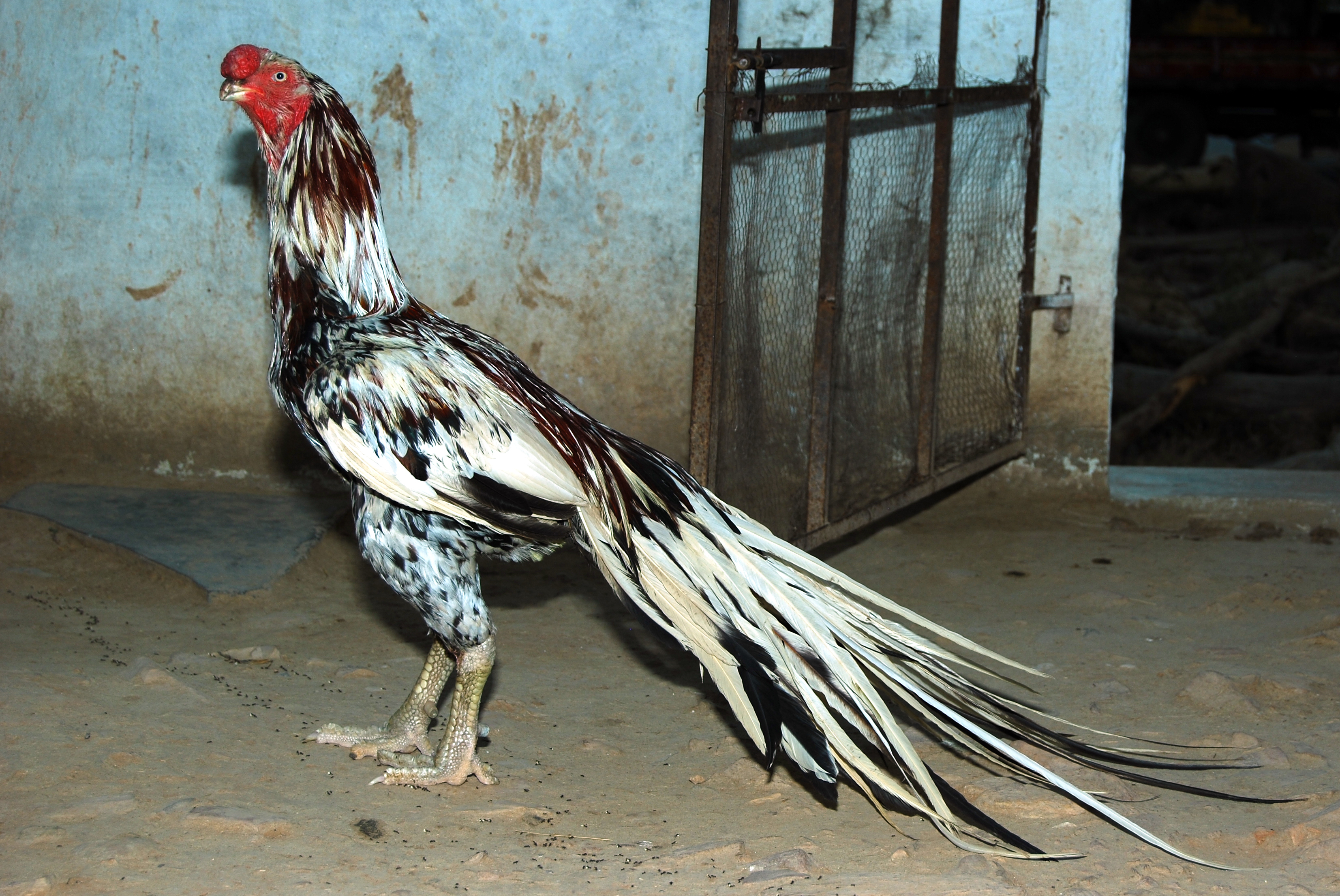
An ancient, intensely game fowl from the Indian subcontinent, prized for courage, muscular 'gladiator' build and quality meat, and used worldwide to add hardness and vigour to other game breeds. Bred over centuries for combat.
ℹ️
Educational only. KinStation content is reviewed by licensed veterinarians but cannot replace an in-person exam. Always consult a licensed veterinarian or board-certified specialist for diagnosis, treatment, or any decision affecting your pet's health.
🩺 Need expert help with your aseel?
Connect with a specialist near you or ask a licensed vet — never substitute online guidance for hands-on care in an emergency.
Muscular, upright game fowl; cocks ~4-5.5 lb (2-2.5 kg), hens ~3.5-4.5 lb. Hard, tight feathering over dense, gladiatorial musculature with a broad chest and sh
Lifespan
8–12 years
Social needs
group
Native region
India / Pakistan (Indian subcontinent)
Family
Phasianidae
Genus
Gallus
Part of the Chicken breeds
Recognized chicken breeds — selectively bred for type, purpose, and appearance.
From the minimum an animal needs to be kept humanely, up to the ideal setup. Bigger is almost always better — minimums are floors, not targets.
Photo coming soon
Minimum
Single-bird pen + roost
8 sq ft per bird + 20 sq ft run, solo-penned cocks
Aseels (4–6 lb) are ancient Indian game-fowl and fiercely aggressive toward same-sex flockmates. Cocks MUST be kept solo or rotated; hens can be kept in small groups with rich pickings. Provide 8 sq ft pen and 20 sq ft run per bird, a high roost, and visual barriers between cocks.
Photo coming soon
Recommended
Pair pens with visual barriers
10 sq ft pen + 30 sq ft run per bird
Individual cock pens separated by solid panels (visual barriers stop sparring through wire). Hens in small breed-groups. Aseels are slow-feathering, tropical-origin birds — provide a draft-free roost and shade.
Photo coming soon
Ideal
Breed-pen complex + free-range hens
Solid-walled cock pens + free-range hen pasture
Permanent breeding complex: a row of solid-walled cock pens (12 × 6 ft each) and free-ranged hen pasture rotated through subdivided runs. Aseels are kept for heritage preservation and traditional cockfighting display only — never legal for staged fighting in most jurisdictions.
Life & growth stages
How this animal changes through its life — each stage often has its own care, diet and space needs.
Photo coming soon
Egg
Birds develop inside a hard-shelled egg incubated by the parent(s). Egg size, shell color, and clutch size vary by species; the embryo develops over days to weeks before hatching.
Photo coming soon
Hatchling / Chick
Hatchlings are either altricial — naked, blind, and dependent on parents (typical of parrots and songbirds) — or precocial — downy, mobile, and self-feeding soon after hatching (typical of poultry and waterfowl). Down gives way to the first feathers.
Photo coming soon
Juvenile / Fledgling
Fledglings grow in their juvenile plumage and begin to fly and feed themselves, though they may still beg from parents at first. Juvenile feathering is often duller than the adult and is replaced as the bird matures.
Adult
Adults attain full body size and mature plumage, and are capable of breeding. Many species show distinct adult coloration, and in sexually dimorphic birds males and females differ in plumage, size, or markings.
(c) D. N., some rights reserved (CC BY-NC) via iNaturalist — https://www.inaturalist.org/observations/312084723
Color & pattern variants
Natural variants occur in the wild; selectively bred (man-made) variants were developed in captivity.
Provide spacious, secure housing with a large run or free-range area; they are active and forage well. Hard, sparse feathering makes them cold-sensitive — give warm, dry, draft-free shelter and supplementary warmth in cold winters. Critically, mature males and even some females are extremely aggressive to their own kind, so birds often must be penned individually or in carefully managed groups with abundant space.
Diet
Feed a high-protein game/grower ration to support heavy musculature and slow maturation; traditional keepers supplement with animal protein, pulses and greens. Provide grit and calcium free-choice. Maintain lean, hard condition — Aseel are athletic birds that should not carry excess fat.
Behavior & temperament
Purpose: historically a fighting breed; now kept for exhibition, meat (firm, flavourful flesh) and as a foundation for crossbreeding. Hens are poor layers (a small number of small tinted eggs) but are determined, fiercely protective broodies and excellent mothers. Temperament is bold, intelligent and remarkably tame and trusting toward their keeper — yet relentlessly combative toward other chickens. Note: cockfighting is illegal in most jurisdictions; keep for show/pet/conservation only.
Health
Low egg production, slow growth and low fertility make the breed hard to multiply and keep it rare. Extreme intra-species aggression causes serious injuries unless birds are separated. Cold-sensitive due to hard, scant feathering. Otherwise an exceptionally robust, disease-resistant and long-lived breed with strong natural vigour.
Tips, DIY & hacks
Plan housing around aggression: separate pens or single-bird quarters for mature males, and watch hens too. Despite their fighting heritage they bond strongly with handlers — frequent gentle handling yields very tame birds. Keep warm and dry in winter. Use their excellent broodiness to hatch other breeds. A rewarding breed for experienced keepers and conservation-minded breeders.