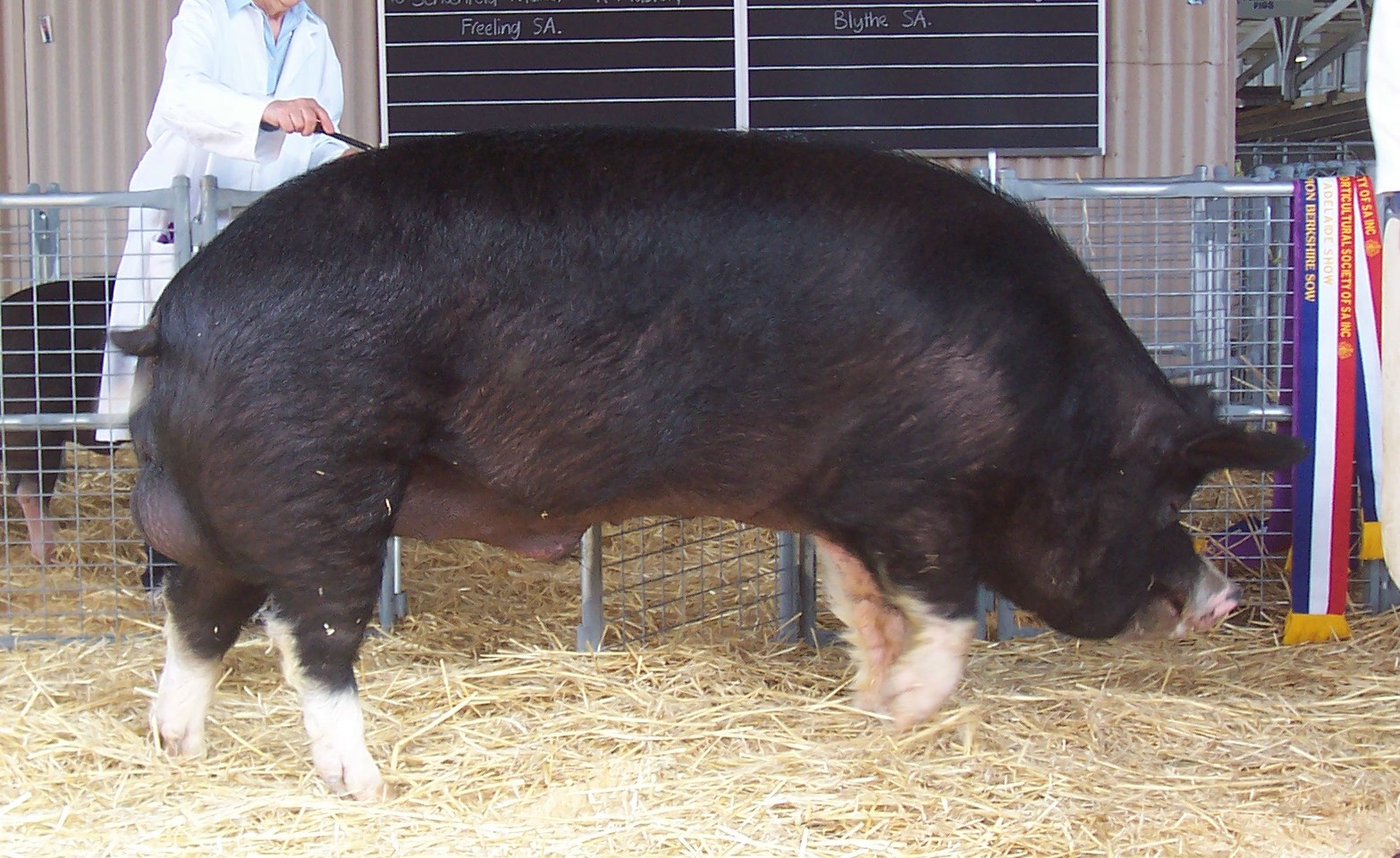
One of the oldest recorded English pig breeds, the Berkshire is a black, six-white-points hog prized worldwide for richly marbled, dark, flavorful pork marketed in Japan as Kurobuta. It is a hardy, docile heritage breed well suited to pasture-based and small-farm production.
ℹ️
Educational only. KinStation content is reviewed by licensed veterinarians but cannot replace an in-person exam. Always consult a licensed veterinarian or board-certified specialist for diagnosis, treatment, or any decision affecting your pet's health.
🩺 Need expert help with your berkshire?
Connect with a specialist near you or ask a licensed vet — never substitute online guidance for hands-on care in an emergency.
From the minimum an animal needs to be kept humanely, up to the ideal setup. Bigger is almost always better — minimums are floors, not targets.
Photo coming soon
Minimum
Pen + wallow + 3-sided shelter
≥ 50 sq ft per pig in pen, hog-rated fencing
A bare-minimum pen with ≥ 50 sq ft per pig, a wallow for thermoregulation, a 3-sided shelter, and hog-rated fencing (woven wire or hot wire). Pigs are herd animals — solo housing is poor welfare, keep at least a pair.
Recommended
Rotated paddock with shelter
1/8–1/4 acre per pig, rotated
Rotated paddocks of 1/8–1/4 acre per pig with a wallow, a barn or sturdy shelter, sturdy fencing, and a farrowing crate option for sows. Rotation prevents parasite build-up and gives fresh rooting ground.
Suiren2022 / CC BY-SA 4.0 (Wikimedia Commons)
Photo coming soon
Ideal
Managed pasture + woodland
Multi-acre rotation, woodland + wallow, herd of 4+
Managed pasture rotation with access to woodland for natural rooting, a wallow, shade, and a herd of 4+ for social structure. Heritage breeds in this setup preserve genetic diversity and express the full pig behavioural repertoire.
Life & growth stages
How this animal changes through its life — each stage often has its own care, diet and space needs.
Photo coming soon
Newborn
Newborn mammals are nursed on their mother's milk. Many are born helpless — blind, deaf, and sparsely furred (altricial, as in dogs, cats, and rodents) — while others stand and follow within hours (precocial, as in hoofed livestock).
Photo coming soon
Juvenile
After weaning, juveniles grow quickly and become increasingly active, playful, and independent. Adult coat, proportions, and (in many species) the permanent teeth come in as they approach full size.
Photo coming soon
Adult
Adults reach full body size and sexual maturity, with the species' mature coat and build. Sexual dimorphism — differences in size, mane, horns, or markings — is pronounced in some mammals and subtle in others.
Senior
Senior animals show aging signs such as graying fur, reduced activity, and a greater need for veterinary monitoring of joints, teeth, and organ function. Lifespan and the onset of old age vary widely by species and size.
Color & pattern variants
Natural variants occur in the wild; selectively bred (man-made) variants were developed in captivity.
Provide pasture or a generous dirt/woodland lot with sturdy fencing (woven wire or hog panel; the breed roots vigorously). Supply a dry, draft-free shelter or three-sided shed bedded with straw, plus a wallow or shaded mud area — the black coat tolerates sun better than white breeds but pigs cannot sweat and still need cooling. Allow roughly 250-400 sq ft per pig on dirt lots, more on pasture. Rotate paddocks to control rooting damage and parasites.
Diet
A balanced grain ration (corn/barley-soy based, ~14-16% protein for growers, lower for adults) forms the base, supplemented well by forage, pasture, root vegetables, and surplus produce. Berkshires forage efficiently and finish well on pasture-plus-grain systems. Provide constant clean water and species-appropriate minerals; avoid feeding raw meat or prohibited swill where banned by law.
Behavior & temperament
Calm, friendly, and easy to handle, which suits them to small farms and family operations. Bred as a dual-purpose meat hog now specialized for premium fresh pork; the meat is dark, well-marbled, and tender. Sows are good, attentive mothers with reasonable litter sizes (often 7-10). Their docility makes them a popular heritage and show breed.
Health
Generally hardy and robust with few breed-specific defects. Like all pigs they are prone to heat stress (no sweat glands), internal/external parasites, and lameness on hard ground. The short, slightly dished face is far less extreme than truly brachycephalic breeds and rarely causes breathing problems, but very flat-faced show lines should be selected against. Watch sunburn on any white points and pink skin.
Tips, DIY & hacks
Provide a wallow and shade in summer to prevent heat stress. Ring-fence gardens — they root hard. The six white points (feet, face/snout, tail tip) are the breed signature; black skin gives good sun tolerance. Buy from registered stock (American Berkshire Association / British registry) for breeding and for verified Kurobuta marketing. Handle calmly from a young age to keep them tame.