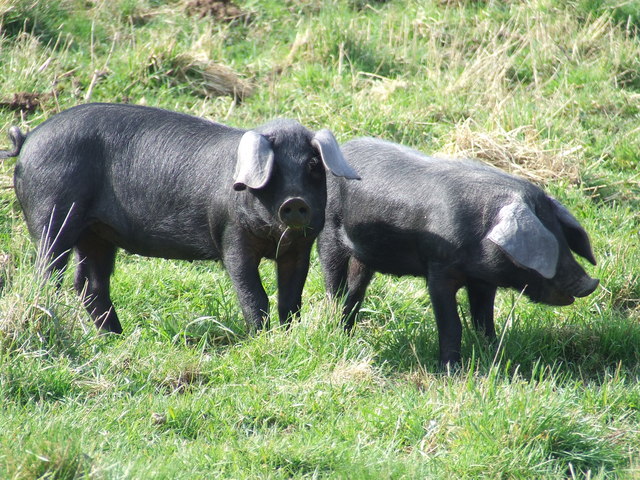
Britain's only all-black pig breed, the Large Black is a calm, hardy grazing pig with fully lop ears, exceptional foraging ability, and outstanding maternal qualities. Its black skin resists sunburn, making it one of the best breeds for low-input outdoor and pasture systems.
ℹ️
Educational only. KinStation content is reviewed by licensed veterinarians but cannot replace an in-person exam. Always consult a licensed veterinarian or board-certified specialist for diagnosis, treatment, or any decision affecting your pet's health.
🩺 Need expert help with your large black?
Connect with a specialist near you or ask a licensed vet — never substitute online guidance for hands-on care in an emergency.
From the minimum an animal needs to be kept humanely, up to the ideal setup. Bigger is almost always better — minimums are floors, not targets.
Photo coming soon
Minimum
Pen + wallow + shelter
50 sq ft per pig + wallow + 3-sided shelter + hog-rated fence
Pigs are intelligent social rooters — pair preferred over solo. Pen with wallow (for cooling — pigs can't sweat) and hog-rated fencing. Large Black is a British heritage breed — black coat, lop ears, excellent foragers.
Photo coming soon
Recommended
Pasture + barn
1/8-1/4 ac per pig + wallow + barn
Rotational paddock for rooting, sturdy fencing, barn for farrowing.
Photo coming soon
Ideal
Managed pasture + woodland
1/4+ ac per pig + woodland + barn
Managed pasture rotation + woodland browse, mud wallow, shade, herd-mate, breeder/vet schedule. Large Black is a British heritage breed — black coat, lop ears, excellent foragers.
Life & growth stages
How this animal changes through its life — each stage often has its own care, diet and space needs.
Photo coming soon
Newborn
Newborn mammals are nursed on their mother's milk. Many are born helpless — blind, deaf, and sparsely furred (altricial, as in dogs, cats, and rodents) — while others stand and follow within hours (precocial, as in hoofed livestock).
Photo coming soon
Juvenile
After weaning, juveniles grow quickly and become increasingly active, playful, and independent. Adult coat, proportions, and (in many species) the permanent teeth come in as they approach full size.
Photo coming soon
Adult
Adults reach full body size and sexual maturity, with the species' mature coat and build. Sexual dimorphism — differences in size, mane, horns, or markings — is pronounced in some mammals and subtle in others.
Senior
Senior animals show aging signs such as graying fur, reduced activity, and a greater need for veterinary monitoring of joints, teeth, and organ function. Lifespan and the onset of old age vary widely by species and size.
Habitat & enclosure
An outstanding **pasture and outdoor range breed** kept with a simple dry, draft-free shelter or ark. It grazes more and roots somewhat less aggressively than some breeds, suiting **extensive rotational grazing**. Provide good fencing and a wallow; the **black skin is highly sun-tolerant**, a major advantage in hot or sunny climates, though shade and water are still required. Hardy and weather-tolerant — thrives on low-input management with straw bedding for cold months.
Diet
Omnivorous and an **exceptionally efficient grazer/forager** — a large share of its intake can come from good pasture, with a balanced commercial ration to finish and to support breeding stock. Provide constant fresh water and a wallow. The breed finishes well on forage-based systems; avoid over-conditioning breeders. Observe local swill/food-scrap feeding regulations.
Behavior & temperament
**Purpose: dual-purpose meat/pork (traditional bacon and pork) and conservation grazing.** Temperament is **very docile, calm, and easy to handle** — among the most placid pig breeds and excellent for beginners. The full lop ears cover the eyes, restricting vision and contributing to the gentle, easily contained nature. Sows are **prolific, milky, and exemplary mothers**, raising large litters with strong maternal care.
Health
**Hardy and robust with few inherited disorders.** The breed was classified rare/threatened, so **genetic diversity is a key management concern** — use registered, pedigree-tracked stock. The **lop ears restrict the field of vision**, which aids handling but means animals startle if approached unseen, and ears should be checked for infection. Black skin greatly reduces sunburn risk. Routine parasite control and hoof care as for any outdoor pig.
Tips, DIY & hacks
Ideal for **hot/sunny-climate and extensive pasture systems** thanks to the sun-resistant black skin and strong grazing instinct — still provide shade and a wallow. The lop ears mean pigs can't see well to the front: **approach calmly and speak to them** so they aren't startled, which makes them very easy to move. An excellent **beginner and family breed** for its docility. Buy registered stock and keep pedigree records to support the limited gene pool. Use rotational grazing to maximize the breed's forage-conversion advantage.