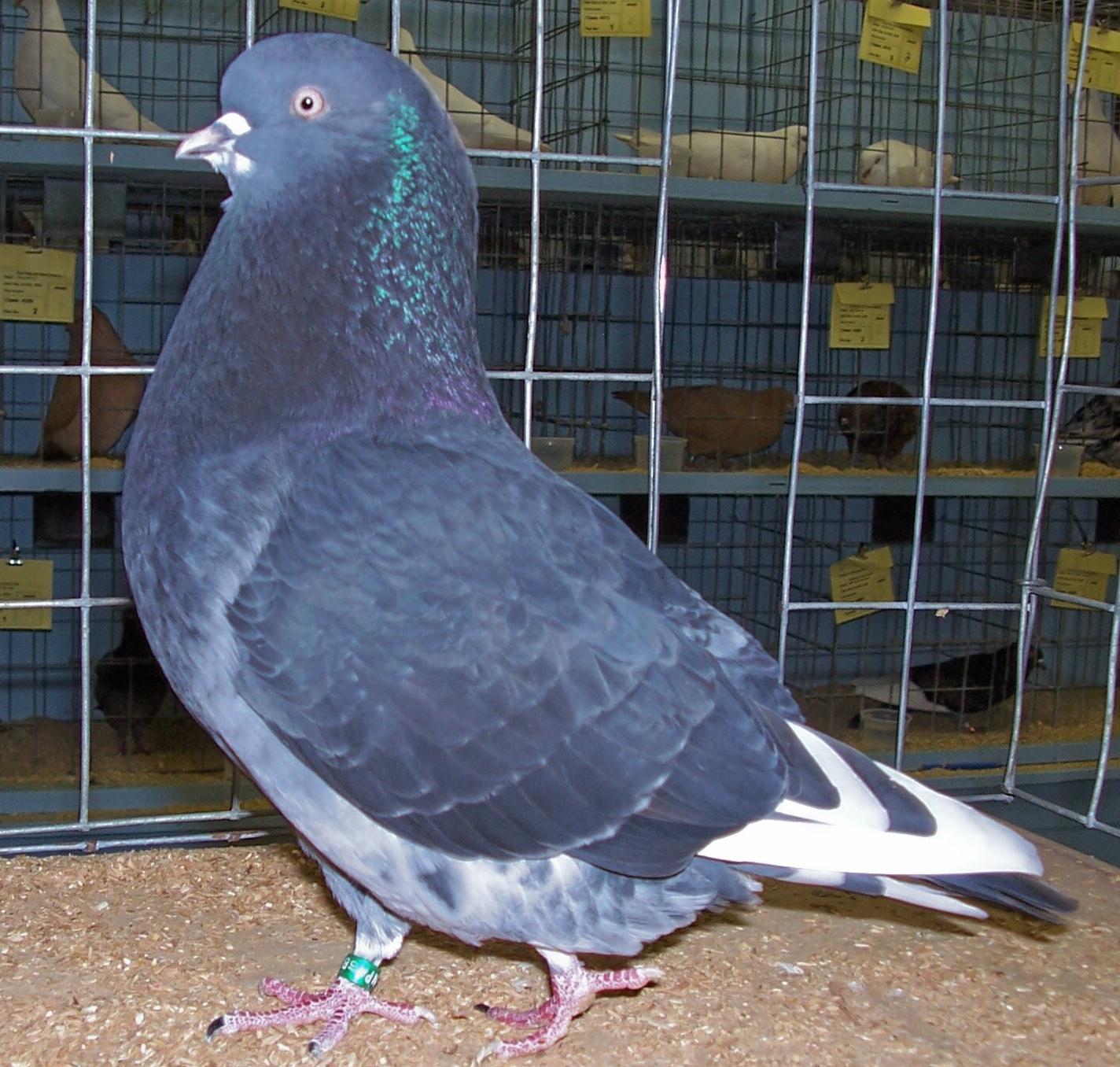
A performance flying pigeon bred to perform rapid backward somersaults — 'rolling' — in tight, fast spins as it flies in a kit. Prized for the speed, depth and synchrony of its roll rather than for looks.
ℹ️
Educational only. KinStation content is reviewed by licensed veterinarians but cannot replace an in-person exam. Always consult a licensed veterinarian or board-certified specialist for diagnosis, treatment, or any decision affecting your pet's health.
🩺 Need expert help with your birmingham roller?
Connect with a specialist near you or ask a licensed vet — never substitute online guidance for hands-on care in an emergency.
From the minimum an animal needs to be kept humanely, up to the ideal setup. Bigger is almost always better — minimums are floors, not targets.
Photo coming soon
Minimum
Roller loft pair section
4 sq ft loft floor per pair + kit-box per kit
Birmingham Rollers are performance pigeons selected for tumbling in flight. A breeding loft needs 4 sq ft per pair, V-perches above 4 ft, nest boxes (one per pair), grit/oyster shell. Separate kit-box (training group) housing keeps trained flying birds together.
Photo coming soon
Recommended
Sectioned loft + trap aviary
6 sq ft per pair + 4×8 ft aviary + trap entry
Two-section loft for breeders and kits, with a bob-wire trap aviary so flown rollers can re-enter but predators cannot. Daily feed routine and short fly sessions train kits to spin together in a tight ball.
Photo coming soon
Ideal
Competition kit-box loft system
Walk-in 4-section loft + multiple kit boxes + open sky
A walk-in loft with separate breeder, weanling, and several 20-bird kit-box sections, located somewhere safe to fly daily — rural or low-raptor suburban. Rollers free-fly twice a day on a routine and return to feed; the best welfare outcome for a working performance pigeon.
Life & growth stages
How this animal changes through its life — each stage often has its own care, diet and space needs.
Photo coming soon
Egg
Birds develop inside a hard-shelled egg incubated by the parent(s). Egg size, shell color, and clutch size vary by species; the embryo develops over days to weeks before hatching.
Photo coming soon
Hatchling / Chick
Hatchlings are either altricial — naked, blind, and dependent on parents (typical of parrots and songbirds) — or precocial — downy, mobile, and self-feeding soon after hatching (typical of poultry and waterfowl). Down gives way to the first feathers.
Photo coming soon
Juvenile / Fledgling
Fledglings grow in their juvenile plumage and begin to fly and feed themselves, though they may still beg from parents at first. Juvenile feathering is often duller than the adult and is replaced as the bird matures.
Adult
Adults attain full body size and mature plumage, and are capable of breeding. Many species show distinct adult coloration, and in sexually dimorphic birds males and females differ in plumage, size, or markings.
(c) Misha Zitser, some rights reserved (CC BY-NC) via iNaturalist — https://www.inaturalist.org/observations/285409360
Color & pattern variants
Natural variants occur in the wild; selectively bred (man-made) variants were developed in captivity.
Keep in a clean, dry **loft** with a landing board, trap and an open sky for daily free-flight training. Birds fly in 'kits' of 10-20 and are released to perform overhead. Provide perches, nest boxes, dry litter and good ventilation; locate the loft where hawk pressure can be managed.
Diet
A balanced pigeon grain mix; many fanciers feed a controlled, slightly lean ration to keep birds 'on the wing' and rolling well, increasing energy grains during heavy flying. Grit, minerals and clean water always available. Avoid overfeeding, which dulls performance.
Behavior & temperament
Energetic, keen flyers selected purely for **aerial performance (competition rolling)**. A good roller spins in a fast, ball-like backward somersault and rejoins the kit; competitions judge frequency, depth and quality. Tame and easy to manage in the loft.
Health
The main welfare risk is the inherited rolling trait itself: birds that 'roll down' (over-roll) can spin uncontrollably into the ground and be killed or injured, and extreme 'stiff' over-rollers cannot fly normally. Otherwise hardy; standard pigeon diseases (canker, coccidiosis, worms, respiratory) apply, and hawk predation during flight is a real loss factor.
Tips, DIY & hacks
Select against over-rollers/roll-downs for welfare and performance. Fly kits in cooler parts of the day and watch for birds of prey. Keep birds fit and not overweight. Practice good loft hygiene and routine canker/coccidiosis prevention. Band and record breeding to track roll quality.