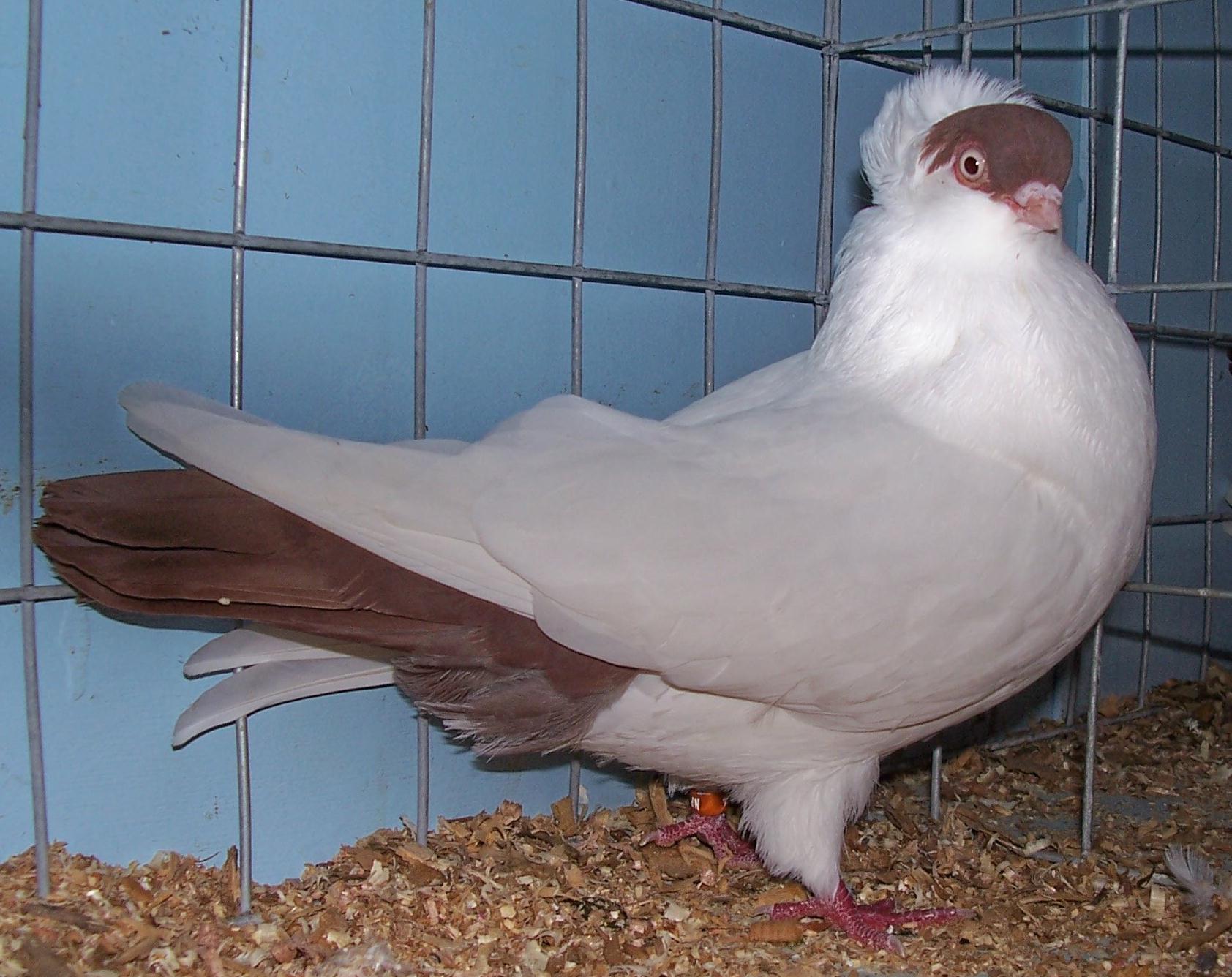
The Helmet is an old European toy/color pigeon defined by its marking pattern: a colored crown and tail on an otherwise white body, resembling a helmet on the head. It is a hardy, friendly show breed available in crested and shell-crested forms.
ℹ️
Educational only. KinStation content is reviewed by licensed veterinarians but cannot replace an in-person exam. Always consult a licensed veterinarian or board-certified specialist for diagnosis, treatment, or any decision affecting your pet's health.
🩺 Need expert help with your helmet?
Connect with a specialist near you or ask a licensed vet — never substitute online guidance for hands-on care in an emergency.
From the minimum an animal needs to be kept humanely, up to the ideal setup. Bigger is almost always better — minimums are floors, not targets.
Photo coming soon
Minimum
Sectioned loft (per pair)
≈ 3 sq ft loft + 6 sq ft fly pen / pair
Helmets are small, active ornamental pigeons that handle a small loft well. A welfare minimum is 3 sq ft of loft and 6 sq ft of covered fly pen per pair, with V-perches, individual nest cubicles, grit, calcium, deep water, and a shallow bath tin twice weekly.
Photo coming soon
Recommended
Divided loft + flight pen
≈ 5 sq ft loft + 10 sq ft fly pen / pair
A divided loft of 5 sq ft per pair plus a 10+ sq ft covered fly per pair gives Helmets room for the lively short flights and pair-bonding they enjoy. Sand or shaving floor, V-perches, multiple nest cubes per pair, and grit/calcium hoppers complete the setup.
Photo coming soon
Ideal
Walk-in loft + aviary
Walk-in loft + 18+ sq ft fly / pair
A walk-in fancier's loft with separate stock, breeding, and young-bird sections plus an 18+ sq ft per pair covered aviary lets Helmets fly daily, bathe, and rear young in calm conditions. The colour-shield head pattern shows best with strong overhead light, so a sky-light or clear roof panel is a nice touch.
Life & growth stages
How this animal changes through its life — each stage often has its own care, diet and space needs.
Photo coming soon
Egg
Birds develop inside a hard-shelled egg incubated by the parent(s). Egg size, shell color, and clutch size vary by species; the embryo develops over days to weeks before hatching.
Photo coming soon
Hatchling / Chick
Hatchlings are either altricial — naked, blind, and dependent on parents (typical of parrots and songbirds) — or precocial — downy, mobile, and self-feeding soon after hatching (typical of poultry and waterfowl). Down gives way to the first feathers.
Photo coming soon
Juvenile / Fledgling
Fledglings grow in their juvenile plumage and begin to fly and feed themselves, though they may still beg from parents at first. Juvenile feathering is often duller than the adult and is replaced as the bird matures.
Adult
Adults attain full body size and mature plumage, and are capable of breeding. Many species show distinct adult coloration, and in sexually dimorphic birds males and females differ in plumage, size, or markings.
(c) Misha Zitser, some rights reserved (CC BY-NC) via iNaturalist — https://www.inaturalist.org/observations/285409360
Color & pattern variants
Natural variants occur in the wild; selectively bred (man-made) variants were developed in captivity.
Keep in a dry, draft-free loft with perches and nest boxes (about 0.3-0.5 m² per pair) plus a secure covered flight or aviary. Helmets are hardy and active and tolerate aviary or open-loft flying well. Maintain clean dry litter and good ventilation; the white body plumage shows soiling, so cleanliness keeps birds in show condition.
Diet
Provide a balanced pigeon grain mix (peas, maize, wheat, milo, small seeds) with constant grit, oyster shell/limestone for calcium, a mineral pickstone and fresh water daily in deep drinkers. Raise legume protein during breeding and moult. Avoid corn-heavy overfeeding to prevent obesity in this small breed.
Behavior & temperament
Purpose: show/ornamental marking ('toy') breed. Friendly, calm and easy to tame, making Helmets good beginner and children's pigeons. They are dependable natural breeders and parents. The breed exists as plain-head, shell-crested and other crest types, with the colored cap-and-tail marking as the defining feature.
Health
Hardy with no exaggerated conformation; among the more beginner-friendly fancy pigeons. Standard pigeon diseases apply: canker, coccidiosis, worms, PMV (vaccinate where required), pox and respiratory infection. Muffed lines need foot-feather mite checks. Maintaining the crisp white-and-color marking depends mainly on selective breeding, not on health.
Tips, DIY & hacks
Offer shallow baths so birds keep the white body bright, and house on clean litter to avoid staining. Select breeders carefully to keep the colored crown and tail clean-edged and the white body free of colored flecks. Pair within crest type. Quarantine new birds 30 days and treat for canker and worms before introducing them to the loft.