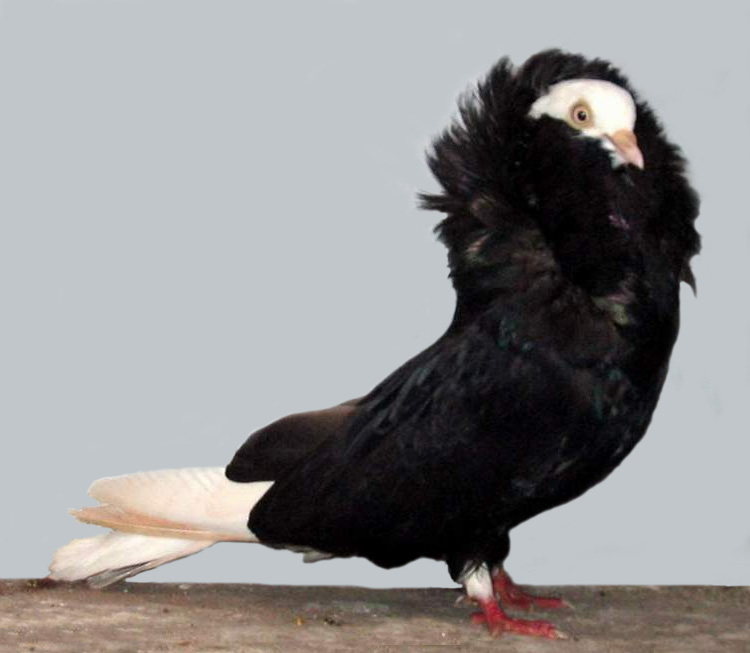
The Old Dutch Capuchine is an ornamental pigeon famous for the dramatic hood, mane and chain of feathers that frame the head like a monk's cowl. One of the oldest feather-ornamented breeds, it is kept strictly for exhibition and its showy plumage.
ℹ️
Educational only. KinStation content is reviewed by licensed veterinarians but cannot replace an in-person exam. Always consult a licensed veterinarian or board-certified specialist for diagnosis, treatment, or any decision affecting your pet's health.
🩺 Need expert help with your old dutch capuchine?
Connect with a specialist near you or ask a licensed vet — never substitute online guidance for hands-on care in an emergency.
From the minimum an animal needs to be kept humanely, up to the ideal setup. Bigger is almost always better — minimums are floors, not targets.
Photo coming soon
Minimum
Calm loft (per pair)
≈ 3.5 sq ft loft + 6 sq ft fly pen / pair
Old Dutch Capuchines have a heavy hood-mane that restricts lateral vision, so they need calm flock-mates, ground-level food and water, and predator-proof housing. A welfare minimum is 3.5 sq ft of loft and 6 sq ft of covered fly per pair, with sand floor, low V-perches, individual nest cubicles, grit, calcium, and shallow occasional baths.
Photo coming soon
Recommended
Sectioned loft + covered fly
≈ 5 sq ft loft + 10 sq ft fly pen / pair
Divided loft of 5 sq ft per pair plus a 10+ sq ft covered aviary per pair lets Capuchines walk, court, and short-fly safely. Group only with non-bullying breeds; foster-pair sections are standard because the hood interferes with feeding squabs.
Photo coming soon
Ideal
Walk-in show loft + flight
Walk-in loft + 18+ sq ft fly / pair
A walk-in fancier's loft with stock, breeding, conditioning, and foster sections plus an 18+ sq ft per pair covered aviary delivers best welfare and show condition. Sand floor, draught-free ventilation, and indirect lighting protect the dramatic mane that gives this 16th-century Dutch breed its name.
Life & growth stages
How this animal changes through its life — each stage often has its own care, diet and space needs.
Photo coming soon
Egg
Birds develop inside a hard-shelled egg incubated by the parent(s). Egg size, shell color, and clutch size vary by species; the embryo develops over days to weeks before hatching.
Photo coming soon
Hatchling / Chick
Hatchlings are either altricial — naked, blind, and dependent on parents (typical of parrots and songbirds) — or precocial — downy, mobile, and self-feeding soon after hatching (typical of poultry and waterfowl). Down gives way to the first feathers.
Photo coming soon
Juvenile / Fledgling
Fledglings grow in their juvenile plumage and begin to fly and feed themselves, though they may still beg from parents at first. Juvenile feathering is often duller than the adult and is replaced as the bird matures.
Adult
Adults attain full body size and mature plumage, and are capable of breeding. Many species show distinct adult coloration, and in sexually dimorphic birds males and females differ in plumage, size, or markings.
(c) Misha Zitser, some rights reserved (CC BY-NC) via iNaturalist — https://www.inaturalist.org/observations/285409360
Color & pattern variants
Natural variants occur in the wild; selectively bred (man-made) variants were developed in captivity.
House in a clean, dry, draft-free loft with perches and roomy nest boxes (about 0.3-0.5 m² per pair) and a secure covered flight or aviary. Keep flights dry and mud-free to protect the long hood and chain feathers. As a not particularly strong flyer bred for ornament, the Capuchine does best in an enclosed aviary rather than free flying.
Diet
Feed a standard pigeon grain mix (peas, maize, wheat, milo, small seeds) with constant grit, oyster shell/limestone, a mineral block and fresh water in deep drinkers. Increase legume protein during breeding and moult to support good hood feathering. Keep birds fit and not overweight.
Behavior & temperament
Purpose: show/ornamental feather-structure breed. Generally calm and ornamental; the enveloping hood can partly obstruct vision, so birds may be flightier or less aware of their surroundings and should be handled and approached calmly. Capuchines breed naturally, but the hood and mane around the head and the small size can reduce fertility, so some breeders foster eggs under plainer pigeons.
Health
No life-threatening conformation defect, but the heavy head ornamentation reduces field of vision and can interfere with courtship and feeding of young; fostering is sometimes used. Standard pigeon diseases apply: canker, coccidiosis, worms, PMV (vaccinate where required), pox and respiratory disease. Keep the hood region clean and parasite-free, as lice/mites quickly spoil the delicate frame feathers.
Tips, DIY & hacks
Protect the hood, mane and chain from rain, mud and rough handling; house on clean dry litter and provide gentle shallow baths so birds can preen the frame into full shape. Because vision is limited, keep loft fittings simple and approach birds slowly. Keep reliable foster pairs available for eggs from heavily hooded or low-fertility birds. Pair to maintain a wide, well-closed hood and full mane. Quarantine and treat new birds for canker before mixing.