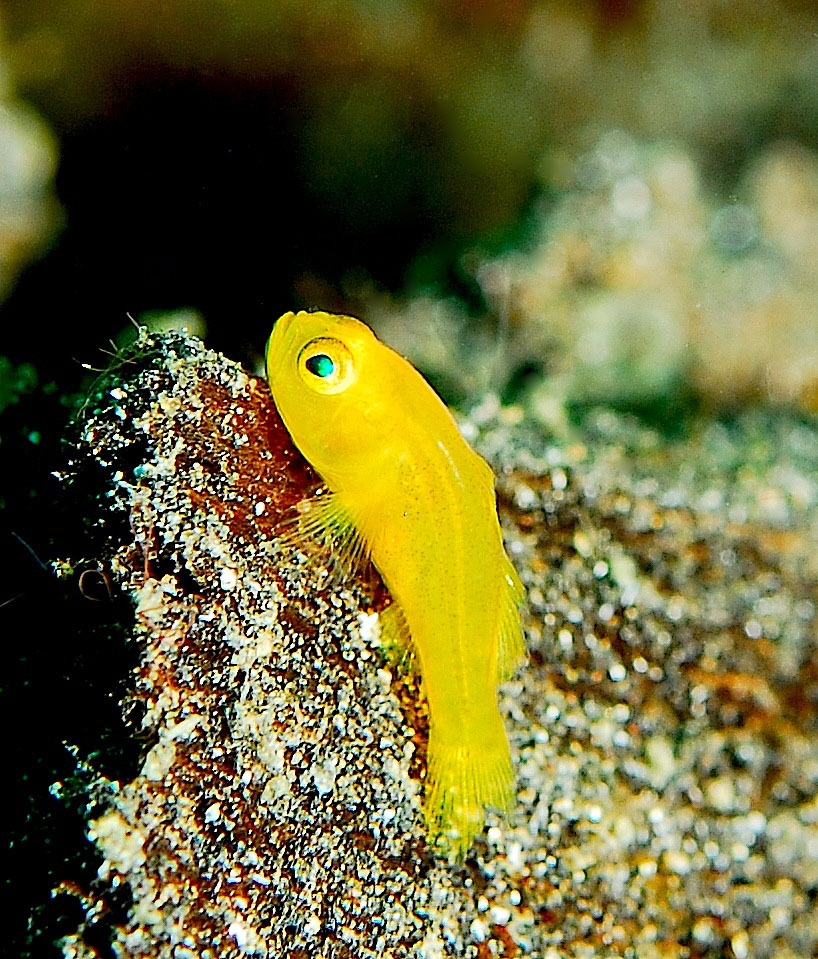
A bright lemon-yellow nano goby that perches among branching corals, hopping from twig to twig. Hardy and full of personality, it is a perfect peaceful pico- and nano-reef fish, with the one caveat that it may nip SPS coral polyps.
ℹ️
Educational only. KinStation content is reviewed by licensed veterinarians but cannot replace an in-person exam. Always consult a licensed veterinarian or board-certified specialist for diagnosis, treatment, or any decision affecting your pet's health.
🩺 Need expert help with your yellow clown goby?
Connect with a specialist near you or ask a licensed vet — never substitute online guidance for hands-on care in an emergency.
Western Pacific: from southern Japan (Okinawa) south through the Indo-Pacific reefs
Origin
Old World
Climate
🌴 Tropical
Water type
🌊 Marine
Family
Gobiidae
Genus
Gobiodon
Part of the Gobies
Small, mostly bottom-dwelling marine and brackish fish prized in aquaria for their hardiness, interesting behaviors, and roles such as sand-sifting, burrowing, or pairing with pistol shrimp. This grouping also includes goby-like specialty species sold under goby names.
From the minimum an animal needs to be kept humanely, up to the ideal setup. Bigger is almost always better — minimums are floors, not targets.
Photo coming soon
Minimum
Nano reef with branching coral
10 gal / 38 L nano reef
Gobiodon okinawae stays under 4 cm and perches on branching corals (acropora). Pair or single in a nano reef with peaceful tankmates and gentle flow.
Photo coming soon
Recommended
Mature SPS reef
20–30 gal / 75–110 L
Established SPS reef with branching corals as perches. Pair lays eggs on coral branches. Reef-safe but may nip SPS polyps occasionally.
Photo coming soon
Ideal
Mixed SPS reef
55 gal+ / 200 L+ SPS reef
Larger SPS reef with abundant branching coral and stable params. Multiple pairs occupy different coral colonies, displaying full yellow colour.
Life & growth stages
How this animal changes through its life — each stage often has its own care, diet and space needs.
Photo coming soon
Egg
Fish eggs are small, translucent spheres, often laid in clutches on plants, substrate, or in a nest — or carried/brooded by a parent in livebearing and mouth-brooding species. A dark eye spot and the curled embryo become visible inside as development progresses.
Photo coming soon
Fry
Newly hatched fry are tiny and semi-transparent, frequently still carrying a yolk sac that fuels them before they feed freely. They lack full fin structure and adult coloration, staying near cover until they can swim and forage on their own.
Photo coming soon
Juvenile
Juveniles look like miniature adults but with developing fins and muted or different markings; many species shift pattern and color as they mature. Growth is rapid at this stage given clean water and steady feeding.
Adult
Adults show the species' full size, finnage, and mature coloration, and are sexually mature. Many fish develop sex-specific differences in size, color, or fin shape, which can intensify during breeding.
Habitat & enclosure
Because it is so small and sedentary, a single yellow clown goby can be kept in a nano reef as small as 5-10 gallons, though 10 gallons or more is more forgiving. It spends its life perched on and darting between branching corals or rockwork, so provide branchy structure such as Acropora, Montipora, or a coral-skeleton replica for it to nestle in. A tight lid is recommended, as they can jump.
Maintain stable tropical reef water: temperature 72-79 F (22-26 C), pH 8.1-8.4, salinity 1.023-1.026 specific gravity. They are indifferent to flow and lighting, so settings can be dictated by the corals around them.
Substrate
Substrate choice is unimportant to this perching fish; fine sand over live rock is typical. What matters is branchy coral or rock structure for it to cling to, which is its preferred microhabitat.
Equipment & setup
Any stable nano-reef setup works: a small heater, gentle to moderate flow, and reef lighting chosen for the corals rather than the fish. A protein skimmer is helpful on larger systems, and a secure lid prevents jumping.
Diet
Carnivorous micro-predator that feeds on zooplankton and small crustaceans in the wild. In the aquarium offer frozen mysis and brine shrimp, copepods, cyclops, and small marine pellets and flakes, fed in small amounts two to three times daily. Newly imported fish can be shy eaters, so a copepod-seeded mature tank helps bridge the gap.
Many take prepared foods quickly, especially captive-bred individuals. Frequent small feedings suit their tiny stomachs and keep their color vivid.
Behavior & temperament
Peaceful and generally reef-safe with most corals, though it is known to nip and perch on small-polyp stony (SPS) corals like Acropora, sometimes irritating the polyps; this is usually cosmetic but worth noting for high-end SPS keepers. It is harmless to other invertebrates and to fish, ignoring tankmates entirely. Keep one per small tank, as same-species fish often quarrel unless a bonded pair is established in a larger system.
Clown gobies secrete a bitter, mildly toxic skin mucus that deters predators, so they are often left alone even by larger fish. They are bold once settled, perching in the open and 'hopping' between coral branches in a charming, frog-like way.
Health
Hardy, but their tiny size means they decline fast if they stop eating, so confirm feeding response before purchase. They can contract marine ich and velvet, though their toxic slime coat gives some protection. Quarantine and slow drip-acclimation reduce import stress.
The main pitfall is starvation in a sterile, freshly set-up tank with few natural micro-foods; an established system or diligent target-feeding prevents this. Stable salinity and temperature keep them in good condition.
Tips, DIY & hacks
Seek captive-bred yellow clown gobies, which adapt to aquarium foods readily and reduce collection pressure. If you keep prize Acropora, watch for polyp nipping and relocate the goby if it becomes a nuisance. To pair them, introduce two juveniles together in a tank with branching coral and let a bond form; pairs may even lay eggs on coral branches.