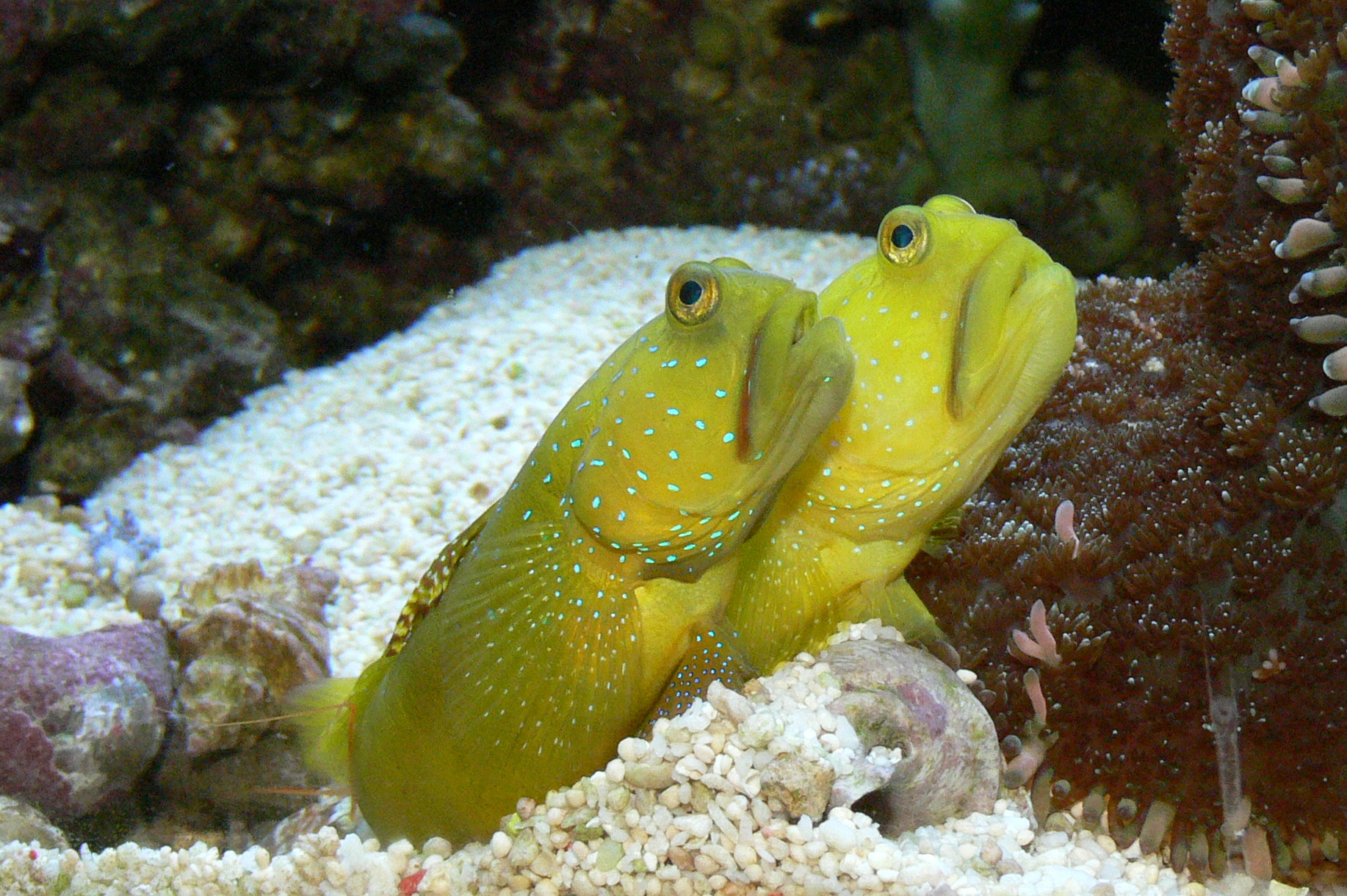
Yellow watchman gobies are small Indo-Pacific reef gobies famous for forming a mutualistic partnership with snapping shrimp — the shrimp digs a shared burrow and the goby watches for predators. Hardy, peaceful, and well-suited to nano reefs.
ℹ️
Educational only. KinStation content is reviewed by licensed veterinarians but cannot replace an in-person exam. Always consult a licensed veterinarian or board-certified specialist for diagnosis, treatment, or any decision affecting your pet's health.
🩺 Need expert help with your yellow watchman goby?
Connect with a specialist near you or ask a licensed vet — never substitute online guidance for hands-on care in an emergency.
Small, mostly bottom-dwelling marine and brackish fish prized in aquaria for their hardiness, interesting behaviors, and roles such as sand-sifting, burrowing, or pairing with pistol shrimp. This grouping also includes goby-like specialty species sold under goby names.
From the minimum an animal needs to be kept humanely, up to the ideal setup. Bigger is almost always better — minimums are floors, not targets.
Photo coming soon
Minimum
Cycled nano reef + sand bed
20 gal (≈ 76 L)
This small bottom-dwelling goby needs a cycled tank of at least 20 gallons with a deep (5–8 cm) fine sand-and-rubble bed it can burrow in, plus rockwork over the substrate to anchor a stable burrow. Keep 24–27 °C and reef-stable salinity, and ideally pair it with a pistol shrimp, the natural symbiotic partner that builds and shares the burrow it 'watches' over.
Photo coming soon
Recommended
Established reef with deep sand
30 gal (≈ 114 L)
A 30-gallon established reef with a generous fine-sand bed and a network of bottom caves gives the goby secure burrow sites and a calm, mature environment. A tight-fitting lid is essential because watchman gobies are notorious jumpers; pair it with a pistol shrimp and tank-mates that won't out-compete it for the bottom, in 24–27 °C reef-stable water.
Photo coming soon
Ideal
Mature deep-sand reef
40+ gal (≈ 150+ L) reef
A mature 40-gallon-plus reef with a thick, fine-grained sand bed rich in microfauna lets the goby and its paired pistol shrimp dig, sift and maintain an elaborate natural burrow exactly as they do in the wild. Stable reef parameters (24–27 °C, ≈ 1.025 SG), plentiful live rock, a secure lid, and live and frozen meaty foods support the full expression of its fascinating symbiotic behaviour.
Life & growth stages
How this animal changes through its life — each stage often has its own care, diet and space needs.
Photo coming soon
Egg
Fish eggs are small, translucent spheres, often laid in clutches on plants, substrate, or in a nest — or carried/brooded by a parent in livebearing and mouth-brooding species. A dark eye spot and the curled embryo become visible inside as development progresses.
Photo coming soon
Fry
Newly hatched fry are tiny and semi-transparent, frequently still carrying a yolk sac that fuels them before they feed freely. They lack full fin structure and adult coloration, staying near cover until they can swim and forage on their own.
Photo coming soon
Juvenile
Juveniles look like miniature adults but with developing fins and muted or different markings; many species shift pattern and color as they mature. Growth is rapid at this stage given clean water and steady feeding.
Adult
Adults show the species' full size, finnage, and mature coloration, and are sexually mature. Many fish develop sex-specific differences in size, color, or fin shape, which can intensify during breeding.
Color & pattern variants
Natural variants occur in the wild; selectively bred (man-made) variants were developed in captivity.
The yellow watchman goby is a small, peaceful marine fish best kept in an established, well-cycled saltwater aquarium. Experienced reefkeepers generally recommend a modest but stable tank for a single fish, with larger volumes preferred because they buffer temperature and chemistry swings that stress a burrow-dwelling species. A tight-fitting lid is essential — like most gobies, this fish is a jumper.
The single most important feature is a deep, fine sand bed. This goby is a 'shimmer-sifter' and burrow occupant that needs several inches of soft substrate to dig and shelter in. Live rock arranged to create overhangs and burrow mouths gives it the security it craves; a bare-bottom tank is unsuitable. Maintain warm tropical reef temperatures, stable salinity, and reef-appropriate water quality with undetectable ammonia and nitrite and low nitrate.
It is reef-safe and will not bother corals, making it a popular nano- and reef-tank resident. Moderate, indirect flow that moves detritus without blasting the burrow entrance works best. Provide caves and crevices; a stressed, hide-less goby will spend its life concealed.
Substrate
A deep (2-4 inch) bed of fine to mixed-grain sand with some rubble is essential, since this goby is a dedicated burrower that excavates and maintains tunnels. Layering coarser bits of crushed coral or shell helps keep their burrows from collapsing.
Equipment & setup
Standard reef parameters (SG 1.024-1.026, 72-78F) with a protein skimmer and live rock seated firmly on the glass so burrowing does not undermine and topple it. A very secure lid is critical, as they will jump.
Diet
Yellow watchman gobies are carnivores that feed on small crustaceans and other tiny invertebrates in the wild. In the aquarium they take a varied meaty diet — frozen or live mysis shrimp, brine shrimp, and other small marine preparations — usually offered once or twice daily in amounts consumed quickly. Newly imported individuals are sometimes shy feeders and may need live or enriched frozen foods to begin eating.
Because they are bottom-oriented and somewhat reclusive, make sure food reaches the lower water column rather than being swept away at the surface. A thriving live-rock and sand-bed microfauna population (copepods, amphipods) supplements their diet and supports a goby that disappears for long stretches in its burrow.
The common mistake is assuming a goby will 'clean up' a tank on its own; it still needs deliberate target feeding, especially in sparsely populated systems. Overfeeding to compensate for a hidden fish quickly fouls water — feed conservatively and observe.
Behavior & temperament
This species is famous for a mutualism with alpheid pistol shrimp: the nearly blind shrimp excavates and maintains a shared burrow while the sharp-eyed goby stands watch at the entrance, signalling danger with a flick of its tail so both can retreat. The pairing is one of the most-loved behaviors in the reef hobby, though the goby does perfectly well solo.
Temperament is peaceful toward other species but territorial toward its own kind; keep one per tank unless the system is very large with ample separated territory. It is generally a calm, watchful fish that perches at its burrow mouth and darts inside when startled. Hand interaction is not appropriate for fish; 'handling' means careful acclimation and minimal disturbance.
Bite risk to people is nil. The main behavioral consideration is providing enough cover and a deep sand bed so the goby feels secure enough to spend time in the open rather than permanently hidden.
Health
As with most marine fish, the great majority of health problems trace back to water quality and husbandry rather than to the species itself. A reliable test kit and stable parameters are the foundation of goby health. Quarantine of new arrivals is widely recommended to avoid introducing parasites to an established display.
Common reef-fish ailments include marine ich (white spot) and marine velvet, both parasitic and both more likely in fish stressed by poor water, transport, or aggression. Bacterial fin and skin infections can follow injury or chronic stress. Sudden hiding, rapid gilling, flashing against rock, clamped fins, or refusal to eat warrant an immediate water-parameter check before anything else.
With good conditions these gobies are hardy and can live several years. There are few avian/exotic-mammal-style preventives here; the preventive program is quarantine, a deep secure sand bed, consistent water chemistry, and conservative feeding. An aquatic-experienced veterinarian can advise where disease is suspected.
Tips, DIY & hacks
Pair them with a pistol shrimp (Alpheus species) for a fascinating symbiotic relationship: the near-blind shrimp digs and maintains the burrow while the sharp-eyed goby stands guard and signals danger. Seat rockwork on the bottom glass before adding sand to prevent burrow-collapse rockslides.
Origin & history
The yellow watchman goby (Cryptocentrus cinctus) is native to the Western Pacific, where it lives in coastal bays and lagoons and shares burrows with pistol shrimp. It is not domesticated; aquarium specimens are wild-caught or, increasingly, captive-bred, and it has become a staple of the marine ornamental trade thanks to its hardiness, small size, and engaging behavior.
Its popularity grew alongside the nano-reef movement, where a single charismatic, reef-safe fish with a built-in 'buddy system' suits small display tanks. Captive breeding of shrimp-gobies remains less common than for clownfish, so responsible sourcing and quarantine matter for both fish welfare and reef conservation.
Anecdotes & owner lore
Community experience and cultural notes — not veterinary advice. Every animal is an individual; treat these as colour, not care instructions.
Reefkeepers adore the goby-and-pistol-shrimp 'odd couple': the shrimp keeps one antenna resting on the goby at all times, and when the goby twitches its tail the shrimp instantly knows to bolt for cover — a living burglar-alarm partnership people will watch for hours. Hobbyists often name the pair as a unit and trade stories of the shrimp redecorating the burrow overnight, shovelling sand and shells until the tank's aquascape mysteriously rearranges itself by morning.
The fish's perpetually surprised, big-eyed 'watchman' expression has made it a favorite subject for nano-tank photographers, and many keepers describe the moment their shy new goby finally pairs up with a shrimp as one of the most rewarding events in the hobby.
Common ailments
Fin rot — common
Marine ich (white spot) — common — Most common after the stress of transport or in tanks with unstable parameters. Quarantining new arrivals is the standard preventive.
Marine velvet — rare
Reviewed and signed off by: KinStation Editorial - pre-launch draft (pending DVM review)