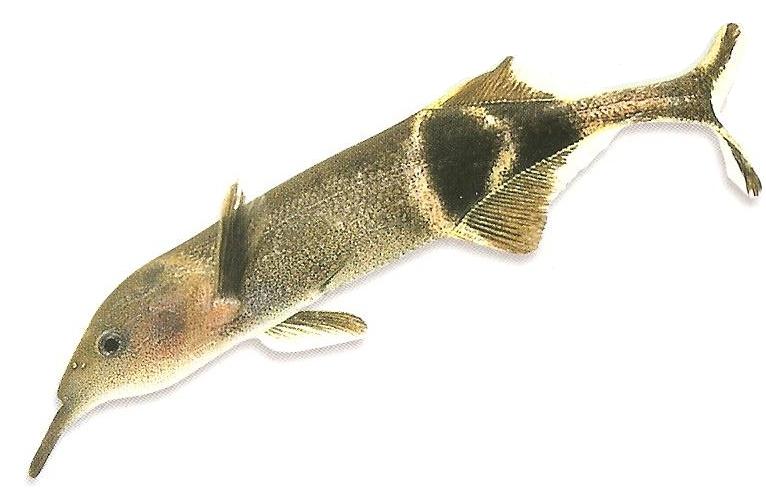
A weakly electric African mormyrid with a distinctive trunk-like chin appendage (the Schnauzenorgan) used to probe the substrate for food. Famous for one of the largest brain-to-body ratios of any fish, it is intelligent, sensitive, and best suited to experienced keepers who can provide pristine, soft water.
ℹ️
Educational only. KinStation content is reviewed by licensed veterinarians but cannot replace an in-person exam. Always consult a licensed veterinarian or board-certified specialist for diagnosis, treatment, or any decision affecting your pet's health.
🩺 Need expert help with your elephantnose fish?
Connect with a specialist near you or ask a licensed vet — never substitute online guidance for hands-on care in an emergency.
Rivers of West and Central Africa (Niger, Congo, Ogun basins)
Origin
Old World
Climate
🌴 Tropical
Water type
💧 Freshwater
Family
Mormyridae
Genus
Gnathonemus
Part of the Freshwater oddballs
Unusual, conversation-piece freshwater fish — knifefish, elephantnoses, bichirs, butterflyfish and other novelties prized for strange shapes, behaviors or electric senses rather than schooling color.
From the minimum an animal needs to be kept humanely, up to the ideal setup. Bigger is almost always better — minimums are floors, not targets.
Photo coming soon
Minimum
Specialist single tank
75 gal / 284 L long blackwater
Gnathonemus petersii reaches 9–14 in. Highly specialised: needs soft acidic blackwater, sand substrate, dim lighting (uses electrolocation), and live or frozen food only. 75-gal long minimum, single specimen.
Photo coming soon
Recommended
Specialist display tank
125 gal / 473 L long blackwater
125-gal long blackwater with sand, driftwood, dim lighting, gentle flow, and peaceful tankmates (no electric fish — interferes with electrolocation). Worms/bloodworms only.
Photo coming soon
Ideal
West African biotope
180 gal+ / 681 L+ biotope
180-gal+ West African river biotope with sand, leaf litter, driftwood, dim light, and a small group (if introduced together). Highly intelligent — needs enrichment.
Life & growth stages
How this animal changes through its life — each stage often has its own care, diet and space needs.
Photo coming soon
Egg
Fish eggs are small, translucent spheres, often laid in clutches on plants, substrate, or in a nest — or carried/brooded by a parent in livebearing and mouth-brooding species. A dark eye spot and the curled embryo become visible inside as development progresses.
Photo coming soon
Fry
Newly hatched fry are tiny and semi-transparent, frequently still carrying a yolk sac that fuels them before they feed freely. They lack full fin structure and adult coloration, staying near cover until they can swim and forage on their own.
Photo coming soon
Juvenile
Juveniles look like miniature adults but with developing fins and muted or different markings; many species shift pattern and color as they mature. Growth is rapid at this stage given clean water and steady feeding.
Adult
Adults show the species' full size, finnage, and mature coloration, and are sexually mature. Many fish develop sex-specific differences in size, color, or fin shape, which can intensify during breeding.
Habitat & enclosure
House one adult in at least 200-250 L (50-65 gal), more for groups. Prefers soft, slightly acidic water, pH 6.0-7.2, temperature 24-28 C (75-82 F), with low to moderate, well-oxygenated flow.
Replicate its dim, vegetated river habitat with dense planting, driftwood, leaf litter, and plenty of shaded hides; bright open tanks cause chronic stress.
Substrate
Use soft, fine sand so it can probe and dig with its sensitive chin organ without abrasion or injury. Add leaf litter and driftwood for natural cover and grazing surfaces.
Equipment & setup
Provide strong, gentle biological filtration to keep nitrogenous waste near zero, a reliable heater, and dim lighting (floating plants help). Avoid harsh flow; a mature, stable system is more important than high-tech gear.
Diet
Carnivore that forages at night using its electric sense and chin organ. Feed frozen and live bloodworms, blackworms, brine shrimp, daphnia, and chopped worms; many specimens refuse dry food. Slow, deliberate eaters that are easily outcompeted at feeding time.
Behavior & temperament
Shy, nocturnal, and intolerant of bright light or boisterous tankmates. Conspecifics establish electric-field hierarchies and can be aggressive, so keep singly or in a larger group (5+) to spread aggression — never a pair. Pair with calm, non-nippy species; avoid other electric fish that interfere with its signals.
Health
Scaleless and extremely sensitive to ammonia, nitrite, nitrate, copper, and salt; only a fully matured, lightly stocked tank is suitable. Prone to ich, skin infections, and slow starvation if outcompeted. Dose any medication at reduced strength and avoid copper entirely.
Tips, DIY & hacks
Feed after lights-out and target-feed with a turkey baster or pipette so the slow eater gets its share. Keep tankmates few and calm, and never use copper or salt-based treatments on this scaleless, electrosensitive fish. Frequent small water changes keep the soft water clean and stable.