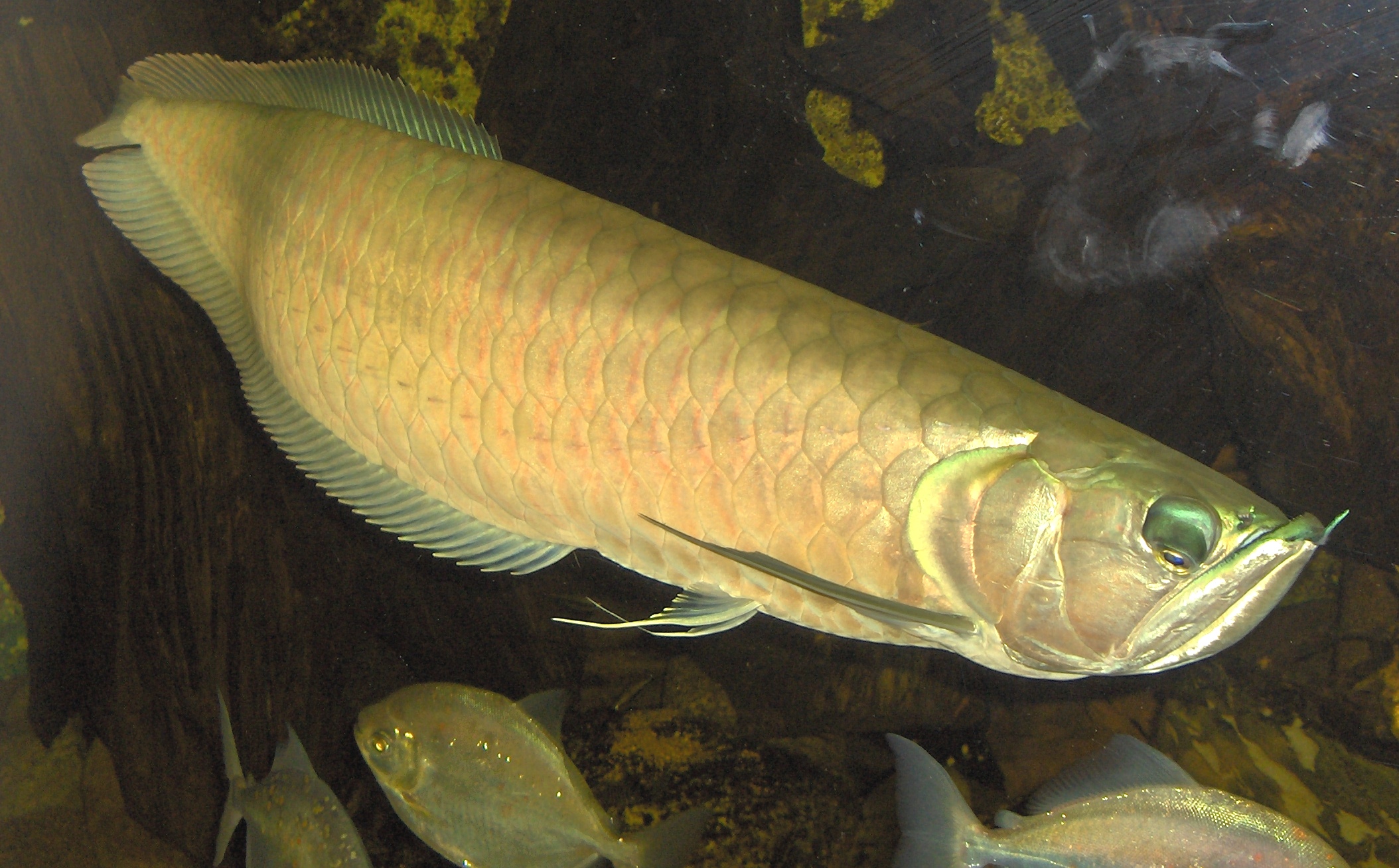
The silver arowana is a sleek, surface-cruising South American predator with a long ribbon-like body, upturned 'drawbridge' mouth, and powerful leaping ability. A spectacular but demanding fish, it reaches enormous size and requires a massive, securely covered aquarium — strictly for experienced keepers with the space to match.
ℹ️
Educational only. KinStation content is reviewed by licensed veterinarians but cannot replace an in-person exam. Always consult a licensed veterinarian or board-certified specialist for diagnosis, treatment, or any decision affecting your pet's health.
🩺 Need expert help with your silver arowana?
Connect with a specialist near you or ask a licensed vet — never substitute online guidance for hands-on care in an emergency.
Commonly 24-36 in (60-90 cm); can reach ~47 in (120 cm)
Lifespan
10–20 years
Social needs
solo
Native region
South America (Amazon basin)
Origin
New World
Climate
🌴 Tropical
Water type
💧 Freshwater
Family
Osteoglossidae
Genus
Osteoglossum
Part of the Freshwater oddballs
Unusual, conversation-piece freshwater fish — knifefish, elephantnoses, bichirs, butterflyfish and other novelties prized for strange shapes, behaviors or electric senses rather than schooling color.
From the minimum an animal needs to be kept humanely, up to the ideal setup. Bigger is almost always better — minimums are floors, not targets.
Photo coming soon
Minimum
Long monster tank
250 gal / 950 L (≥8 ft, tight lid)
Osteoglossum bicirrhosum reaches 90+ cm and is a top-water JUMPER — heavy lid mandatory. 8-ft tank is minimum entry; smaller tanks cause stunting and 'dropeye'.
Photo coming soon
Recommended
Larger monster setup
400 gal / 1500 L (10 ft+)
10-ft+ tank with massive filtration (6× turnover), strong cooling, surface space for breathing/feeding. Single specimen or carefully matched group.
Photo coming soon
Ideal
Indoor pond / public display
1000 gal+ / 3800 L+ pond
Indoor pond or public-aquarium-scale display with abundant surface area, deep water, and natural prey targets. Truly humane arowana keeping.
Life & growth stages
How this animal changes through its life — each stage often has its own care, diet and space needs.
Photo coming soon
Egg
Fish eggs are small, translucent spheres, often laid in clutches on plants, substrate, or in a nest — or carried/brooded by a parent in livebearing and mouth-brooding species. A dark eye spot and the curled embryo become visible inside as development progresses.
Photo coming soon
Fry
Newly hatched fry are tiny and semi-transparent, frequently still carrying a yolk sac that fuels them before they feed freely. They lack full fin structure and adult coloration, staying near cover until they can swim and forage on their own.
Photo coming soon
Juvenile
Juveniles look like miniature adults but with developing fins and muted or different markings; many species shift pattern and color as they mature. Growth is rapid at this stage given clean water and steady feeding.
Adult
Adults show the species' full size, finnage, and mature coloration, and are sexually mature. Many fish develop sex-specific differences in size, color, or fin shape, which can intensify during breeding.
Color & pattern variants
Natural variants occur in the wild; selectively bred (man-made) variants were developed in captivity.
This is a giant: an adult needs a tank of at least 250 gallons (~950 L) and ideally far more, with a long, wide footprint that prioritizes horizontal swimming room and surface area over height. Keep warm, soft, acidic-to-neutral blackwater conditions of 75-82°F (24-28°C), pH 6.0-7.5, and soft to moderately soft water; pristine quality is essential for this large, waste-heavy fish.
Arowanas are surface-oriented river fish that need open swimming lanes and a tightly secured, heavy lid — they are explosive jumpers and will launch themselves out of an open or poorly weighted tank. Gentle to moderate flow and subdued lighting suit them.
Substrate
Bare-bottom or a thin layer of fine sand is easiest to keep spotless given the heavy bioload; arowanas spend their time near the surface and don't forage in substrate. Keep the aquascape open and uncluttered to avoid injury to such a large, fast fish.
Equipment & setup
Run powerful, oversized filtration (sump or large canister) to handle the heavy waste load, paired with a reliable heater. A heavy, fully sealed lid is non-negotiable to prevent jumping; provide moderate flow and dim, even lighting. Large frequent water changes are part of the standard equipment routine.
Diet
Strictly carnivorous and surface-feeding. Offer meaty foods such as large sinking/floating carnivore pellets, earthworms, crickets, shrimp, mussel, and pieces of fish; variety prevents nutritional issues like the eye-drooping linked to overly fatty diets. Avoid relying on feeder fish, which risk introducing disease, and do not overfeed this fast-growing predator.
Behavior & temperament
A solitary, territorial predator best kept one per tank; juveniles may be grouped only in very large systems and often still turn on each other. It will eat any tankmate small enough to fit in its mouth, so companions must be large, robust, and non-aggressive. Generally calm with appropriately sized tankmates but always views smaller fish as food.
Health
Common problems include 'drop eye' (downward-tilted eyes, linked to diet, tank depth, or looking downward at food), gill curl, and injuries from jumping or striking the glass. Hole-in-the-head and ich can appear under poor water quality. Spinal and growth deformities result from cramped tanks — adequate size and water changes are the foundation of long-term health.
Tips, DIY & hacks
Buy a juvenile only if you can house the adult — these fish outgrow most home tanks fast. Weight or latch the lid securely, as a leaping arowana can injure itself or escape. Feed a varied meaty diet and keep food at or below water level to help prevent drop-eye over the fish's long life.