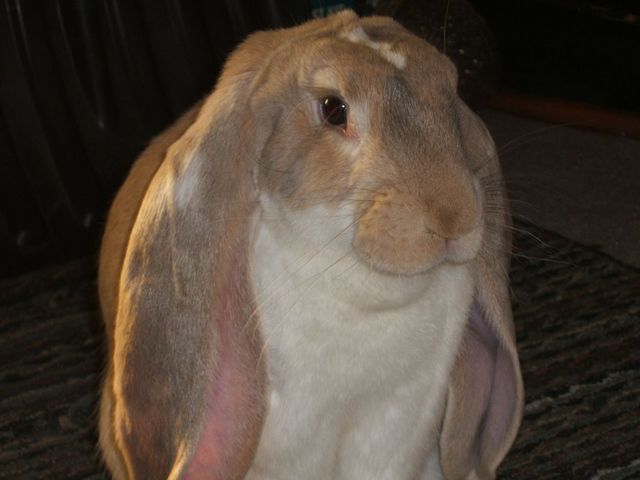
The oldest domesticated lop breed and the original 'fancy' rabbit, famous for its dramatically long, dragging ears. Developed in 19th-century England, it is a calm, affectionate show and companion rabbit whose extreme ears demand special care.
ℹ️
Educational only. KinStation content is reviewed by licensed veterinarians but cannot replace an in-person exam. Always consult a licensed veterinarian or board-certified specialist for diagnosis, treatment, or any decision affecting your pet's health.
🩺 Need expert help with your english lop?
Connect with a specialist near you or ask a licensed vet — never substitute online guidance for hands-on care in an emergency.
From the minimum an animal needs to be kept humanely, up to the ideal setup. Bigger is almost always better — minimums are floors, not targets.
Photo coming soon
Minimum
Hutch + daily exercise run
Hutch 12 sq ft + 32 sq ft exercise run
Welfare floor: a rabbit must be able to take 3–4 consecutive hops, stand fully upright on its hind legs, and stretch flat. A hutch alone is never enough — pair it with several hours of daily run access. English Lop is a large 4–5 kg breed with long ears — flat solid flooring matters (the ears drag); go larger than the welfare floor where you can.
Photo coming soon
Recommended
X-pen with free-roam access
X-pen ~16 sq ft, free-roam most of the day
Exercise pen or rabbit-proofed room available most of the day, with hides at both ends, a hay station, dig/forage boxes, and a litter tray. Bonded pairs need proportionally more space.
Photo coming soon
Ideal
Free-roam house rabbit
Full room / free-roam, 24/7 access
Free-roam (like a house cat) with rabbit-proofed cabling, multiple hides, dig boxes, levels, and constant access to hay, water, and a litter area. Best welfare outcome and most natural behaviour.
Life & growth stages
How this animal changes through its life — each stage often has its own care, diet and space needs.
Photo coming soon
Newborn
Newborn mammals are nursed on their mother's milk. Many are born helpless — blind, deaf, and sparsely furred (altricial, as in dogs, cats, and rodents) — while others stand and follow within hours (precocial, as in hoofed livestock).
Photo coming soon
Juvenile
After weaning, juveniles grow quickly and become increasingly active, playful, and independent. Adult coat, proportions, and (in many species) the permanent teeth come in as they approach full size.
Photo coming soon
Adult
Adults reach full body size and sexual maturity, with the species' mature coat and build. Sexual dimorphism — differences in size, mane, horns, or markings — is pronounced in some mammals and subtle in others.
Senior
Senior animals show aging signs such as graying fur, reduced activity, and a greater need for veterinary monitoring of joints, teeth, and organ function. Lifespan and the onset of old age vary widely by species and size.
Color & pattern variants
Natural variants occur in the wild; selectively bred (man-made) variants were developed in captivity.
House in a large pen or hutch with a smooth, snag-free solid floor so the long ears are never caught, torn, or stepped on. Keep food and water bowls low and wide so ears don't dip into them. Provide soft bedding, shade, and good ventilation. Outdoor housing must protect the thin, exposed ears from cold (frostbite risk on ear tips) and from biting insects.
Diet
Unlimited grass hay underpins the diet, with a measured pellet portion for a large rabbit and daily leafy greens. Use shallow, heavy bowls or low feeders so the ears stay clean and dry. Provide constant fresh water and keep treats minimal to avoid obesity.
Behavior & temperament
A show and pet breed prized for its docile, laid-back, and affectionate nature; many tolerate extensive handling. The breed is foundational to all modern lops. Their relaxed temperament suits patient keepers willing to manage the ear-care workload.
Health
The extreme ear length brings real welfare concerns: ears are easily torn, can be stepped on by the rabbit, are prone to ear-canal infections and wax buildup, and the tips are vulnerable to frostbite in cold and to fly/insect damage. Like other large lops they are prone to sore hocks, dental malocclusion, and heat stress. Responsible keeping means daily ear monitoring.
Tips, DIY & hacks
Inspect the ears daily for tears, dirt, wax, parasites, or sores, and keep the housing floor smooth and free of catch points. In winter protect ear tips from frost; in summer guard against flystrike and insect bites. Keep bedding clean and dry to prevent ear and hock infection. Handle gently, never lifting by the ears, and keep hay available at all times.