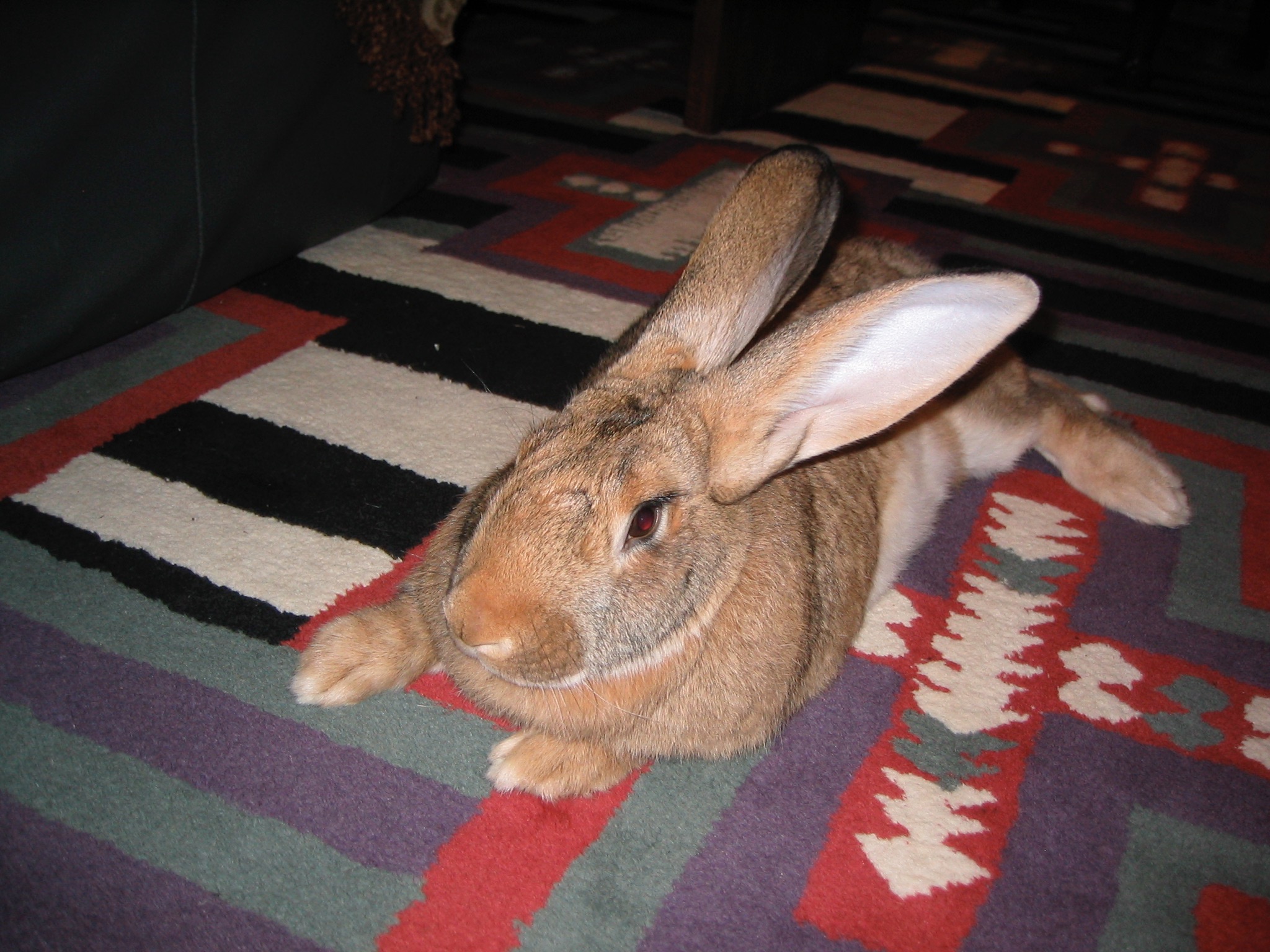
A docile giant breed from Flanders, Belgium, originally raised for fur and meat and now a popular gentle companion. Its enormous size demands proportionally large housing and care.
ℹ️
Educational only. KinStation content is reviewed by licensed veterinarians but cannot replace an in-person exam. Always consult a licensed veterinarian or board-certified specialist for diagnosis, treatment, or any decision affecting your pet's health.
🩺 Need expert help with your flemish giant?
Connect with a specialist near you or ask a licensed vet — never substitute online guidance for hands-on care in an emergency.
From the minimum an animal needs to be kept humanely, up to the ideal setup. Bigger is almost always better — minimums are floors, not targets.
Photo coming soon
Minimum
Oversized hutch + large run
Hutch ≥ 24 sq ft + 50 sq ft exercise run
Giant rabbits need a hutch they can fully stretch out in (≥ 6 ft long) and a daily run sized for several consecutive 1 m+ hops. The standard 12 sq ft welfare floor is too small for a 6–10 kg adult. Flemish Giants reach 6–10 kg — they are dog-sized and a hutch is not appropriate housing. Soft non-slip flooring prevents sore hocks.
Recommended
Walk-in pen + free-roam access
Pen ~32 sq ft, free-roam most of the day
A walk-in x-pen or shed-conversion plus rabbit-proofed room access most of the day. Reinforced flooring (sore-hock risk), oversized litter tray, and heavy ceramic feed/water bowls a giant can't flip.
Geoprofi Lars / CC BY-SA 4.0 (Wikimedia Commons)
Photo coming soon
Ideal
Free-roam giant in a rabbit-proofed home
Full room or shed/aviary, 24/7 access
Free-roam in a giant-proofed room or a heated shed/aviary combo. Soft non-slip flooring, multiple resting platforms (cushioned to protect hocks), and constant access to hay, water, and a large litter area. Giants are sedentary if confined — space is the main welfare lever.
Life & growth stages
How this animal changes through its life — each stage often has its own care, diet and space needs.
Photo coming soon
Newborn
Newborn mammals are nursed on their mother's milk. Many are born helpless — blind, deaf, and sparsely furred (altricial, as in dogs, cats, and rodents) — while others stand and follow within hours (precocial, as in hoofed livestock).
Photo coming soon
Juvenile
After weaning, juveniles grow quickly and become increasingly active, playful, and independent. Adult coat, proportions, and (in many species) the permanent teeth come in as they approach full size.
Photo coming soon
Adult
Adults reach full body size and sexual maturity, with the species' mature coat and build. Sexual dimorphism — differences in size, mane, horns, or markings — is pronounced in some mammals and subtle in others.
Senior
Senior animals show aging signs such as graying fur, reduced activity, and a greater need for veterinary monitoring of joints, teeth, and organ function. Lifespan and the onset of old age vary widely by species and size.
Color & pattern variants
Natural variants occur in the wild; selectively bred (man-made) variants were developed in captivity.
Requires very large housing — a hutch/pen at minimum several times the stretched-out body length, or a dedicated free-roam room. Dog x-pens, large dog crates, or custom enclosures are common. Solid, well-cushioned flooring is critical given the heavy body weight (sore hocks risk). Needs daily access to a spacious run. Sensitive to heat — provide shade, ventilation, and cooling in summer.
Diet
Unlimited grass hay plus generous leafy greens; pellets fed in larger amounts proportionate to body mass but still measured to avoid obesity. Growing giants need adequate protein and may eat well into 1.5 years before reaching full size. Constant fresh water (a bowl or large bottle). Monitor weight closely — extra mass stresses joints and feet.
Behavior & temperament
Bred originally as a dual-purpose fur/meat breed; today chiefly a calm, sociable pet and show animal nicknamed the 'gentle giant.' Generally tolerant and easygoing, but their size means even relaxed kicks can injure handlers or the rabbit if mishandled.
Health
Sore hocks (pododermatitis) and arthritis/joint strain from heavy weight are common — provide soft flooring and keep lean. Prone to heat stress, and to splayed/overgrown nails. Shorter lifespan than small breeds, partly due to size-related cardiac and skeletal load. Vaccinate against myxomatosis and RHDV where available.
Tips, DIY & hacks
Always support the hindquarters fully when lifting; their spine can fracture if the back legs dangle or kick unsupported. Provide oversized litter trays, food bowls, and resting mats. Budget for higher food and vet costs. Best handled close to the ground. Neuter pets and consider a bonded companion of similar size.