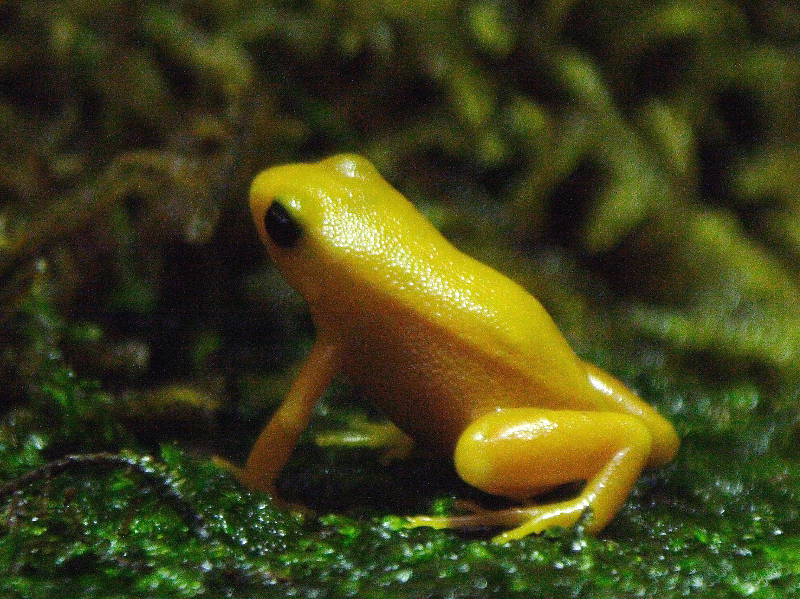
A tiny, brilliant orange-to-yellow terrestrial frog from a few small wetlands in central-eastern Madagascar, often called an 'Old World dart frog' for its convergent aposematic coloring and toxin-sequestering biology (it is not a true dendrobatid). It is a popular, social, captive-bred display species. The wild population is threatened: it was long listed as Critically Endangered and, following a 2020 reassessment with better range data, is now classified as Endangered on the IUCN Red List. It is also listed on CITES Appendix II, so responsible keepers buy only captive-bred stock.
ℹ️
Educational only. KinStation content is reviewed by licensed veterinarians but cannot replace an in-person exam. Always consult a licensed veterinarian or board-certified specialist for diagnosis, treatment, or any decision affecting your pet's health.
🩺 Need expert help with your golden mantella?
Connect with a specialist near you or ask a licensed vet — never substitute online guidance for hands-on care in an emergency.
Tiny: about 1 to 1.25 in (24 to 31 mm) snout-vent length, with females slightly larger and rounder than males
Lifespan
5–10 years
Social needs
group
Native region
Central-eastern Madagascar, restricted to a few small swampy wetland and marsh-clearing sites in degraded lowland forest
Origin
Old World
Climate
🌴 Tropical
Family
Mantellidae
Genus
Mantella
Part of the Poison Dart Frogs
Small, brilliantly colored diurnal frogs of the family Dendrobatidae from Central and South America. Captive-bred individuals are non-toxic because their alkaloid defenses come from wild ant- and mite-based diets. They thrive in planted, high-humidity bioactive vivaria and are display-only animals that should not be handled.
From the minimum an animal needs to be kept humanely, up to the ideal setup. Bigger is almost always better — minimums are floors, not targets.
Photo coming soon
Minimum
Bioactive vertical vivarium
18 × 18 × 18 in for a pair
Mantella aurantiaca is a Madagascan analogue to dart frogs — terrestrial, brightly aposematic, captive-bred specimens toxin-free. Bioactive 18×18×18 with ABG, leaf litter, low ground cover, shallow water feature, 75–85% humidity at 68–75 °F (cooler than darts).
Photo coming soon
Recommended
Larger planted bioactive
24 × 18 × 18 in for a small group
Mantellas do well in small groups — wider floor space, dense leaf litter, sphagnum patches for egg-laying, and a shallow stream/pool. Cooler nights (60–65 °F) and a simulated dry season trigger breeding.
Photo coming soon
Ideal
Planted bioactive 30+ gal
30+ gal display vivarium
Heavily planted 30+ gallon bioactive with deep leaf litter, sphagnum egg sites, gentle stream/pool, and a springtail + isopod crew. Conservation-relevant — wild populations are critically endangered, so support reputable captive breeders.
Life & growth stages
How this animal changes through its life — each stage often has its own care, diet and space needs.
Photo coming soon
Egg
Amphibian eggs are soft, jelly-coated spheres laid in or near water — in floating clutches, strings, or foam nests depending on the species. The dark embryo is visible within the clear gel as it develops.
Photo coming soon
Tadpole / Larva
The aquatic larva (a tadpole in frogs/toads, a gilled larva in salamanders and newts) breathes through gills and feeds and grows in water. Frog/toad tadpoles are limbless at first, then sprout hind then front legs as metamorphosis nears.
Photo coming soon
Juvenile (froglet / eft)
At metamorphosis the animal develops legs and lungs and typically leaves the water as a froglet or, in many newts, a terrestrial eft. It resembles a small adult but is not yet sexually mature and its coloration may still be changing.
Adult
Adults reach full size and breeding condition, with the species' mature skin coloration and pattern. Many amphibians return to water to breed and can show seasonal or sex-specific changes such as nuptial coloration or crests.
Color & pattern variants
Natural variants occur in the wild; selectively bred (man-made) variants were developed in captivity.
Natural
representative
Classic orange
The typical bright orange form, the most commonly kept and bred coloration.
representative
Yellow / 'lemon'
Paler yellow-orange individuals occurring naturally within the species' limited color range.
representative
Red-orange
Deeper red-tinged orange animals; color in this species spans yellow through to nearly red rather than distinct locale morphs.
Habitat & enclosure
Keep a small group in a heavily planted, humid terrarium with plenty of horizontal floor space, since they are ground-dwellers rather than climbers. A trio or small group does well in an 18x18x18 in (45x45x45 cm) bioactive vivarium with cork bark, leaf litter, plants, and a shallow water dish or stream feature. Maintain a cooler tropical range than darts, about 68 to 78 F (20 to 26 C) by day with a slight night drop, and 80 to 100 percent humidity; they do not tolerate heat above the low 80s F (about 28 C). A seasonal cooler, drier rest period helps trigger breeding.
Substrate
Use a bioactive setup with a drainage layer, a fine soil mix such as ABG over it, and a deep layer of leaf litter and live moss where the frogs forage and shelter. A thriving springtail and dwarf isopod cleanup crew both maintains the substrate and provides supplemental tiny prey, which suits this frog's small mouth.
Equipment & setup
Provide full-spectrum LED plant lighting and optional low-level UVB, which can support natural behavior and D3 synthesis. A misting or fogging system maintains the high humidity, working with the drainage layer, a hygrometer, and a thermometer. Because they prefer cooler conditions, the priority is often preventing overheating rather than adding heat, so site the tank away from strong heat sources and consider room cooling in summer. A secure, controlled-ventilation glass lid keeps humidity high while preventing escapes of these tiny frogs.
Diet
Feed frequent small meals of micro-feeders: dwarf (Drosophila hydei and melanogaster) fruit flies, springtails, pinhead crickets, aphids, and bean weevils. Dust feeders with calcium plus D3 and a vitamin A and multivitamin supplement on a rotating schedule, as vitamin A deficiency (short tongue syndrome) is a real risk in this species. Their fast metabolism and tiny size mean they should be fed most days.
Behavior & temperament
Diurnal, bold, and active, with constant foraging and audible clicking calls from the males. Unlike many frogs they are gregarious and do well in groups, with males calling and mild, non-injurious jostling rather than serious territorial fighting. Like dart frogs they are an aposematic, look-but-do-not-touch species: wild frogs sequester skin alkaloids from their diet, and even captive-bred animals (which lose this dietary toxicity) have delicate, absorptive skin that should not be handled without clean, wet, powder-free gloves.
Health
Main risks are metabolic bone disease and short tongue syndrome from poor supplementation, overheating, dehydration, obesity from overfeeding, and chytrid fungus or bacterial infection in poorly quarantined stock. Their small size leaves little margin for husbandry error, so stable cool-tropical temperatures and careful feeder dusting are essential. Source captive-bred animals, quarantine new arrivals, and use clean dechlorinated water for all dishes and misting.
Tips, DIY & hacks
Buy only captive-bred Mantella aurantiaca, never wild-caught, given its Endangered status, CITES Appendix II listing, and tightly restricted range. Keep them in groups of 4 to 8 or more for natural calling and breeding behavior, and provide a shallow water feature plus film canisters or cups for egg-laying near water, since tadpoles develop in shallow pools. To trigger breeding, give a 4 to 8 week cooler, slightly drier rest followed by heavier misting that simulates the rainy season. Always handle with clean wet gloves and only when necessary.