Palythoa
Palythoa grandis · also called Palys, Button polyps, Sea mat, Giant palythoa, Moon polyps

A hardy, fast-spreading colonial zoanthid coral (a 'soft coral' in trade terms) grown as buttons of polyps joined by a fleshy mat. Beginner-friendly and brightly colored, but notable for containing palytoxin — one of the most potent natural toxins known — so it must be handled with serious caution.
🩺 Need expert help with your palythoa?
Connect with a specialist near you or ask a licensed vet — never substitute online guidance for hands-on care in an emergency.
Quick facts
| Size | Colonial polyps; P. grandis is a large-polyp species with individual polyps up to ~1-2 in (2.5-5 cm) across, spreading via a shared fleshy mat into colonies of |
| Lifespan | 5–100 years |
| Social needs | solo |
| Native region | Tropical western Atlantic and Caribbean (P. grandis); the genus also occurs across the Indo-Pacific |
| Origin | Worldwide |
| Climate | 🌴 Tropical |
| Water type | 🌊 Marine |
| Family | Sphenopidae |
| Genus | Palythoa |
Part of the Zoanthids
Zoanthids and palythoas are colonial reef polyps (order Zoantharia) famous for an endless palette of fluorescent color morphs and easy, fast-spreading growth. Hardy and beginner-friendly, they nonetheless carry palytoxin in their tissue and must be handled with gloves and care.
Habitat & space requirements
From the minimum an animal needs to be kept humanely, up to the ideal setup. Bigger is almost always better — minimums are floors, not targets.
Life & growth stages
How this animal changes through its life — each stage often has its own care, diet and space needs.
Color & pattern variants
Natural variants occur in the wild; selectively bred (man-made) variants were developed in captivity.
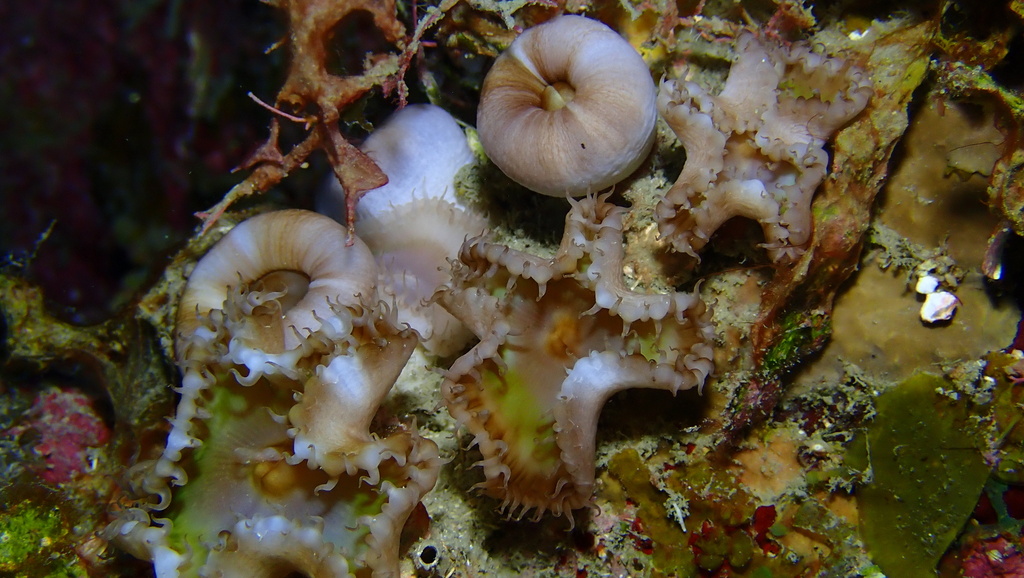 representative
Green/Gold Palythoa
Common wild morphs with green or gold-centered polyps and contrasting skirts; very hardy and fast-spreading.
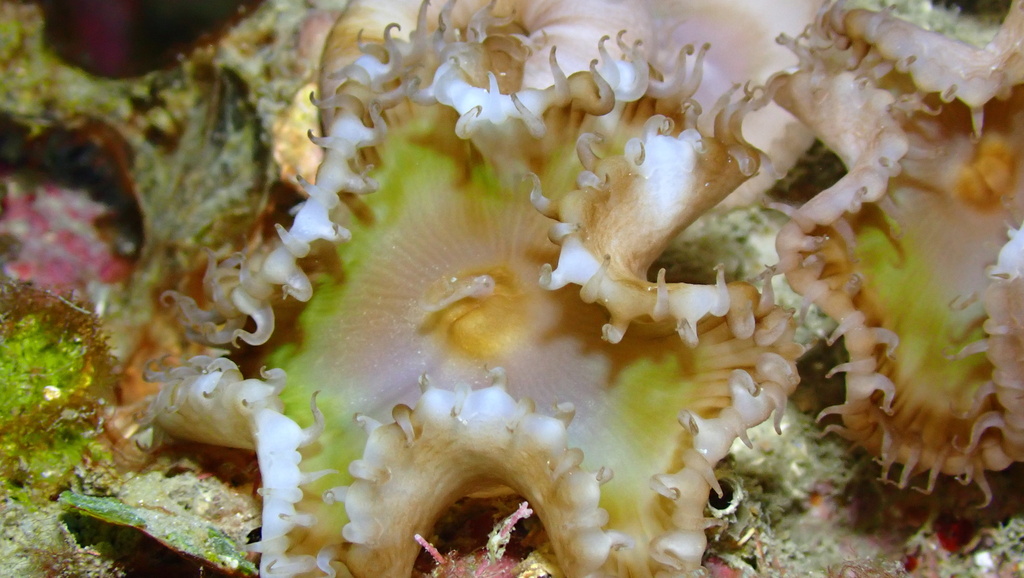 representative
Gold/Sunny D Palythoa →
Large-polyped Palythoa grandis with golden-yellow centers and brown skirts; a hardy, fast-spreading mat coral.
Tip: WARNING: Palythoa carry palytoxin, among the most lethal natural toxins — wear gloves and eye protection when handling and NEVER boil/scrape rock with palys, as aerosolized toxin has hospitalized hobbyists.
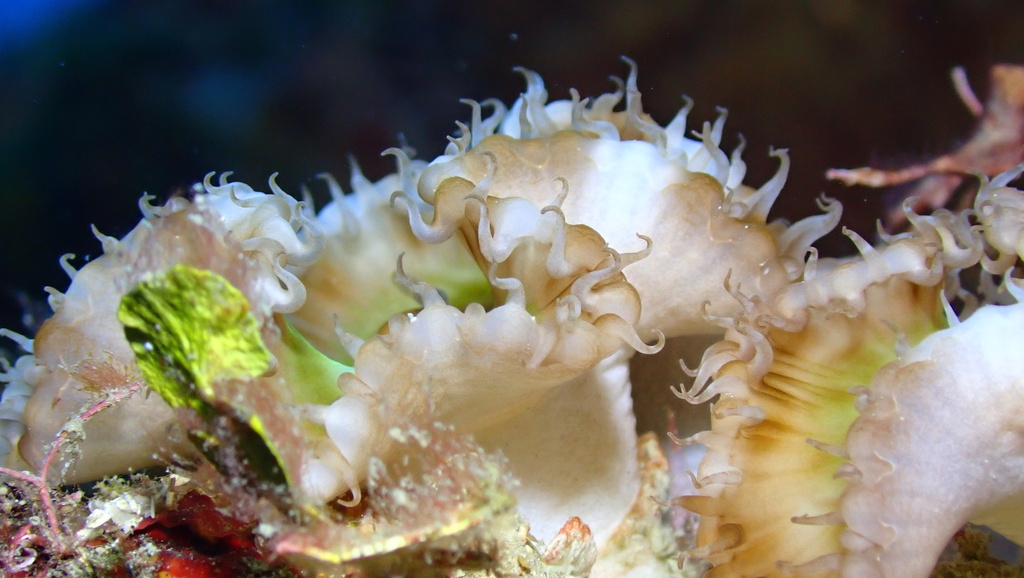 representative
Sunny Side Up Palythoa →
Bright yellow center ringed by a contrasting skirt, resembling a fried egg; a vigorous beginner paly.
Tip: Thrives in low-to-moderate light and moderate flow; it spreads aggressively over rock, so isolate it on an island to keep it off prized corals — and still glove up for palytoxin.
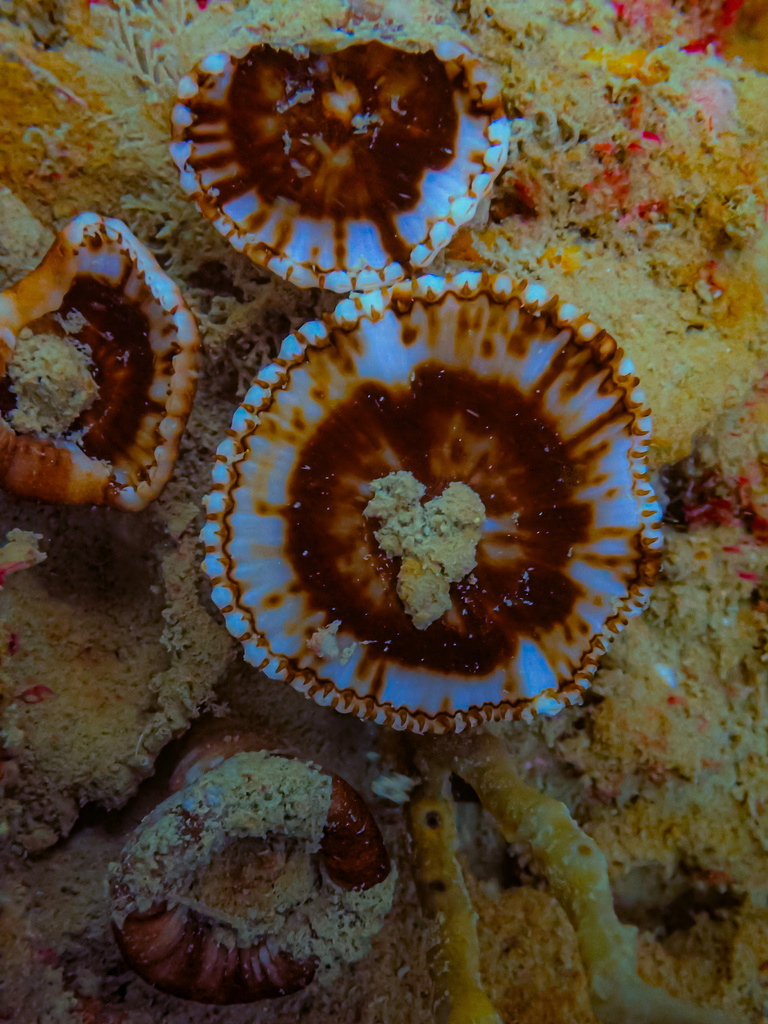 representative
Maui Pink / Pink Palythoa →
A pink-skirted grandis-type paly with a contrasting mouth; popular for its softer pastel coloration.
Tip: Pink holds best under blue-leaning light; feed the large polyps bits of meaty food weekly to boost size and color — with gloves on at all times.
 representative
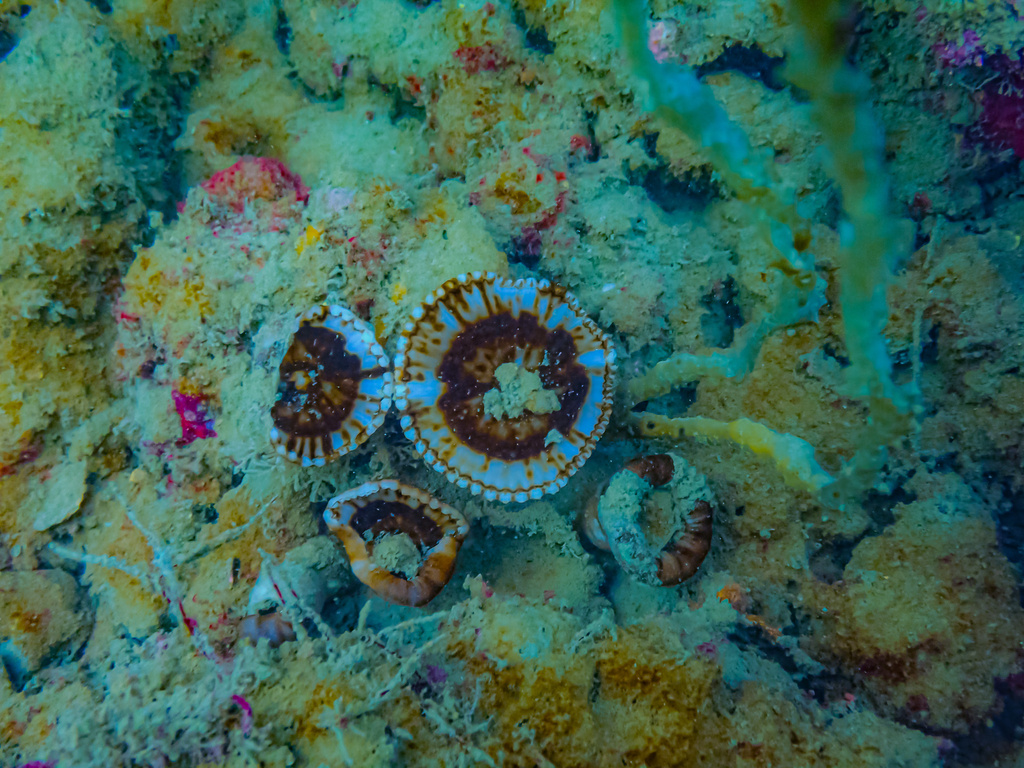
Purple Death / Purple Deathstar Palythoa →
Deep purple skirt with a green/teal center; one of the most recognizable named paly morphs in the hobby.
Tip: Moderate light keeps the purple deep (high light browns it out); the name is apt — handle with extreme palytoxin caution and never expose open cuts.
 representative
Nuclear Green / Toxic Green Palythoa →
Electric fluorescent-green polyps that glow hard under actinic light; an easy, fast-growing crowd-pleaser.
Tip: Blue/actinic lighting maximizes the green fluorescence; it's a weed-grade grower, so frag and trade rather than letting it carpet the tank — gloves mandatory.
representativeMagician / Devil's Armor Palythoa →
High-end multi-color grandis palys with dark skirts and bright contrasting centers, sold under collector trade names.
Tip: These pricier morphs hold color best with stable parameters and moderate light; quarantine new frags and dip them, since palys can carry zoa-eating nudibranchs and spiders.
representativeNuclear Green Palythoa →
A bright nuclear-green large-polyp paly with a contrasting darker or cream center, forming dense mats of big open polyps.
Tip: Easy across a wide range of light and flow; give it room to spread since it encrusts aggressively over rock.
representativeGrandis 'Sun' Palythoa →
The large brown/tan *Palythoa grandis*-type polyp with a sun-burst oral disc — big dinner-plate polyps that fully open under light.
Tip: Moderate light and moderate flow; very hardy and a good beginner large paly, but wear gloves due to palytoxin risk.
representativeUtter Chaos →
A large-polyp paly with a dark purple-to-black base splattered and swirled with yellow-green and accented by bright orange skirts, giving an almost psychedelic, mottled look.
Tip: Give it moderate light (PAR ~100-200) and low-to-medium flow. It can be touchy when first fragged, so place it somewhere stable and let it settle before moving it.
representativeCaptain America →
A large grandis-type paly named for its red-and-blue comic-book coloration, with a red-orange center ringed in bold blue and a vivid green skirt on big button polyps.
Tip: Acclimate slowly to light; it handles a wide range but colors up best under moderate lighting with slow-to-moderate current.
representativeCaptain Jerk →
A large-polyp paly with green, teal and yellow coloration and long, flowing skirts.
Tip: A fast grower tolerant of varied conditions; place on rock with moderate flow and moderate light and give it room to spread.
representativeRed People Eater →
A classic paly with a red-to-purple face, a bright green mouth, and contrasting skirts that make for an unmistakable 'people eater' look.
Tip: Very forgiving; place anywhere with low-to-moderate light and gentle-to-moderate flow and it will quickly spread across the rock.
representativeButt Muncher →
A button polyp with bold mottled coloration, sold by various shops as both a paly and a zoa.
Tip: Treat like other button polyps: moderate light, low-to-medium flow, and a stable spot. If the skirts shorten, the flow may be too strong or too direct.
representativeSunny D →
A bright button polyp with a metallic orange face, a green mouth, and a yellow-gold highlighted skirt that can sparkle under stronger light.
Tip: Tolerates a wide range of light (PAR ~100-250); give low-to-medium flow and a bit more light to bring out the sparkly orange skirt.
representativeWWC Emerald Grandis →
A true Palythoa grandis selection with large emerald-green button polyps that can approach 1.5-2 inches across.
Tip: Fast growing and tolerant; World Wide Corals recommends medium light and stronger flow. Mount on rock and keep detritus from settling on the polyps.
representativeWWC Green Grandis →
A fast-growing green Palythoa grandis with large button polyps whose color shifts noticeably with the lighting it is given.
Tip: Give it room to spread on the rockwork; low-to-moderate light and moderate flow are plenty, and it will quickly form a colony.
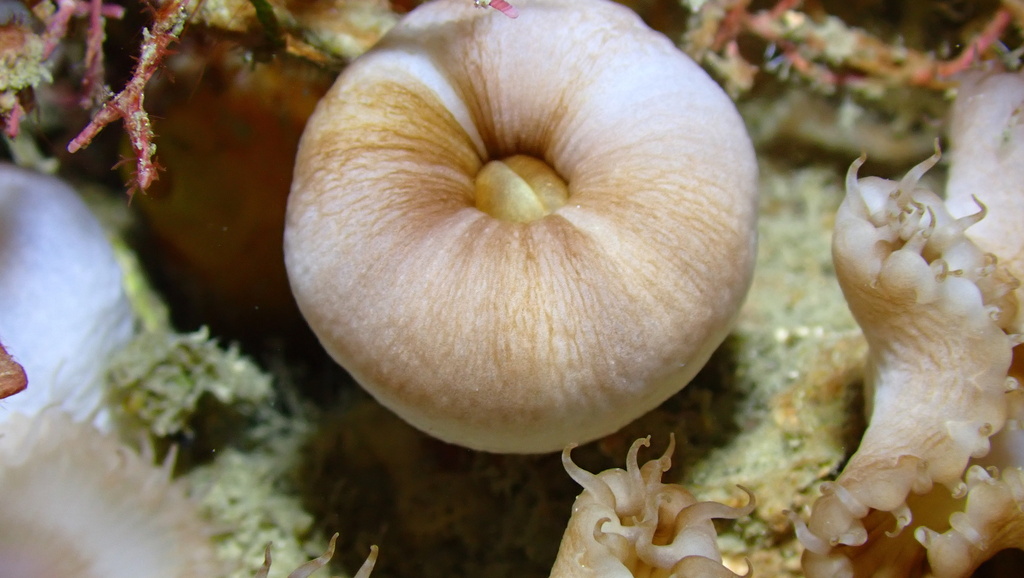
representativePalythoa grandis (Cinnamon / Sun Paly) →
The classic wild-collected Palythoa grandis, the largest of the button polyps, in warm green/brown 'cinnamon' tones; the species is also sold as 'Sun Paly' or 'Sun Polyp.'
Tip: Extremely adaptable to current and light; mount on rock and it will steadily add new polyps under basic reef conditions. Note that grandis is among the most palytoxin-heavy palys, so handle with gloves and eye protection.
 representative
Designer 'Paly' morphs
Collector-named aquacultured strains (e.g., 'Nuclear Green,' 'Sunny D,' 'Grandis' color forms) line-selected and propagated for vivid multicolor polyps in the frag trade.
representativeAquacultured Palythoa Frag →
Tank-propagated paly frags of named morphs glued to plugs; the standard, pest-reduced way palys are sold today.
Tip: Even on aquacultured frags, treat every Palythoa as toxic — the single most important paly tip is gloves, eye protection, and good ventilation, every single time.
representativeMagician Palythoa →
A large-polyp paly known for an electric blue, sparkly, spattered contrasting center on the oral disc — like a dropped splatter of paint against the surrounding face.
Tip: Moderate light and moderate flow on mid-level rockwork; palys tolerate higher nutrients than acros and respond very well to feeding, so they thrive in established tanks.
representativeArmageddon Palythoa →
A large paly best known for shocking orange rings around the mouth and the edge of the oral disc, giving a high-contrast, fiery look; exact coloration can shift between tanks.
Tip: Moderate flow and light on rockwork; like all palys, handle with gloves — palythoa can carry potent palytoxin.
representativeSunny D Palythoa →
A paly named 'Sunny D' for its bright green body lit by intense orange highlights, a clean and cheerful citrus-toned morph.
Tip: Tolerates a wide range of light and prefers low-to-medium flow; moderate light helps the orange highlights pop. Place on rockwork and avoid deep shade.
representativeBam Bam Orange Palythoa/Zoa →
An intensely orange, fluorescent orange-skirted polyp — one of the most recognizable orange morphs traded, valued because true orange is uncommon in reef tanks.
Tip: Moderate-to-bright light keeps the orange fluorescence saturated; moderate flow and mid-rock placement work well. A hardy, fast-growing beginner morph.
representativeDaisy Duke's Paly →
A designer paly with a bright ring of pink surrounded by another ring of pastel pink, giving a soft, layered bullseye look.
Tip: The Jason Fox listing calls for high light and high flow; under those conditions the pinks stay saturated. Acclimate to intensity gradually so it does not bleach.