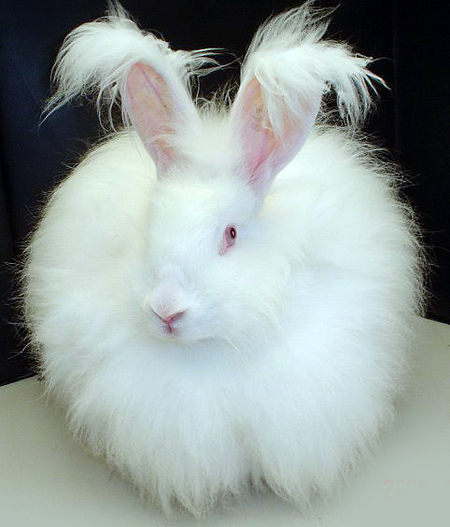
A fiber breed prized for wool that carries the satin sheen — a translucent, finer hair shaft that gives the coat extra luster and a softer hand. Developed in the 1980s by crossing a Satin rabbit into French Angora lines.
ℹ️
Educational only. KinStation content is reviewed by licensed veterinarians but cannot replace an in-person exam. Always consult a licensed veterinarian or board-certified specialist for diagnosis, treatment, or any decision affecting your pet's health.
🩺 Need expert help with your satin angora?
Connect with a specialist near you or ask a licensed vet — never substitute online guidance for hands-on care in an emergency.
From the minimum an animal needs to be kept humanely, up to the ideal setup. Bigger is almost always better — minimums are floors, not targets.
Photo coming soon
Minimum
Enclosure + daily run
Hutch 12 sq ft + 32 sq ft exercise run
A rabbit must take 3–4 consecutive hops, stand fully upright on its hind legs, and stretch flat. A hutch alone is never enough — pair it with several hours of daily run time. Satin Angora is a medium wool breed (~6.5–9.5 lb) — same welfare floor, plus frequent grooming/shearing to prevent matting and wool block.
Photo coming soon
Recommended
Pen with attached run
X-pen ~16 sq ft, free-roam most of the day
An exercise pen or rabbit-proofed room accessible for most of the day, with hides, a hay station, and a litter tray. Bonded pairs need proportionally more space.
Photo coming soon
Ideal
Free-roam house rabbit
Full room / free-roam, 24/7 access
Free-roam (like a house cat) with rabbit-proofed cabling, multiple hides, digging boxes, levels, and constant access to hay, water, and a litter area. Best welfare outcome and most natural behaviour.
Life & growth stages
How this animal changes through its life — each stage often has its own care, diet and space needs.
Photo coming soon
Newborn
Newborn mammals are nursed on their mother's milk. Many are born helpless — blind, deaf, and sparsely furred (altricial, as in dogs, cats, and rodents) — while others stand and follow within hours (precocial, as in hoofed livestock).
Photo coming soon
Juvenile
After weaning, juveniles grow quickly and become increasingly active, playful, and independent. Adult coat, proportions, and (in many species) the permanent teeth come in as they approach full size.
Photo coming soon
Adult
Adults reach full body size and sexual maturity, with the species' mature coat and build. Sexual dimorphism — differences in size, mane, horns, or markings — is pronounced in some mammals and subtle in others.
Senior
Senior animals show aging signs such as graying fur, reduced activity, and a greater need for veterinary monitoring of joints, teeth, and organ function. Lifespan and the onset of old age vary widely by species and size.
Color & pattern variants
Natural variants occur in the wild; selectively bred (man-made) variants were developed in captivity.
House in a large hutch (minimum ~4 ft of floor length) with daily access to a clean run for exercise. Wire flooring is hard on feet, so provide solid resting boards or mats; a slatted or solid floor with deep, dry bedding is preferable. Because the wool mats and absorbs moisture, the enclosure must stay scrupulously dry and clean — damp bedding ruins fiber and invites skin disease. Keep cool: Angoras overheat easily, so shade, ventilation, and frozen water bottles in summer are essential. Best kept indoors or in a temperature-stable shed.
Diet
Unlimited grass hay (timothy/orchard) is the foundation and is critical for both gut and dental health and for passing ingested wool. Supplement with a measured ration of plain pelleted feed and a daily handful of safe leafy greens. Many keepers add a small amount of extra fiber or papaya/pineapple enzyme during heavy molt to help move swallowed wool through the gut. Constant fresh water; wool around the mouth means water bottles stay cleaner than open bowls.
Behavior & temperament
A fiber/show breed, kept primarily for its lustrous wool (sheared, plucked, or combed roughly every 90 days) and secondarily as a calm companion. Generally docile and tolerant of the frequent handling grooming requires, but individuals vary. Not a hands-off pet — the coat demands routine, gentle interaction.
Health
Wool block (gastrointestinal stasis from ingested fiber) is the signature risk and can be fatal; prevent with constant hay, grooming, and hydration. Matting leads to skin sores, fly-strike, and overheating if the coat is neglected. As a wool breed they are prone to heat stress. Routine dental and nail care needed. The satin gene affects only hair structure and carries no known lethal/health defect itself.
Tips, DIY & hacks
Groom thoroughly 2-3 times weekly and daily during molt; a wide-tooth comb and blower work better than a slicker on satin fiber. Harvest wool by gentle plucking during natural molt or by shearing — never let the coat felt. Trim the fur around the rear ('skirt') to keep it clean and prevent fecal matting. Do the bulk of shearing before hot weather. Check skin under the wool weekly for mats and sores.