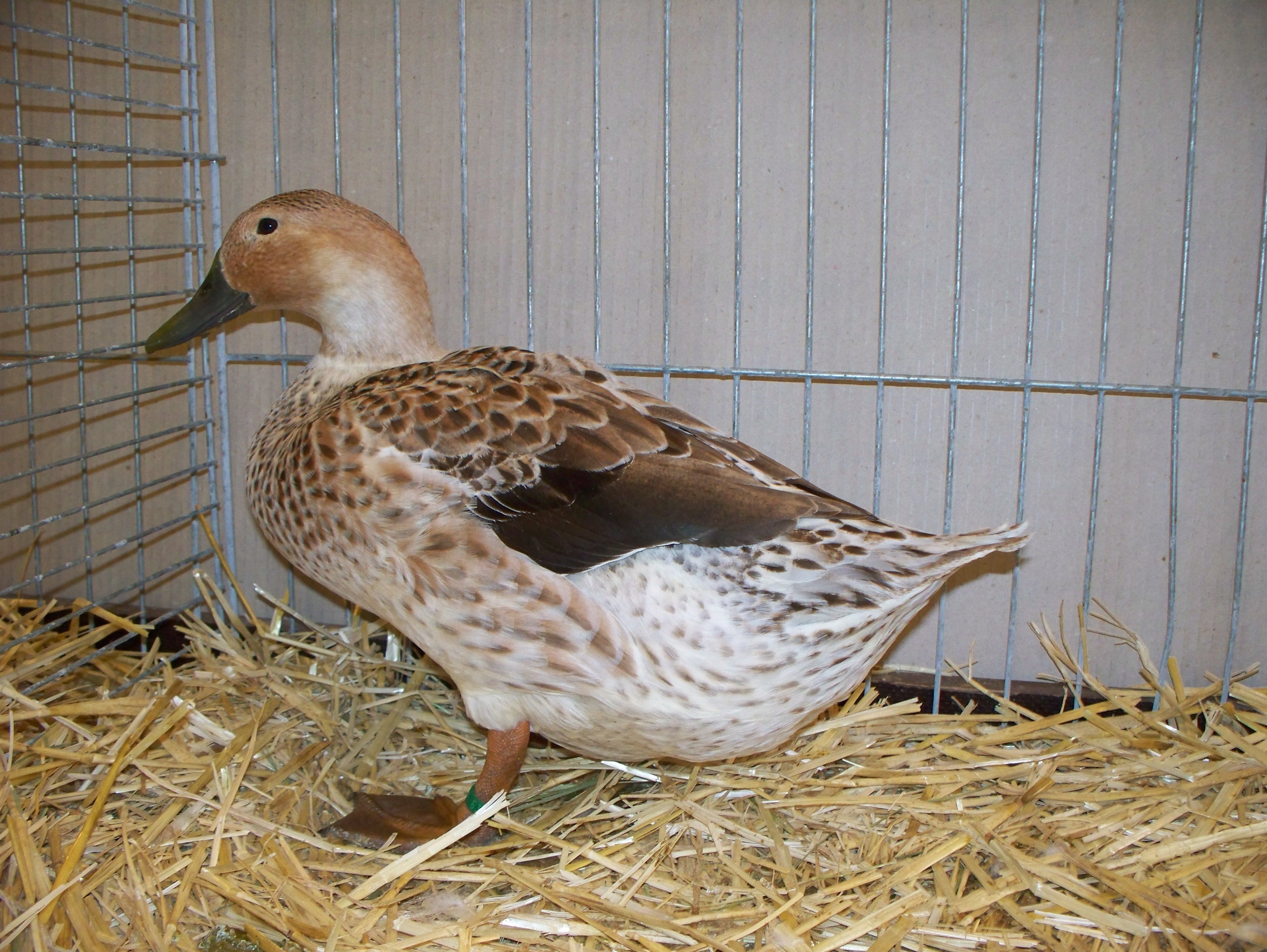
The Welsh Harlequin is a beautiful, prolific lightweight laying duck derived from the Khaki Campbell, combining high egg output with calm temperament and a refined, intricately patterned plumage.
ℹ️
Educational only. KinStation content is reviewed by licensed veterinarians but cannot replace an in-person exam. Always consult a licensed veterinarian or board-certified specialist for diagnosis, treatment, or any decision affecting your pet's health.
🩺 Need expert help with your welsh harlequin?
Connect with a specialist near you or ask a licensed vet — never substitute online guidance for hands-on care in an emergency.
From the minimum an animal needs to be kept humanely, up to the ideal setup. Bigger is almost always better — minimums are floors, not targets.
Photo coming soon
Minimum
Shelter + run + bathing water
3–4 sq ft/bird shelter + 10–15 sq ft/bird run + pool
Lightweight Welsh dual-purpose duck (auto-sexing): ~3–4 sq ft of dry ground-level shelter per bird, 10–15 sq ft of run, and a head-submersible bathing pool. Calm, friendly, and cold-hardy.
Photo coming soon
Recommended
Larger run with pond
6 sq ft/bird shelter + 25 sq ft/bird run + 6×4 ft pond
Larger run with refillable pond, shade, and soft footing. Welsh Harlequins are good foragers — provide pasture rotation if possible and protect from predators (light build means easy targets).
Photo coming soon
Ideal
Pasture + natural pond
Locked night shelter + pasture with natural pond
Pasture access by day with a natural pond and secure night shelter. Welsh Harlequins are top-rate layers in this setup and excellent in mixed gentle-waterfowl flocks.
Life & growth stages
How this animal changes through its life — each stage often has its own care, diet and space needs.
Photo coming soon
Egg
Birds develop inside a hard-shelled egg incubated by the parent(s). Egg size, shell color, and clutch size vary by species; the embryo develops over days to weeks before hatching.
Photo coming soon
Hatchling / Chick
Hatchlings are either altricial — naked, blind, and dependent on parents (typical of parrots and songbirds) — or precocial — downy, mobile, and self-feeding soon after hatching (typical of poultry and waterfowl). Down gives way to the first feathers.
Photo coming soon
Juvenile / Fledgling
Fledglings grow in their juvenile plumage and begin to fly and feed themselves, though they may still beg from parents at first. Juvenile feathering is often duller than the adult and is replaced as the bird matures.
Adult
Adults attain full body size and mature plumage, and are capable of breeding. Many species show distinct adult coloration, and in sexually dimorphic birds males and females differ in plumage, size, or markings.
no rights reserved via iNaturalist — https://www.inaturalist.org/observations/16238282
Color & pattern variants
Natural variants occur in the wild; selectively bred (man-made) variants were developed in captivity.
Keep a flock with a predator-proof house and a run or, ideally, free range over grass. Lightweight and active foragers that can manage short flights, so use adequate fencing or covered runs. Provide head-dunking water and bathing water where possible, shade in summer, and roughly 1-1.5 m² indoor floor per bird plus generous outdoor foraging space.
Diet
Feed a good-quality waterfowl/poultry layer pellet to support heavy egg production. Outstanding foragers that consume slugs, snails, insects and greens — excellent natural pest control. Provide grit and ample calcium (oyster shell) for the high lay rate, plus leafy greens. Feed beside water.
Behavior & temperament
Egg-laying / dual-purpose breed developed in Wales from off-coloured Khaki Campbells. Highly productive layer of around 240-330 large white/tinted eggs a year. Calm, docile, friendly and active; tames well and is good for families. More likely than Campbells or Runners to go broody and to mother ducklings successfully. A standout trait is that ducklings can often be sexed at hatch by bill colour (autosexing), which is unusual and useful.
Health
Hardy and long-lived with few breed-specific problems. The breed descends from a small founder population, so genetic diversity can be limited in some lines — source from reputable breeders. As with heavy layers, ensure excellent calcium and body condition to reduce egg-binding and prolapse risk. Standard waterfowl care prevents niacin-deficiency leg weakness in ducklings and bumblefoot in adults.
Tips, DIY & hacks
Take advantage of day-old bill-colour autosexing to identify females early if you want layers. Their high output means calcium and consistent layer feed are essential. They forage hard, so free range pays off in pest control and feed savings. Two recognised phases exist — gold (the original) and silver — so confirm which phase your stock is. Calm handling makes them tame, productive backyard ducks ideal for beginners.