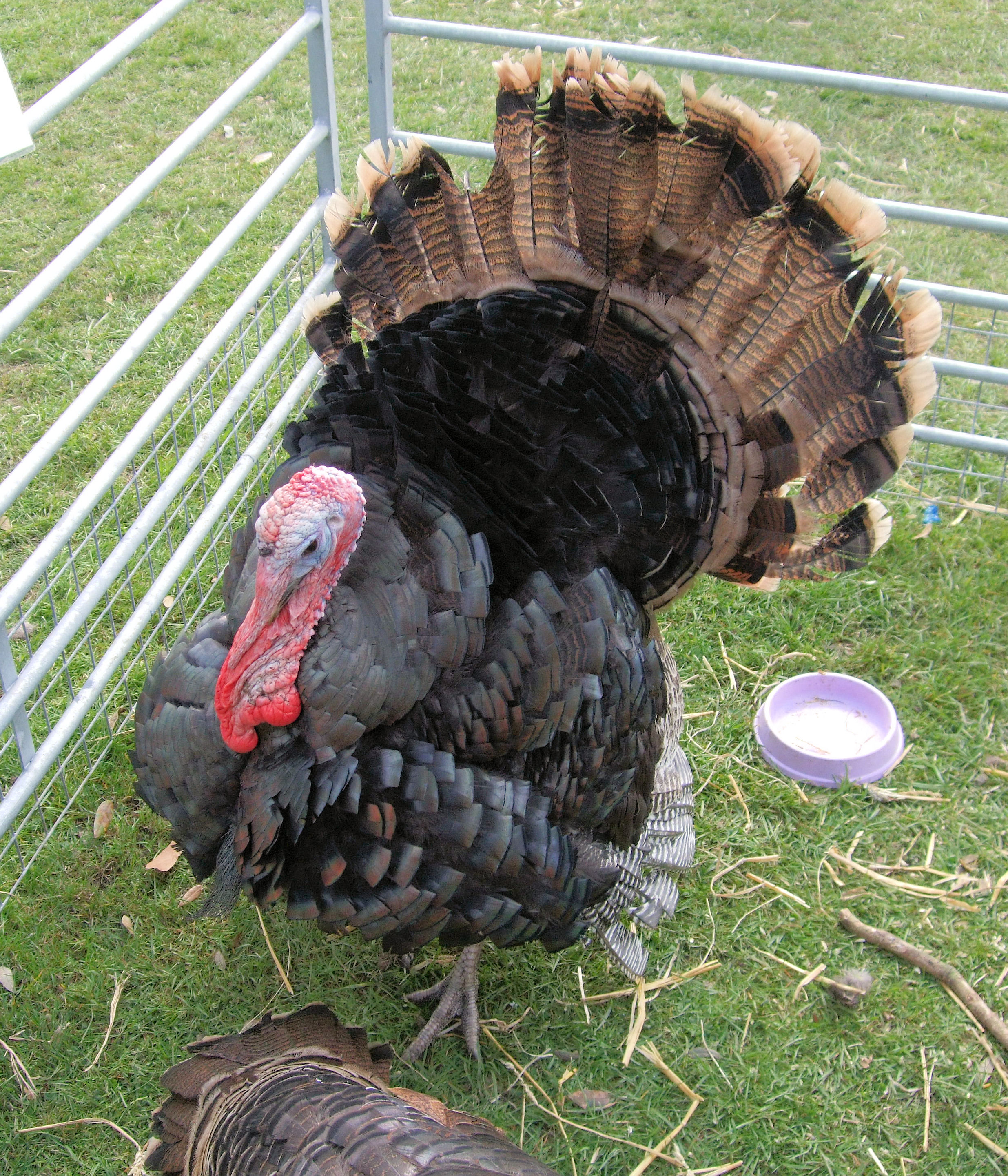
One of the oldest turkey breeds, descended from Mexican turkeys taken to Spain and Europe and reimported to the Americas. It has lustrous metallic-black plumage and is a hardy, dual-purpose heritage bird.
ℹ️
Educational only. KinStation content is reviewed by licensed veterinarians but cannot replace an in-person exam. Always consult a licensed veterinarian or board-certified specialist for diagnosis, treatment, or any decision affecting your pet's health.
🩺 Need expert help with your black (spanish) turkey?
Connect with a specialist near you or ask a licensed vet — never substitute online guidance for hands-on care in an emergency.
From the minimum an animal needs to be kept humanely, up to the ideal setup. Bigger is almost always better — minimums are floors, not targets.
Photo coming soon
Minimum
Turkey shelter + run
10 sq ft shelter + 25 sq ft run per bird
Black Spanish (Black) turkeys are a heritage breed (toms 23 lb, hens 14 lb). Provide 10 sq ft shelter and 25 sq ft secure run per bird with a 4 ft roost. They mate naturally and are good foragers — predator-proof fencing essential.
Photo coming soon
Recommended
Pasture run + roost barn
12 sq ft shelter + 100 sq ft pasture per bird
Open-sided pole barn with high roosts and a 100 sq ft pasture per bird, with shade trees. Black Spanish are alert and active; their iridescent black plumage is heat-absorbing — shade is critical in hot climates.
Photo coming soon
Ideal
Free-range pasture flock
Free-range pasture + roost barn, flock of 5–10
Rotated free-range pasture (1–2 acres for small flock) with a barn they return to at dusk. Black Spanish are flighty and fly well — keep tree cover for natural roosting tendency, but secure the barn against night predators.
Life & growth stages
How this animal changes through its life — each stage often has its own care, diet and space needs.
Photo coming soon
Egg
Birds develop inside a hard-shelled egg incubated by the parent(s). Egg size, shell color, and clutch size vary by species; the embryo develops over days to weeks before hatching.
Photo coming soon
Hatchling / Chick
Hatchlings are either altricial — naked, blind, and dependent on parents (typical of parrots and songbirds) — or precocial — downy, mobile, and self-feeding soon after hatching (typical of poultry and waterfowl). Down gives way to the first feathers.
Photo coming soon
Juvenile / Fledgling
Fledglings grow in their juvenile plumage and begin to fly and feed themselves, though they may still beg from parents at first. Juvenile feathering is often duller than the adult and is replaced as the bird matures.
Adult
Adults attain full body size and mature plumage, and are capable of breeding. Many species show distinct adult coloration, and in sexually dimorphic birds males and females differ in plumage, size, or markings.
(c) Eric Schmidt, some rights reserved (CC BY) via iNaturalist — https://www.inaturalist.org/observations/93649779
Color & pattern variants
Natural variants occur in the wild; selectively bred (man-made) variants were developed in captivity.
Provide a dry, ventilated coop with elevated roosts and a large predator-proof range; allow 6-10 sq ft indoors per bird. The breed forages and flies well, so use tall or covered fencing. Shade helps in heat as dark plumage absorbs sun.
Diet
Poults need a 28% protein starter; step down to 20-22% grower and 16-18% maintenance/breeder ration. Strong forager that gathers insects and greens on range. Offer grit and free-choice oyster shell to layers and always clean water.
Behavior & temperament
Active, hardy, alert dual-purpose (meat and eggs) breed; one of the foundation lines behind several modern turkeys including the Bronze. Mates naturally and hens are capable brooders and mothers. Generally calm but good fliers and keen foragers.
Health
Robust and weather-hardy adults. Poults are vulnerable to chilling, coccidiosis, and blackhead disease (avoid co-ranging with chickens). As a slow-growing heritage line it is free of the mobility and heart issues seen in broad-breasted commercial turkeys.
Tips, DIY & hacks
Give afternoon shade in hot climates because black feathers absorb heat. Select breeders for rich green-black sheen and good size to maintain type. Let broody hens raise poults to sustain the flock. Excellent free-range homestead bird for ticks and pest control.