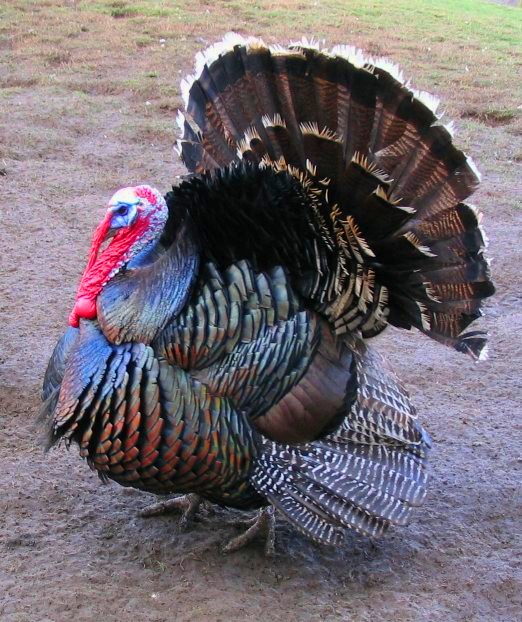
Photo: photo taken by Lupin on en:Wikipedia · CC BY-SA 3.0
The original metallic-bronze heritage turkey, a naturally-mating, slow-growing dual-purpose breed descended from crosses of domestic and Eastern wild turkeys. APA-recognized since 1874.
ℹ️
Educational only. KinStation content is reviewed by licensed veterinarians but cannot replace an in-person exam. Always consult a licensed veterinarian or board-certified specialist for diagnosis, treatment, or any decision affecting your pet's health.
🩺 Need expert help with your standard bronze?
Connect with a specialist near you or ask a licensed vet — never substitute online guidance for hands-on care in an emergency.
From the minimum an animal needs to be kept humanely, up to the ideal setup. Bigger is almost always better — minimums are floors, not targets.
Photo coming soon
Minimum
Coop + run
10 sq ft/bird coop + 25 sq ft/bird run
Large heritage turkey: ~10 sq ft of coop floor per bird, very sturdy low roosts (they are heavier than ornamental varieties), and a 25 sq ft/bird run with shade. Predator-proof construction is non-negotiable.
Photo coming soon
Recommended
Larger coop + bigger run
15 sq ft/bird coop + 75 sq ft/bird run
More room reduces aggression and lets toms display. Heritage Bronzes can still fly short distances — fences need to be tall or wings trimmed. Provide dust bath, shade, and varied forage.
Photo coming soon
Ideal
Pasture range with secure coop
Locked roost barn + pasture/orchard free-range
Free-range pasture or orchard with insects, greens, and seeds, plus a locked roost barn at night. Standard Bronzes are excellent foragers and thrive in low-density pasture-based husbandry.
Life & growth stages
How this animal changes through its life — each stage often has its own care, diet and space needs.
Photo coming soon
Egg
Birds develop inside a hard-shelled egg incubated by the parent(s). Egg size, shell color, and clutch size vary by species; the embryo develops over days to weeks before hatching.
Photo coming soon
Hatchling / Chick
Hatchlings are either altricial — naked, blind, and dependent on parents (typical of parrots and songbirds) — or precocial — downy, mobile, and self-feeding soon after hatching (typical of poultry and waterfowl). Down gives way to the first feathers.
Photo coming soon
Juvenile / Fledgling
Fledglings grow in their juvenile plumage and begin to fly and feed themselves, though they may still beg from parents at first. Juvenile feathering is often duller than the adult and is replaced as the bird matures.
Adult
Adults attain full body size and mature plumage, and are capable of breeding. Many species show distinct adult coloration, and in sexually dimorphic birds males and females differ in plumage, size, or markings.
(c) Eric Schmidt, some rights reserved (CC BY) via iNaturalist — https://www.inaturalist.org/observations/93649779
Habitat & enclosure
Pasture or large run with a covered, predator-proof coop; these active foragers need ample space and tolerate free-ranging well. Provide sturdy elevated roosts — unlike the broad-breasted hybrids, Standard Bronze can fly and prefer to roost off the ground (sometimes in trees). Good ventilation and dry litter in housing.
Diet
Turkey starter/grower for poults, then a maintenance ration with significant forage — they are excellent foragers, eating insects, seeds, and greens, which lowers feed needs. Provide grit, fresh water, and oyster shell for laying hens. Avoid over-feeding adults to keep breeders fit for natural mating.
Behavior & temperament
Active, alert, and good foragers; temperament varies with breeding and handling from docile (following keepers like dogs) to assertive toms in season. A naturally-mating, slow-growing dual-purpose heritage bird raised for flavorful meat and modest egg production (~75 eggs/year). Hens can go broody and brood their own poults.
Health
Robust and long-lived compared with commercial hybrids, with no extreme-conformation problems — they mate and reproduce naturally. Standard poultry concerns apply: blackhead (histomoniasis, avoid co-grazing with chickens on contaminated ground), coccidiosis in poults, and external parasites. Slow growth means longer time to market.
Tips, DIY & hacks
Do not confuse with Broad Breasted Bronze — Standard Bronze is the self-sustaining heritage bird and the one to choose for natural breeding. Keep poults warm and dry early (they are delicate the first weeks), and avoid rearing on ground shared by chickens to reduce blackhead risk. Select breeders for vigor and good leg structure.