🐾 Land🐦 FlyingCare difficulty: AdvancedLegal complexity: Low
Crèvecœur
Gallus gallus domesticus · also called Crevecoeur, Poule de Crèvecœur, Crève-Cœur
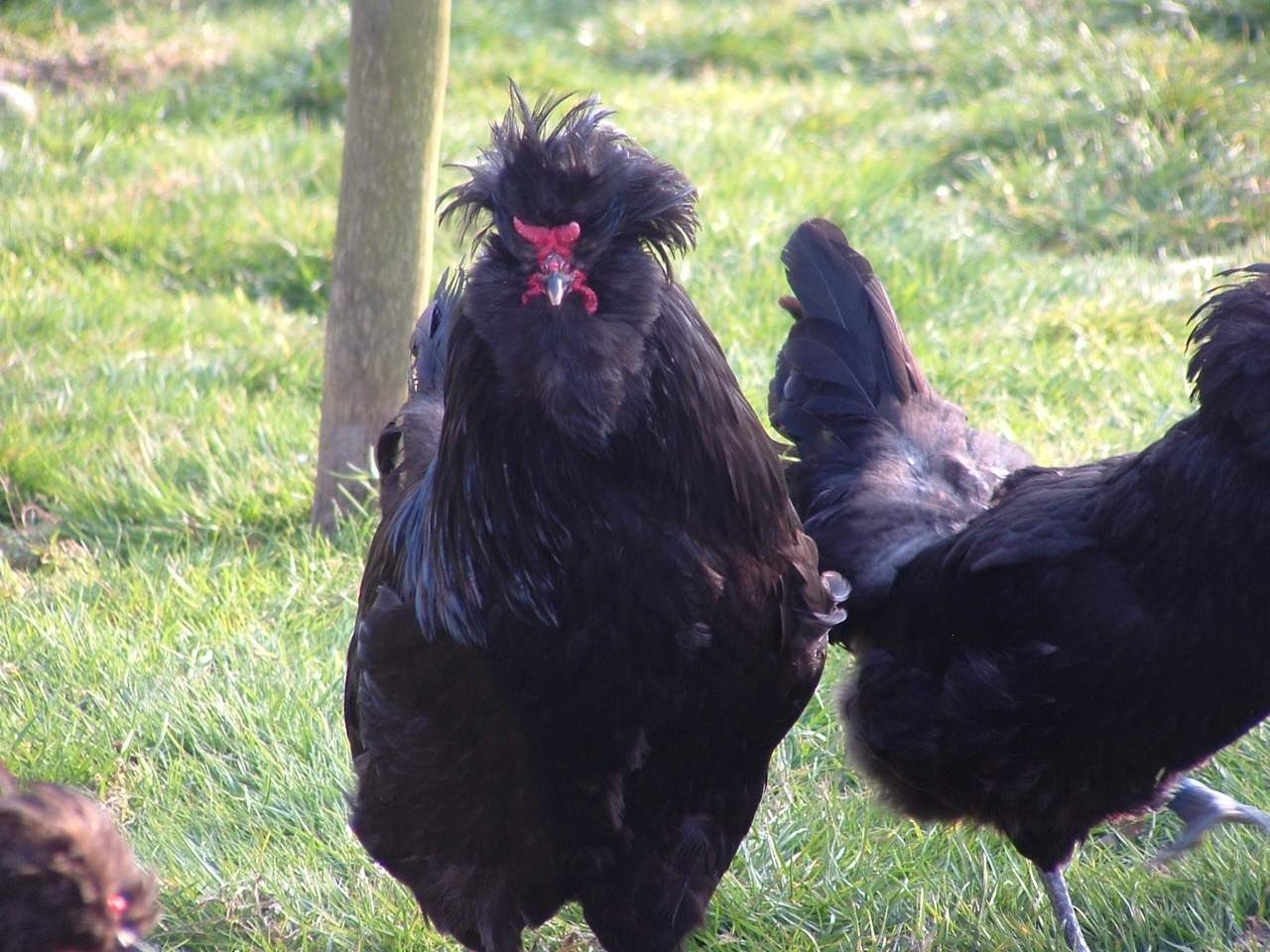
One of the oldest French breeds, a crested, bearded, black-plumaged fowl with a distinctive V-shaped (horned) comb, traditionally raised as a fine table bird in Normandy. Now critically rare and kept mainly for show.
Educational only. KinStation content is reviewed by licensed veterinarians but cannot replace an in-person exam. Always consult a licensed veterinarian or board-certified specialist for diagnosis, treatment, or any decision affecting your pet's health.
🩺 Need expert help with your crèvecœur?
Connect with a specialist near you or ask a licensed vet — never substitute online guidance for hands-on care in an emergency.
Quick facts
| Size | Medium fowl. Standard cock ~2.7-3.6 kg (6-8 lb), hen ~2.25-3.2 kg (5-7 lb); bantam cock ~790 g, hen ~680 g. |
| Lifespan | 6–8 years |
| Social needs | group |
| Native region | France |
| Family | Phasianidae |
| Genus | Gallus |
Part of the Chicken breeds
Recognized chicken breeds — selectively bred for type, purpose, and appearance.
Habitat & space requirements
From the minimum an animal needs to be kept humanely, up to the ideal setup. Bigger is almost always better — minimums are floors, not targets.
Life & growth stages
How this animal changes through its life — each stage often has its own care, diet and space needs.
Habitat & enclosure
Provide a dry, draught-free, well-ventilated coop with a covered or roomy run. As with other crested breeds, the full crest must be kept dry — wet, muddy or frozen housing soils the crest, irritates the eyes and chills the bird. Offer low-to-moderate perches, clean dry litter and around 0.35-0.4 m² per bird indoors. The breed tolerates confinement calmly but benefits from sheltered space where the crest stays clean and dry; a covered run is strongly recommended in wet or cold climates.
Diet
Feed a balanced layer or grower ration (16-18% protein) plus grit, oyster-shell and fresh water. Because the crest and beard limit forward vision, use open, easily accessible feeders and waterers and confirm all birds are feeding — shy individuals can be out-competed if they cannot see well. Avoid deep waterers that soak the crest or chill chicks. Keep the beard area clean of caked feed. On good range they will forage, but vision limits make supervised, predator-safe foraging best.
Behavior & temperament
Historically a meat (table) breed prized in France for fine, well-flavoured white-skinned flesh; hens also lay a modest number (roughly 100-160) of medium white eggs per year and seldom go broody. Temperament is typically calm, quiet and gentle, though restricted vision from the crest can make birds appear nervous or startle when approached from above. Hand-raised birds become docile and make striking, manageable ornamental fowl.
Health
The ornamental conformation brings welfare considerations: the large crest impairs vision (raising startle, predation and feeding difficulties) and the dense head feathering harbours lice and scaly mites, while damp conditions cause crest matting and eye infections. The V-shaped comb and crest base can be frostbite-susceptible. Critically, the breed is extremely rare worldwide and bred from a small gene pool, so inbreeding and limited stock availability are pressing concerns. Kept dry and clean, the birds are otherwise hardy.
Tips, DIY & hacks
House under cover and keep litter dry to protect the crest from icing and matting; trim crest feathers lightly around the eyes if vision is severely blocked. Check the crest and beard frequently for mites and lice and treat promptly. Approach from the front and announce yourself so birds are not startled. Provide shallow, visible feeders and waterers. Because the breed is critically endangered, buy from conservation-minded breeders, keep breeding records, and prioritise genetic diversity to help preserve it.
Sources
- Crèvecœur chicken - Wikipedia (encyclopedia)
- The Livestock Conservancy - Crevecoeur Chicken (breed registry)
- Wikipedia: Crèvecœur (wiki)