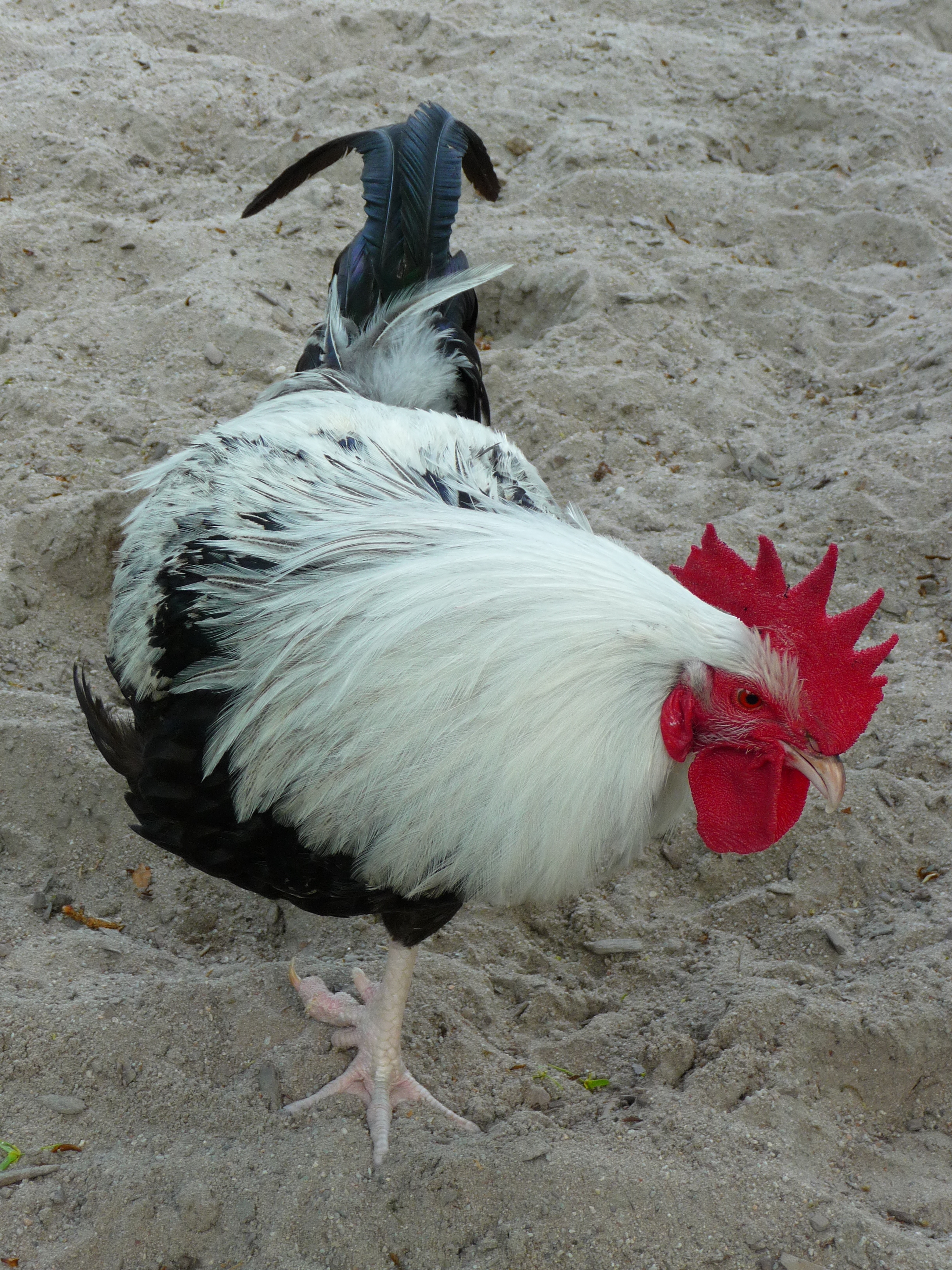
An ancient British dual-purpose breed with a uniquely long, low body and five toes, traditionally prized for fine white-skinned table meat. One of the oldest English fowl, now globally rare.
ℹ️
Educational only. KinStation content is reviewed by licensed veterinarians but cannot replace an in-person exam. Always consult a licensed veterinarian or board-certified specialist for diagnosis, treatment, or any decision affecting your pet's health.
🩺 Need expert help with your dorking?
Connect with a specialist near you or ask a licensed vet — never substitute online guidance for hands-on care in an emergency.
From the minimum an animal needs to be kept humanely, up to the ideal setup. Bigger is almost always better — minimums are floors, not targets.
Photo coming soon
Minimum
Heavy-bodied coop + low run
5 sq ft coop + 12 sq ft run per bird, low roosts
Dorkings (7–9 lb) are an ancient five-toed British breed with short legs and a heavy body. 5 sq ft coop per bird, low roost (≤ 18 in — short legs make jumps risky), 12 sq ft run, one nest box per 4 hens. Single comb is frost-vulnerable.
Photo coming soon
Recommended
Walk-in coop + covered run
6 sq ft coop + 18 sq ft covered run per bird
Walk-in coop with deep-litter, low roost, covered run with dust bath. Dorkings tolerate confinement well but are slow-growing (8–10 mo to full size); calm, broody, gentle — great mother hens.
Ideal
Free-range heritage flock
Free-range + 8 sq ft coop per bird
Free-range or paddock-rotated grass with a predator-safe coop. Dorkings are vigilant and good foragers; the ancient five-toed breed thrives on pasture and traditional rearing.
Kolforn / CC BY-SA 4.0 (Wikimedia Commons)
Life & growth stages
How this animal changes through its life — each stage often has its own care, diet and space needs.
Photo coming soon
Egg
Birds develop inside a hard-shelled egg incubated by the parent(s). Egg size, shell color, and clutch size vary by species; the embryo develops over days to weeks before hatching.
Photo coming soon
Hatchling / Chick
Hatchlings are either altricial — naked, blind, and dependent on parents (typical of parrots and songbirds) — or precocial — downy, mobile, and self-feeding soon after hatching (typical of poultry and waterfowl). Down gives way to the first feathers.
Photo coming soon
Juvenile / Fledgling
Fledglings grow in their juvenile plumage and begin to fly and feed themselves, though they may still beg from parents at first. Juvenile feathering is often duller than the adult and is replaced as the bird matures.
Adult
Adults attain full body size and mature plumage, and are capable of breeding. Many species show distinct adult coloration, and in sexually dimorphic birds males and females differ in plumage, size, or markings.
(c) D. N., some rights reserved (CC BY-NC) via iNaturalist — https://www.inaturalist.org/observations/312084723
Color & pattern variants
Natural variants occur in the wild; selectively bred (man-made) variants were developed in captivity.
Best kept with access to pasture or a roomy run; Dorkings are calm, ground-loving foragers that do well in free-range or generously sized enclosures. Provide a dry, well-bedded coop with low, sturdy perches — their heavy, short-legged build makes high roosts and hard landings risky. Allow at least 0.4 m²+ per bird indoors given their size. They are reasonably cold-hardy thanks to a deep body, but the large single comb (in the single-comb varieties) is frostbite-prone in winter, so keep housing draught-free.
Diet
Feed a balanced ration; growing and dual-purpose birds benefit from slightly higher protein (around 18% for growers, 16% for laying adults) plus grit and oyster-shell. As good foragers they make excellent use of pasture, but their large frame and historic role as a meat bird mean they relish a full feed — monitor body condition to avoid excessive fat in non-breeding birds. Constant fresh water and supplementary calcium for laying hens are essential.
Behavior & temperament
Dual-purpose breed historically valued above all for the quality and quantity of its meat (fine-textured, white-skinned), while hens lay a respectable 140-190 tinted/white eggs a year and many go broody and make excellent, dedicated mothers. Temperament is famously docile, calm and friendly — Dorkings are quiet, easily tamed and tolerant of confinement, making them gentle, manageable birds well suited to families and mixed flocks.
Health
Hardy and long-lived but slow-maturing. The defining fifth toe should be well-formed and separated; poor breeding can produce overlapping or malformed toes. The short legs and heavy body predispose them to leg and foot problems (bumblefoot) and make high perches hazardous, so keep roosts low. Single-comb birds are susceptible to frostbite. The breed is listed as threatened/critical by conservation bodies, so genetic diversity and careful breeder sourcing are real welfare considerations.
Tips, DIY & hacks
Provide low perches and soft, deep litter to protect heavy birds' feet and legs, and inspect for bumblefoot regularly. Their docility makes them easy to handle and ideal for novices wanting a calm heritage bird, but it also makes them poor at evading predators — secure housing is essential. Make the most of their reliable broodiness by using Dorking hens to hatch and rear other breeds. As a rare breed, buy from conservation breeders and keep records to support the gene pool. Protect single combs from frost in winter.