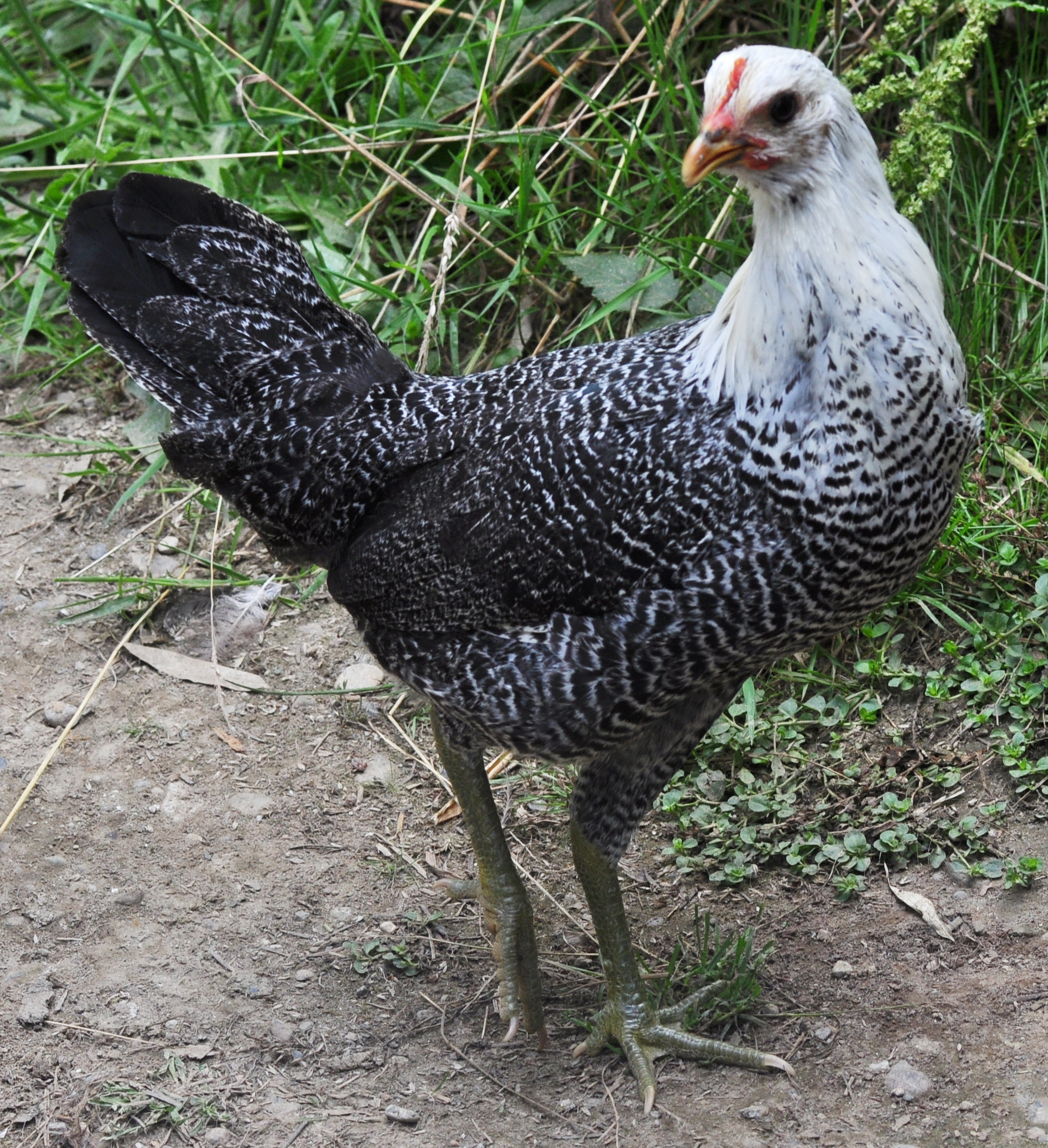
An ancient, extremely hardy Egyptian landrace from the Fayoum region, this small silver-pencilled fowl is renowned for heat tolerance, early maturity and unusual natural disease resistance.
ℹ️
Educational only. KinStation content is reviewed by licensed veterinarians but cannot replace an in-person exam. Always consult a licensed veterinarian or board-certified specialist for diagnosis, treatment, or any decision affecting your pet's health.
🩺 Need expert help with your fayoumi?
Connect with a specialist near you or ask a licensed vet — never substitute online guidance for hands-on care in an emergency.
From the minimum an animal needs to be kept humanely, up to the ideal setup. Bigger is almost always better — minimums are floors, not targets.
Photo coming soon
Minimum
Coop + run (per bird)
3 sq ft coop + 10 sq ft run / bird
Fayoumis are small (≈ 1.8 kg), highly active Egyptian landrace chickens that prefer roosting high and ranging wide. A welfare minimum is 3 sq ft of coop and 10 sq ft of covered run per bird, with high roost bars (≥ 3 ft), one nest box per 4 hens, grit, calcium, clean water, and predator-proof ½ in hardware cloth — they will fly out of low-fenced runs.
Photo coming soon
Recommended
Tall coop + roomy run
4 sq ft coop + 15 sq ft run / bird
A taller coop (≥ 6 ft headroom) with 4 sq ft per bird and a 15+ sq ft per bird run, ideally roofed or with 6 ft fencing, lets Fayoumis express their natural roosting and flying behaviours. They mature very early (4 months) and are excellent foragers, so a deep-litter coop with a dust-bath cuts feed costs.
Photo coming soon
Ideal
Free-range homestead flock
6 sq ft coop + free-range / pasture
A roomy coop of 6 sq ft per bird with all-day free-range or rotated pasture access is the ideal welfare standard for this landrace. Fayoumis evade predators well and roost in trees, but provide a secure night coop and overhead cover for chicks. Small white-egg layers, frugal feeders, and disease-resistant — a heritage homesteader's classic.
Life & growth stages
How this animal changes through its life — each stage often has its own care, diet and space needs.
Photo coming soon
Egg
Birds develop inside a hard-shelled egg incubated by the parent(s). Egg size, shell color, and clutch size vary by species; the embryo develops over days to weeks before hatching.
Photo coming soon
Hatchling / Chick
Hatchlings are either altricial — naked, blind, and dependent on parents (typical of parrots and songbirds) — or precocial — downy, mobile, and self-feeding soon after hatching (typical of poultry and waterfowl). Down gives way to the first feathers.
Photo coming soon
Juvenile / Fledgling
Fledglings grow in their juvenile plumage and begin to fly and feed themselves, though they may still beg from parents at first. Juvenile feathering is often duller than the adult and is replaced as the bird matures.
Adult
Adults attain full body size and mature plumage, and are capable of breeding. Many species show distinct adult coloration, and in sexually dimorphic birds males and females differ in plumage, size, or markings.
(c) D. N., some rights reserved (CC BY-NC) via iNaturalist — https://www.inaturalist.org/observations/312084723
Color & pattern variants
Natural variants occur in the wild; selectively bred (man-made) variants were developed in captivity.
Coop-and-run housing with emphasis on ventilation and space; Fayoumis are highly active, accomplished flyers and instinctive foragers that strongly prefer free range. Provide a tall, well-netted run or free-range access and roost bars (they love to roost high, even in trees). Outstanding heat and drought tolerance; in cold, wet climates give a dry, draft-free coop and protect the comb from frostbite, as they are less suited to damp cold than to their native warmth.
Diet
Standard feeding program: chick starter, grower, then layer ration with calcium supplementation for hens. Exceptionally thrifty foragers that derive much of their diet from insects, seeds and greens, requiring less supplemental feed than most breeds when ranged. Provide grit and clean water.
Behavior & temperament
Purpose: prolific layer of small white/tinted eggs (often 150-200+/year) and historically a subsistence dual-purpose bird; also widely used in research for disease resistance. Temperament is wild, alert, noisy and very flighty; pullets can begin laying as early as 4-5 months and cockerels crow young. They are independent and not tame, though they can settle with early handling. Hens are generally non-broody but some retain decent mothering instinct.
Health
Famed for robust natural resistance to several diseases, including notable tolerance/resistance to Marek's disease and some viral and coccidial challenges, making them one of the hardiest breeds. The single comb can frostbite in cold climates. Their main 'issue' is behavioral flightiness rather than physical disorder. Standard parasite and worm management still applies.
Tips, DIY & hacks
Ideal for hot, arid climates and low-input or self-sufficient flocks. Expect very early maturity, so separate or plan for young cockerels. To curb flightiness, raise chicks with gentle daily contact and provide a secure covered run; clip a wing if escapes are a problem. Provide ample roosting height to satisfy their instinct. Their disease hardiness makes them excellent free-range survivors and useful flock genetics.