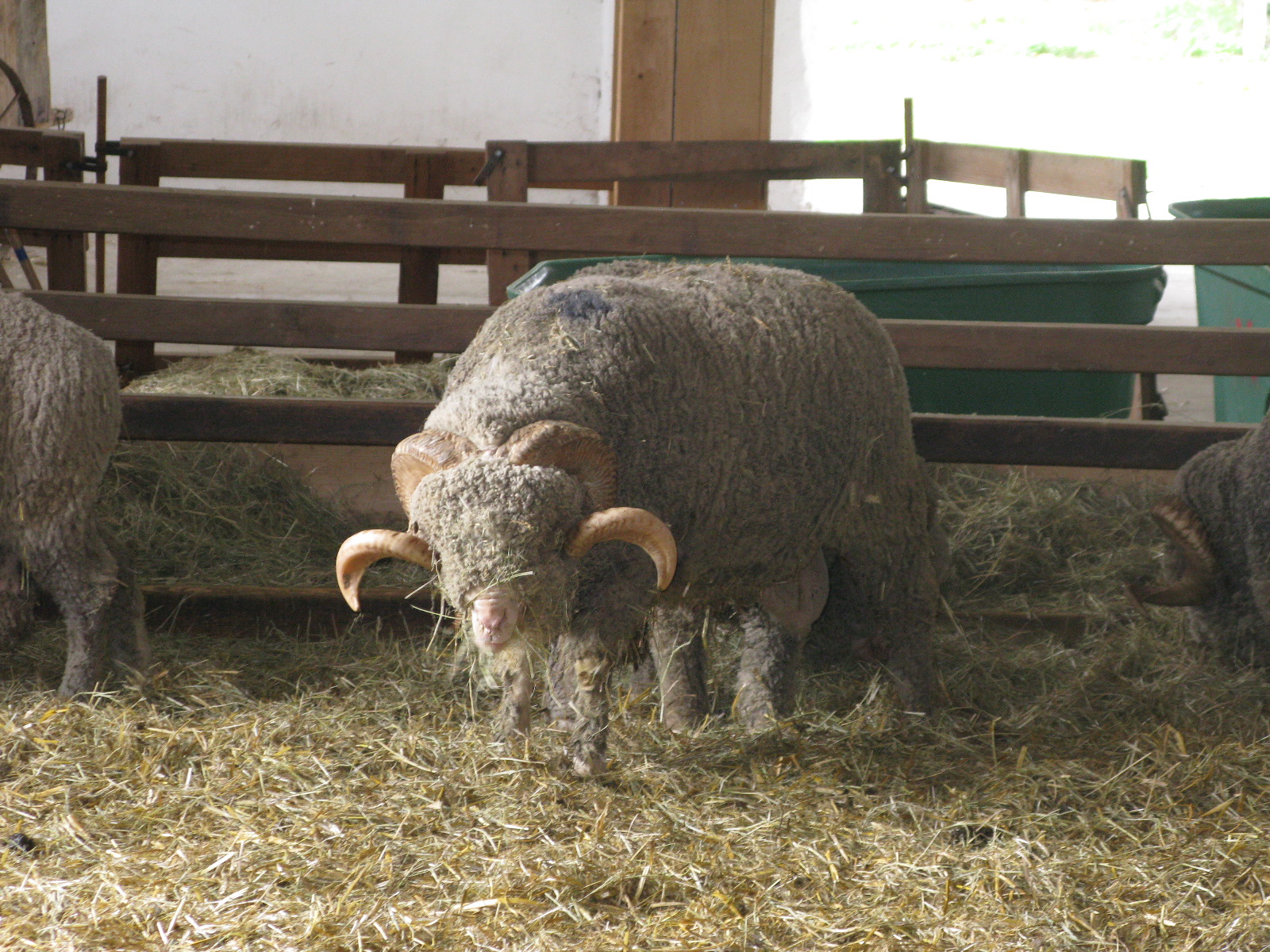
The world's premier fine-wool sheep, originating in Spain and developed into many strains worldwide (especially Australia). Prized for soft, fine, crimped fleece, Merinos are the foundation of the fine-wool industry.
ℹ️
Educational only. KinStation content is reviewed by licensed veterinarians but cannot replace an in-person exam. Always consult a licensed veterinarian or board-certified specialist for diagnosis, treatment, or any decision affecting your pet's health.
🩺 Need expert help with your merino?
Connect with a specialist near you or ask a licensed vet — never substitute online guidance for hands-on care in an emergency.
Medium-sized. Ewes about 50-80 kg (110-175 lb), rams about 80-120 kg (175-265 lb), varying widely by strain. Rams are usually horned and ewes polled in many str
Lifespan
10–12 years
Social needs
group
Native region
Spain
Family
Bovidae
Genus
Ovis
Part of the Sheep breeds
Recognized sheep breeds — selectively bred for type, purpose, and appearance.
From the minimum an animal needs to be kept humanely, up to the ideal setup. Bigger is almost always better — minimums are floors, not targets.
Photo coming soon
Minimum
Small flock dry-lot + shed
0.5 ac dry-lot for 4–5 head + 3-sided shed
Sheep are obligate herd animals — keep at least 2–3, never solo. A half-acre dry-lot with daily hay, fresh water, mineral access, and an open-front 3-sided shed for shade and weather. Perimeter must be predator-proof (sturdy woven wire or electric net).
Photo coming soon
Recommended
Rotational pasture
≈ 1 ac per 2–3 sheep, rotated paddocks
Rotate the flock across 2–4 paddocks to break parasite cycles and keep forage healthy. Provide a windbreak/shelter, free-choice minerals, clean water, and a guardian (LGD) or strong perimeter fencing against coyotes and dogs.
Photo coming soon
Ideal
Managed pasture + LGD
Managed rotation, LGD, full hoof/shear program
Large managed pasture rotation with a livestock guardian dog, scheduled hoof trimming, shearing once or twice a year, and parasite monitoring (FAMACHA). Lambing barn or jug space available in season. Merinos are a fine-wool breed bred for dense fleeces — monitor for fly-strike, shear annually, and provide shade in hot climates.
Life & growth stages
How this animal changes through its life — each stage often has its own care, diet and space needs.
Photo coming soon
Newborn
Newborn mammals are nursed on their mother's milk. Many are born helpless — blind, deaf, and sparsely furred (altricial, as in dogs, cats, and rodents) — while others stand and follow within hours (precocial, as in hoofed livestock).
Photo coming soon
Juvenile
After weaning, juveniles grow quickly and become increasingly active, playful, and independent. Adult coat, proportions, and (in many species) the permanent teeth come in as they approach full size.
Photo coming soon
Adult
Adults reach full body size and sexual maturity, with the species' mature coat and build. Sexual dimorphism — differences in size, mane, horns, or markings — is pronounced in some mammals and subtle in others.
Senior
Senior animals show aging signs such as graying fur, reduced activity, and a greater need for veterinary monitoring of joints, teeth, and organ function. Lifespan and the onset of old age vary widely by species and size.
Color & pattern variants
Natural variants occur in the wild; selectively bred (man-made) variants were developed in captivity.
Open pasture or rangeland with shelter from extremes; Merinos are well adapted to dry, extensive grazing systems. Provide fencing suitable for sheep, shade in hot climates, and dry ground to protect feet and fleece. A flock animal that must be kept in groups; adequate space reduces stress and parasite load.
Diet
Grazes pasture, rangeland forage and is fed hay when grass is short; thrives on relatively sparse, dry feed. Provide sheep-specific minerals (low/no added copper, which is toxic to sheep) and clean water. Supplement energy and protein in late pregnancy, lactation and for growing lambs. Avoid sudden grain changes to prevent acidosis.
Behavior & temperament
Flocking, gregarious and generally docile, with a strong herd instinct that makes them easy to muster. Purpose is fiber: they are the leading fine-wool breed, producing dense fleeces of high-value apparel wool; some strains are dual-purpose for wool and meat.
Health
Skin folds (wrinkle) in some strains increase fleece weight but raise the risk of fly-strike (flystrike) and make shearing harder; modern breeding favors plainer-bodied sheep for welfare. Welfare note: the heavy, dense fleece must be shorn at least annually to prevent overheating, fleece-rot and strike, and to allow the animal to see and move. Other concerns: footrot in wet conditions, internal parasites, and dystocia is uncommon as lambs are moderate-sized.
Tips, DIY & hacks
Shear at least once a year and crutch (clip around the rear) to reduce flystrike. Monitor for flystrike in warm, wet weather, especially in wrinkly strains. Use sheep mineral only — never feed copper-supplemented goat or cattle mineral. Choose plainer-bodied, breech-strike-resistant lines to reduce welfare problems associated with extreme wrinkle.