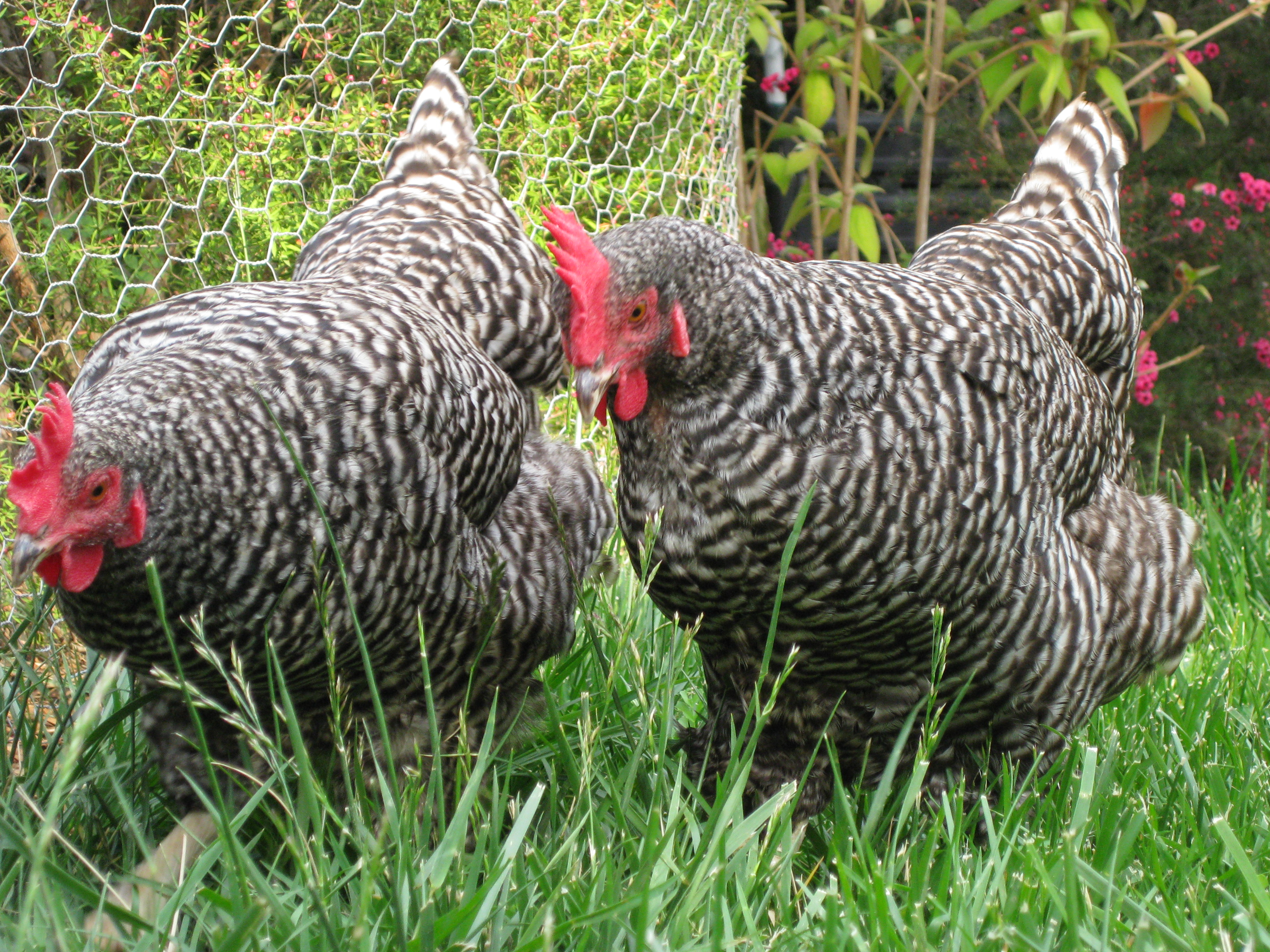
The Plymouth Rock is a classic American dual-purpose chicken—best known in its black-and-white Barred Rock variety—valued for steady brown-egg laying, good meat, cold-hardiness and an exceptionally docile, family-friendly temperament.
ℹ️
Educational only. KinStation content is reviewed by licensed veterinarians but cannot replace an in-person exam. Always consult a licensed veterinarian or board-certified specialist for diagnosis, treatment, or any decision affecting your pet's health.
🩺 Need expert help with your plymouth rock?
Connect with a specialist near you or ask a licensed vet — never substitute online guidance for hands-on care in an emergency.
From the minimum an animal needs to be kept humanely, up to the ideal setup. Bigger is almost always better — minimums are floors, not targets.
Photo coming soon
Minimum
Coop + run
4 sq ft/bird coop + 10 sq ft/bird run
Dual-purpose American breed: 4 sq ft of coop floor per bird, 10 sq ft of run, one 12 × 12 in nest box per 3–4 hens, and perches at ~18 in. Hardy in cold but ventilation above roost height prevents frostbite in winter.
Photo coming soon
Recommended
Roomier coop + larger run
5–6 sq ft/bird coop + 15–20 sq ft/bird run
More space cuts squabbling and gives docile barred rocks room to forage. Provide dust bath, shade, deep litter, and predator-proof hardware cloth on all openings (raccoons reach through standard chicken wire).
Ideal
Free-range with secure coop
Locked coop + pasture/orchard free-range
Plymouth Rocks are confident, productive free-rangers. A locked night coop plus daily supervised pasture access gives best welfare, feed efficiency, and natural behaviour.
Joe Mabel / CC BY-SA 4.0 (Wikimedia Commons)
Life & growth stages
How this animal changes through its life — each stage often has its own care, diet and space needs.
Photo coming soon
Egg
Birds develop inside a hard-shelled egg incubated by the parent(s). Egg size, shell color, and clutch size vary by species; the embryo develops over days to weeks before hatching.
Photo coming soon
Hatchling / Chick
Hatchlings are either altricial — naked, blind, and dependent on parents (typical of parrots and songbirds) — or precocial — downy, mobile, and self-feeding soon after hatching (typical of poultry and waterfowl). Down gives way to the first feathers.
Photo coming soon
Juvenile / Fledgling
Fledglings grow in their juvenile plumage and begin to fly and feed themselves, though they may still beg from parents at first. Juvenile feathering is often duller than the adult and is replaced as the bird matures.
Adult
Adults attain full body size and mature plumage, and are capable of breeding. Many species show distinct adult coloration, and in sexually dimorphic birds males and females differ in plumage, size, or markings.
(c) D. N., some rights reserved (CC BY-NC) via iNaturalist — https://www.inaturalist.org/observations/312084723
Color & pattern variants
Natural variants occur in the wild; selectively bred (man-made) variants were developed in captivity.
Coop-and-run setup with a dry, well-ventilated, predator-proof coop (~0.3-0.4 m² per bird) with perches and nest boxes (one per 3-4 hens), and a run of at least 1 m² per bird; they free-range readily. Their single comb tolerates cold reasonably well, but provide draft-free ventilation in winter and shade plus ample water in summer for these fairly heavy birds.
Diet
Base diet of complete layer ration (~16-18% protein) with free-choice oyster-shell calcium and grit, plus constant fresh water. Active foragers that gladly take insects, greens and scraps when ranged; keep treats below ~10% of the diet to support laying and prevent the heavy frame from becoming overweight.
Behavior & temperament
A dual-purpose breed used for both eggs and table birds; hens lay about 200-280 large brown eggs per year. Renowned for being calm, gentle, hardy and easy to handle—a top choice for families and beginners. Hens can go broody and make good mothers; roosters are usually mild-mannered.
Health
A hardy, long-lived breed with no major inherent disorders. Routine poultry care covers the main risks: external parasites (mites/lice), worms, and possible comb frostbite in extreme cold. Heavier hens are somewhat prone to obesity and, with age, to reproductive problems. No lethal or deforming conformation genes.
Tips, DIY & hacks
An ideal first-flock or homestead breed and a good broody mother if you want naturally hatched chicks. Choose heritage-strain birds for the best dual-purpose type; many hatchery 'Barred Rocks' are lighter laying strains. Provide dust baths, monitor weight, and protect combs from hard freezes. Barred coloration is sex-linked-adjacent and easy to enjoy, but several colour varieties exist.