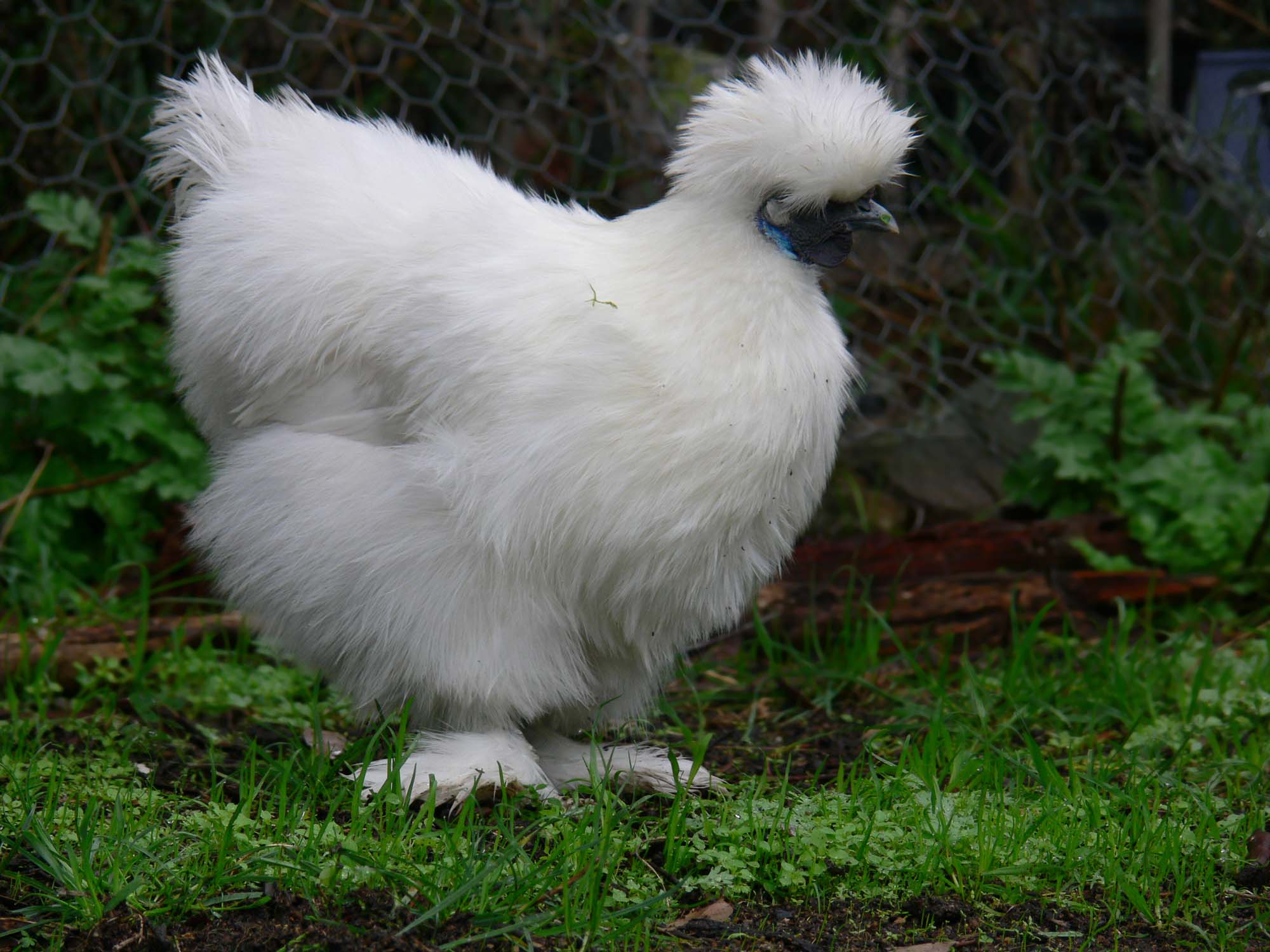
An ancient ornamental breed with uniquely fluffy, hair-like (non-barbed) plumage, black skin, bones and meat, blue earlobes, and five toes. Famous for an exceptionally docile, affectionate temperament and for being one of the most reliably broody of all chickens, making it a favourite pet and natural incubator.
ℹ️
Educational only. KinStation content is reviewed by licensed veterinarians but cannot replace an in-person exam. Always consult a licensed veterinarian or board-certified specialist for diagnosis, treatment, or any decision affecting your pet's health.
🩺 Need expert help with your silkie?
Connect with a specialist near you or ask a licensed vet — never substitute online guidance for hands-on care in an emergency.
Light/bantam-type breed: standard cock ~1.8 kg (4 lb), hen ~1.4 kg (3 lb); true bantam form ~0.5-0.9 kg. Compact, fluffy body with hair-like plumage, five toes,
Lifespan
7–9 years
Social needs
group
Native region
China
Family
Phasianidae
Genus
Gallus
Part of the Chicken breeds
Recognized chicken breeds — selectively bred for type, purpose, and appearance.
From the minimum an animal needs to be kept humanely, up to the ideal setup. Bigger is almost always better — minimums are floors, not targets.
Photo coming soon
Minimum
Dry coop + covered run
3 sq ft/bird coop + 8 sq ft/bird covered run
Silkies have non-waterproof fluffy plumage — they soak through in rain. Provide a dry coop, covered run, low ramps (they fly poorly), low water dishes, and a dust bath. Crest/feathered feet need clean dry footing.
Recommended
Roomier dry covered run
5 sq ft/bird coop + 12–15 sq ft/bird covered run
Larger covered run with shade, deep dry litter, dust bath, and protection from raptors (Silkies cannot see overhead well due to crests). Trim/keep crests dry to prevent eye infections.
Stephan van Helden / CC BY-SA 4.0 (Wikimedia Commons)
Photo coming soon
Ideal
Silkie-only dry covered aviary run
Silkie-only covered aviary + roomy coop
Dedicated Silkie-only flock in a fully covered dry aviary, shielded from rain and predators. Best welfare for this delicate but very docile broody breed.
Life & growth stages
How this animal changes through its life — each stage often has its own care, diet and space needs.
Photo coming soon
Egg
Birds develop inside a hard-shelled egg incubated by the parent(s). Egg size, shell color, and clutch size vary by species; the embryo develops over days to weeks before hatching.
Photo coming soon
Hatchling / Chick
Hatchlings are either altricial — naked, blind, and dependent on parents (typical of parrots and songbirds) — or precocial — downy, mobile, and self-feeding soon after hatching (typical of poultry and waterfowl). Down gives way to the first feathers.
Photo coming soon
Juvenile / Fledgling
Fledglings grow in their juvenile plumage and begin to fly and feed themselves, though they may still beg from parents at first. Juvenile feathering is often duller than the adult and is replaced as the bird matures.
Adult
Adults attain full body size and mature plumage, and are capable of breeding. Many species show distinct adult coloration, and in sexually dimorphic birds males and females differ in plumage, size, or markings.
(c) D. N., some rights reserved (CC BY-NC) via iNaturalist — https://www.inaturalist.org/observations/312084723
Color & pattern variants
Natural variants occur in the wild; selectively bred (man-made) variants were developed in captivity.
House Silkies in a clean, dry, predator-proof coop with a covered run. Their plumage is not waterproof, so they must have shelter from rain and cannot tolerate damp or muddy conditions; wet Silkies chill easily. Provide low perches or floor bedding since most cannot fly and the crest can impair vision and balance. Good shade in heat and dry, draught-free housing in cold suit them. Because they are small, tame, and poor flyers, they are vulnerable to predators and need secure enclosures.
Diet
Feed a balanced poultry ration by life stage (starter, grower, then ~16% layer feed for hens in lay) with oyster shell and grit offered free-choice. Crested birds with vision partly obscured by the crest can struggle to find feed and water, so use accessible, clearly placed feeders and shallow waterers. Avoid letting feed cake into the crest or beard.
Behavior & temperament
Gentle, calm, and people-friendly to the point of being lap chickens; Silkies are among the best pet and child-friendly breeds and even roosters are typically mild. Kept for ornament, exhibition, and companionship rather than production: hens lay only ~100-120 small cream/tinted eggs a year and go broody very frequently. Their exceptional broodiness and mothering make them the classic choice for hatching and fostering other birds' eggs, including quail, ducks, and pheasants.
Health
Marek's disease susceptibility is notably higher than average, so vaccination of chicks is strongly recommended. The crest and vaulted skull (a soft spot in the skull is common) make head injuries more serious, and crest feathers can cause eye irritation or impaired sight. Non-waterproof plumage means chilling and respiratory illness if kept damp. Feathered feet and dense plumage invite scaly leg mite, lice, and mites. Frequent broodiness can deplete body condition.
Tips, DIY & hacks
Keep them dry above all else and gently bathe and blow-dry show birds, never leaving them damp. Trim crest feathers around the eyes if vision is obstructed. Check the feathered feet and dense fluff regularly for mites and clean the vent and beard of food and droppings. Because they can't fly to escape danger, prioritise secure runs. Vaccinate chicks against Marek's. Their tameness makes them ideal for handling and as gentle pets, but supervise mixed flocks as their docility can make them targets for bullying.