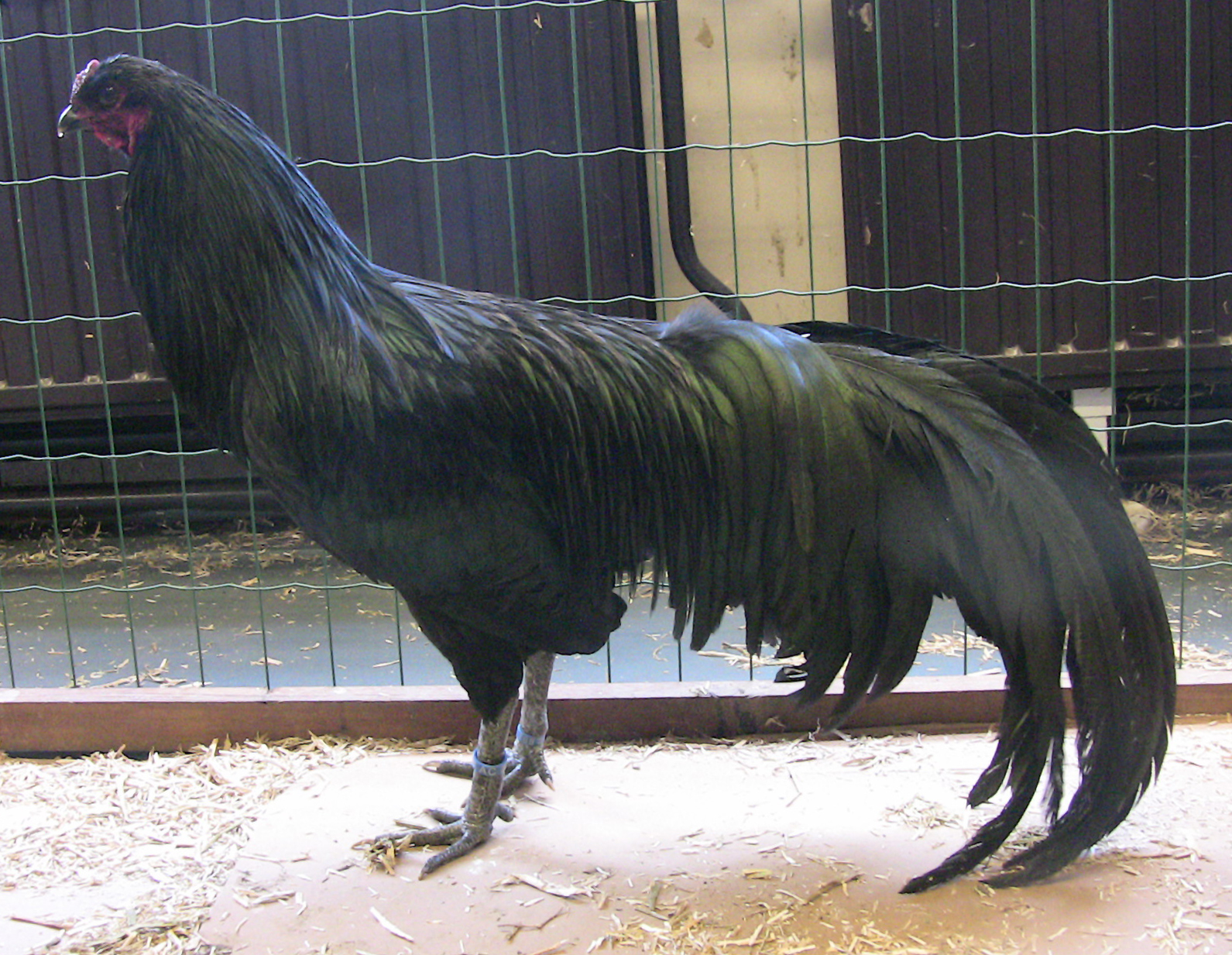
An elegant, long-tailed game-type fowl from the island of Sumatra, famous for its lustrous beetle-green-black plumage and pheasant-like flowing tail. Kept almost entirely as an ornamental and exhibition breed.
ℹ️
Educational only. KinStation content is reviewed by licensed veterinarians but cannot replace an in-person exam. Always consult a licensed veterinarian or board-certified specialist for diagnosis, treatment, or any decision affecting your pet's health.
🩺 Need expert help with your sumatra?
Connect with a specialist near you or ask a licensed vet — never substitute online guidance for hands-on care in an emergency.
Standard: cocks ~2.25 kg (5 lb), hens ~1.8 kg (4 lb). A bantam version also exists. Long flowing tail and abundant sickle feathers exaggerate apparent size.
Lifespan
5–8 years
Social needs
group
Native region
Indonesia
Family
Phasianidae
Genus
Gallus
Part of the Chicken breeds
Recognized chicken breeds — selectively bred for type, purpose, and appearance.
Sumatra are slim, agile, strong-flying Asian gamefowl: tall coop with high perches, fully covered run (they will fly out of any open one), and individual housing for cocks since they remain territorial.
Photo coming soon
Recommended
Tall covered run + individual cock pens
6 sq ft/bird coop + 25 sq ft/bird covered run
Larger tall covered run for hens; individual or carefully managed pens for cocks. Provide soft footing, shade, dust bath, and predator-proof construction. Sumatras tolerate cold poorly — provide draft-free shelter.
Photo coming soon
Ideal
Show pens + supervised range
Individual cock pens + hen aviary + supervised range
Individual cock pens with tall coops and supervised range, hens in a tall covered aviary. Best welfare given the breed's flight ability and cock aggression.
Life & growth stages
How this animal changes through its life — each stage often has its own care, diet and space needs.
Photo coming soon
Egg
Birds develop inside a hard-shelled egg incubated by the parent(s). Egg size, shell color, and clutch size vary by species; the embryo develops over days to weeks before hatching.
Photo coming soon
Hatchling / Chick
Hatchlings are either altricial — naked, blind, and dependent on parents (typical of parrots and songbirds) — or precocial — downy, mobile, and self-feeding soon after hatching (typical of poultry and waterfowl). Down gives way to the first feathers.
Photo coming soon
Juvenile / Fledgling
Fledglings grow in their juvenile plumage and begin to fly and feed themselves, though they may still beg from parents at first. Juvenile feathering is often duller than the adult and is replaced as the bird matures.
Adult
Adults attain full body size and mature plumage, and are capable of breeding. Many species show distinct adult coloration, and in sexually dimorphic birds males and females differ in plumage, size, or markings.
(c) D. N., some rights reserved (CC BY-NC) via iNaturalist — https://www.inaturalist.org/observations/312084723
Color & pattern variants
Natural variants occur in the wild; selectively bred (man-made) variants were developed in captivity.
An active, strong-flying breed that needs a tall covered run or aviary — they roost high and readily fly over low fencing. Provide high perches and protect the long tail feathers from mud and damage with clean, dry bedding. Tolerates free-range well where predators are controlled. Hardy in cold but the large comb in males benefits from draught-free housing.
Diet
Standard balanced poultry ration (16% layer or grower) plus grain and access to forage; as keen foragers they do well on range. Provide grit and oyster shell for layers. No special dietary needs beyond the energy required for their active lifestyle.
Behavior & temperament
Purpose: ornamental/exhibition. Active, alert, and somewhat flighty; retains strong game-bird instincts and can be wary of people, though males are generally less aggressive to each other than many game breeds (historically multiple cocks were even kept together). Hens are good natural mothers and frequently go broody. A modest layer of small white eggs (~100/year).
Health
A robust, naturally healthy heritage breed with few breed-specific disorders. The main concerns are weather/predator exposure given their flightiness, and keeping the long tail and abundant plumage clean and free of mites/lice. Males may show multiple spurs, a recognized breed trait, not a defect.
Tips, DIY & hacks
Use tall fencing or netted runs to contain their flying. Offer elevated roosts they clearly prefer. Trim and inspect long tail feathers for breakage before shows. Because they're flighty, handle and socialize young to ease management, and provide cover/foliage so birds feel secure on range.