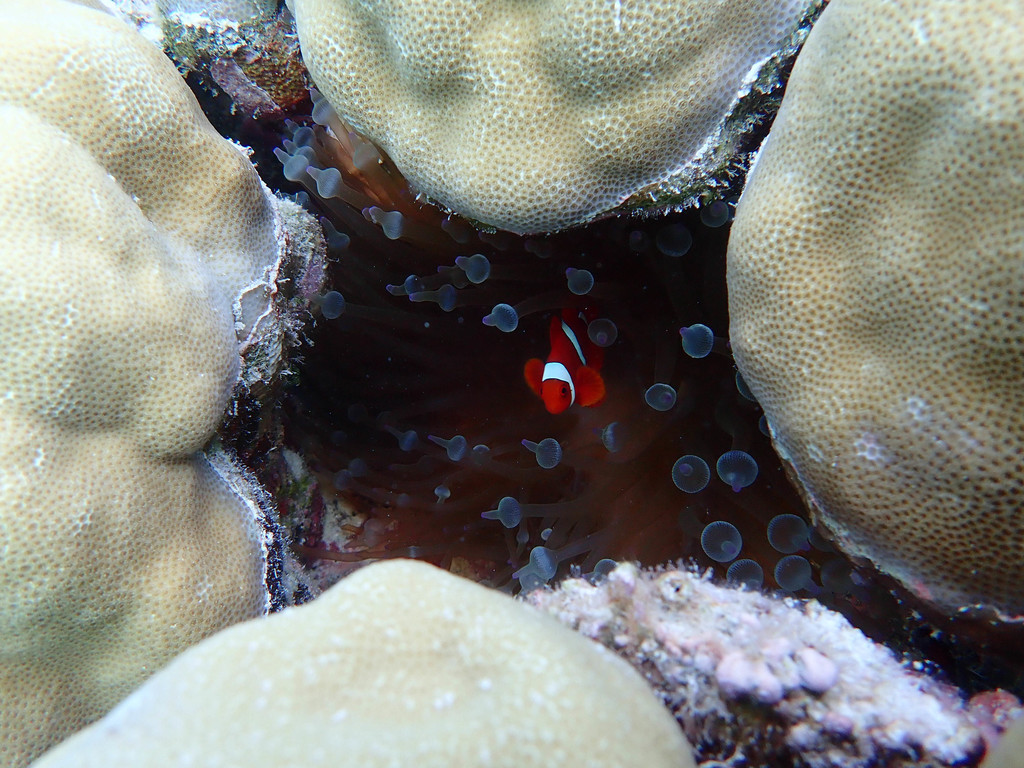
Bubble tip anemone
Entacmaea quadricolor · also called BTA, Bulb-tip anemone, Bulb anemone, Rose anemone, Maroon anemone
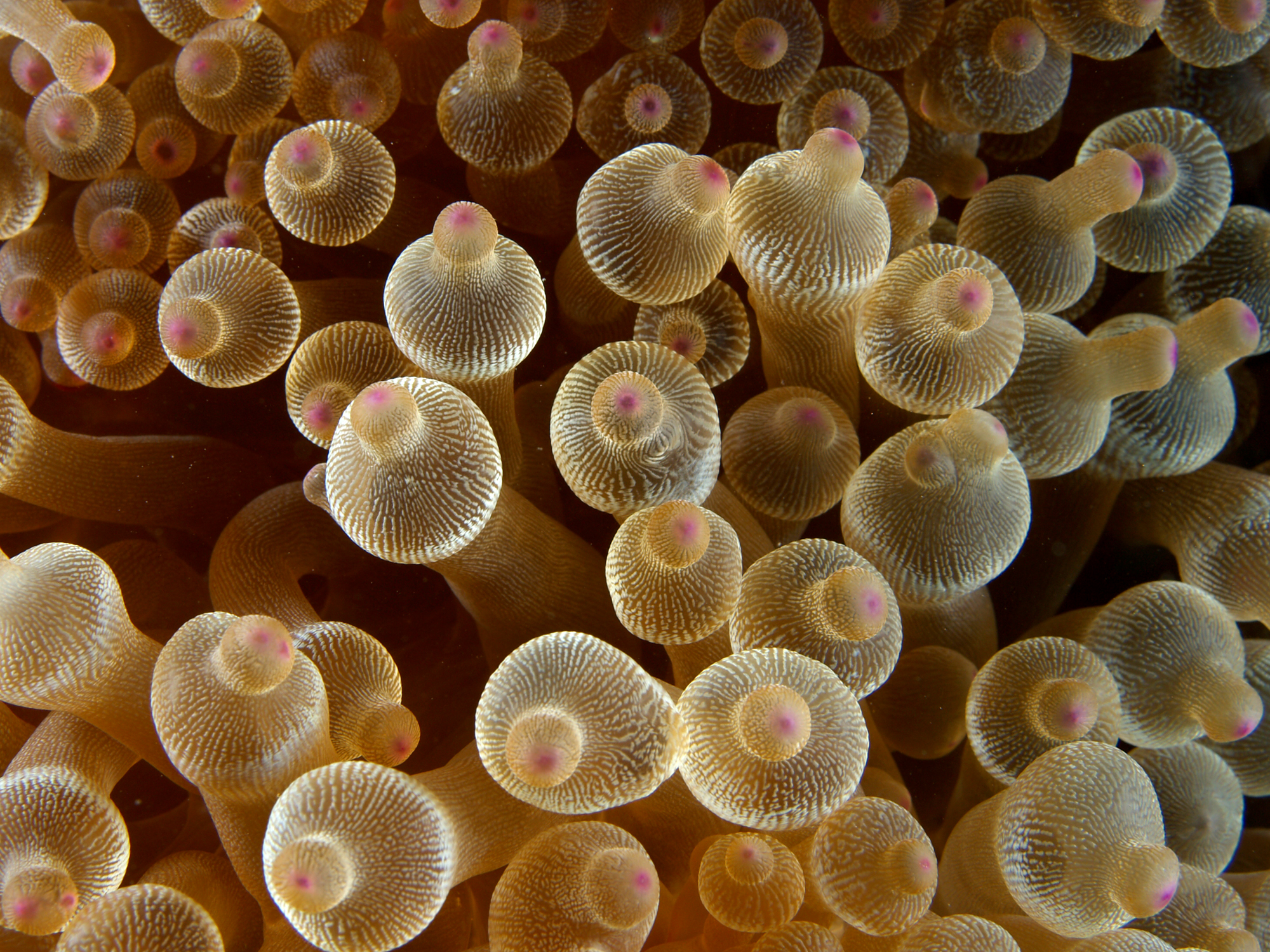
The bubble tip anemone is the most beginner-accessible of the true host anemones, named for the distinctive bulbous swellings at its tentacle tips. It is the natural and captive favorite host for many clownfish, especially maroon and tomato clowns, and is widely aquacultured in colors from drab brown to the prized rose/rainbow morphs. Though hardier than other host anemones, it still demands strong light, stable mature water, and powerful equipment, and it will roam until it finds a spot it likes.
🩺 Need expert help with your bubble tip anemone?
Connect with a specialist near you or ask a licensed vet — never substitute online guidance for hands-on care in an emergency.
Quick facts
| Size | Oral disc commonly 4-8 in (10-20 cm), reaching 12 in (30 cm); colonies can clone into clusters of many individuals. |
| Lifespan | 10–100 years |
| Social needs | solo |
| Native region | Indo-Pacific |
| Origin | Old World |
| Climate | 🌴 Tropical |
| Water type | 🌊 Marine |
| Family | Actiniidae |
| Genus | Entacmaea |
Part of the Sea Anemones
Stinging, sessile cnidarians ranging from clownfish-hosting giants to nano-sized carpet species. Many are demanding, mobile, and can sting corals or be drawn into pumps — careful placement and rock-stable water are essential.
Habitat & space requirements
From the minimum an animal needs to be kept humanely, up to the ideal setup. Bigger is almost always better — minimums are floors, not targets.
Life & growth stages
How this animal changes through its life — each stage often has its own care, diet and space needs.
Color & pattern variants
Natural variants occur in the wild; selectively bred (man-made) variants were developed in captivity.
 representative
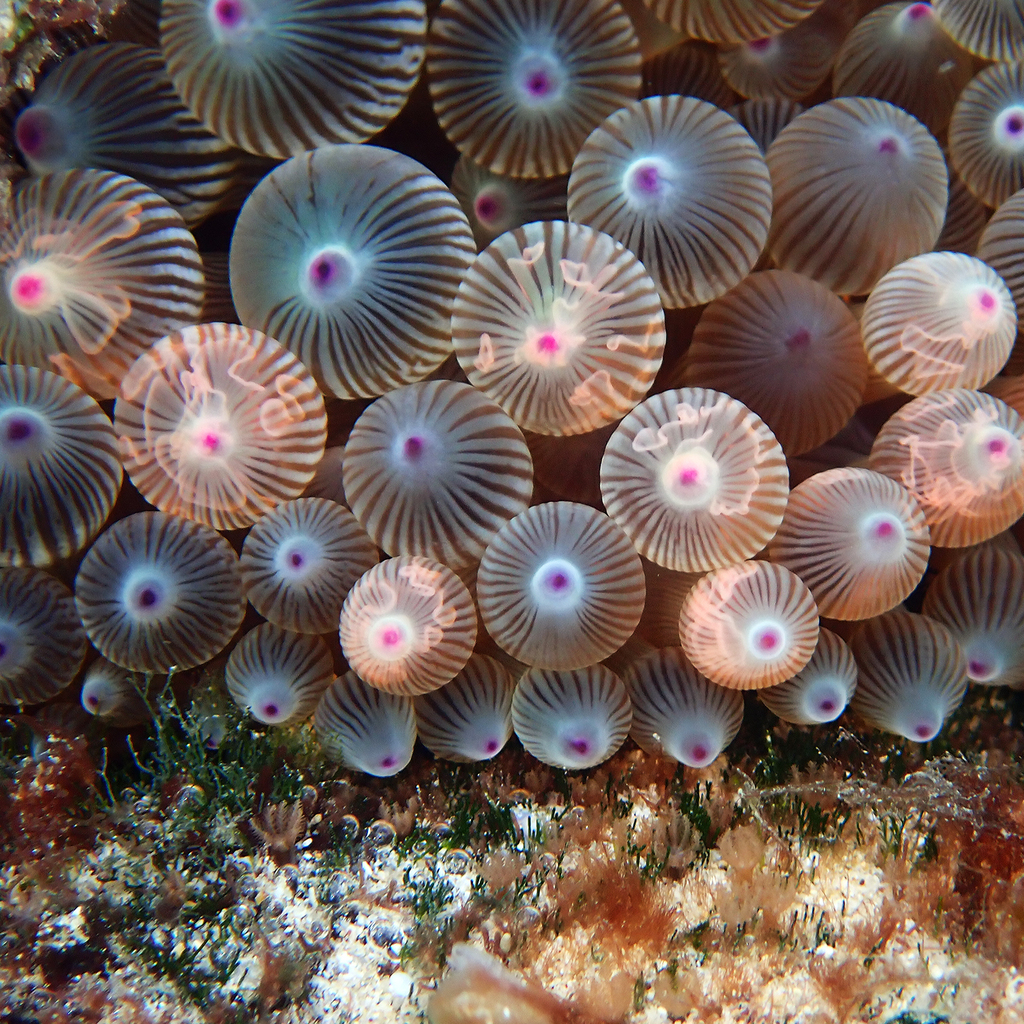
Rose bubble tip anemone (RBTA) →
The classic deep red-to-magenta bubble tip with vivid scarlet bulbous tentacles over a darker purple-red column. The most iconic and recognizable colored BTA in the hobby.
Tip: Place on rock near the base where it can anchor its foot into a crevice; give it moderate-to-strong flow and moderate-to-high light (PAR ~150-250). Cover pump and powerhead intakes with guards so the anemone cannot wander into them, and keep it in a mature, stable tank.
 representative
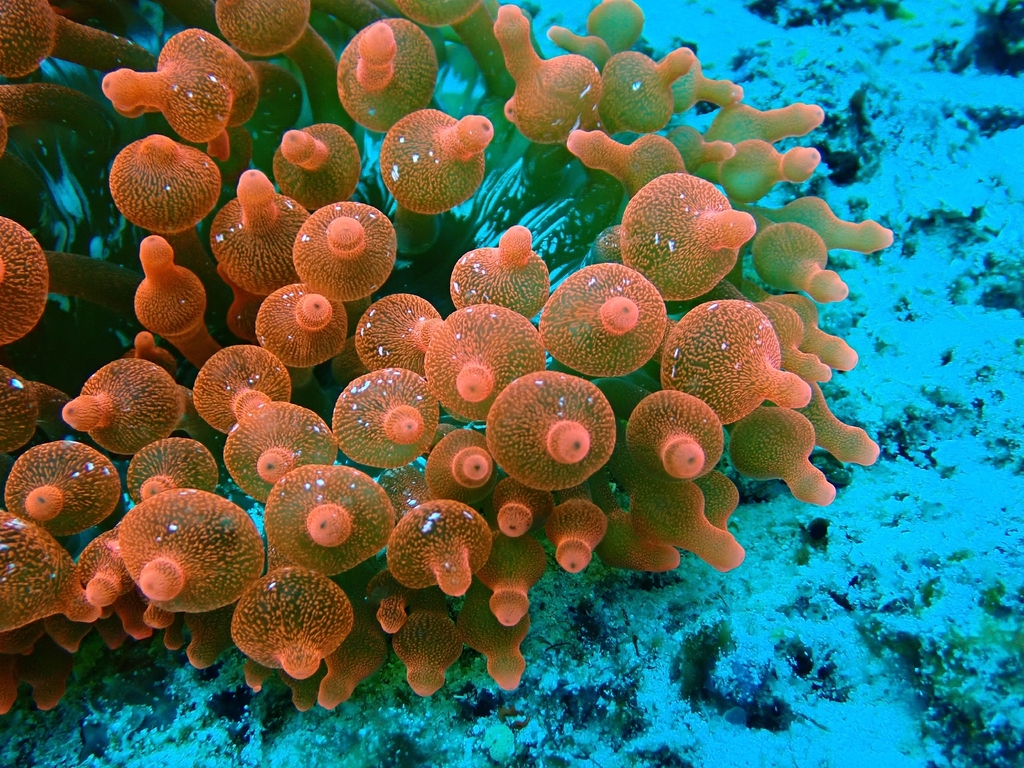
Rainbow bubble tip anemone →
A multicolor morph blending green, orange, pink and teal across the oral disc and tentacles. The premium designer BTA, sold by named lines (e.g. 'Rainbow').
Tip: Rainbow coloration is high-PAR dependent — give it 200+ PAR; under weak light it reverts to a plain green/tan and loses the rainbow.
 representative
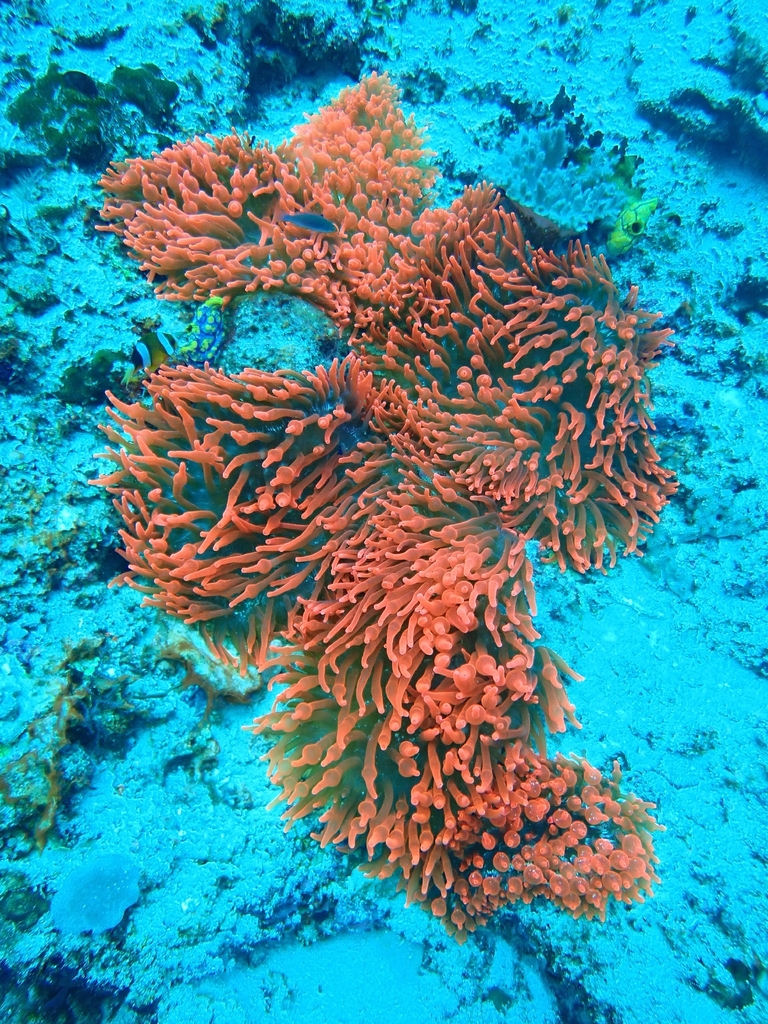
Green/brown bubble tip →
The common wild form, ranging from drab brown to bright green, hardy and inexpensive.
 representative
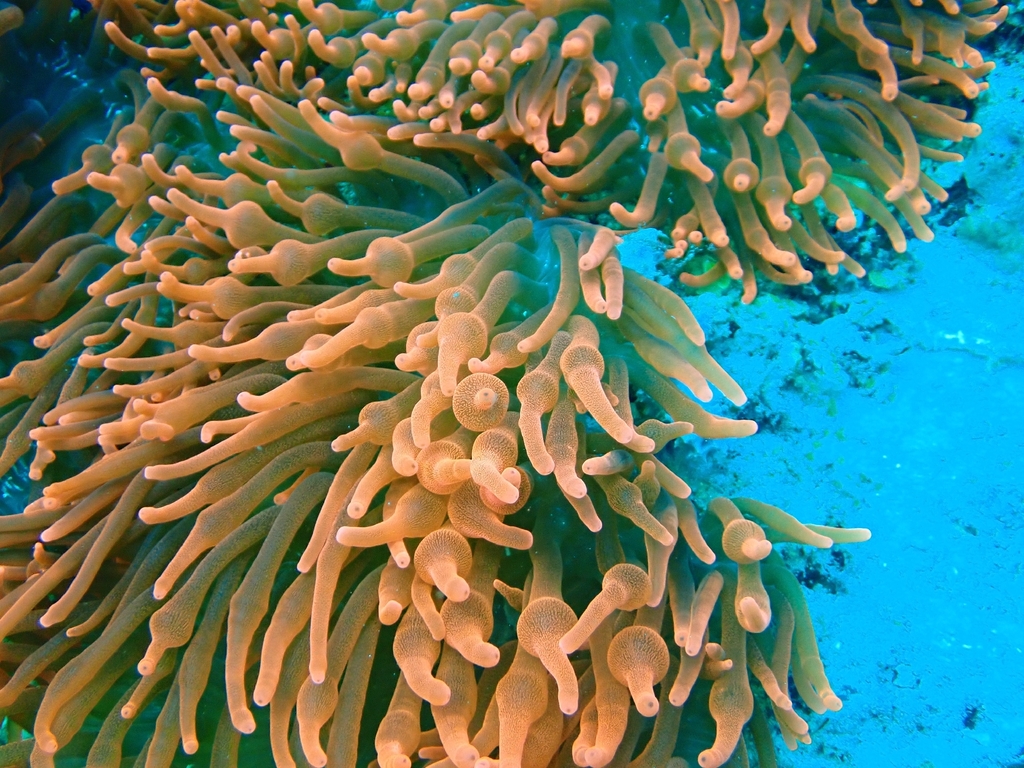
Black Widow / Black BTA →
A dark maroon-to-black bodied morph, often with green or red bubble tips, prized for its dramatic contrast under blue light.
Tip: The dark pigment is partly a stress/shade response — keep light moderate and stable, since pushing too much PAR can lighten it toward plain rose.
 representative
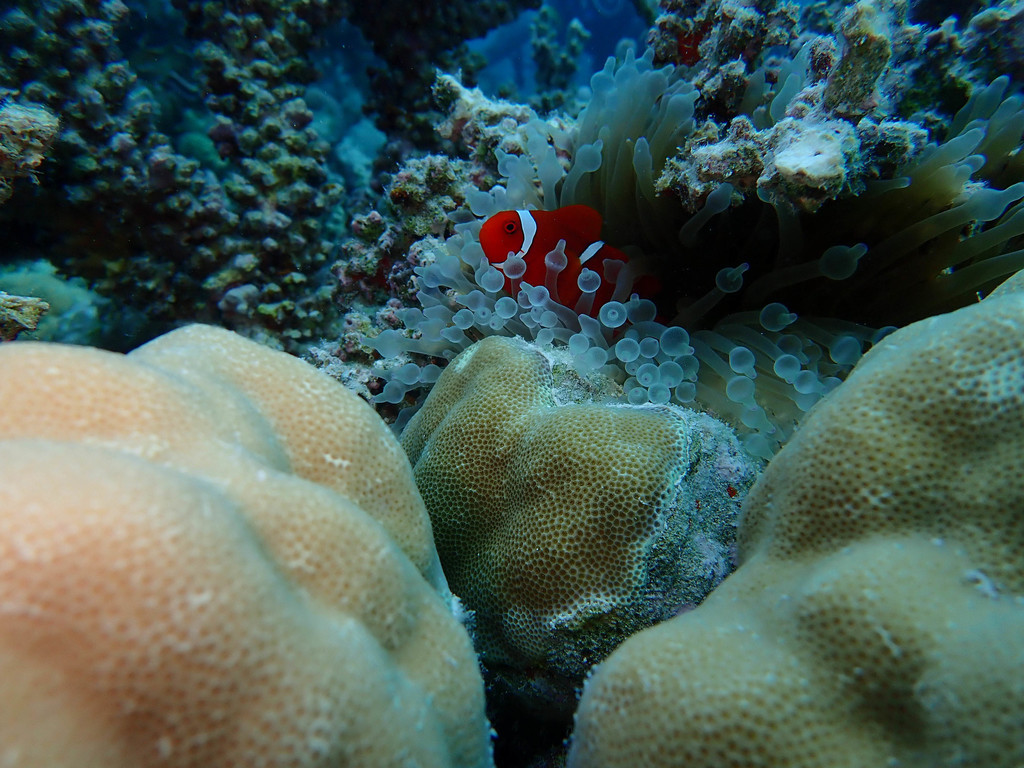
Green Bubble Tip Anemone (GBTA) →
An entry-level colored BTA with green-to-neon-green tentacles, frequently over a maroon or deep base; some lines show purple or pink tips ('green with purple tip' GBTA).
Tip: One of the more forgiving colored morphs, but still needs a mature tank — moderate-to-strong light and moderate flow are plenty. Provide a rocky crevice for the foot and feed meaty foods every few days to encourage splitting.
 representative
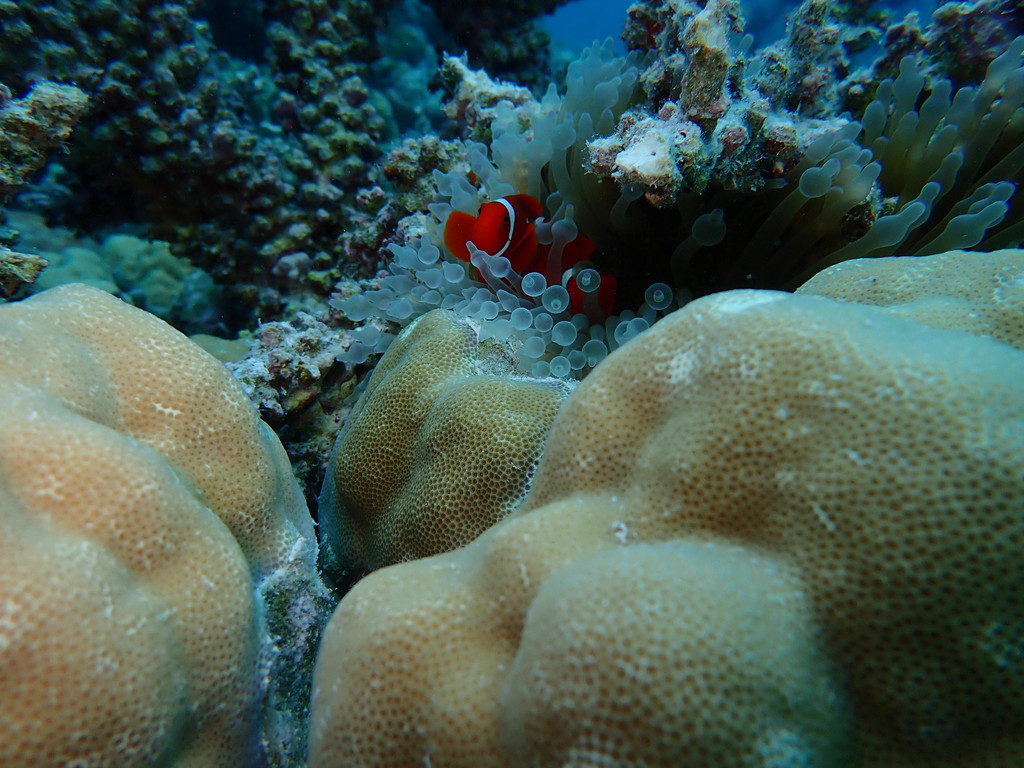
Orange/Flame Tip BTA →
Green-to-brown body with bright orange or flame-colored bubble tips. A mid-priced step up from plain green with a vivid two-tone look.
Tip: Feed regularly (silversides/mysis) — well-fed flame-tip anemones hold the orange tips far better than starved ones, which fade pale.
 representative
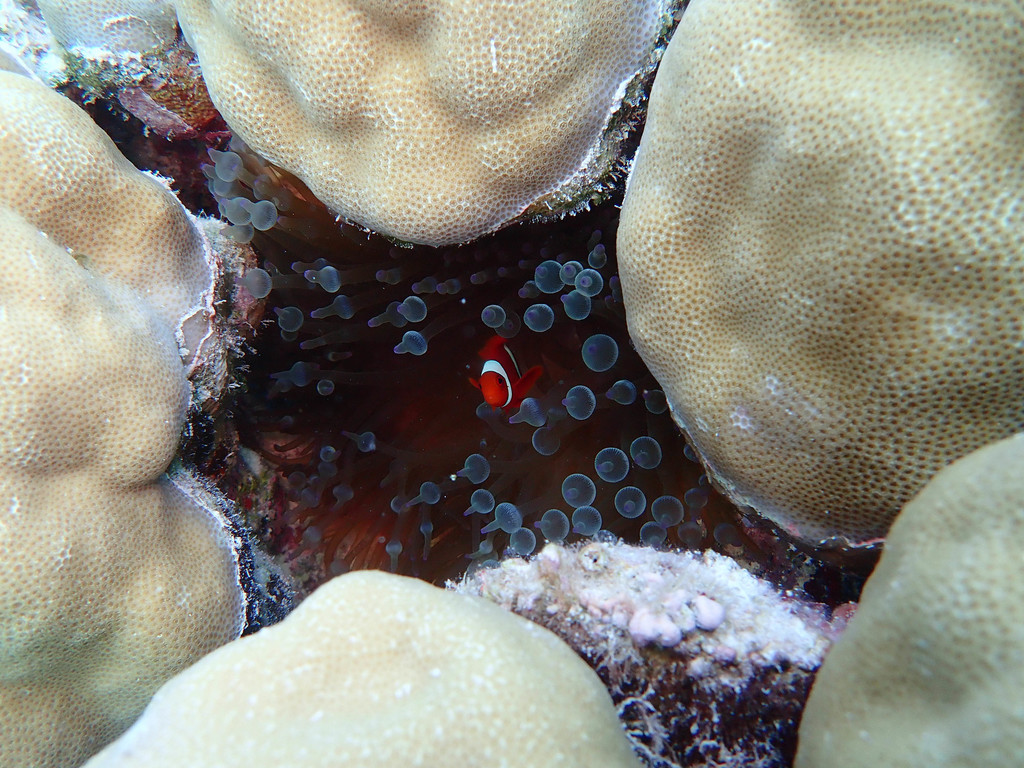
Bubble Tip 'Splatter' / Confetti →
An entry-level rainbow showing speckled patches of green, orange and pink ('splatter') rather than full rainbow coverage. A stepping-stone designer morph.
Tip: Treat like a rainbow: high stable PAR and a mature tank; splatter patterning intensifies as it acclimates over months, so don't judge color on day one.
 representative
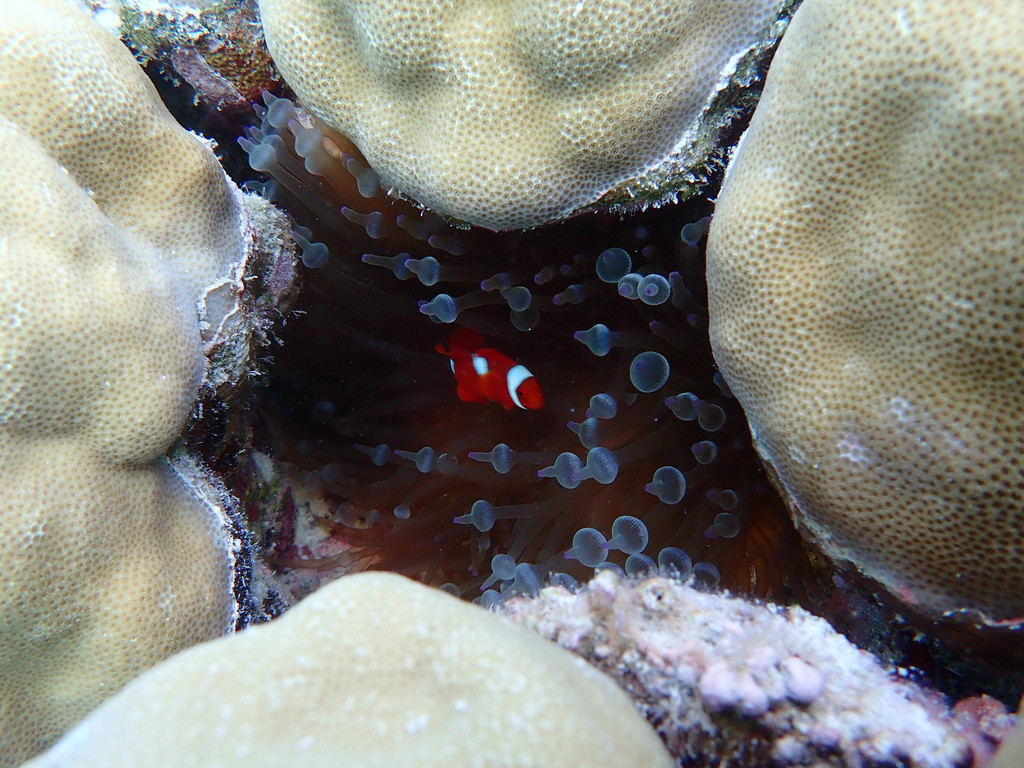
Black Widow Bubble-Tip Anemone →
A dramatic BTA with a dark, near-black to deep-red body and bright neon green or lime bubble tips, giving high contrast under blue light.
Tip: Strong blue-heavy light brings out the neon tips against the dark body; anchor it on rock with moderate flow and feed regularly to keep the dark pigment intense.
 representative
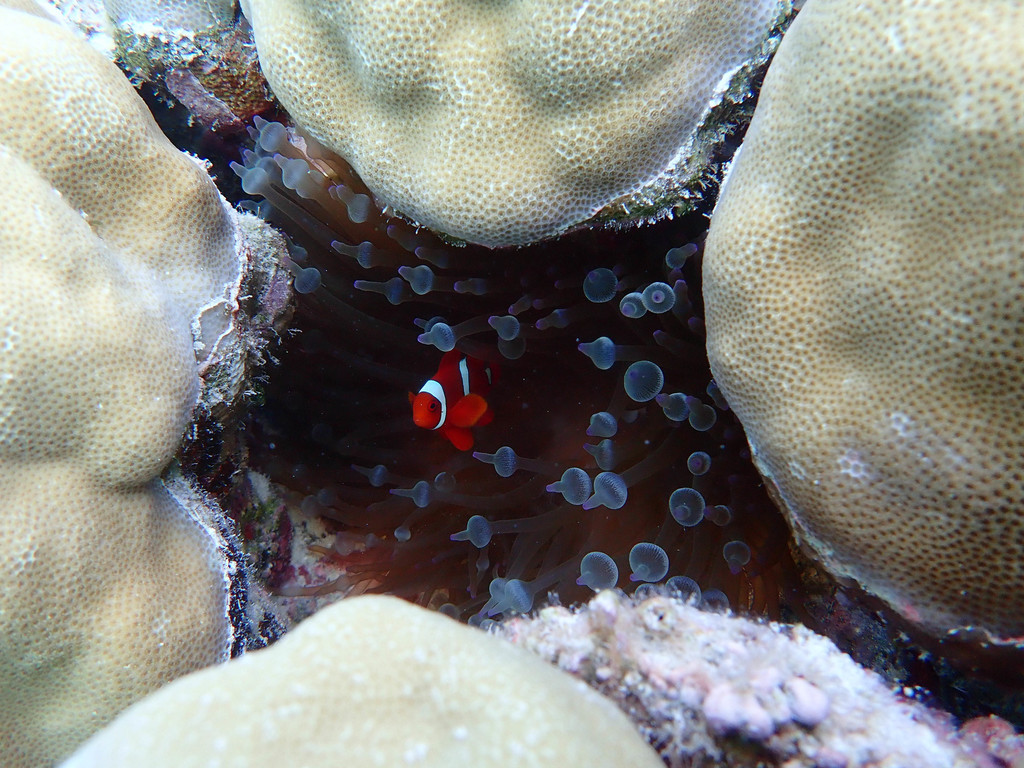
Orange/Flame Bubble-Tip Anemone →
A warm-toned BTA with orange to flame-colored tentacles, sometimes with green bubble tips, a brighter alternative to the classic rose.
Tip: Moderate to strong light with moderate flow and a secure foot; consistent feeding helps the orange pigment stay vivid rather than browning out.
 representative
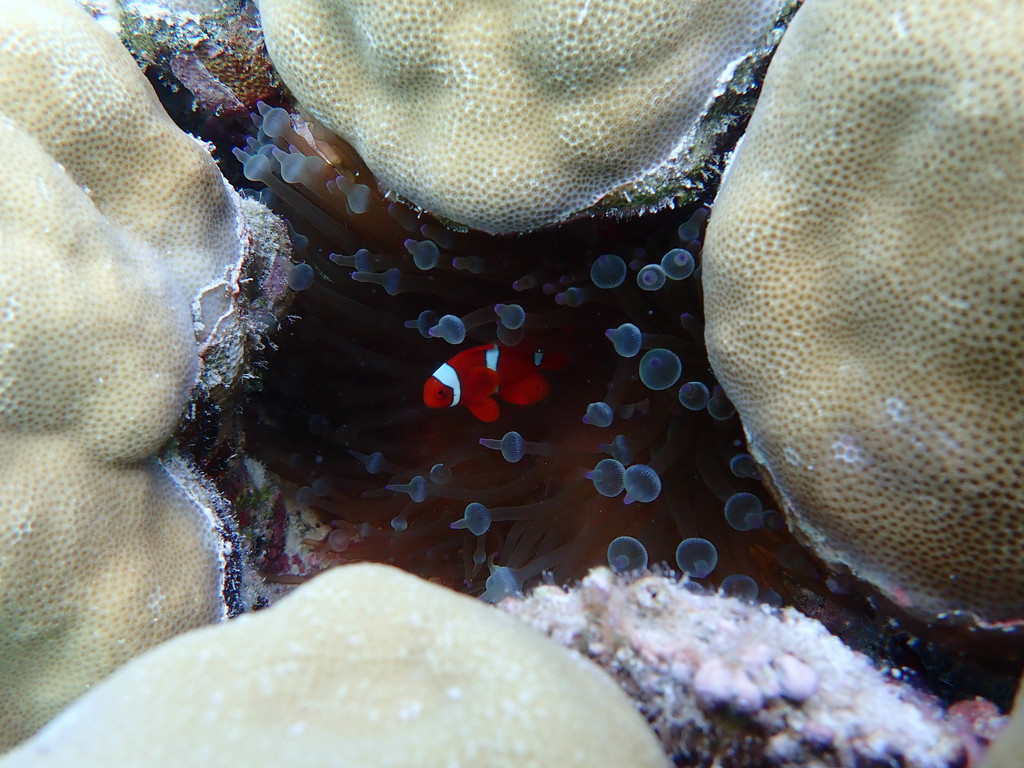
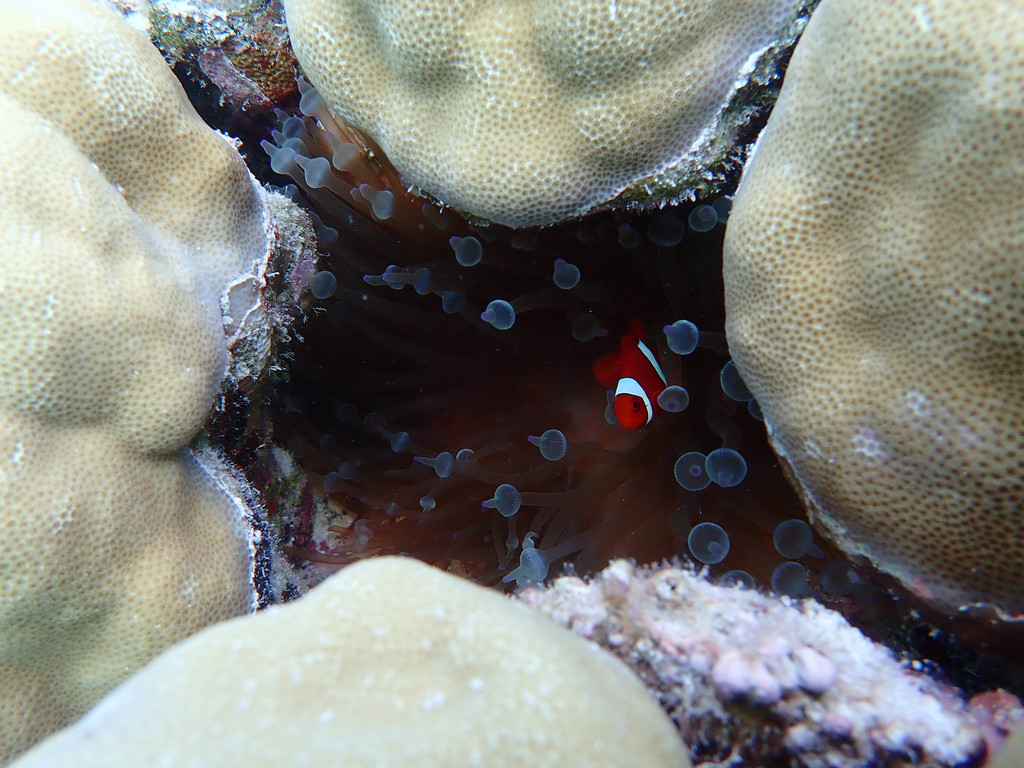
Green/Green Tip Bubble-Tip Anemone (GBTA) →
The standard fluorescent-green color form with green tentacles and bulbed tips that glow under actinic light.
Tip: Good blue-spectrum lighting maximizes the green fluorescence; give it a rock to grip and moderate flow, and it will host clownfish like the rose form.
 representative
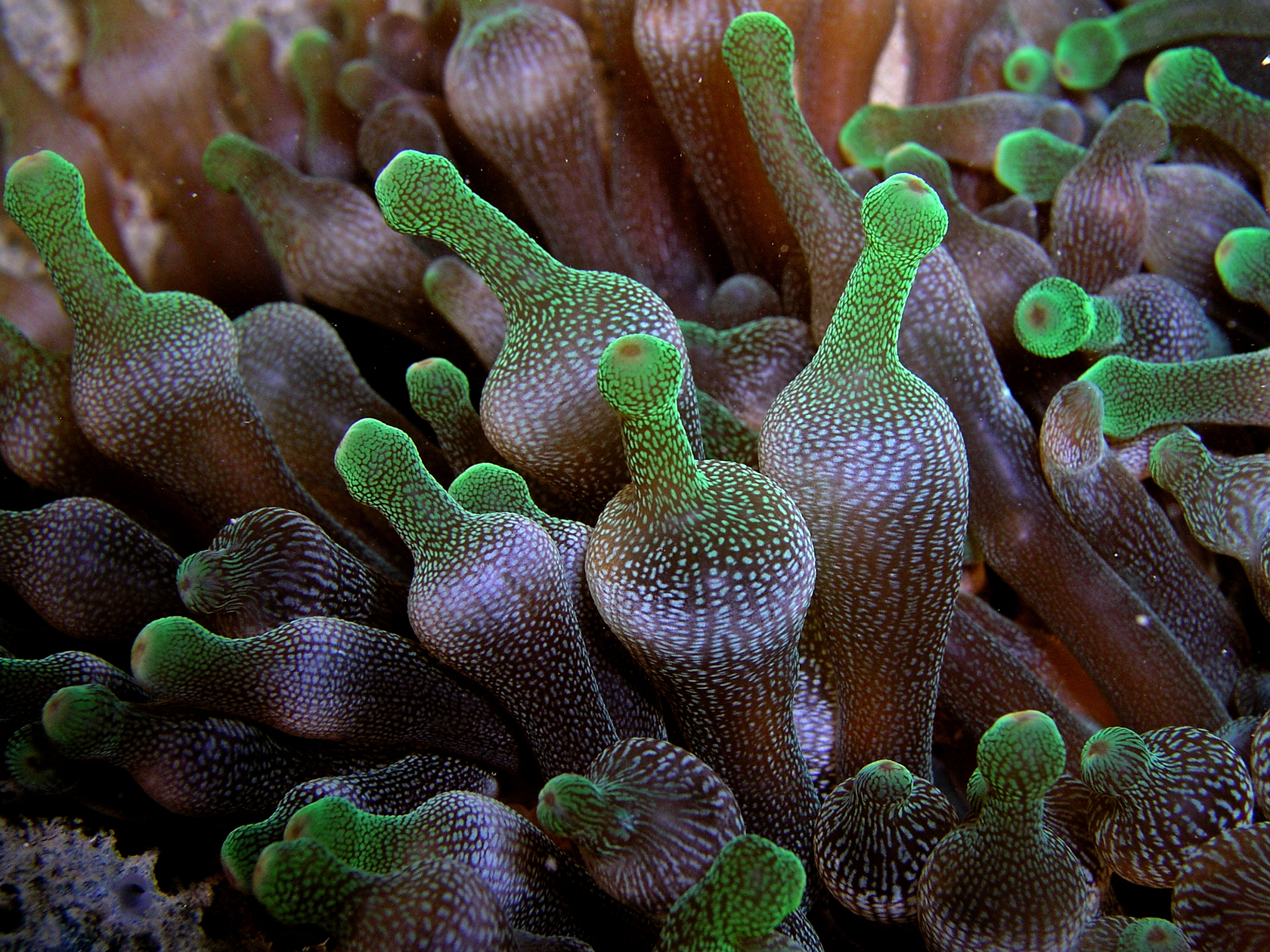
Rainbow Bubble Tip Anemone (Rainbow BTA) →
A multicolor morph combining orange, green, red, purple and pink across the column and tentacles, often with contrasting neon tips that glow under actinic light. Grades from standard 'rainbow' up to higher-color specimens.
Tip: Stronger light brings out the multicolor pigments — aim for moderate-to-high light (PAR ~200-300) once acclimated, with moderate flow so the tentacles sway. Acclimate to brighter light slowly to avoid bleaching.
 representative
Colorado Sunburst (CSB) →
One of the two officially recognized sunburst strains: highlighter neon-orange tentacles, often tipped in yellow, with a contrasting aqua-and-green oral disc. A premier must-have BTA in the trade.
Tip: Medium light (PAR ~150-350) and moderate flow show the neon orange best; it does not require blasting PAR. Anchor it low on rock with good water movement around the bubbles. Note that under Kessil/LED lighting the CSB can shift toward yellow, reverting under other lighting.
 representative
Chicago Sunburst (ChSB) →
The second officially recognized sunburst strain: red, orange or yellow tentacles (color shifts with lighting) over a bluish oral disc with white spotting, fading through bright green up the tentacles. The green carry-up is the main giveaway versus a Colorado.
Tip: Lighting changes its look dramatically — yellow under LEDs, redder under metal halide — so give it medium-to-high light (~150-350 PAR) and moderate flow, and let color settle before judging. Keep flow steady to encourage bubble development.
representativeArizona Sunset →
Warm shades of orange, red and gold with subtle purple and pink accents, evoking a glowing desert sunset across the tentacles.
Tip: Medium-to-high light (PAR ~150-350) keeps the warm orange/red pigments saturated; pair with moderate flow on a secure rock where the foot can grip. Acclimate to brighter light gradually.
 representative
Ultra Rainbow BTA →
A higher-grade rainbow morph selected for stronger patterning and more saturated multicolor (red, orange, green, pink, often with acid-splash speckling) than a standard rainbow BTA.
Tip: Like the standard rainbow, it colors up best under moderate-to-high light; keep flow moderate and acclimate light slowly so it doesn't bleach the extra color out.
 representative
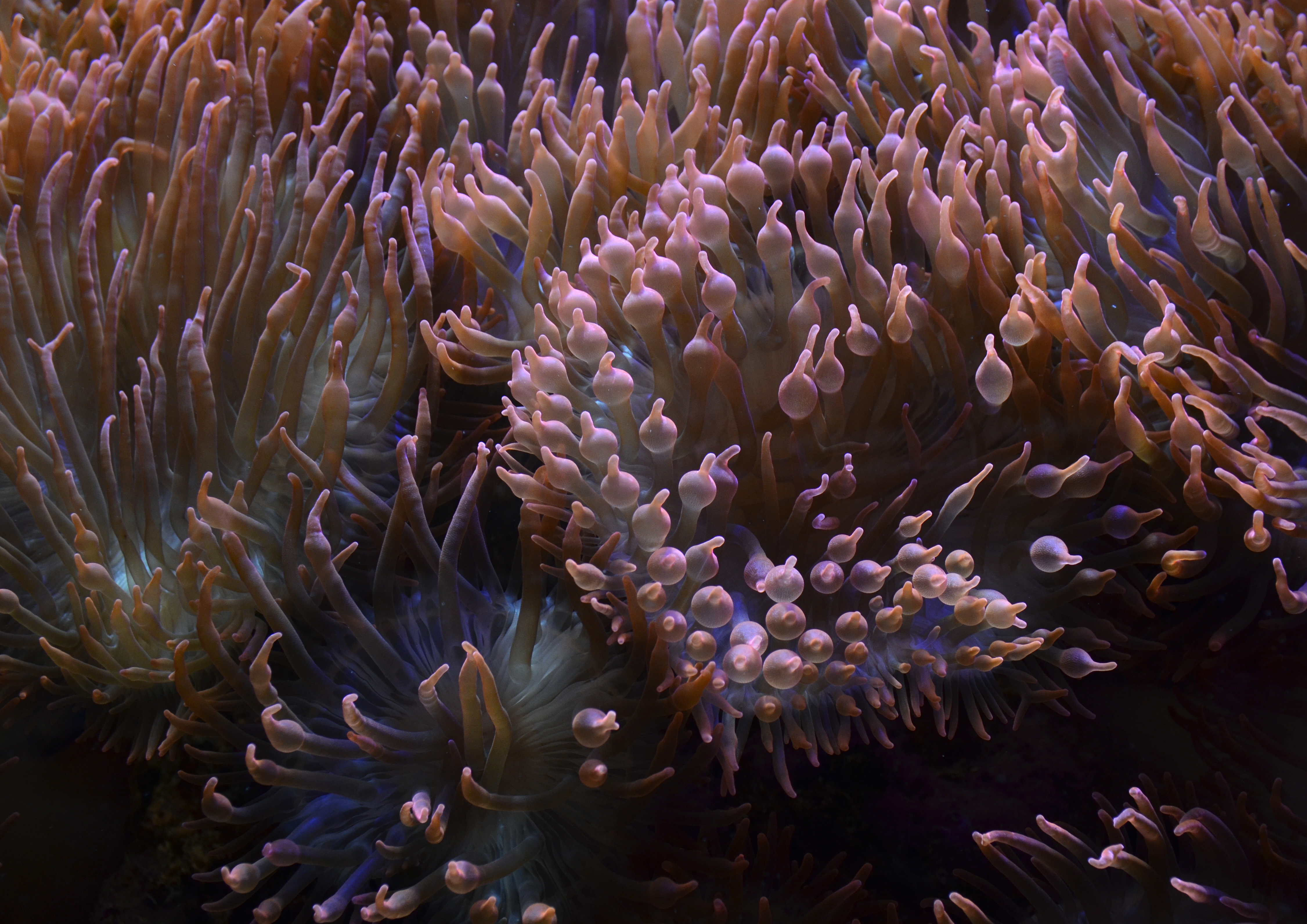
Inferno →
A fiery BTA with glowing red-to-orange tentacles, often with a metallic striped pattern, bright tips and a red foot. One of the original Coral Collection exotic anemone lines.
Tip: Lighting strongly affects the red/orange tones — give it moderate-to-high light and moderate flow, and let color settle before judging. Secure the foot in a rock crevice.
 representative
Supernova →
A vivid BTA with a dark base flecked with red spots and green-speckled tentacles in bright orange/red, with green tips — distinguished from the Inferno by its cooler, more magenta-toned cast.
Tip: Moderate-to-high light brings out the contrast between the warm tentacles and the dark green-speckled base; keep flow moderate and the foot anchored in rock.
 representative
Flame Tip BTA →
A warm BTA whose base-colored tentacles transition to bright orange/red flaming tips; the Coral Collection 'sister' line to the CC Inferno, with no two pieces colored exactly alike.
Tip: Moderate-to-high light keeps the flame-colored tips vivid without bleaching the body; pair with moderate flow and a secure rock foothold.