Mini Maxi Anemone
Stichodactyla tapetum · also called Mini Maxi Carpet Anemone, Maxi-Mini Carpet Anemone, Mini Carpet Anemone

Stichodactyla tapetum is a small, jewel-toned carpet anemone famous for rainbow color morphs, making it a popular nano-reef anemone. Far more manageable than its giant carpet relatives, but its short, sticky tentacles still pack a strong sting.
🩺 Need expert help with your mini maxi anemone?
Connect with a specialist near you or ask a licensed vet — never substitute online guidance for hands-on care in an emergency.
Quick facts
| Size | Oral disc typically 2-4 in (5-10 cm) across, occasionally to ~6 in |
| Lifespan | 10–30 years |
| Social needs | solo |
| Native region | Indo-Pacific reefs (Indo-Malayan region, Indonesia, Vietnam) |
| Origin | Old World |
| Climate | 🌴 Tropical |
| Water type | 🌊 Marine |
| Family | Stichodactylidae |
| Genus | Stichodactyla |
Part of the Sea Anemones
Stinging, sessile cnidarians ranging from clownfish-hosting giants to nano-sized carpet species. Many are demanding, mobile, and can sting corals or be drawn into pumps — careful placement and rock-stable water are essential.
Habitat & space requirements
From the minimum an animal needs to be kept humanely, up to the ideal setup. Bigger is almost always better — minimums are floors, not targets.
Life & growth stages
How this animal changes through its life — each stage often has its own care, diet and space needs.
Color & pattern variants
Natural variants occur in the wild; selectively bred (man-made) variants were developed in captivity.
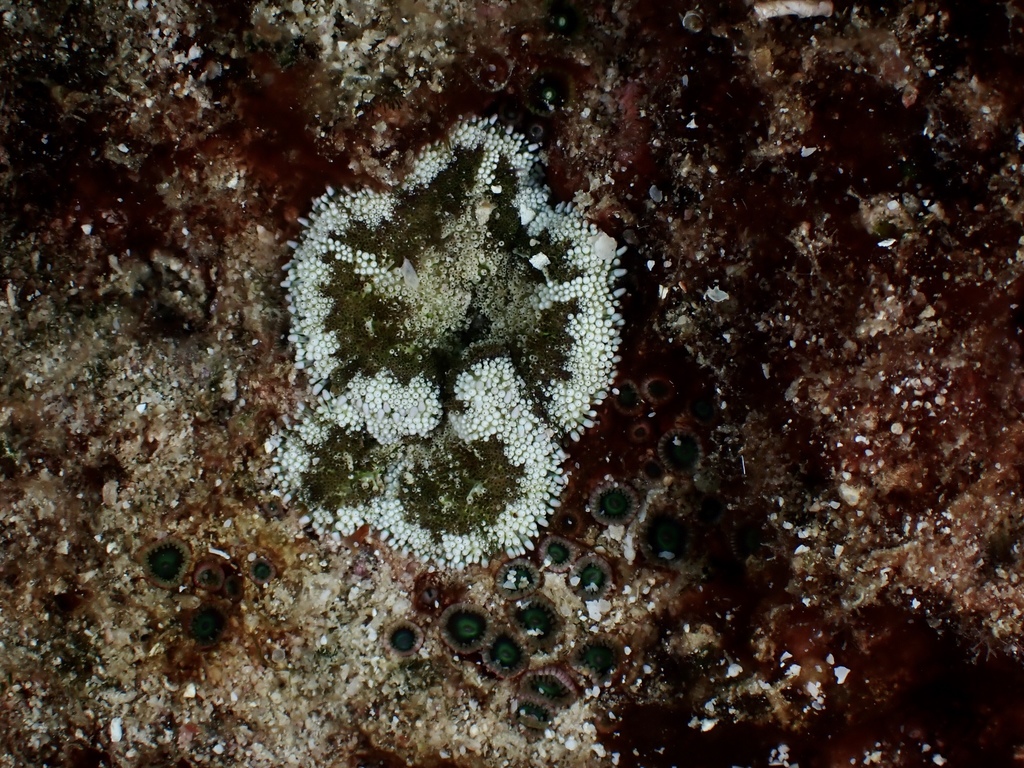 representative
Rainbow
Multicolor morph blending red, green, blue, and orange across the disc and tentacles — the most prized and recognizable mini-maxi color form.
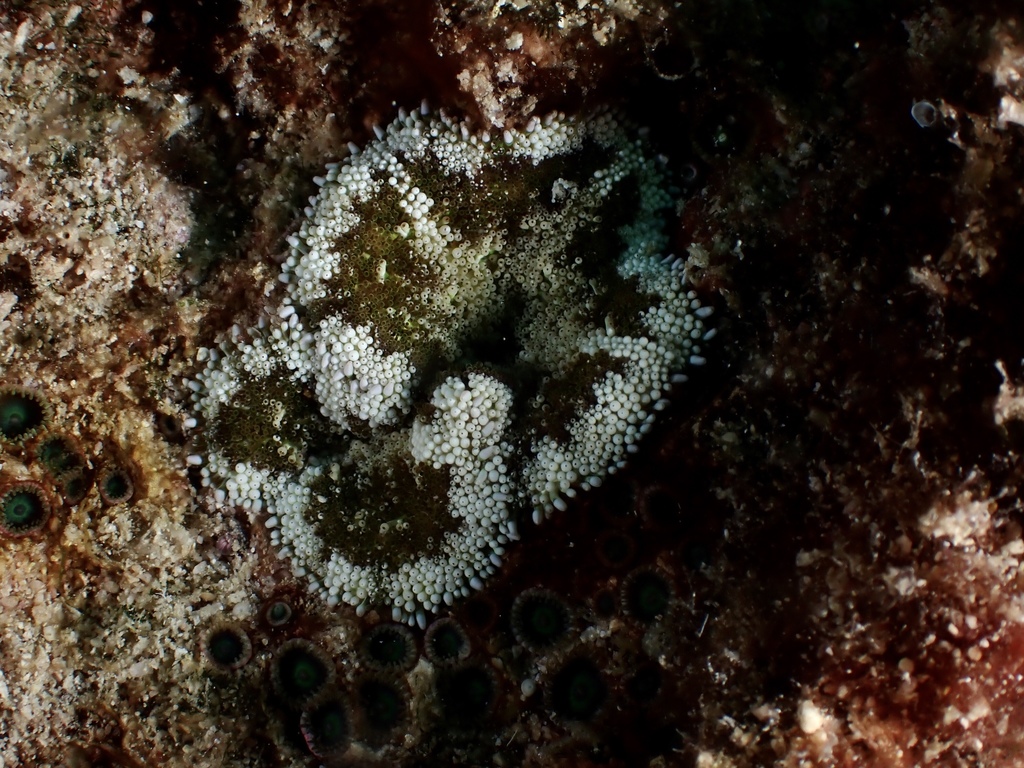 representative
Purple / Magenta
Solid vivid purple-to-magenta disc with contrasting tentacle tips; a popular single-color variant.
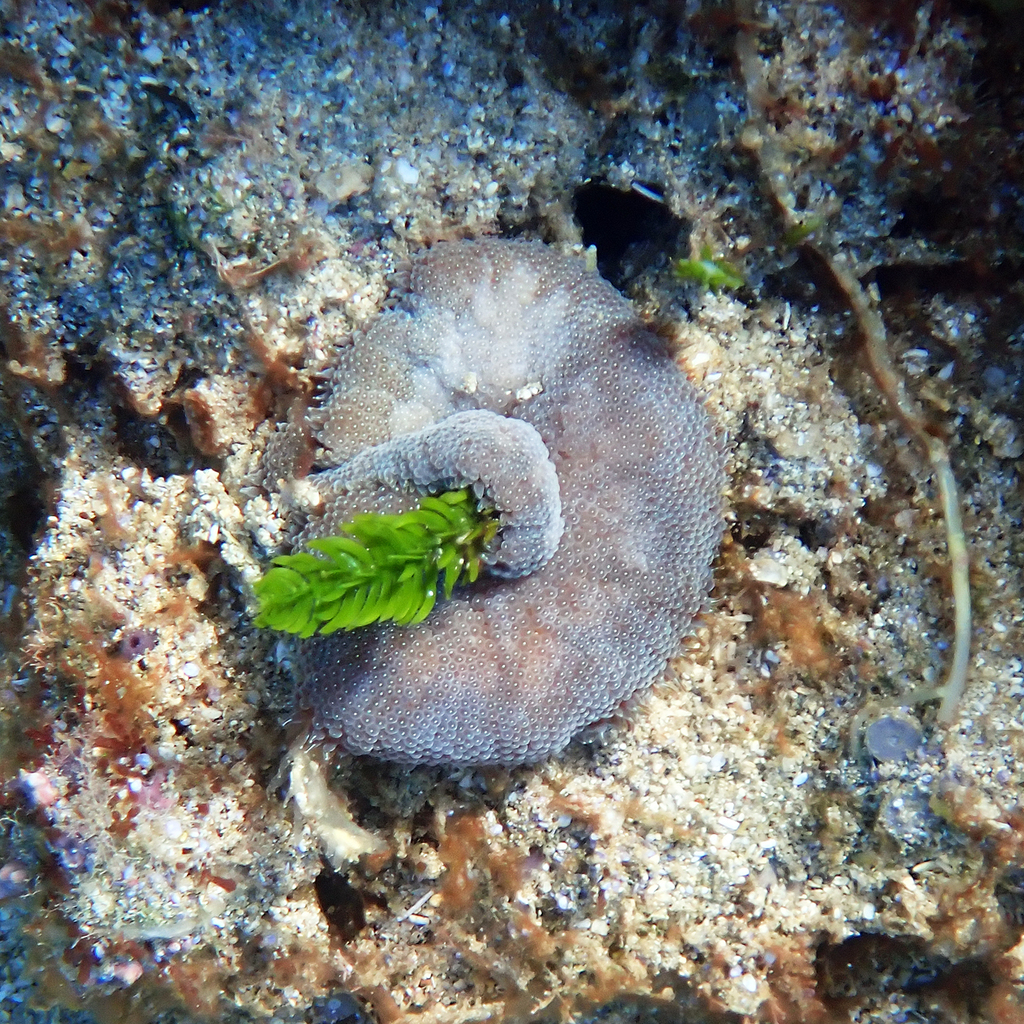 representative
Green / Tipped
Green disc with brightly colored tentacle tips, fluorescing strongly under actinic lighting.
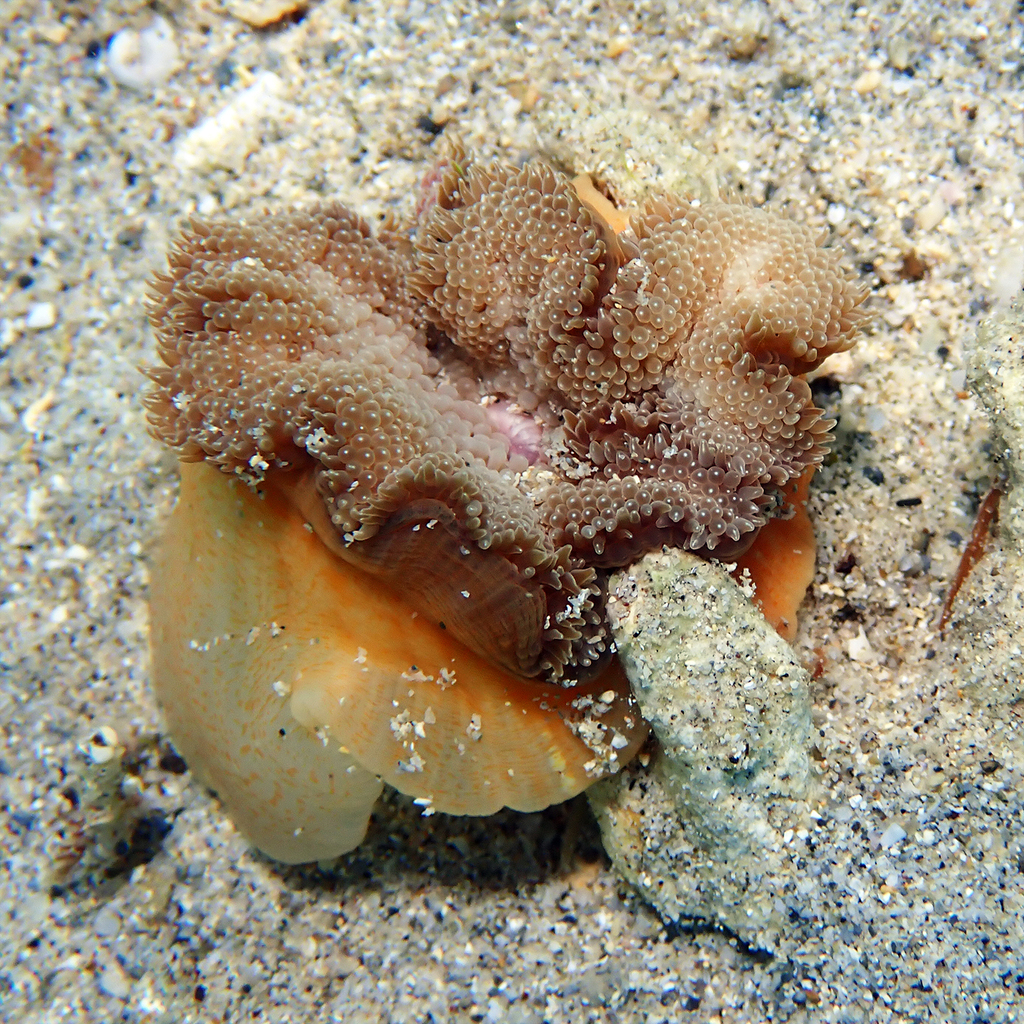 representative
Ultra Grade Rainbow Maxi-Mini →
The top color grade of *Stichodactyla tapetum*, blending green, blue, purple, pink and orange across the oral disc into a true multicolor 'rainbow' that fluoresces hard under actinic light. Roughly 1.5-3 inches; viewed best top-down.
Tip: Place on or near the sandbed in low-to-moderate flow and let it tuck its foot into rock/sand to anchor; once attached it rarely wanders. Moderate light (~100-200 PAR) is plenty; heavy actinic brings out the rainbow fluorescence. Wear gloves when handling — the sting can irritate skin.
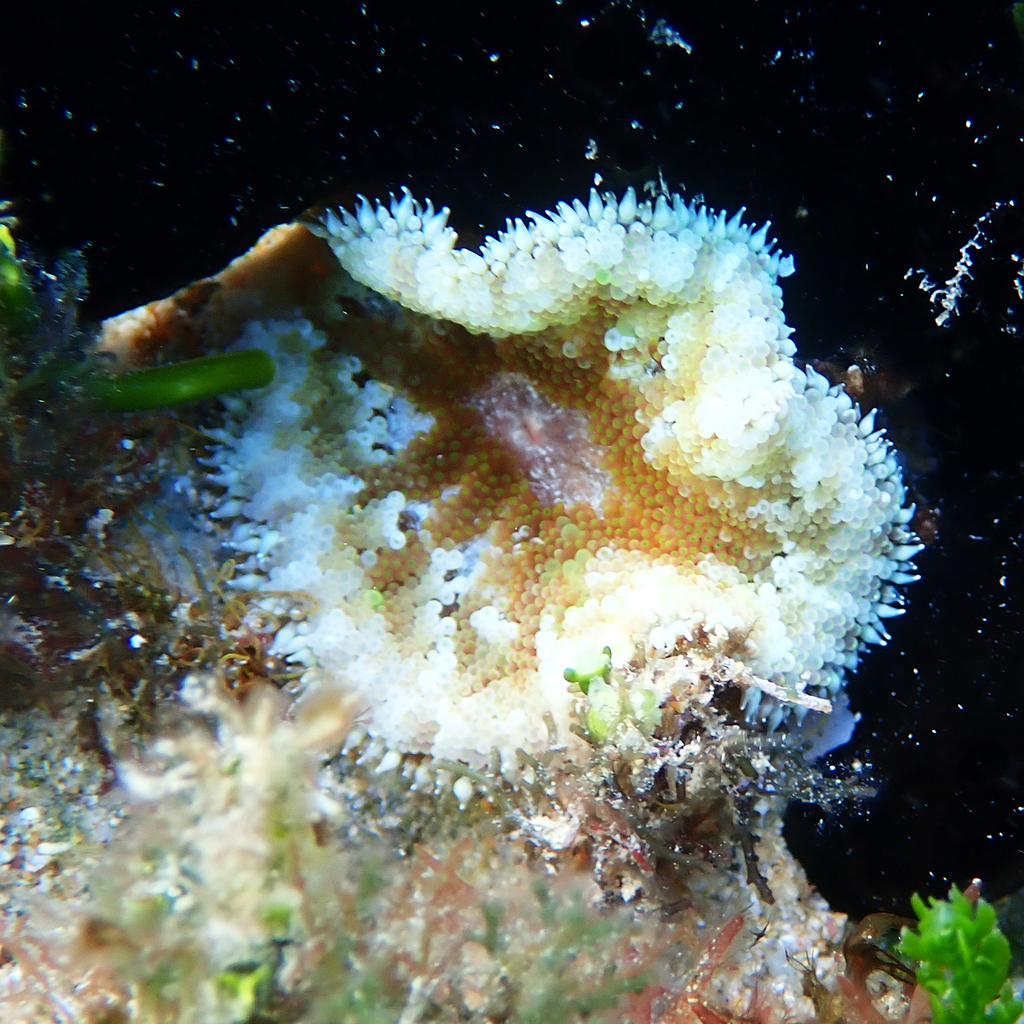 representative
Rainbow Maxi-Mini Carpet →
The standard 'rainbow' trade designation — a mottled mix of green, teal, purple and orange across the disc, less saturated than the Ultra grade but still multicolor. Intensely fluorescent top-down under blue light.
Tip: Give it low-to-moderate flow and let it settle on the sandbed near rockwork; avoid blasting it directly until the foot grips. It has a potent sting, so keep it away from other corals and wear gloves when handling.
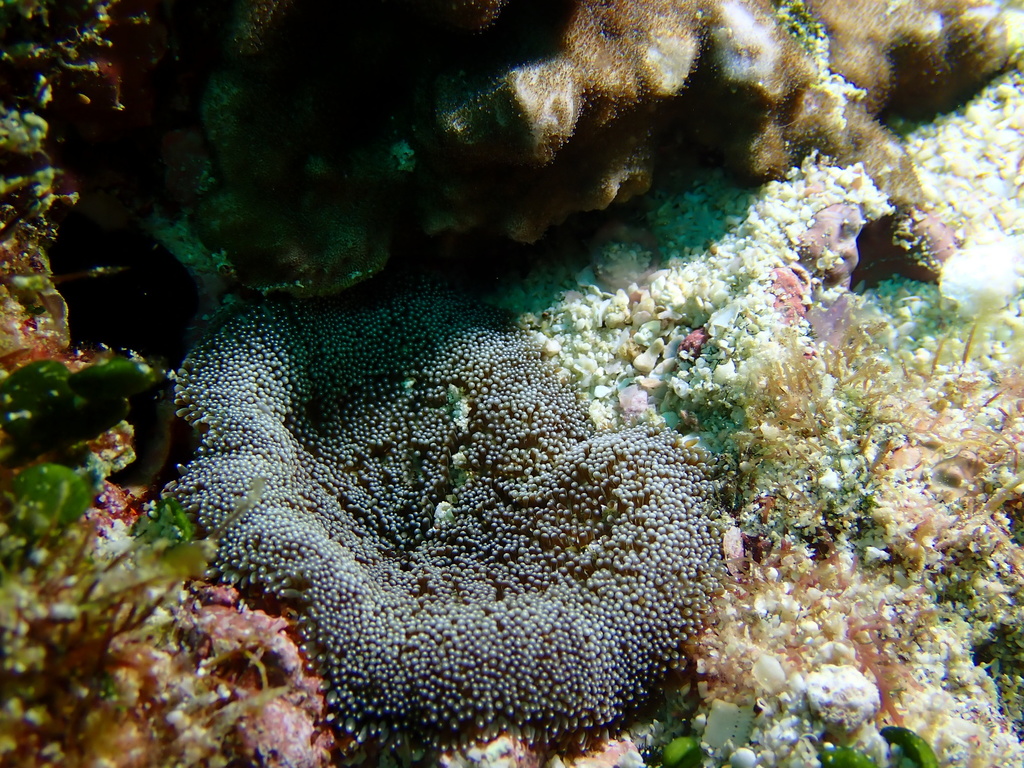 representative
Rainbow Rim Maxi-Mini →
A maxi-mini with a contrasting brightly colored outer ring ('rim') of rainbow tones encircling a differently colored center disc. The rim coloration shifts noticeably between white and actinic lighting.
Tip: Position under moderate blue-heavy light to pop the rim fluorescence, on sand in gentle-to-moderate flow until it anchors its foot. Keep it isolated — its sting can damage neighboring corals; gloves recommended.
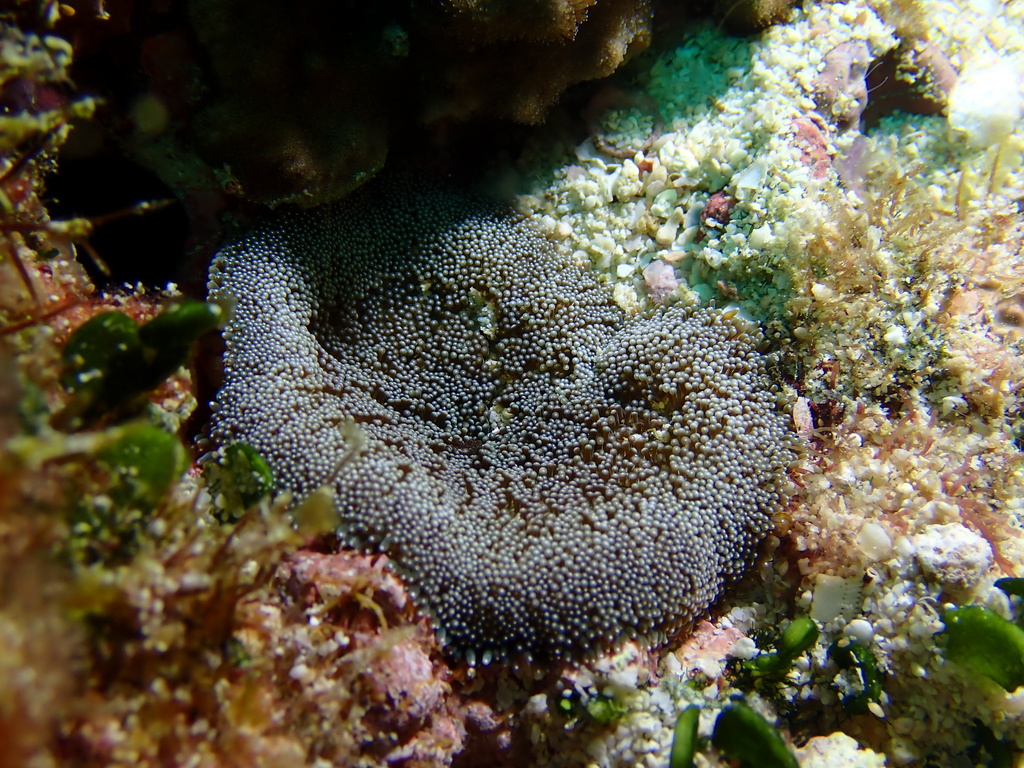 representative
Grade B Maxi-Mini Carpet →
An entry-level color grade — typically green/brown with some purple or blue accents, lacking the full multicolor spread of Grade A or Ultra pieces. Hardy and inexpensive.
Tip: Treat it like any maxi-mini: sandbed placement, low-to-moderate flow, moderate light. A great beginner anemone since it tolerates a wide range of conditions and clones readily. Mind the sting and wear gloves.
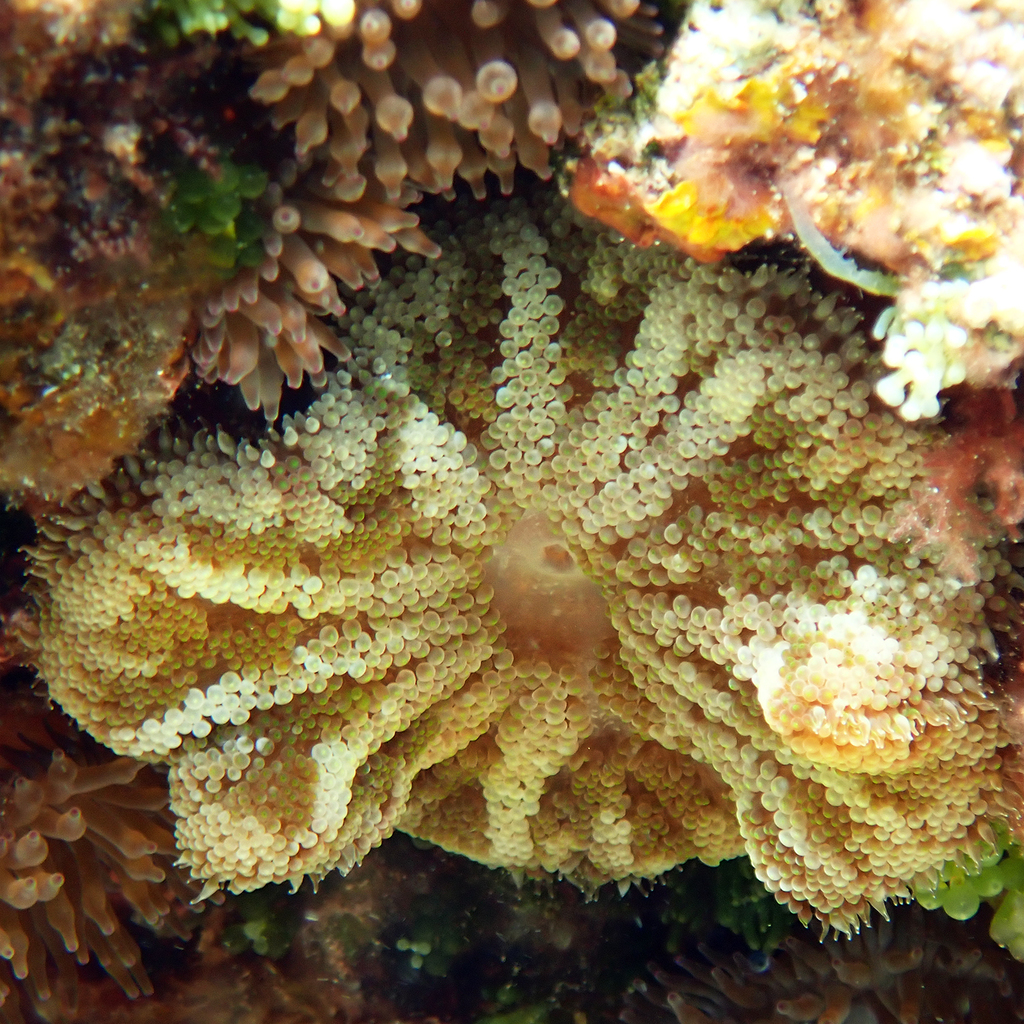 representative
Orange Maxi-Mini Carpet →
A maxi-mini dominated by orange tentacles/disc, frequently with a contrasting purple or maroon center. The orange is a striking solid color rather than a multicolor mix.
Tip: Keep it on sand in low-to-moderate flow under moderate light; the orange holds best without being washed out by overly intense white lighting. Mind the strong sting near other livestock.
 representative
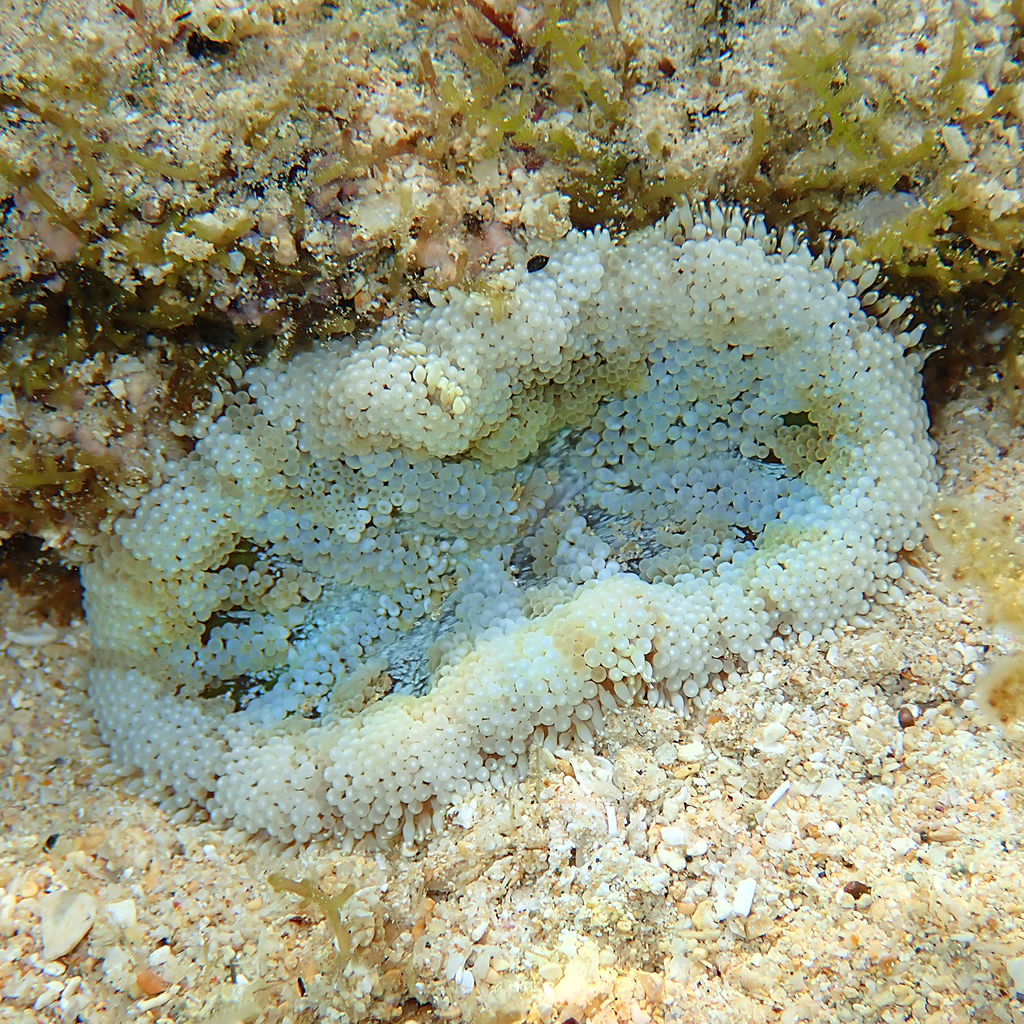
Royal Blue Maxi-Mini Carpet →
A royal-blue to purplish-blue maxi-mini — one of the more sought-after solid colors, with the blue intensifying dramatically under actinic light. Disc and short tentacles share the blue tone.
Tip: Use blue-spectrum light to maximize the color and keep flow low-to-moderate; let it anchor on the sandbed near rock. As with all maxi-minis, isolate it from corals due to its sting and wear gloves.
 representative
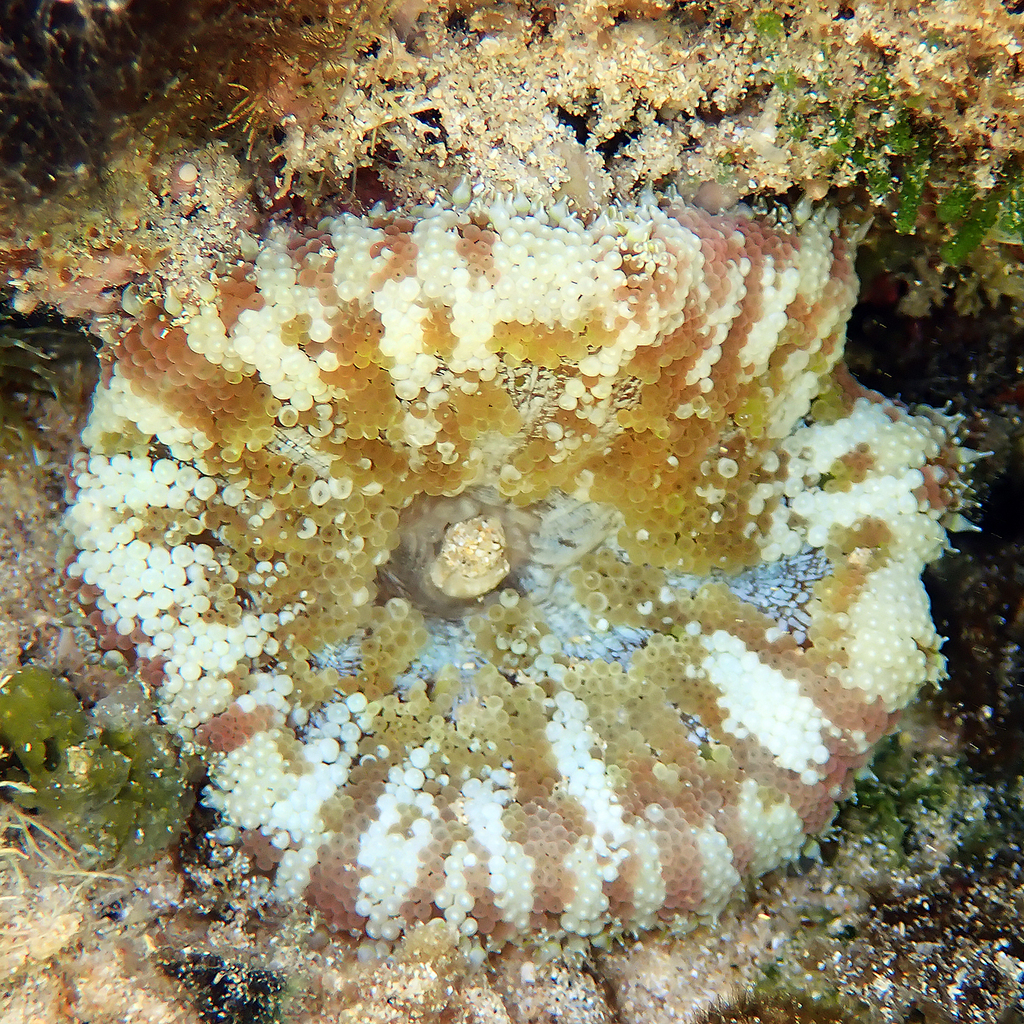
Purple Maxi-Mini Carpet →
A maxi-mini with a predominantly purple to magenta disc, sometimes with occasional green highlights. A clean single-color look prized for contrast against green-dominant tanks.
Tip: Moderate light and low-to-moderate flow on the sandbed; purple tones tend to read best under a mix of white and blue. Keep clear of corals — the sting is potent for the animal's small size.
 representative
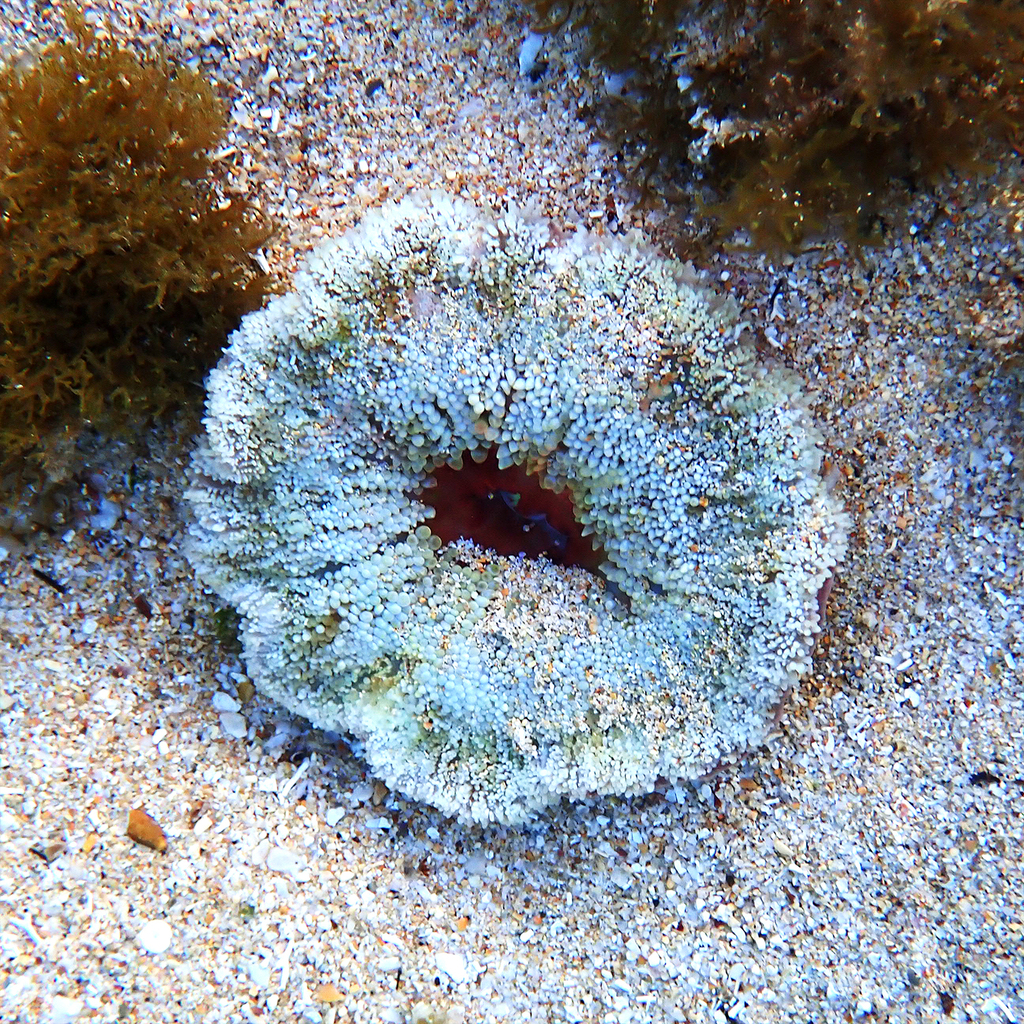
Pink Maxi-Mini Carpet →
A maxi-mini showing pink to magenta coloration across the disc and tentacle tips, often with a greenish base. Less common than green/rainbow pieces.
Tip: Keep on the sandbed in low-to-moderate flow under moderate, blue-leaning light to hold the pink. Give it space away from corals because of its strong sting; gloves recommended.
 representative
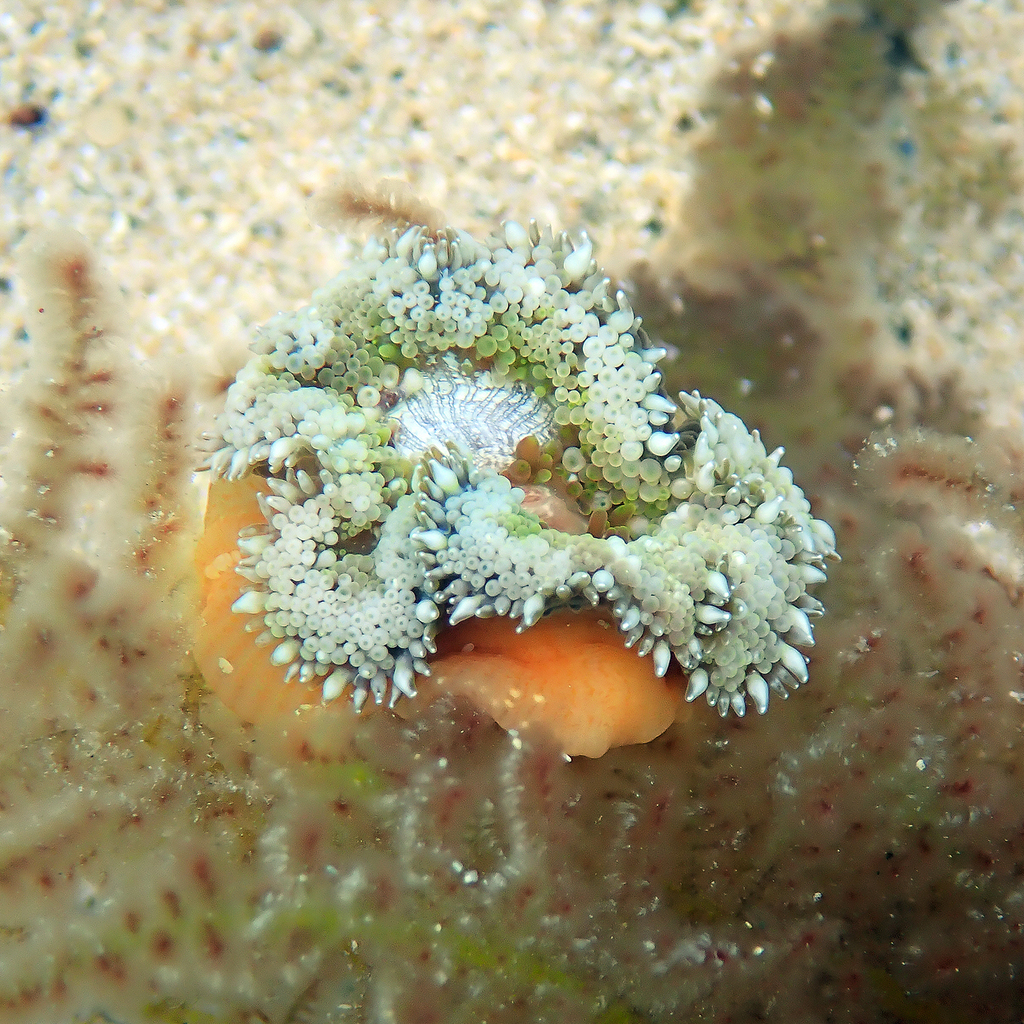
Blue/Green Maxi-Mini Carpet →
A bicolor maxi-mini with a green disc and blue accents (or vice versa) — one of the most frequently available colored forms after plain green. Fluoresces well top-down under blue light.
Tip: Standard maxi-mini care: sandbed, low-to-moderate flow, moderate light. Hardy and forgiving, making it an ideal first anemone; just respect the sting near corals and wear gloves.
 representative
Blood Red Mini Carpet →
An uncommon deep blood-red colormorph of the mini/maxi carpet, with a saturated red disc and tentacles — one of the harder solid colors to find in the trade. Reds tend to deepen under blue light.
Tip: Place on sand in low-to-moderate flow and avoid bleaching the red with overly intense white light. Keep well isolated from corals; the sting is potent relative to its small footprint, so wear gloves.
Habitat & enclosure
Substrate
Equipment & setup
Diet
Behavior & temperament
Health
Tips, DIY & hacks
Sources
- Mini-Maxi Carpet Anemone Care Guide - Reef Chasers (care guide)
- Mini Maxi Carpet Anemone (Stichodactyla tapetum) - Aqua Imports (retailer guide)
- Wikipedia: Mini Maxi Anemone (wiki)