Rock flower anemone
Phymanthus crucifer · also called Rock flower, Flower anemone, Beaded anemone, RFA

The rock flower anemone is a small, hardy, Caribbean anemone prized for its endlessly varied and brilliant color combinations on the oral disc and tentacles. Unlike the large host anemones, it is comparatively peaceful, stays compact, and tolerates a broad range of conditions, making it a popular choice for nano and mixed reef tanks. It tucks its foot into rock crevices, often with only the colorful disc exposed, and can be kept in groups of separate individuals.
🩺 Need expert help with your rock flower anemone?
Connect with a specialist near you or ask a licensed vet — never substitute online guidance for hands-on care in an emergency.
Quick facts
| Size | Oral disc commonly 2-5 in (5-13 cm); a relatively small, compact anemone. |
| Lifespan | 10–80 years |
| Social needs | solo |
| Native region | Caribbean |
| Origin | New World |
| Climate | 🌴 Tropical |
| Water type | 🌊 Marine |
| Family | Phymanthidae |
| Genus | Phymanthus |
Part of the Sea Anemones
Stinging, sessile cnidarians ranging from clownfish-hosting giants to nano-sized carpet species. Many are demanding, mobile, and can sting corals or be drawn into pumps — careful placement and rock-stable water are essential.
Habitat & space requirements
From the minimum an animal needs to be kept humanely, up to the ideal setup. Bigger is almost always better — minimums are floors, not targets.
Life & growth stages
How this animal changes through its life — each stage often has its own care, diet and space needs.
Color & pattern variants
Natural variants occur in the wild; selectively bred (man-made) variants were developed in captivity.
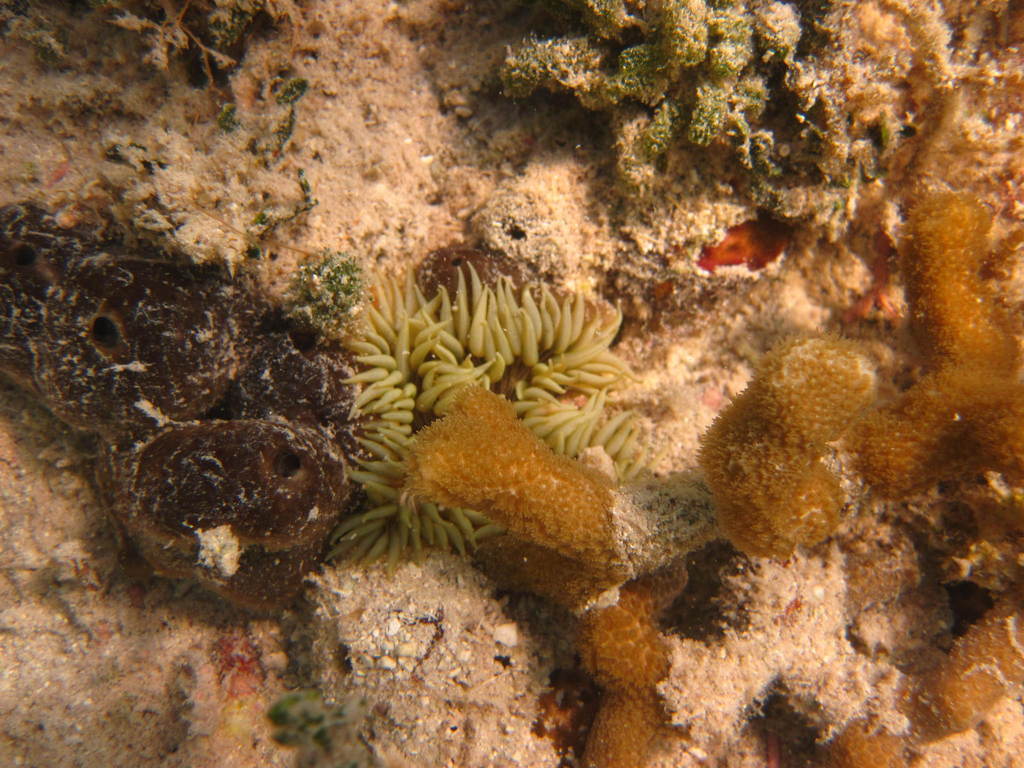 representative
Rainbow rock flower →
A multi-color rock flower displaying several contrasting hues at once — typically a green or teal disc with red, orange, pink and purple bubbled tentacles, giving a true 'rainbow' spread.
Tip: Set it in a low rock crevice or sand pocket with moderate PAR and gentle flow so its foot stays put; avoid high-flow areas that keep tentacles permanently retracted.
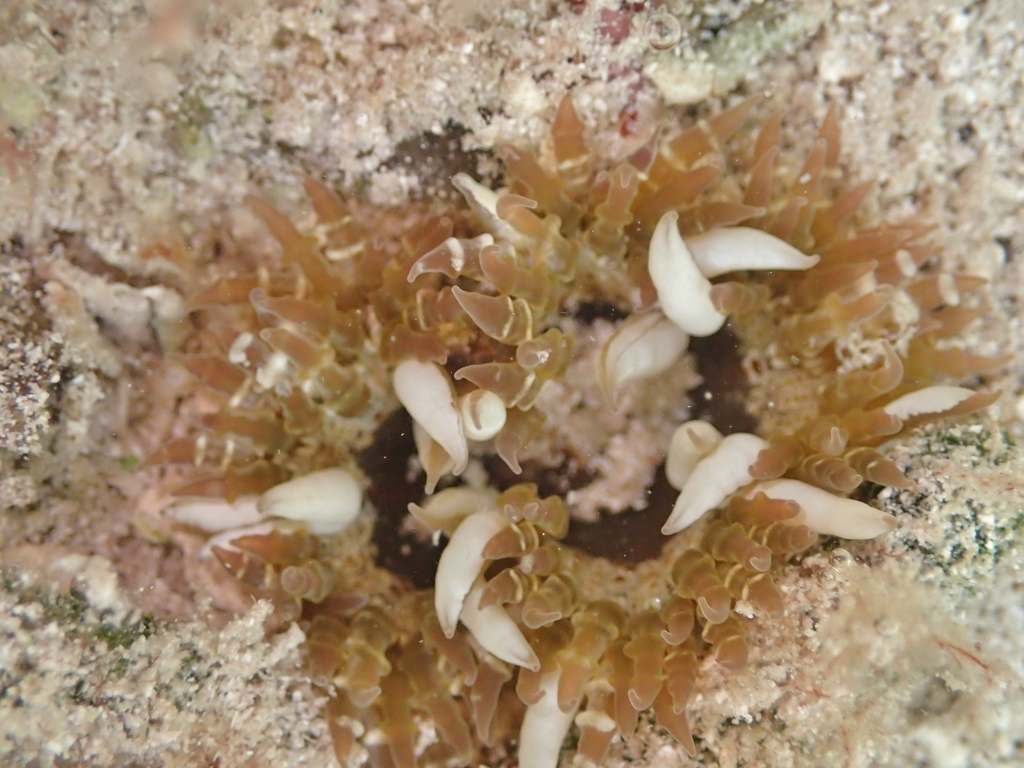 representative
Bounce / Ultra Bounce Rock Flower →
Rock flowers with inflated, bubble-like 'bounce' vesicles on the tentacles, a trait borrowed in name from bounce mushrooms. Highly prized when paired with bright base colors.
Tip: Give moderate, indirect flow — too much current deflates the bounce vesicles and the anemone won't show its signature look.
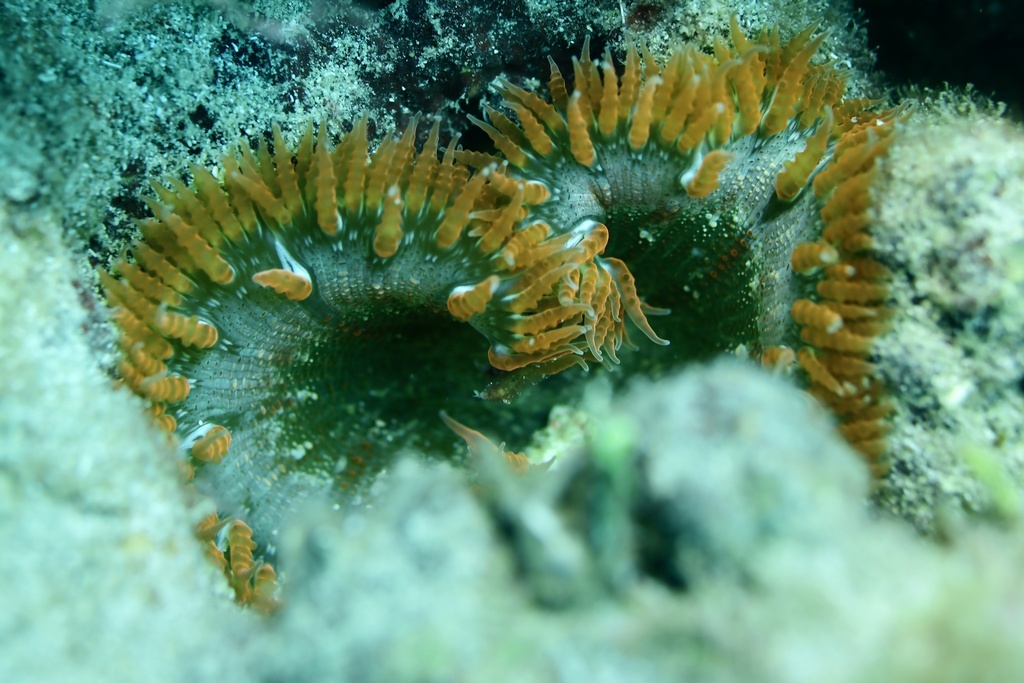 representative
Orange Rock Flower →
A bright pumpkin-to-tangerine rock flower with an even orange disc and orange tentacles, prized for the warm, glowing single color.
Tip: Give it a sandy spot with moderate lighting and gentle flow; feed small meaty foods weekly to maintain the warm orange pigment.
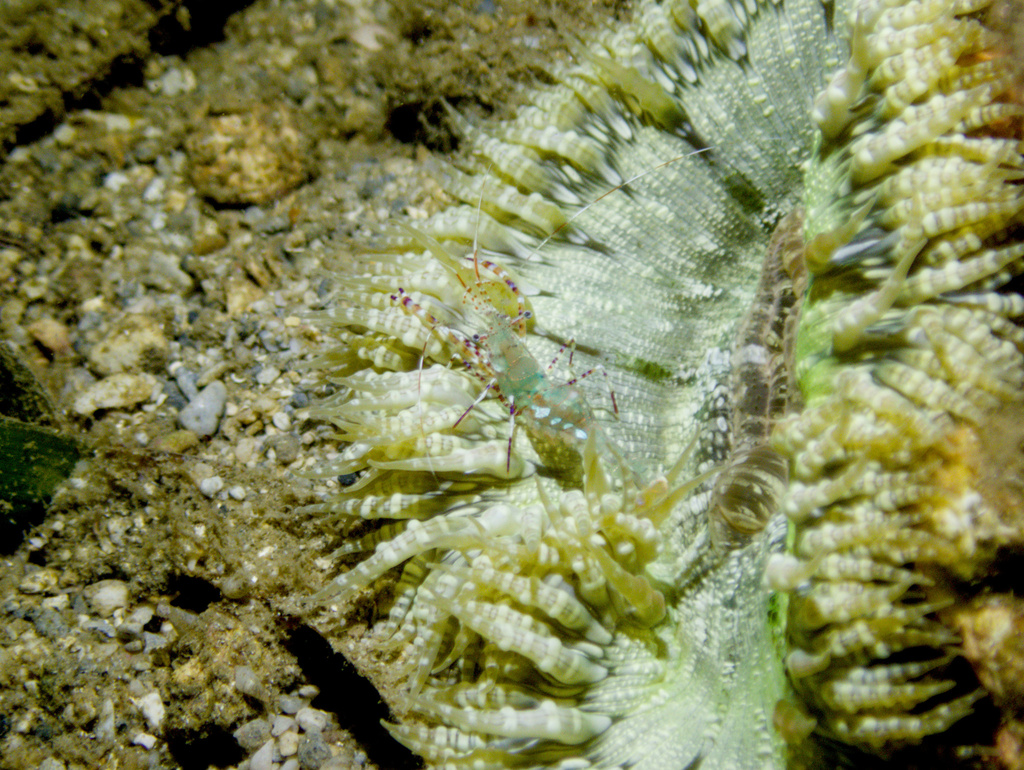 representative
Red Rock Flower →
A solid, saturated red rock flower with a uniformly crimson oral disc and matching red bubble-tipped tentacles — a clean, bold single-color look.
Tip: Anchor it in sand or rubble under moderate light with low flow, and target-feed meaty foods to keep the red pigment rich and the foot well-fed.
 representative
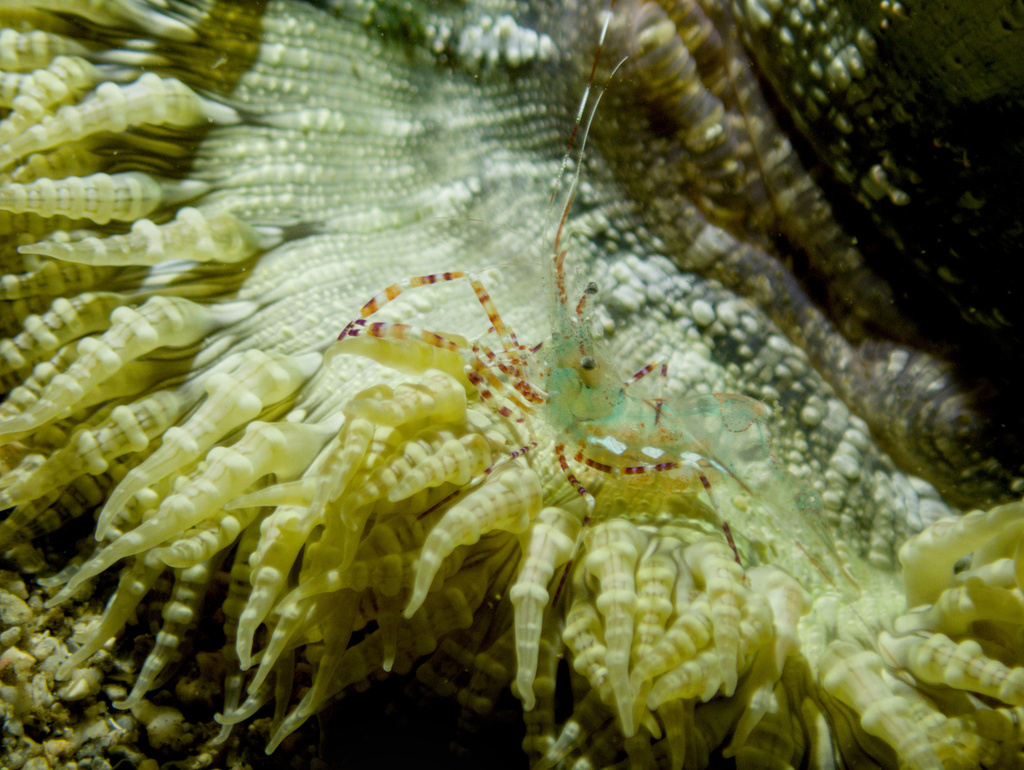
Green Rock Flower →
A bright fluorescent-green rock flower, often with a contrasting paler disc and neon-green tentacle tips that glow strongly under blue light.
Tip: Place in sand or low rock under moderate blue-heavy light to pop the green fluorescence; keep flow gentle and feed occasionally.
 representative
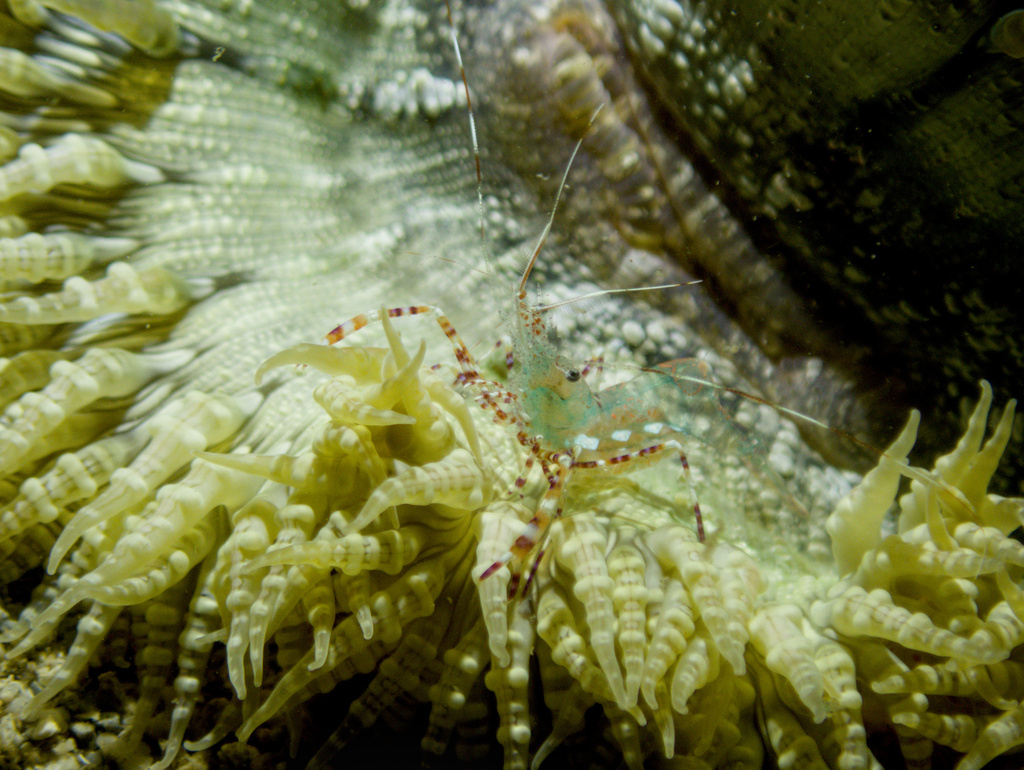
Pink/Magenta Rock Flower →
Pink to magenta oral disc, sometimes with neon green radial lines. Less common than red/orange/green forms.
Tip: The pink can fade under weak light or starvation — keep it well fed and give stable moderate lighting to hold the color.
 representative
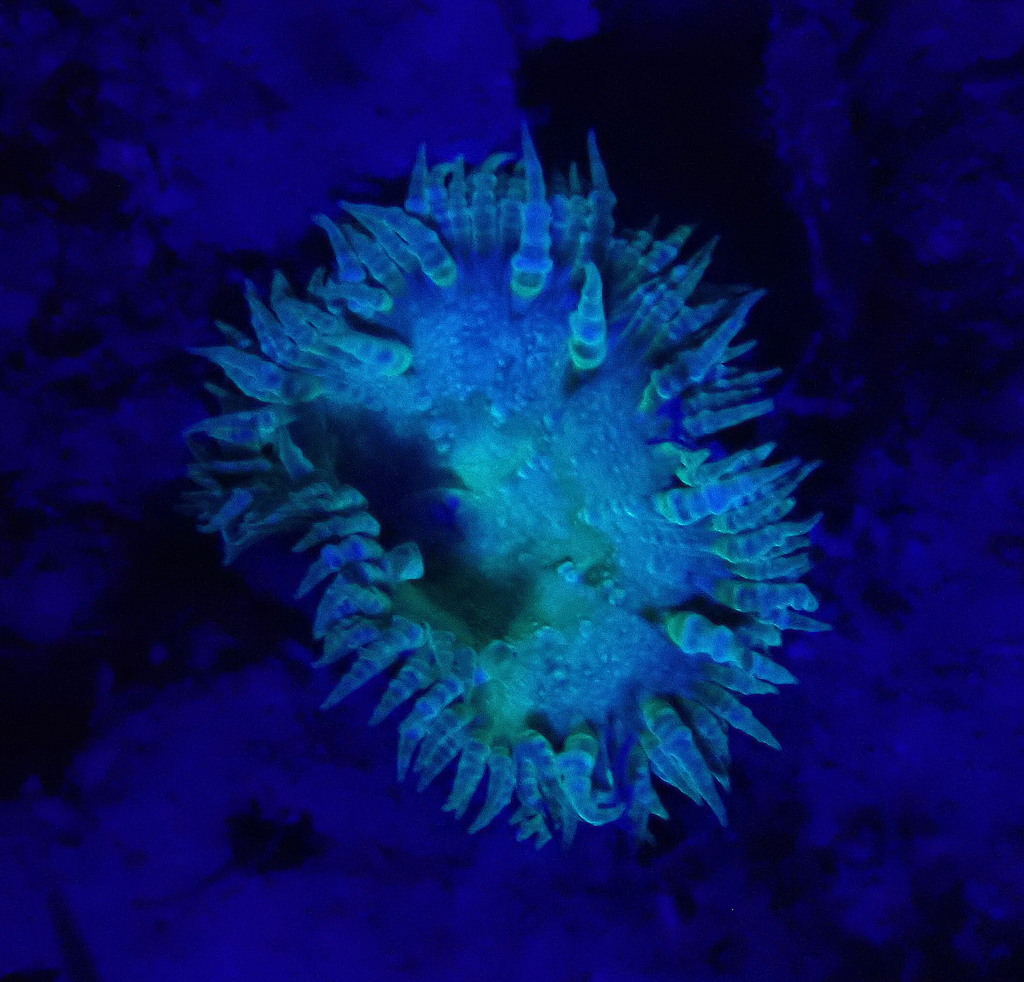
Sunburst Rock Flower →
A contrasting two-tone form, typically a colored disc radiating into yellow/orange 'sunburst' tentacle tips.
Tip: Provide consistent feeding; the bright tip contrast diminishes if the animal is underfed or stressed.
 representative
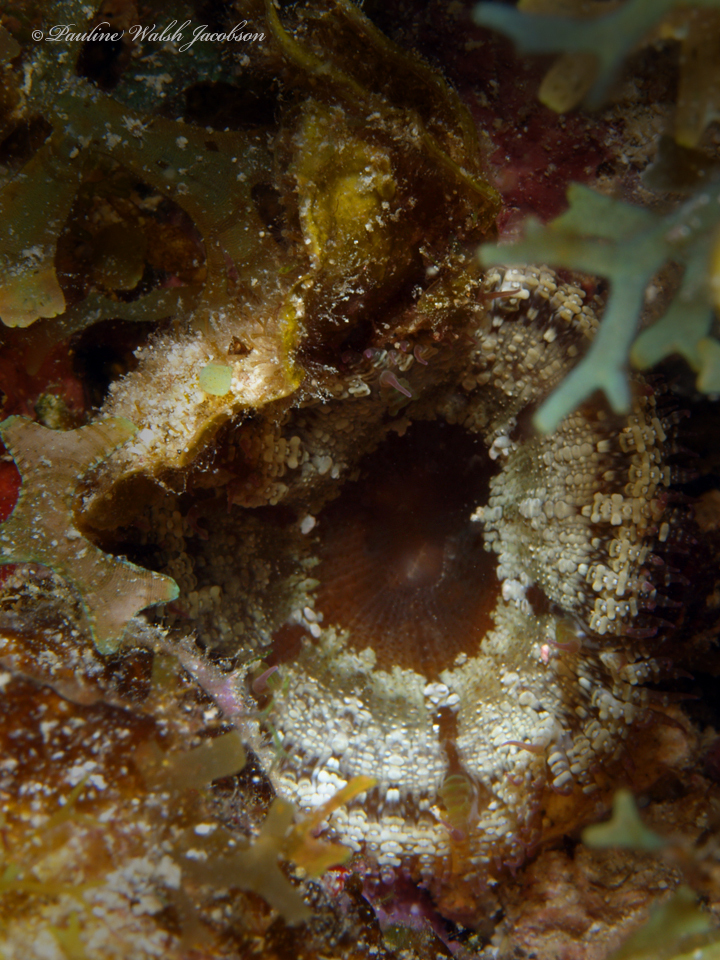
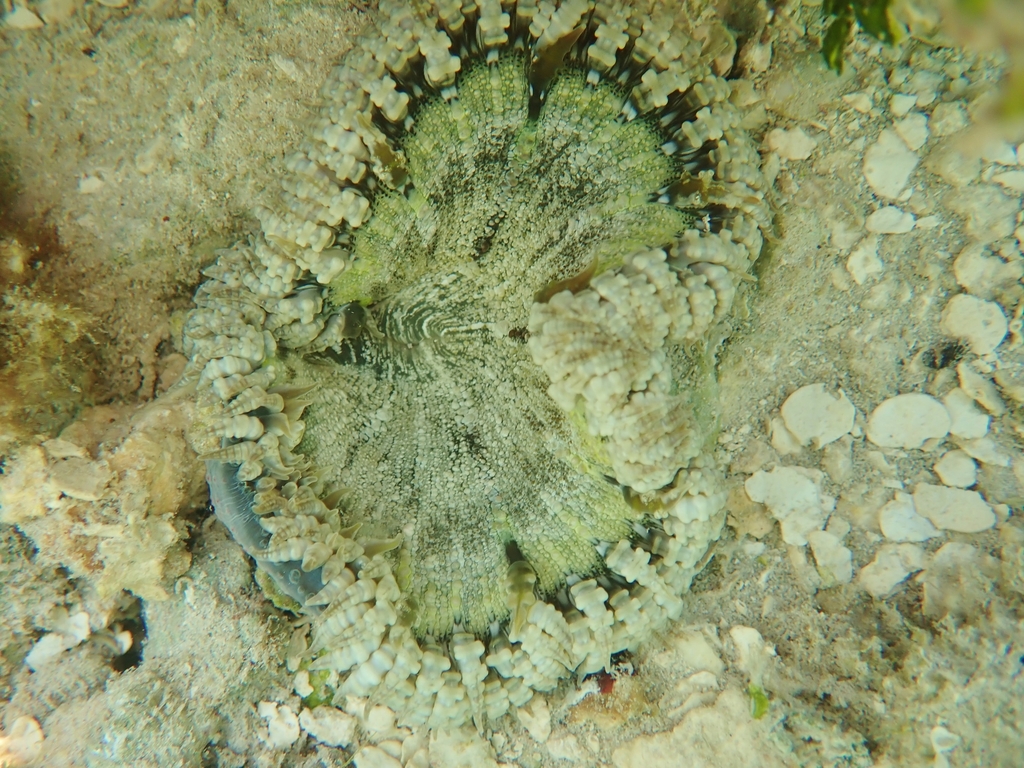
Bullseye Rock Flower →
A rock flower with a strong concentric color-ring pattern — a contrasting central mouth ringed by bands of color out to the tentacle bases, creating a 'bullseye' or 'target' look.
Tip: Position in sand or a rubble pocket under moderate light with low flow so the disc opens flat and the ring pattern shows; spot-feed meaty foods to keep it full.
 representative
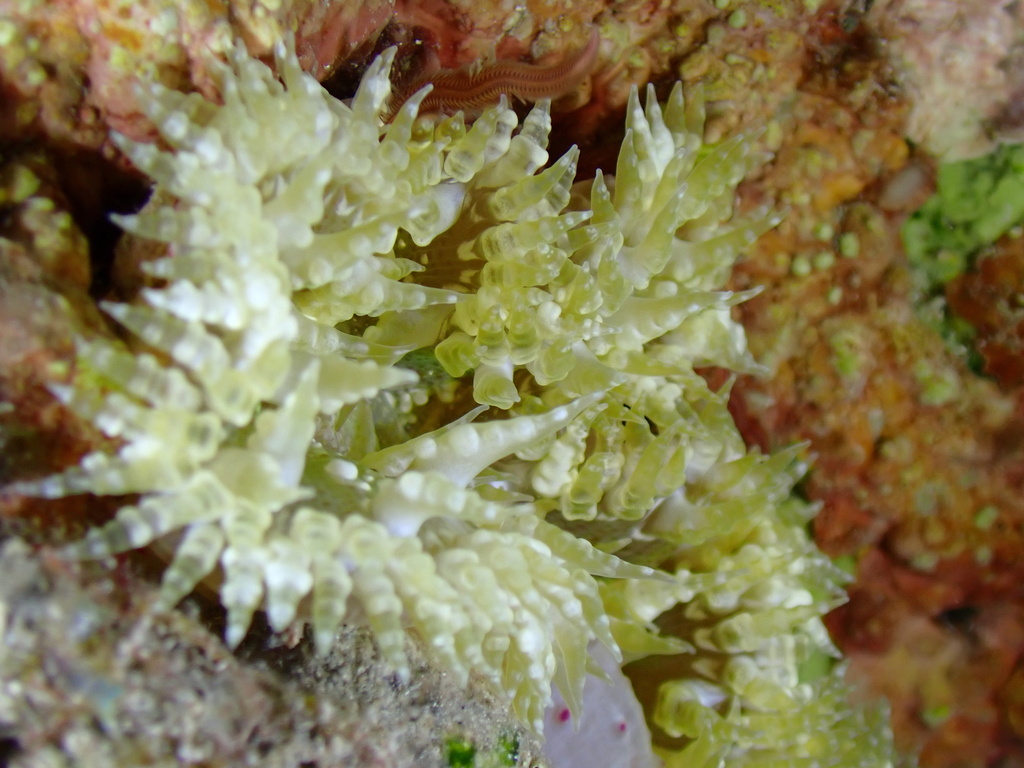
Ultra Rainbow Rock Flower →
A true rock flower anemone (*Phymanthus crucifer*) showing multiple contrasting colors at once — typically a glowing center disc against a ring of differently colored, beaded radial tentacles in reds, greens, blues and purples. "Rainbow" is the multi-color top grade of this species.
Tip: Place on the sandbed or in a sand pocket between rocks under low-to-moderate light and gentle, indirect flow; rock flowers anchor their foot in a crevice and rarely wander once settled. Spot-feed small meaty pieces (mysis, chopped seafood) once or twice a week.
 representative
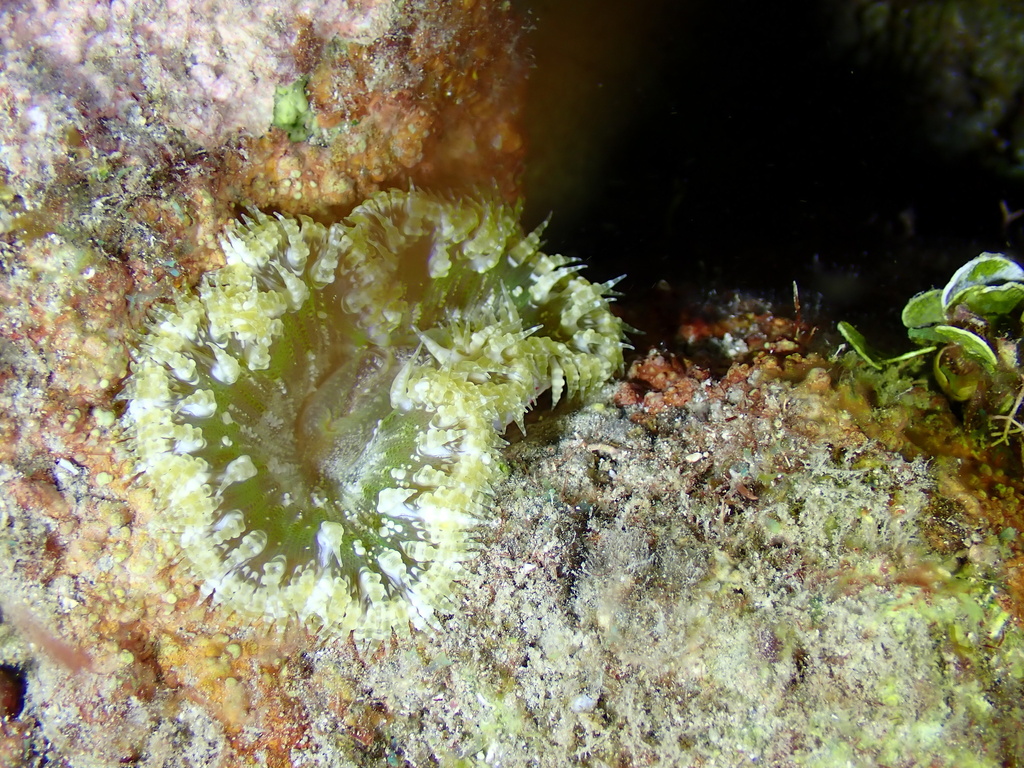
Ultra Red Rock Flower →
A solid deep-red to crimson rock flower anemone with a contrasting oral disc, one of the most familiar color forms of *Phymanthus crucifer*. The short, knobby tentacles give it the classic "flower" look.
Tip: Seat it in a shallow sand depression or low rock crevice under modest lighting; feed small meaty pieces (mysis, chopped seafood) a couple times a week to keep the color rich.
 representative
Ultra Green Rock Flower →
A fluorescent-green to lime rock flower anemone (*Phymanthus crucifer*) whose disc and tentacle tips pop hard under blue light. Often paired with a red or orange mouth for contrast.
Tip: Give it a spot with a little more blue/actinic light to bring out the green fluorescence, but keep flow gentle so the short tentacles stay fully expanded. Feed small meaty foods weekly.
 representative
Orange / Gold Rock Flower →
A bright orange-to-gold *Phymanthus crucifer* with a warm-toned disc, frequently with a contrasting green or pink mouth. The "Gold" grade is among the more sought-after warm color forms.
Tip: Keep it on the sandbed under moderate light; rock flowers inflate and deflate daily, so give it room from neighbors since it can pack a mild sting.
representativePink / Bubblegum Rock Flower →
A pink to magenta rock flower anemone (*Phymanthus crucifer*), sometimes with a pinstripe pattern and a bright green center — a color combo hobbyists specifically hunt for. The soft pink tone reads as "bubblegum" against the green core.
Tip: Place in a sand pocket under gentle light and low flow; if you want it to stay put, set it where its foot can grip a buried rock rather than open sand.
 representative
Colorado Sunburst (CSB) BTA →
A neon-orange bubble-tip anemone (*Entacmaea quadricolor*) — not a true rock flower — with electric tangerine tentacles and a glowing disc. One of the most coveted designer anemones in the hobby.
Tip: Give it strong-ish light and a rocky perch it can wedge its foot into; BTAs like to climb rock rather than sit on sand, and they can wander until they find their spot, so keep powerheads guarded.
representativeChicago Sunburst BTA →
A bubble-tip anemone (*Entacmaea quadricolor*) blending rich orange, fiery red and golden highlights — a sibling/competitor strain to the Colorado Sunburst. Some lines show distinct red, yellow and orange color phases.
Tip: Provide moderate-to-strong reef light (roughly 150–350 PAR) and let it choose a rock crevice; feed silversides or chopped seafood occasionally to keep the warm colors saturated.
representativeRainbow BTA →
A bubble-tip anemone (*Entacmaea quadricolor*) showing a subtle blend of orange, green, red, purple and blue across its tentacles. The multi-color expression is what earns the "rainbow" grade.
Tip: Aim for solid PAR (these color up best with good light) and a stable, mature tank; give it a rocky spot and keep flow moderate so tentacles bubble properly.
representativeRose Bubble Tip (RBTA) →
The classic deep rose-to-maroon bubble-tip anemone (*Entacmaea quadricolor*), the long-standing hobby favorite that predates the fancier sunburst strains. Bubble-tipped tentacles in solid rose-red.
Tip: A hardy, relatively beginner-friendly BTA that hosts clownfish; give it rock to climb, good light, and a guarded powerhead, then let it pick its own home.
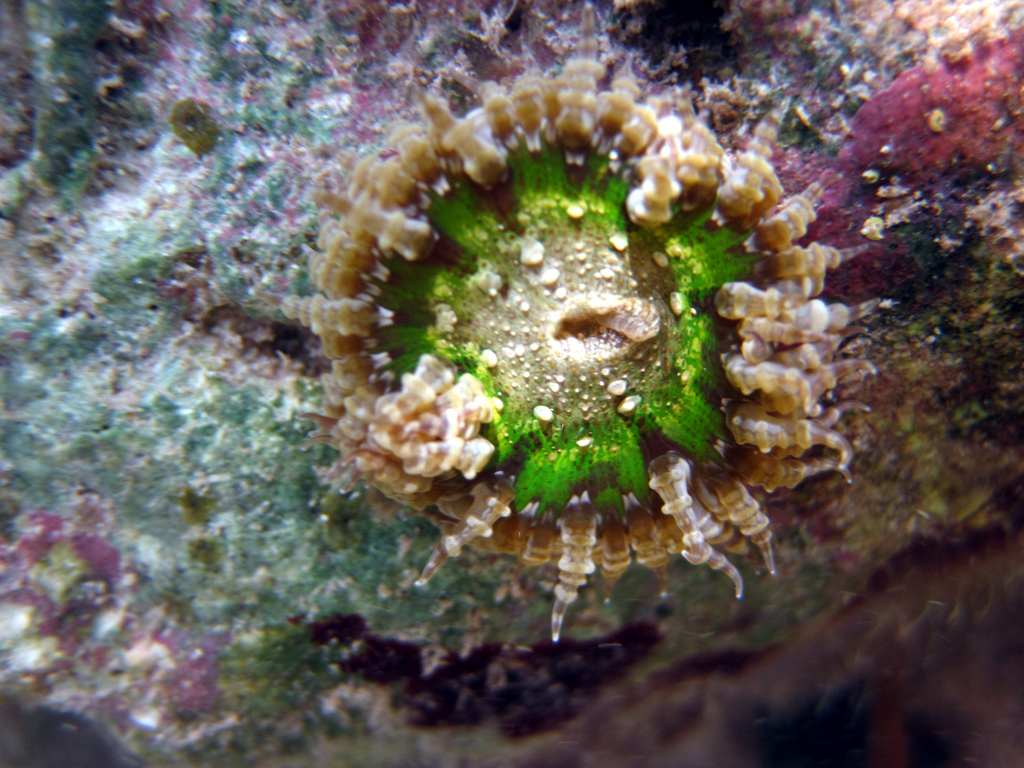
representativeUltra Maxi-Mini (Mini Carpet) →
A small carpet anemone (*Stichodactyla tapetum*) sold loosely as a "flower anemone," with a dense carpet of short tentacles in vivid green, purple, orange or tie-dye combinations. Compact at roughly 2–4 inches.
Tip: Place on or near the sandbed under moderate light (around 150–250 PAR) with moderate flow; note it packs a strong sting and won't host clownfish, so keep it clear of prized corals.
 representative
Ultra/collector morphs →
Named, hand-selected and propagated color collector specimens (e.g. high-contrast neon or metallic combos) curated and grown out by aquaculturists.
representativeBlack Widow BTA →
A dramatic bubble-tip anemone (*Entacmaea quadricolor*) with an inky blue-to-black base/center and contrasting red tentacles. A high-contrast designer look.
Tip: Keep it under controlled, moderate lighting (too much light can wash out the dark base) on a rocky perch, and feed regularly to maintain the bold contrast.