Rhodactis Mushroom
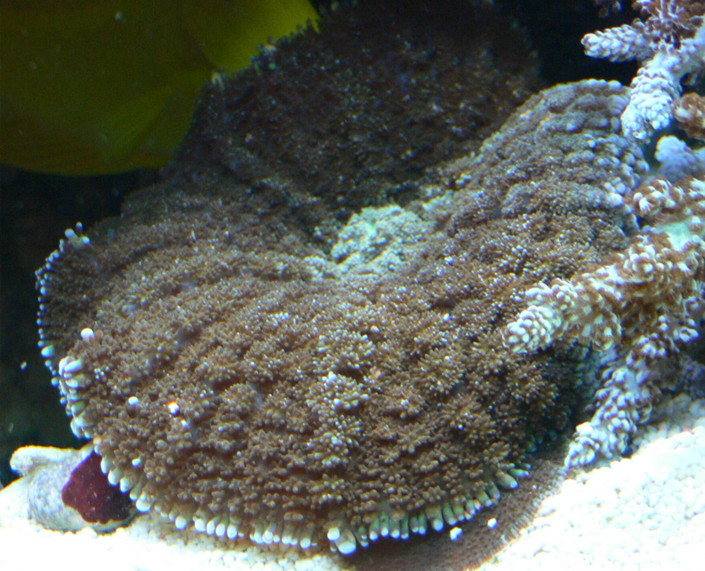
Rhodactis inchoata · also called Hairy Mushroom, Bullseye Mushroom, Tonga Blue Eye Mushroom

Photo · CC BY-SA 3.0
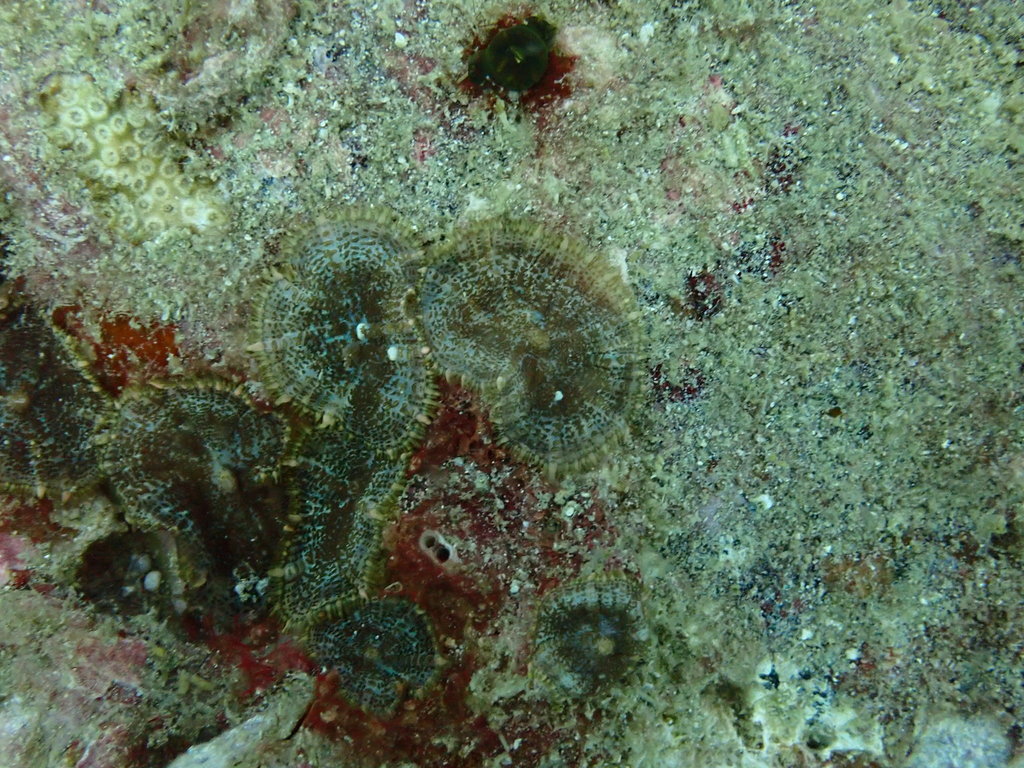
Rhodactis inchoata is a hardy, fast-spreading corallimorph (mushroom 'coral') prized for fluorescent bullseye-patterned discs with short bubbly tentacles. One of the most forgiving beginner photosynthetic invertebrates in the reef hobby.
🩺 Need expert help with your rhodactis mushroom?
Connect with a specialist near you or ask a licensed vet — never substitute online guidance for hands-on care in an emergency.
Quick facts
| Size | Individual polyps 1-2 in (2.5-5 cm) across; readily forms spreading colonies of dozens of polyps |
| Lifespan | 10–25 years |
| Social needs | group |
| Native region | Indo-Pacific reefs (Tonga, Fiji, Solomon Islands, Indonesia) |
| Origin | Old World |
| Climate | 🌴 Tropical |
| Water type | 🌊 Marine |
| Family | Discosomidae |
| Genus | Rhodactis |
Part of the Mushroom Corals
Soft, disc-shaped corallimorphs (Rhodactis, Discosoma, Ricordea, and bounce morphs) that carpet rockwork in fluorescent colors. Hardy, low-light, low-flow, and among the best beginner reef invertebrates.
Habitat & space requirements
From the minimum an animal needs to be kept humanely, up to the ideal setup. Bigger is almost always better — minimums are floors, not targets.
Life & growth stages
How this animal changes through its life — each stage often has its own care, diet and space needs.
Color & pattern variants
Natural variants occur in the wild; selectively bred (man-made) variants were developed in captivity.
 representative
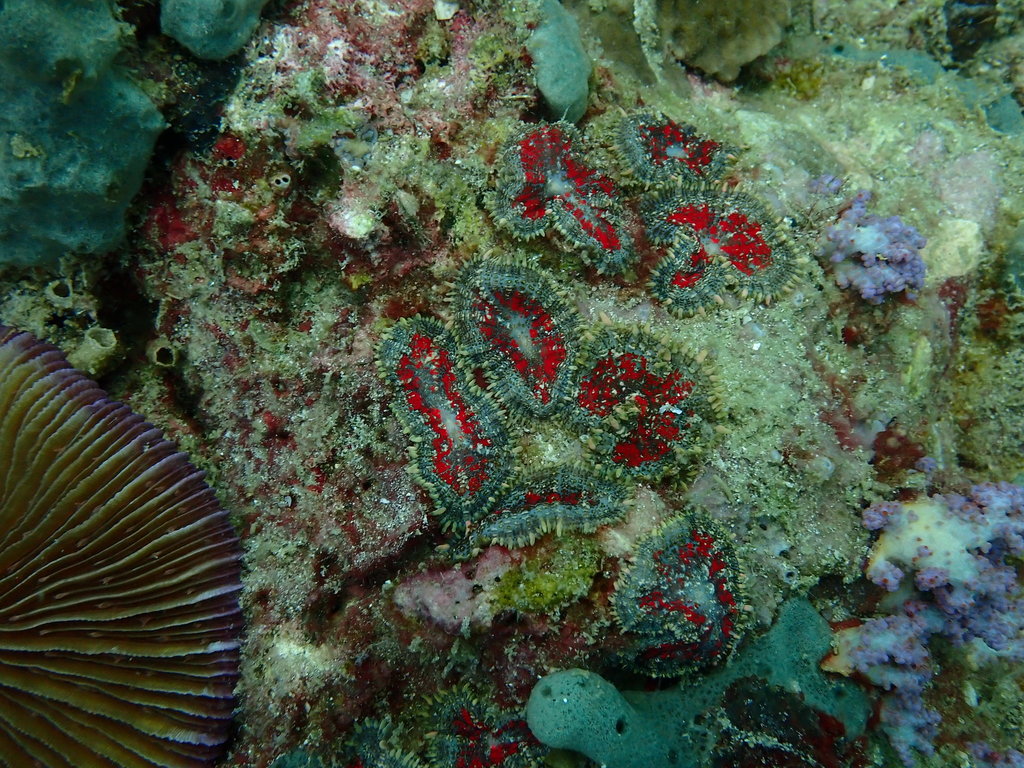
Tonga Blue Eye
Classic morph with a vivid blue or teal fluorescent center disc ringed by green — the most recognizable R. inchoata look.
 representative
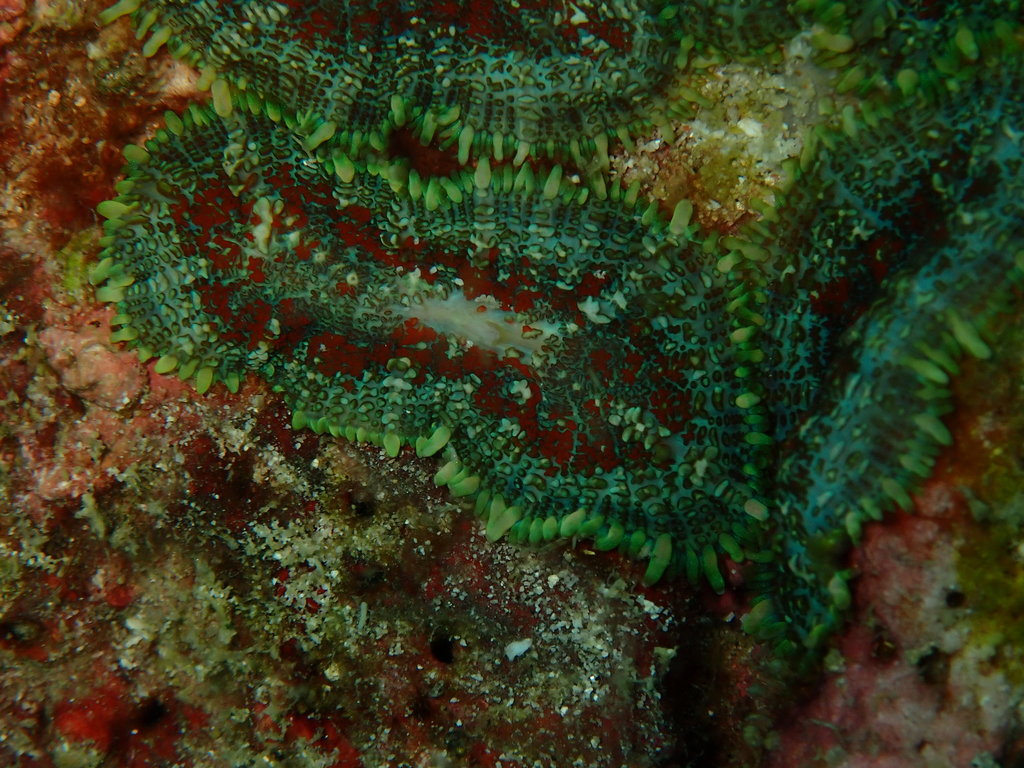
Bullseye / Watermelon
Concentric red/green/orange rings radiating from the mouth, resembling a target or watermelon pattern.
 representative
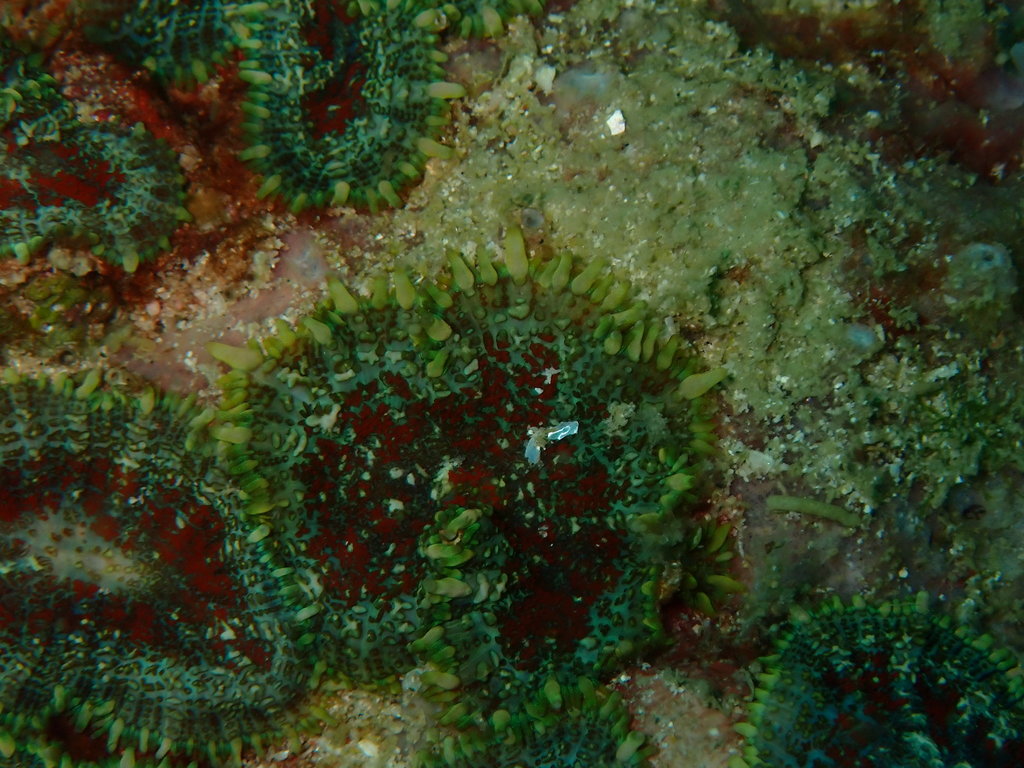
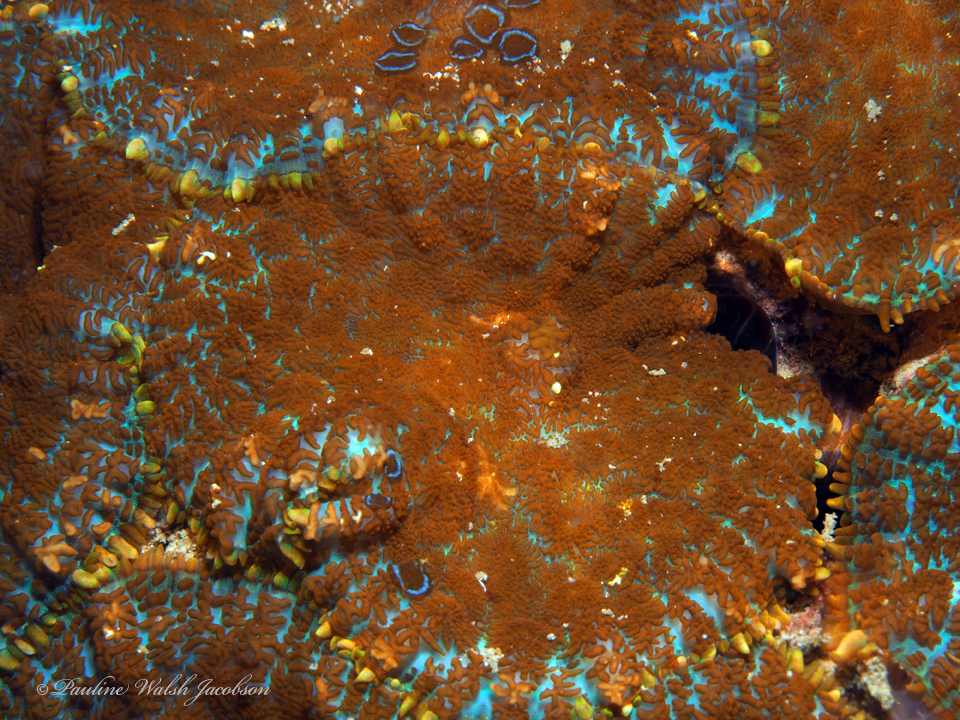
WWC OG Bounce Mushroom →
The original blue-green-based Rhodactis covered in large orange-red inflated vesicles ("bounces"). The gold-standard bounce that started the craze and still commands among the highest prices in the hobby.
Tip: Place low in the tank on the sandbed or a low rock under low-to-moderate light (PAR ~75-150) with gentle flow; too much light or harsh flow shrinks and flattens the vesicles. Target-feed small meaty foods about once a week.
 representative
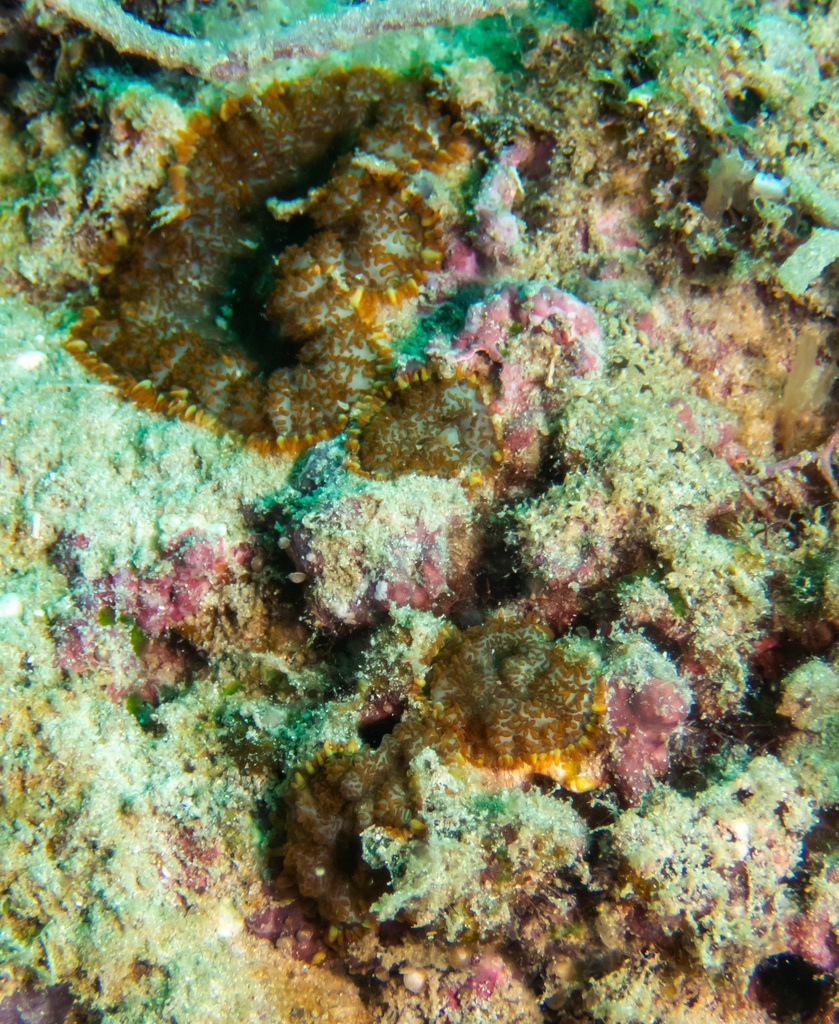
WWC Sunkist Bounce Mushroom →
A blue-green-based Rhodactis similar to the OG Bounce but with smaller, fully bright-orange bubbles giving a citrus 'sunkist' look. One of the most recognizable named bounces.
Tip: Keep under low-to-moderate light (PAR ~50-120) on the lower third of the tank with gentle flow so the orange vesicles stay inflated and saturated. A slightly nutrient-rich tank helps the bubbles develop.
 representative
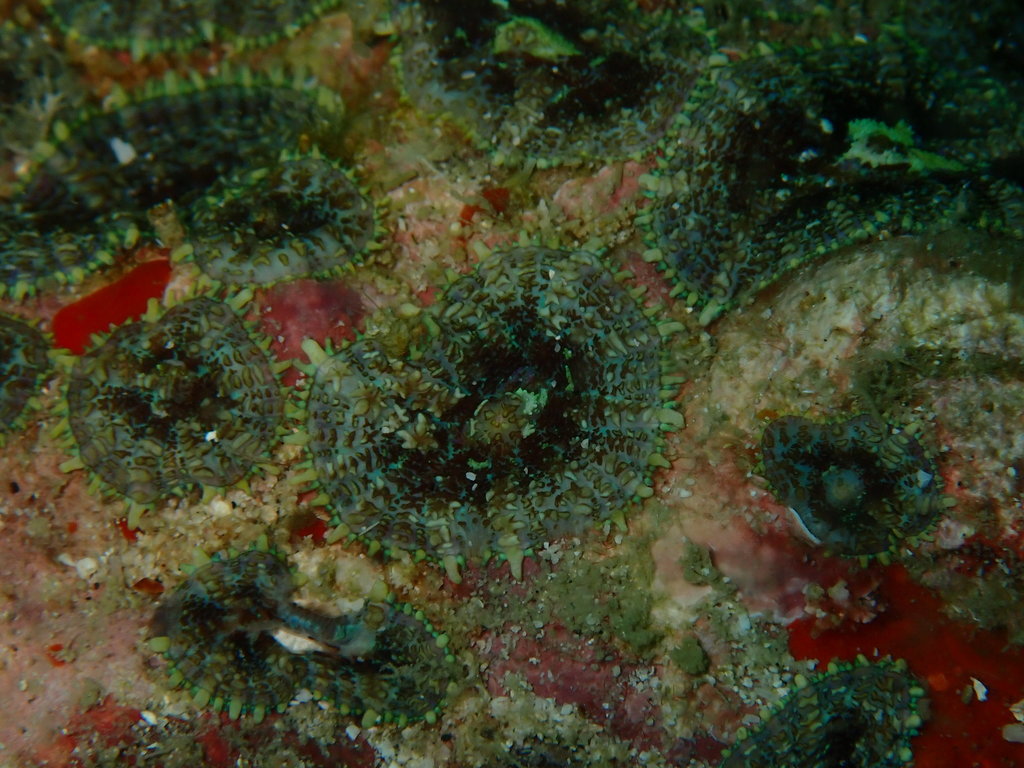
WWC King Julius Bounce Mushroom →
A premium WWC bounce with a colorful base and dense raised vesicles; mother colonies have grown to several inches across. Named in the WWC 'King Julius' line.
Tip: Give it a stable low-flow, lower-light spot (PAR under ~100); mature colonies will slowly carpet a low rock, so leave room around it. Weekly target feeding speeds growth.
 representative
WWC Biohazard Bounce Mushroom →
A toxic-green and orange/blue bounce with a striking high-contrast 'hazard' color split across its inflated vesicles. One of the older, well-known bounce varieties.
Tip: Low light and low-to-moderate flow keep the neon-green coloration from washing out; place on the sandbed or a low ledge.
representativeTSA Mardi Gras Bounce Mushroom →
A festive multicolor bounce mixing purple, green, and orange tones across a colorful base in a 'Mardi Gras' palette.
Tip: Low-to-medium flow and low-to-moderate light on the sandbed or a low rock keeps the multicolor coloration bright and the vesicles inflated.
representativeTSA Bozos Revenge Bounce Mushroom →
A clownish, high-contrast Rhodactis bounce with vivid warm vesicles, named 'Bozos Revenge' for its loud coloration. Considered a grail-grade piece.
Tip: Keep it low and lightly shaded with gentle flow; raise light slowly only if color holds.
representativePowerball Bounce Mushroom →
A top-grade bounce with large primary vesicles surrounded by smaller ones in a fusion of neon green, molten orange, and deep blue tones.
Tip: Low-to-moderate light (PAR ~70-120) and gentle flow on a stable low rock; large vesicles deflate quickly under strong, direct flow.
representativeCA Orange Crush Bounce Mushroom →
A bright, fully orange-vesicled Rhodactis bounce with a clean 'orange crush' soda coloration over a contrasting base.
Tip: Low-to-moderate light keeps the orange saturated; place low with gentle flow.
representativeFrankenstein Bounce Mushroom →
A blue-based bounce with teal/green frilly tentacles and chunky, flesh-pink outer vesicles giving a 'stitched-together' Frankenstein look; a companion 'Bride of Frankenstein' morph also exists.
Tip: Low light, low flow, low placement; let the heavy vesicles inflate undisturbed.
representativeNeptune Bounce Mushroom →
A powdery blue-and-teal base with puffy, sand-colored bubbles. Notable because it is a Discosoma-type bounce rather than the typical Rhodactis, making it stand out among bounces.
Tip: Low light and low-to-moderate flow keep the pastel blue base from bleaching; place on the sandbed or a low rock.
representativeLava Bounce Mushroom →
A red-orange 'lava' colored Rhodactis bounce with molten-looking vesicles over a darker base.
Tip: Low-to-moderate light and gentle flow on a low rock keeps the warm lava tones rich.
representativeMellow Yellow Bounce Mushroom →
A soft yellow-vesicled Rhodactis bounce with a mellow, pastel-yellow palette across the bubbles.
Tip: Low light and low flow; yellow bounces can wash out fast under bright light, so keep it shaded and low.
representativeBrass Monkey Bounce Mushroom →
A metallic gold-to-brassy toned Rhodactis bounce with warm, coppery vesicles.
Tip: Low-to-moderate light and low flow on a lower rock to keep the metallic tones from fading.
representativeSuperman Bounce Mushroom →
A blue-based Rhodactis with bright red-orange highlights giving the classic blue-and-red 'Superman' contrast; sold both as a bullseye-type and as bouncing specimens.
Tip: Low-to-medium light and low flow; the blue base holds best when not over-lit.
representativeRed Bullseye Rhodactis Mushroom →
The classic non-bounce form of Rhodactis inchoata: a deep red disc with a contrasting central mouth ('bullseye') and short pseudotentacles. The wild base type from which bounces can emerge.
Tip: Low-to-moderate light and low flow on the sandbed or a low rock; under blue-heavy light it can develop enlarged pseudotentacles.
representativeGreen Bullseye Rhodactis Mushroom →
A green-disc form of Rhodactis inchoata with a contrasting bullseye center and short pseudotentacles; often fluoresces under actinic light.
Tip: Low-to-moderate light and gentle flow; blue-spectrum light brings out the green fluorescence.
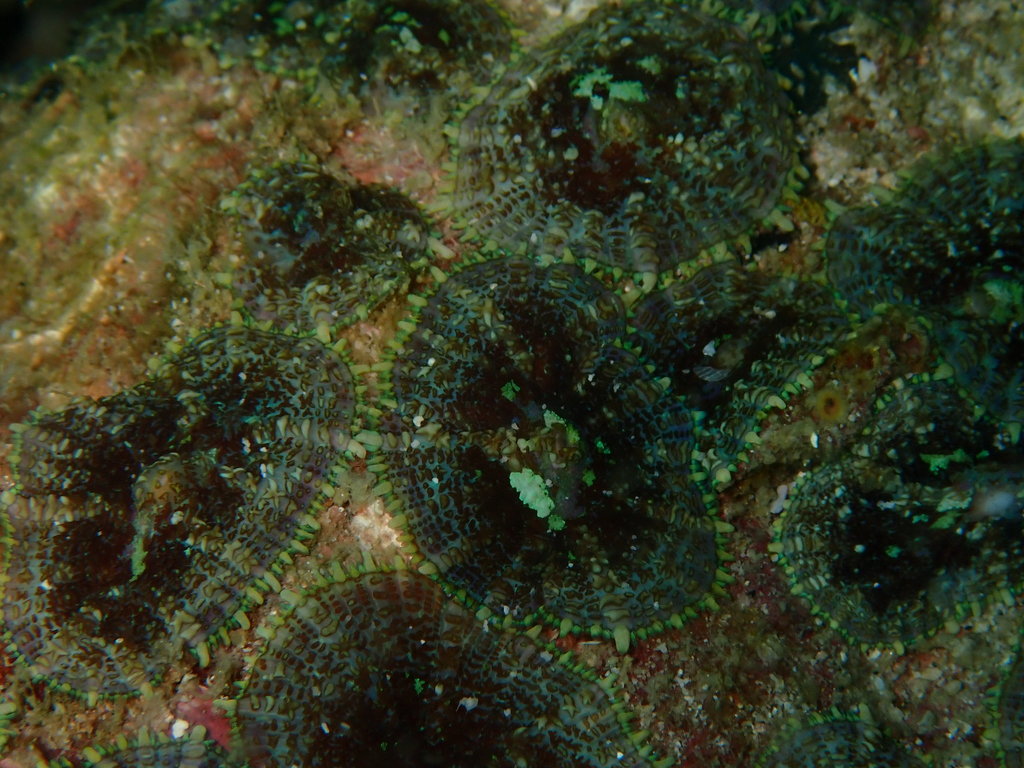
representativePurple Camo Bullseye Rhodactis Mushroom →
A Rhodactis inchoata bullseye with a mottled purple/maroon/blue/green 'camo' patterning across the disc, more colorful than the plain wild types.
Tip: Low-to-moderate light and low flow; keep it on a lower rock so the purple mottling stays saturated.
 representative
JF Raunchy Red Bounce Mushroom →
A blue base topped with raised red frills and red bubbles, with outer tentacles that flash orange, yellow, or red depending on lighting. A bold red-dominant bounce.
Tip: Low-to-moderate light (PAR ~80-150) and low-to-moderate flow; keep it out of the highest-light zones to preserve the red frills.
 representative
JF Orange Swirl Mushroom →
A Rhodactis with swirling orange and contrasting tones across the disc, named for its marbled 'swirl' pattern rather than classic round bounces.
Tip: Medium light and medium flow per the vendor listing; a mid-to-low rock placement keeps the swirl pattern vivid.
representativeJF Mayhem Mushroom →
A chaotic, multicolor Rhodactis with a busy mix of warm and cool tones across the disc, named 'Mayhem' for its disorderly coloration.
Tip: Medium light and low flow per the vendor listing, on a lower rock; let it acclimate before moving it.
representativeJF Minecraft Mushroom →
A Rhodactis (cited as R. indosinensis) with a blocky, pixelated color pattern that inspired the 'Minecraft' name; it 'bounces' by growing longer, branchier vesicles into a lightning-bolt shape rather than round bubbles.
Tip: Low-to-moderate light and gentle flow; because it elongates rather than forms round bubbles, give it open low space to spread.
representativeCornbred Forest Fire Orange Bounce Mushroom →
A fiery orange Rhodactis bounce with red-orange vesicles evoking a 'forest fire,' carrying Cornbred Corals' naming. Noted for holding its bubbles even under stronger light.
Tip: Low-to-moderate light and low flow; the warm coloration intensifies under blue-heavy light without being blasted.
representativeGodzilla Bounce Mushroom →
A prized Rhodactis bounce morph with a green base studded with raised, bubble-like vesicles that glow bold orange, giving the inflated bounced texture collectors chase.
Tip: Place low-to-mid on the rockwork under moderate PAR (~75-120) with gentle, indirect flow so the vesicles inflate rather than getting blasted flat.
Habitat & enclosure
Substrate
Equipment & setup
Diet
Behavior & temperament
Health
Tips, DIY & hacks
Sources
- Rhodactis Mushroom Coral Care - Tidal Gardens (care guide)
- A Guide To Aquarium Mushroom Corals - Quality Marine (retailer guide)
- Wikipedia: Rhodactis Mushroom (wiki)