Ricordea mushroom
Ricordea florida · also called Ricordea, Florida ricordea, Ricordea coral, Knobby mushroom

Ricordea florida is a Caribbean corallimorph (mushroom) covered in vivid bubble-like vesicles, available in striking oranges, greens, blues, and rainbow combinations. It is hardy, undemanding, and beginner-friendly, making it one of the most popular 'mushroom' corals in the hobby.
🩺 Need expert help with your ricordea mushroom?
Connect with a specialist near you or ask a licensed vet — never substitute online guidance for hands-on care in an emergency.
Quick facts
| Size | Individual polyps commonly 1-2.5 in (2.5-6 cm) across; spreads into clusters of many polyps over time. |
| Lifespan | 10–50 years |
| Social needs | group |
| Native region | Caribbean and tropical western Atlantic (Florida, Caribbean reefs) |
| Origin | New World |
| Climate | 🌴 Tropical |
| Water type | 🌊 Marine |
| Family | Ricordeidae |
| Genus | Ricordea |
Part of the Mushroom Corals
Soft, disc-shaped corallimorphs (Rhodactis, Discosoma, Ricordea, and bounce morphs) that carpet rockwork in fluorescent colors. Hardy, low-light, low-flow, and among the best beginner reef invertebrates.
Habitat & space requirements
From the minimum an animal needs to be kept humanely, up to the ideal setup. Bigger is almost always better — minimums are floors, not targets.
Life & growth stages
How this animal changes through its life — each stage often has its own care, diet and space needs.
Color & pattern variants
Natural variants occur in the wild; selectively bred (man-made) variants were developed in captivity.
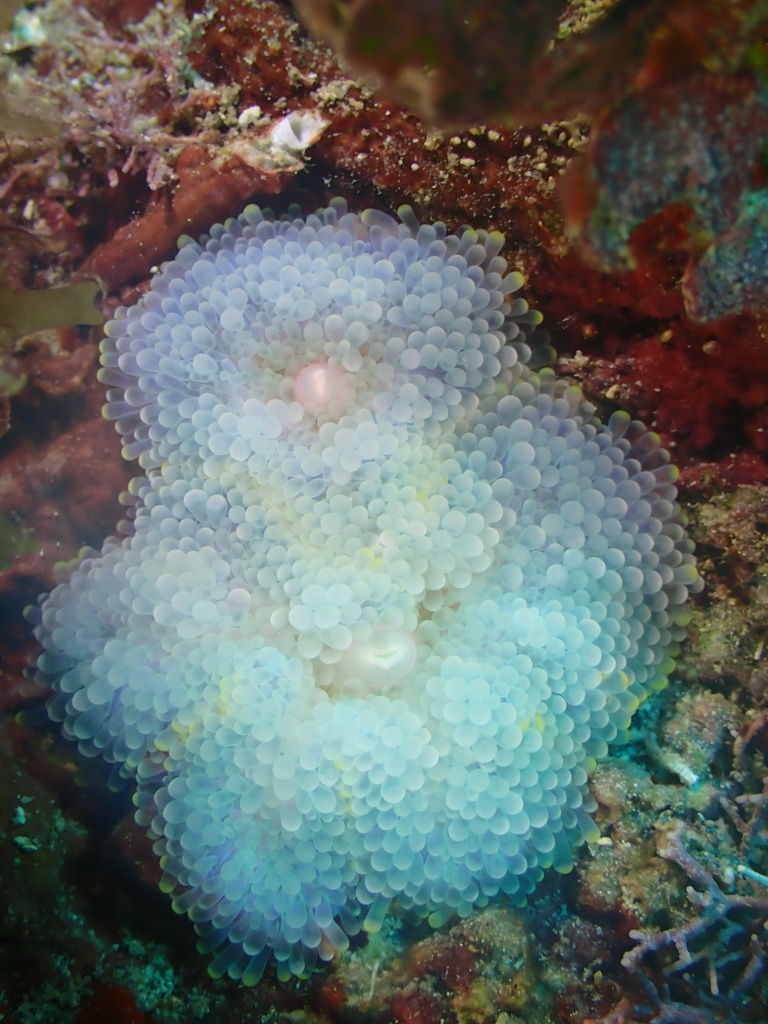 representative
Orange Ricordea
Solid bright-orange polyps, one of the most sought and valuable natural color forms of *R. florida*.
Tip: Orange holds best under moderate light (PAR 50-100) and low flow — too much current causes the polyp to detach and 'walk', so place it in a calm low-tank pocket.
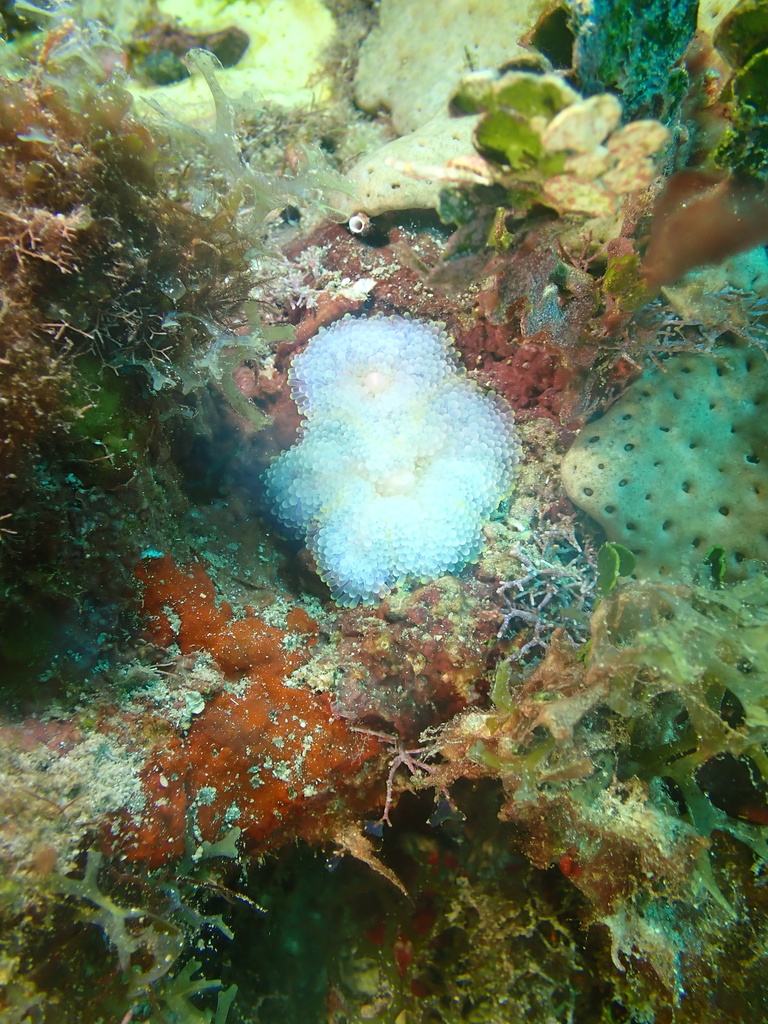 representative
Green Ricordea
Fluorescent green vesicles, the most common and affordable color form.
Tip: The most forgiving Ricordea for beginners — give it low light and gentle flow; it will inflate and split on its own without fragging once settled.
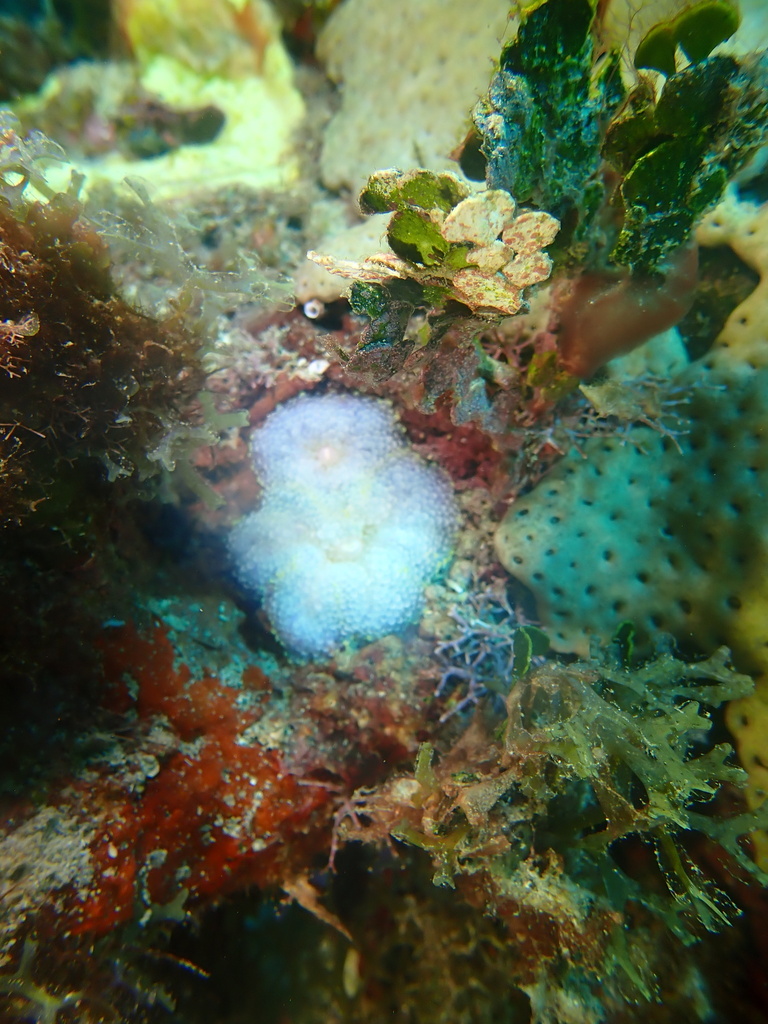 representative
Rainbow Ricordea
Multicolor polyps blending orange, green, blue, and purple across a single disc—the premium collector form.
Tip: Rainbows lose their multicolor under too much PAR, fading toward solid green — keep them at the lower light end and stable, and never blast them with flow.
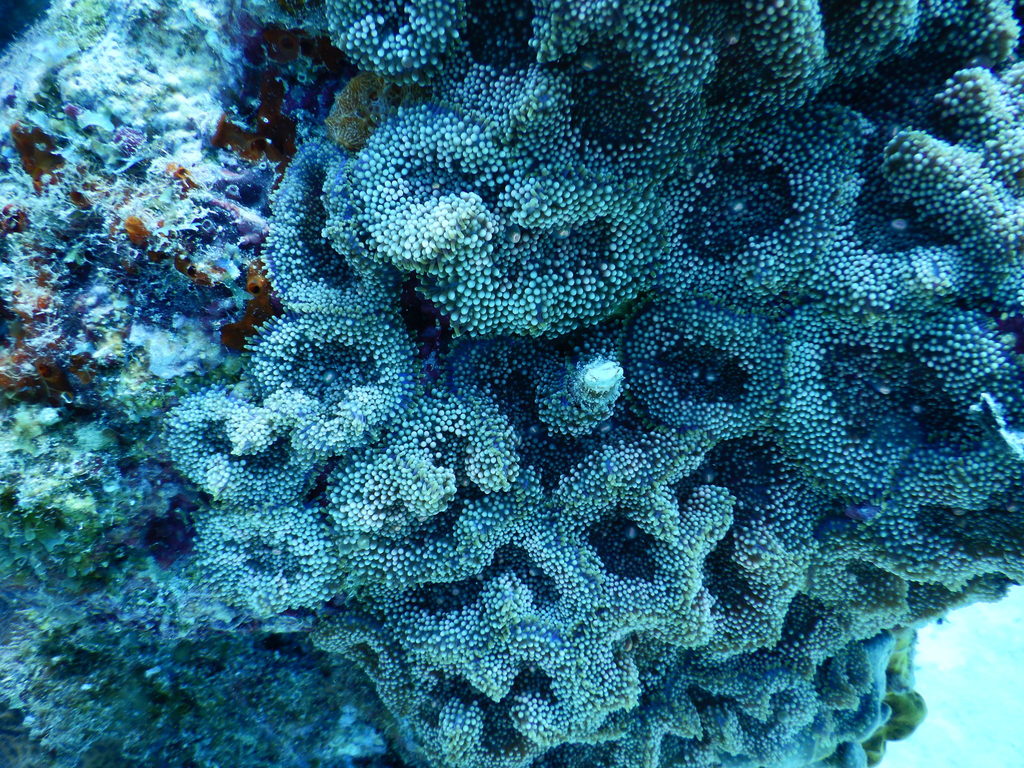 representative
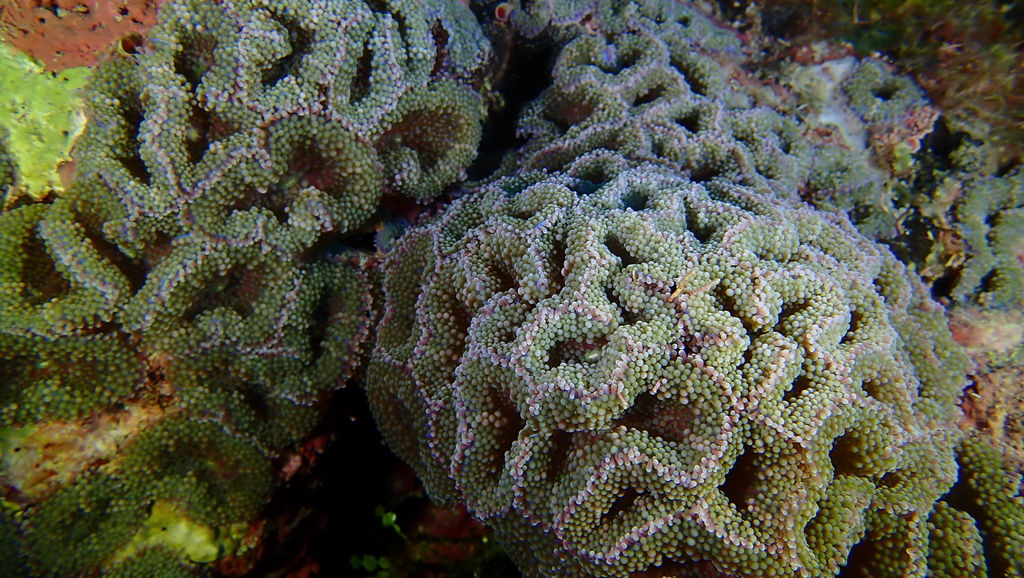
Yuma (Ricordea yuma, ridged) →
The Pacific cousin (*R. yuma*) with larger, ridged 'bumpy' vesicles and often dramatic multicolor — frequently traded alongside *R. florida* under the Ricordea name.
Tip: Yumas are notoriously touchier than florida — drip-acclimate slowly, keep them on a flat rock (not a steep wall), and avoid moving them once attached.
 representative
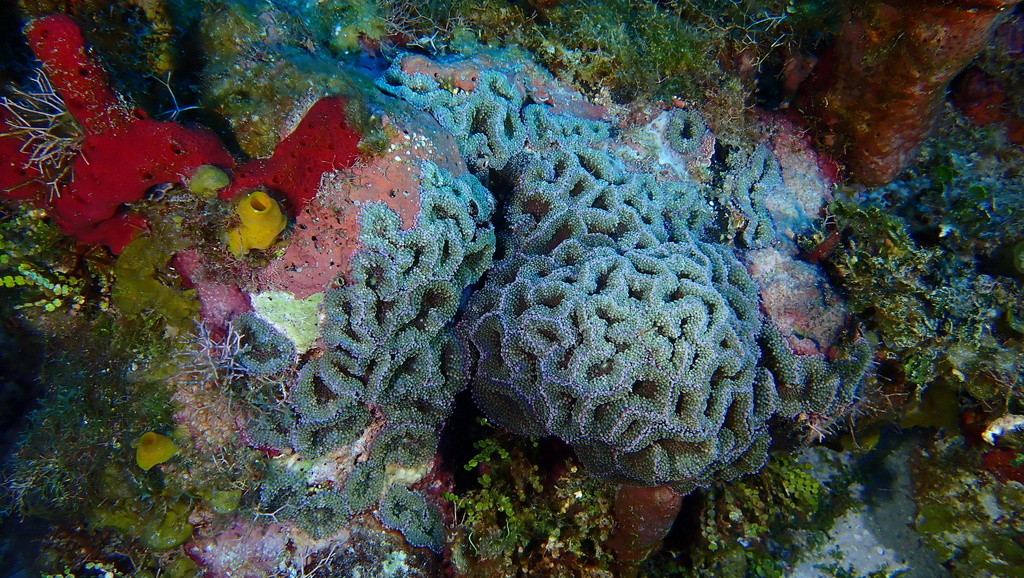
Blue Ricordea →
Polyps with a strong blue/purple fluorescence across the vesicles, an uncommon and high-demand natural color form.
Tip: Blue pigment is light-sensitive — keep PAR on the low side and blue-spectrum heavy; high white light will wash the blue toward dull green.
 representative
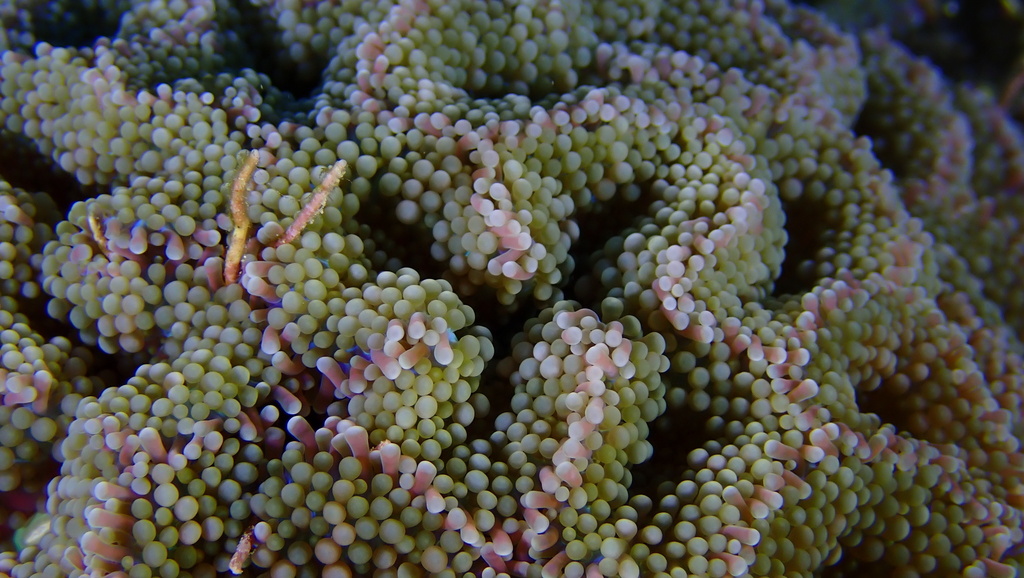
Watermelon / Bicolor →
A two-tone form with a green disc and contrasting orange or pink mouth/vesicle margin, resembling watermelon flesh.
Tip: The contrast depends on stable, moderate lighting — sudden PAR changes flatten the two-tone look, so keep its position and light schedule consistent.
 representative
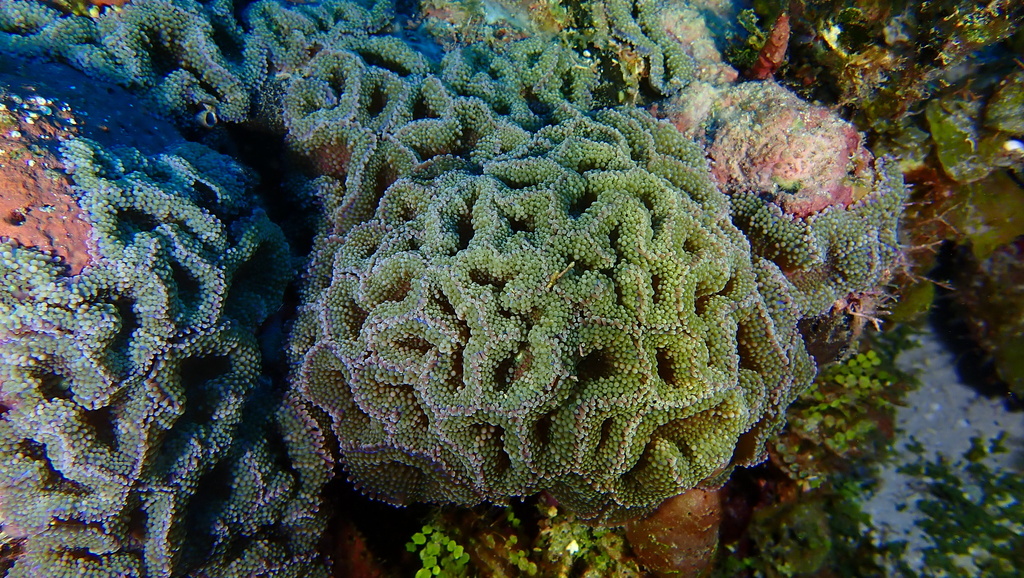
Yuma Ricordea (Ricordea yuma) →
The larger Pacific ricordea with bubble-like vesicles covering the disc, available in vivid solid and multi-tone colors. This is R. yuma, the Indo-Pacific counterpart to the Atlantic R. florida.
Tip: Yumas are fussier than florida — give them low-to-moderate light (~50-100 PAR) and very gentle flow, avoid moving them once settled, and give them space, as ricordea can be mildly aggressive toward neighbors.
 representative
Rainbow Ricordea (Rainbow Yuma/Florida) →
A ricordea showing several contrasting colors on one polyp — for example a blue disc with orange vesicles and a green or pink mouth. The multi-color single polyp is the holy grail of the genus.
Tip: Low, stable light to preserve the contrasting pigments, gentle flow, and a secure spot in a low-traffic frag rack; feed small meaty foods to encourage it to bud new heads.
 representative
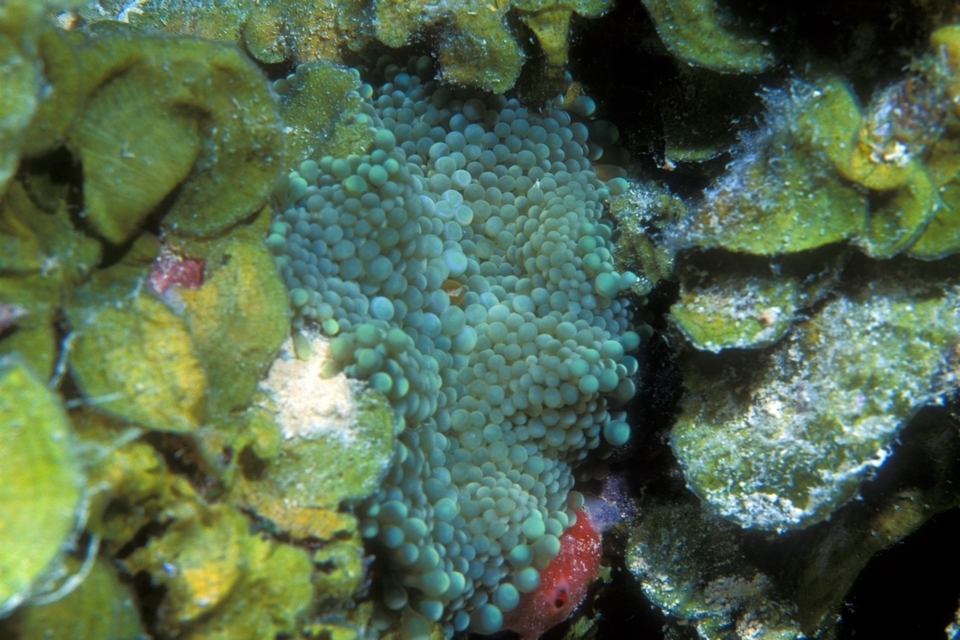
Florida Ricordea (Ricordea florida) →
The Atlantic/Caribbean ricordea with small uniform vesicles, commonly in solid green, orange, blue, or purple. The flatter, beadier disc distinguishes it from the bubblier Pacific yuma.
Tip: Forgiving for a ricordea — low to moderate light and low flow; it splits and propagates readily, making it the ideal beginner ricordea.
 representative
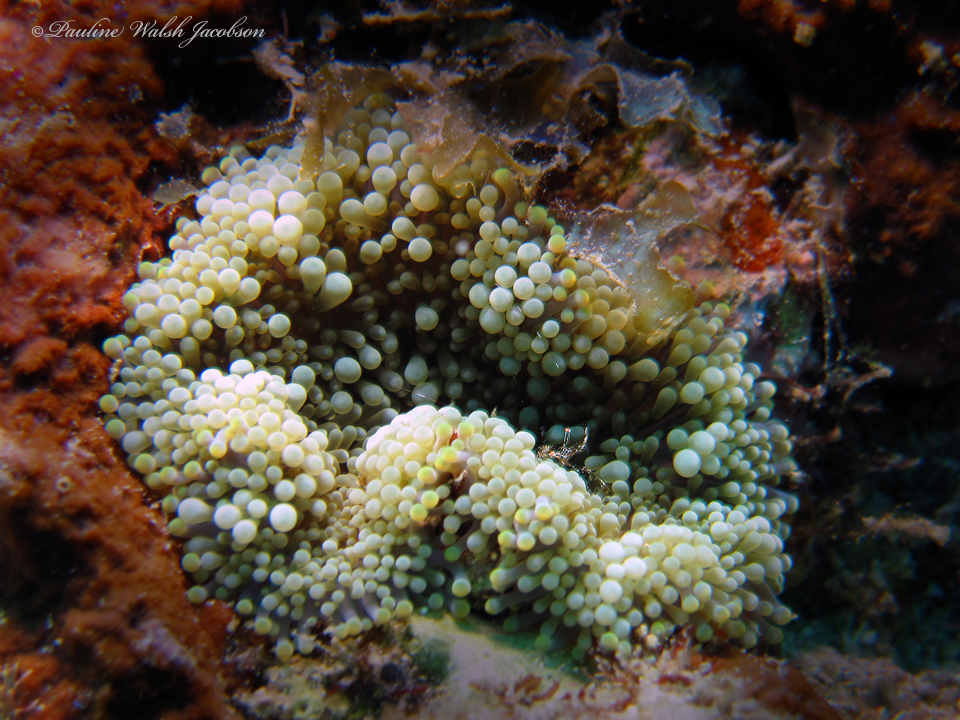
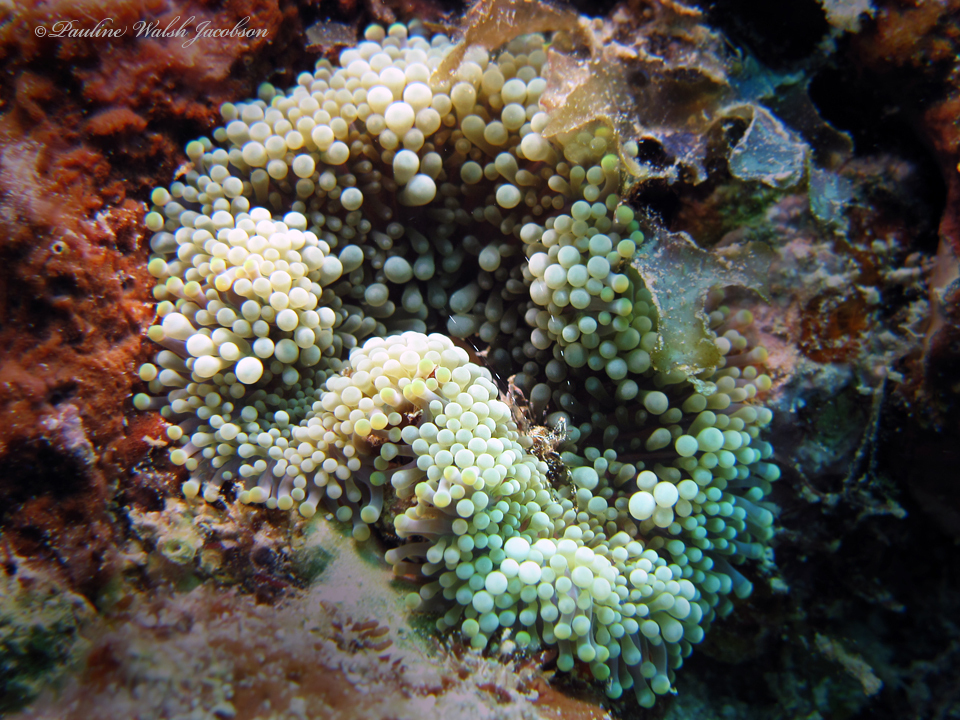
Orange Ricordea Florida →
A solid pumpkin-orange R. florida, one of the most popular single-color florida morphs, glowing warm orange under blue light.
Tip: Low-moderate light and gentle flow on a frag plug placed in a calm zone; allow it to settle and it will split via pedal laceration into a small colony.
 representative
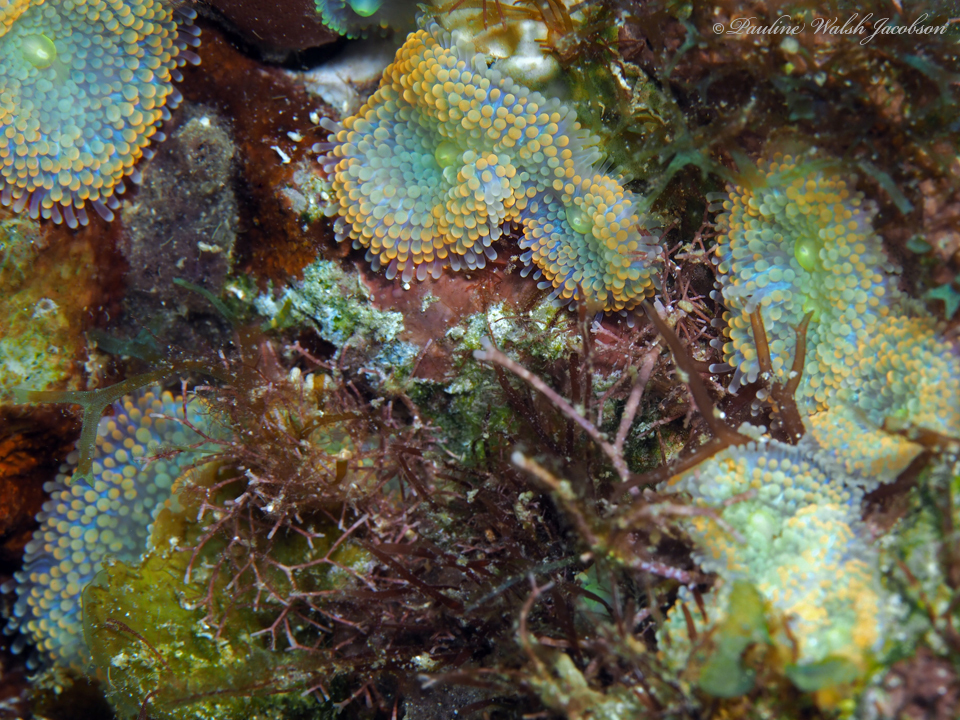
Blue/Ultra Blue Ricordea Florida →
A florida with a saturated blue disc, often with contrasting yellow or green mouth and vesicle tips. Strong solid blues are less common than orange or green florida.
Tip: Keep light on the lower side — too much PAR can wash blue florida toward green; gentle flow and a stable spot preserve the blue pigment.
 representative
Mango / Sunkist Ricordea Yuma →
A yuma in saturated mango-orange to neon-yellow tones, sometimes with a contrasting green or pink mouth — the 'citrus' color grade chased by yuma collectors.
Tip: Low light and very gentle flow; yumas in these bright pigments can pale if overlit, so dial PAR down and keep it stable.
representativeWatermelon Ricordea →
A ricordea with a green disc and pink/red mouth and vesicle accents recalling watermelon flesh and rind. A popular two-tone trade name reused across mushrooms and chalices alike.
Tip: Moderate-low light to hold both the green and pink tones; gentle flow and minimal handling once placed.
 representative
Rainbow Ricordea (Florida) →
The most sought-after wild Florida Ricordea grade: a multicolor polyp blending burnt-orange and light-orange vesicles, a pink or green mouth, and an outer skirt of purple tentacles often shot through with green.
Tip: Give it medium light and low-to-medium flow on the sandbed or lower rockwork; Ricordea florida is forgiving, but too much direct flow keeps the polyp from inflating and very intense light can wash out the color. Reproduces readily by division.
 representative
Orange Ricordea (Florida) →
A solid, saturated orange Florida Ricordea polyp with rows of round vesicles and a contrasting fluorescent-green or pink mouth.
Tip: An easy beginner mushroom; give it medium light and low-to-medium flow on the sandbed or lower rockwork and it will inflate large and reproduce by division/pedal laceration.
 representative
Blue Ricordea (Florida) →
An uncommon Florida morph with mostly dark-blue polyps, light-blue or purple highlights on the vesicles, and either a pink or fluorescent-green mouth.
Tip: Blue color holds best under medium light with some blue/actinic spectrum; keep flow low-to-medium and avoid the highest-light spots, which can wash out the blue.
 representative
Steel Blue Ricordea (Florida) →
A cooler-toned Florida Ricordea showing a steely metallic blue-grey body, distinct from the deeper navy 'Blue' grade.
Tip: Position under medium, blue-leaning light with low-to-medium flow; the metallic sheen reads best when the polyp is fully inflated, so keep it off direct powerhead current.
 representative
Fluorescent Green & Purple Ricordea (Florida) →
A bright two-tone Florida morph pairing a fluorescent-green body and vesicles with a deep-purple outer ring of tentacles, usually with a bright green mouth.
Tip: The green fluoresces strongly under blue light; medium light with low-to-medium flow keeps the polyp inflated and the green pigment vivid. An easy, hardy beginner mushroom.
 representative
Rainbow Top Ricordea →
An exceptionally showy Ricordea florida batch with unusually long pseudotentacles colored orange, green and yellow over a deep blue base, resembling a short rainbow carpet anemone.
Tip: Give it medium light and low-to-medium flow with room to fully extend; the elongated tentacles display best in calm water, so keep it off direct powerhead flow.
 representative
Nuclear Ricordea Yuma →
A vividly colored Ricordea yuma in bright green and purple, with the dense bubble-like vesicles typical of the Pacific yuma.
Tip: Yumas are more sensitive than Florida rics and are not a beginner coral. Give it medium-to-high light (50+ PAR) and low-to-medium flow, keep water quality stable, and feed small meaty bits to support its slower growth.
 representative
Golden State Ricordea Yuma →
A Ricordea yuma morph combining yellow and blue across the disc and vesicles for a high-contrast two-tone look.
Tip: Provide medium-to-high light to hold the yellow and low-to-medium flow so the polyp inflates; spot-feed occasionally. Yumas are more sensitive to water quality than Florida rics, so keep parameters stable.
representativeSuper Orange Ricordea Yuma →
A blindingly bright orange Ricordea yuma with purple undertones and a neon-green mouth.
Tip: Medium-to-high light keeps the orange saturated; keep flow low-to-medium so the dense vesicles inflate, and target-feed to support slow yuma growth. More sensitive than Florida rics — not a beginner coral.
representativeLilac Ricordea Yuma →
A softer pastel Ricordea yuma blending pink, purple and green across the disc.
Tip: Pastel pinks and purples hold under medium, blue-leaning light; low-to-medium flow and a stable lower-rock or sandbed spot let the polyp open fully. Keep water quality steady, as yumas are more delicate than Florida rics.
representativeOrange & Purple Ricordea Yuma →
A two-tone Ricordea yuma pairing orange streaking over a purple/blue body, with a mouth often rimmed in neon green.
Tip: Give it medium-to-high light and low-to-medium flow; the contrast pops most when the polyp is fully inflated, so avoid direct powerhead current. Not a beginner coral — keep parameters stable.
representativeRainbow Ricordea Yuma →
The premium yuma grade: a single polyp showing three to five distinct colors across the body, mouth, inner ring, outer vesicles and skirt.
Tip: Yumas want medium-to-high light and low-to-medium flow; multi-color rainbow grades color up best under strong but not bleaching light and benefit from occasional feeding. More sensitive than Florida rics, so keep water quality stable.
representativeBean Bag Yuma Ricordea →
A distinctive Ricordea yuma whose round orange-to-red vesicles each carry a single red-orange stripe or squiggle, giving the whole polyp a psychedelic 'bean bag' patterning.
Tip: Treat like any yuma — medium-to-high light, low-to-medium flow, occasional feeding, and stable water quality. Note the striping only develops with age, so a juvenile may look like a plain orange yuma at first.
representativeRainbow Ricordea Yuma Bounce →
A high-end collector grade: a rainbow-colored Ricordea yuma whose vesicles are unusually inflated and rounded, lending a 'bounce'-like bubbled texture prized in the genus.
Tip: Give it stable, medium-to-high light and low-to-medium flow so the inflated vesicles stay puffed; sudden parameter swings can cause the bubbles to deflate. As a yuma it is more sensitive than Florida rics.