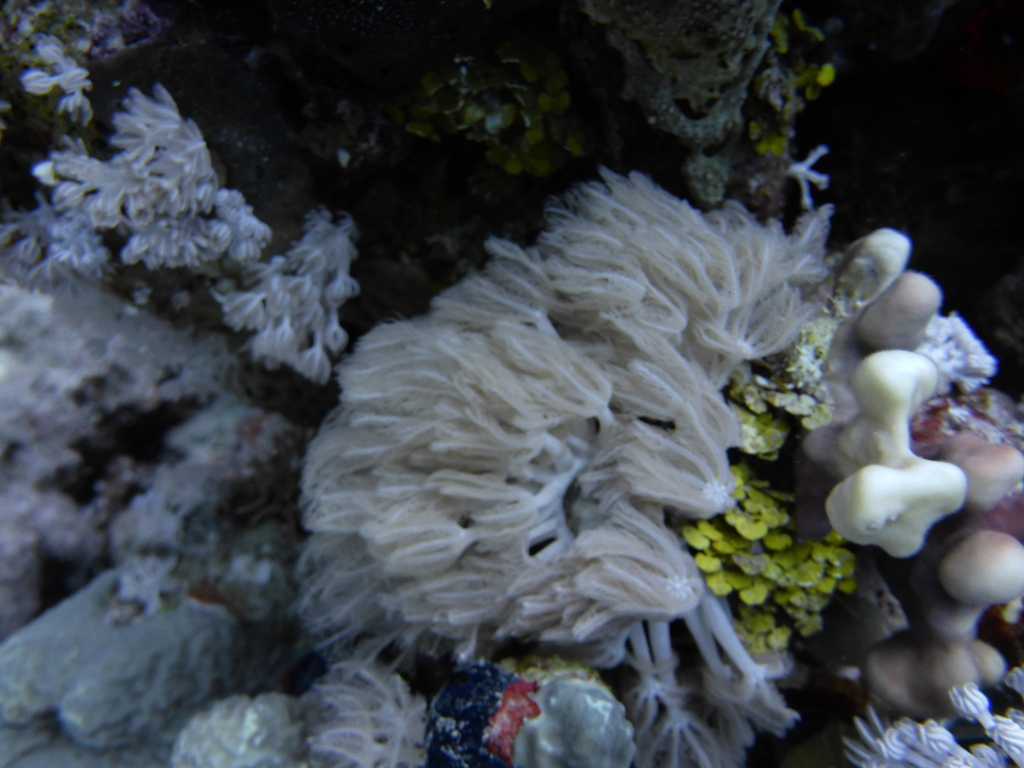
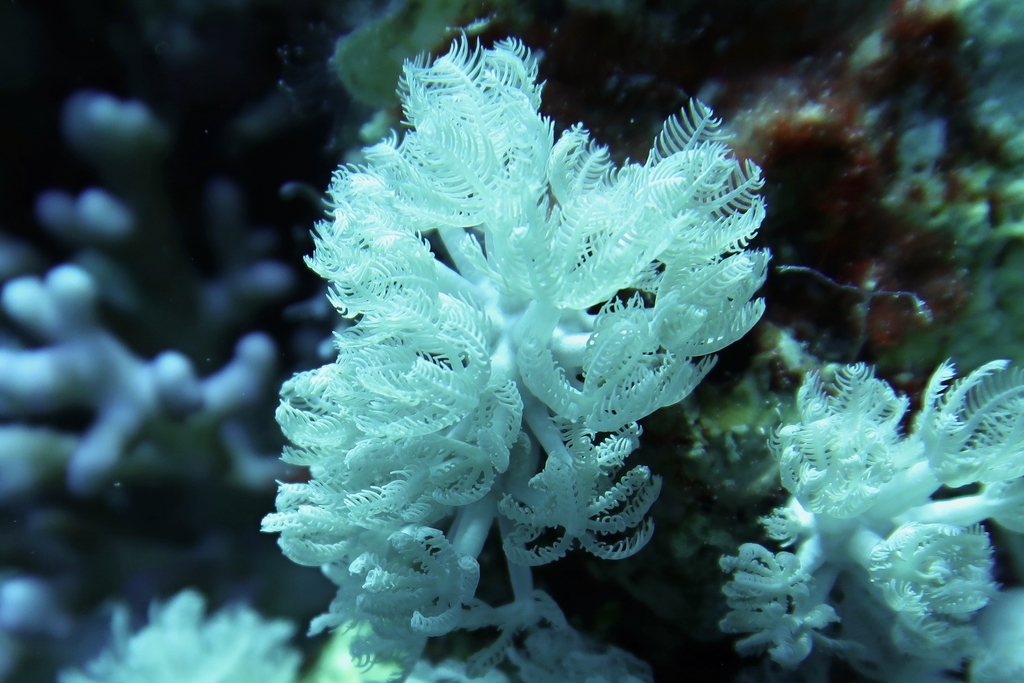
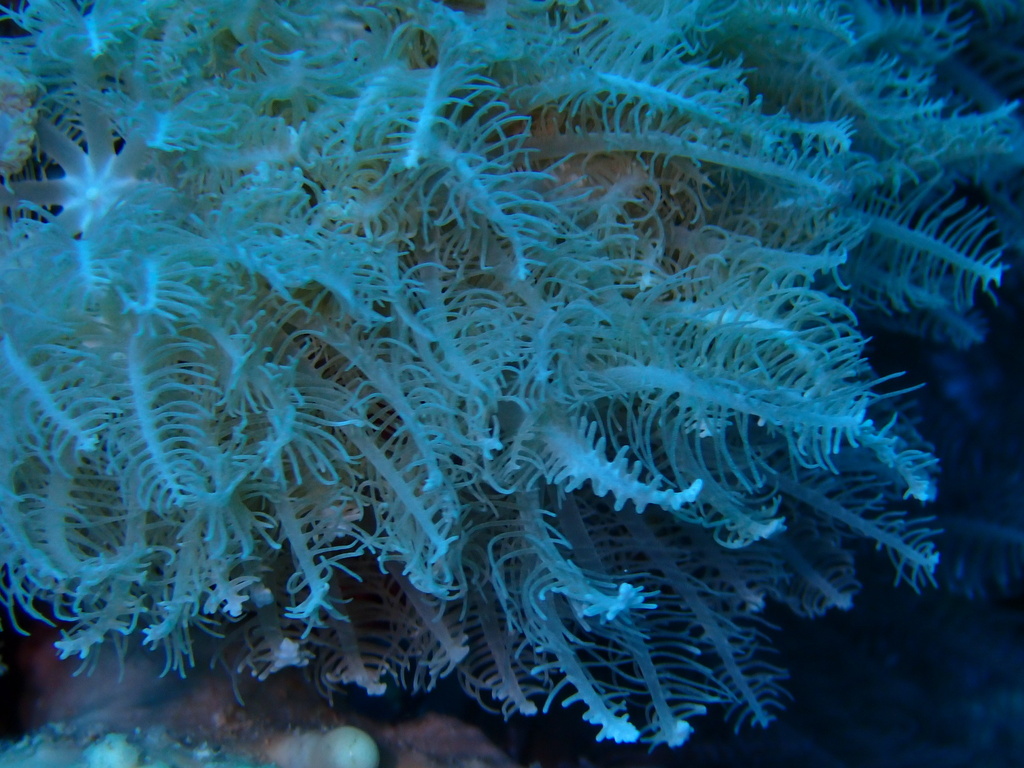
A fast-growing soft coral whose tall, feathery eight-tentacled polyps wave constantly in the current, resembling tiny waving hands. Unlike Xenia, its polyps rise directly from an encrusting mat rather than a stalk, and it is hardy enough to become invasive within the aquarium.
ℹ️
Educational only. KinStation content is reviewed by licensed veterinarians but cannot replace an in-person exam. Always consult a licensed veterinarian or board-certified specialist for diagnosis, treatment, or any decision affecting your pet's health.
🩺 Need expert help with your anthelia (waving hand polyps)?
Connect with a specialist near you or ask a licensed vet — never substitute online guidance for hands-on care in an emergency.
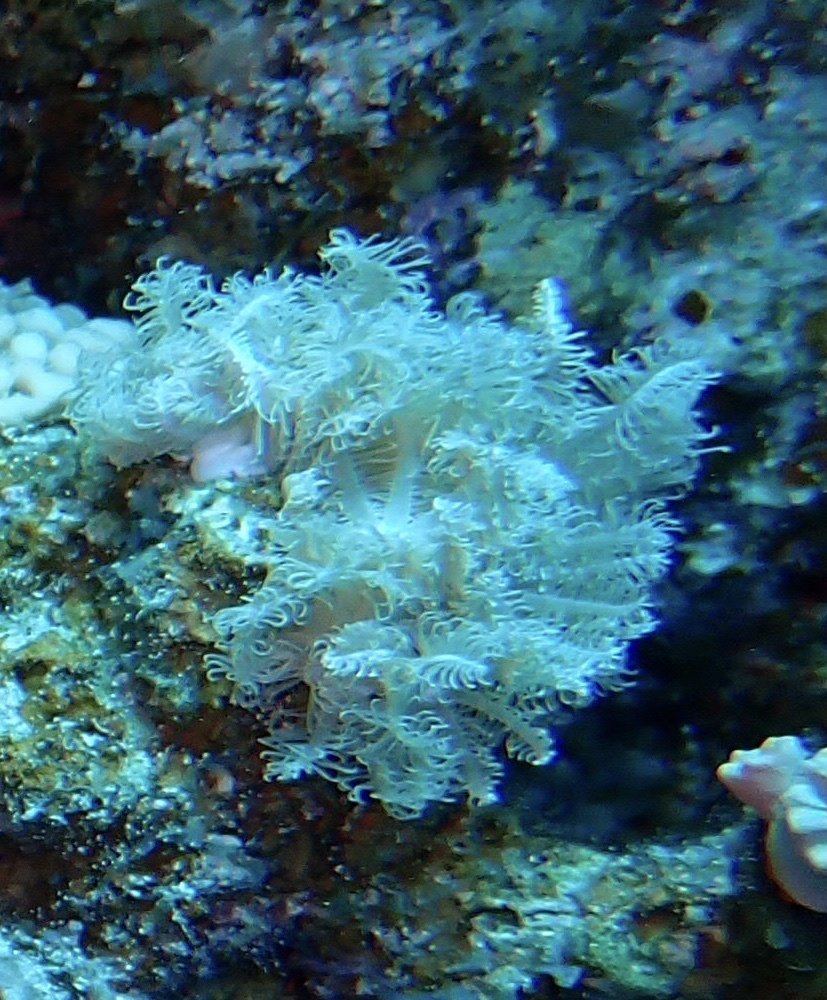
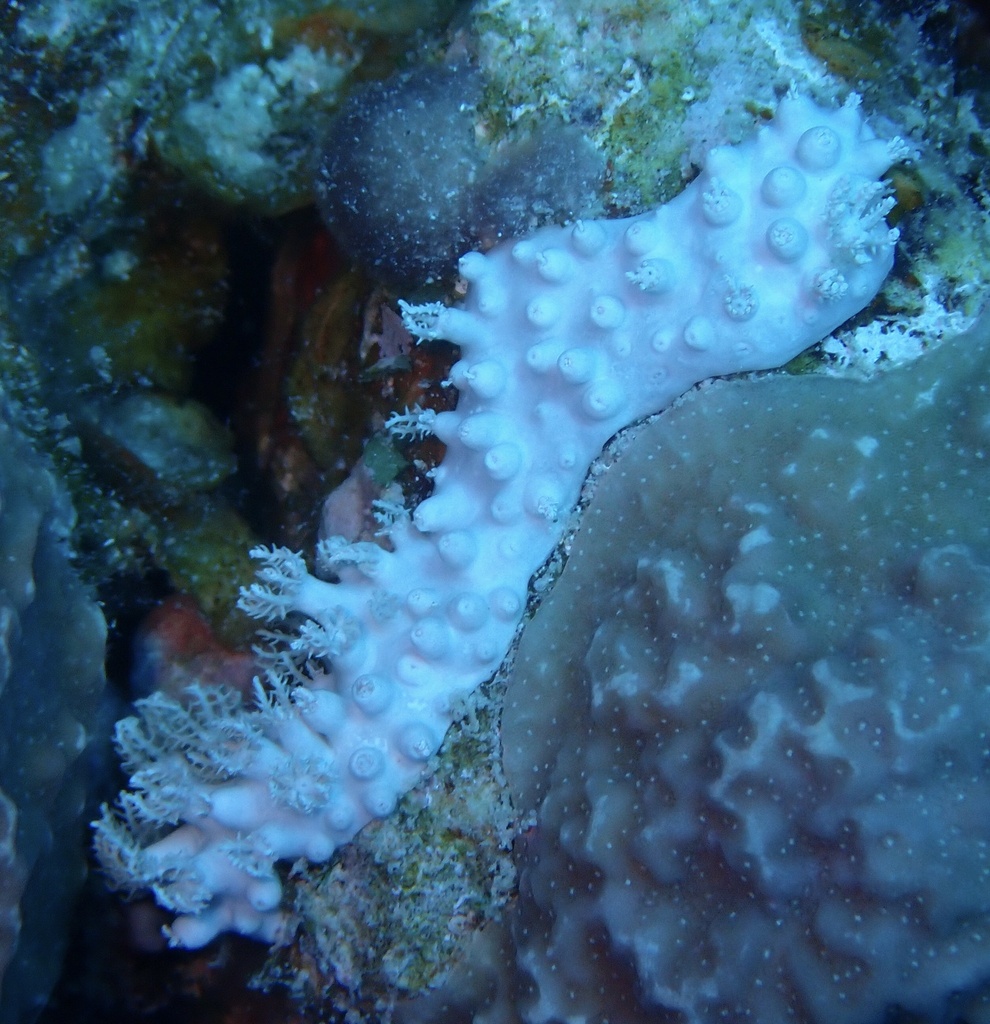
Polyps 2-5 cm tall with feathery eight-pinnate tentacles; colonies form spreading mats over rock
Lifespan
5–20 years
Social needs
group
Native region
Indo-Pacific reefs, including the Red Sea, Indonesia, and the western Pacific
Origin
Old World
Climate
🌴 Tropical
Water type
🌊 Marine
Family
Xeniidae
Genus
Anthelia
Part of the Soft Corals
Soft corals such as leathers, colt, cloves, Anthelia, gorgonians and Sympodium. Non-skeletal octocorals with flexible, often swaying colonies and eight-tentacled polyps; mostly hardy, beginner-friendly reef corals driven by photosynthesis and tolerant of a wide range of light, flow and nutrients.
From the minimum an animal needs to be kept humanely, up to the ideal setup. Bigger is almost always better — minimums are floors, not targets.
Photo coming soon
Minimum
Stable nano reef
10+ gal / SG 1.025 / Alk 8-9 dKH / NO3 5-15 ppm
Hardy soft coral — fine in a stable nano reef with low–medium light and gentle flow. Place low/mid; tolerates higher nutrients than SPS. Anthelia (Waving Hand Polyps) extend in moderate flow — pulse less than xenia but spread fast.
Photo coming soon
Recommended
Established 30-gal reef
30+ gal / cycled 6+ mo / Alk 8-9 / Ca 420-440
Established 30+ gal reef with stable lighting + mid flow. Photosynthetic; no target feeding required. Frag-friendly — grows fast.
Photo coming soon
Ideal
Mature mixed reef
75+ gal / show-quality stability
Mature 75+ gal mixed reef. Tolerant species like this can compete chemically with neighbours (e.g. xenia, GSP spread fast) — give space or contain on isolated rock. Anthelia (Waving Hand Polyps) extend in moderate flow — pulse less than xenia but spread fast.
Life & growth stages
How this animal changes through its life — each stage often has its own care, diet and space needs.
Photo coming soon
Planula larva
Corals begin as a free-swimming planula larva released into the water column after spawning or brooding. The tiny, ciliated larva drifts and swims until it finds suitable hard substrate to settle on.
Photo coming soon
Single polyp
Once settled, the larva metamorphoses into a single founding polyp that secretes a calcium-carbonate (or proteinaceous) base and extends a ring of tentacles to feed. Reef-building corals begin laying down skeleton at this stage.
Mature colony
The founding polyp buds asexually into a colony of many genetically identical polyps, building the species' characteristic growth form — branching, plating, encrusting, or massive. A mature colony can reproduce and contributes to reef structure.
Color & pattern variants
Natural variants occur in the wild; selectively bred (man-made) variants were developed in captivity.
Natural
representative
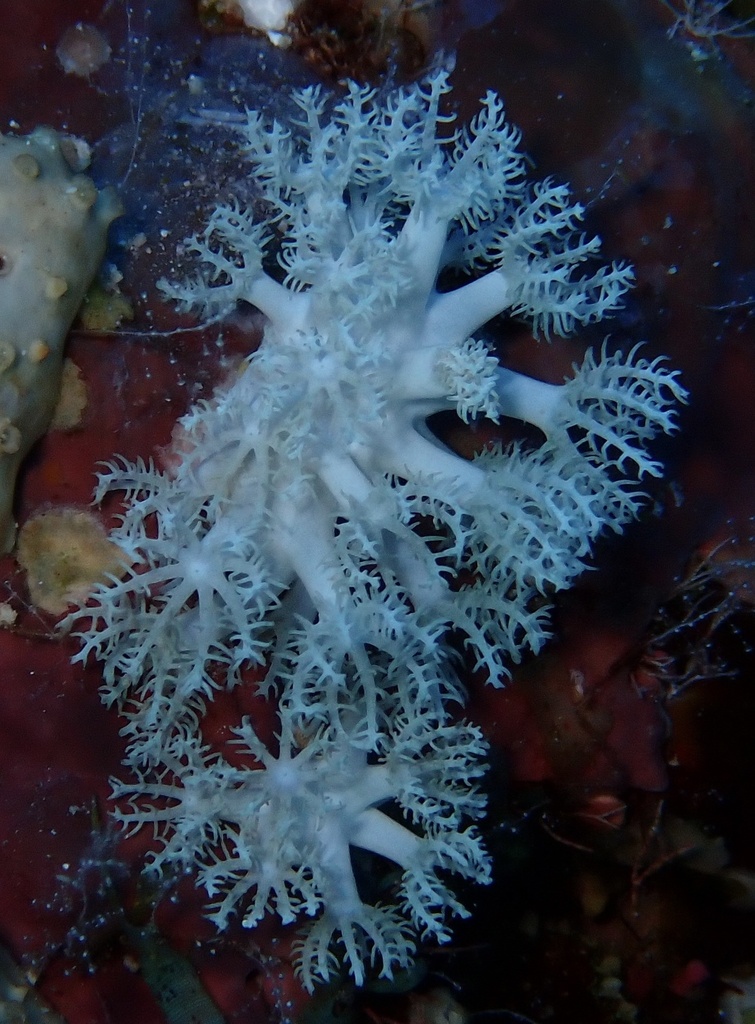
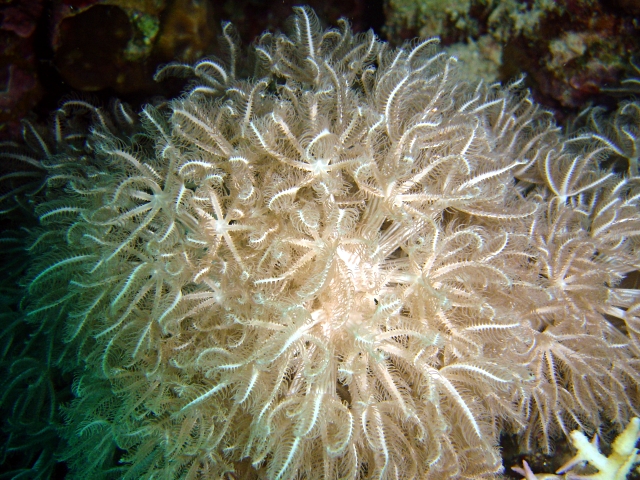
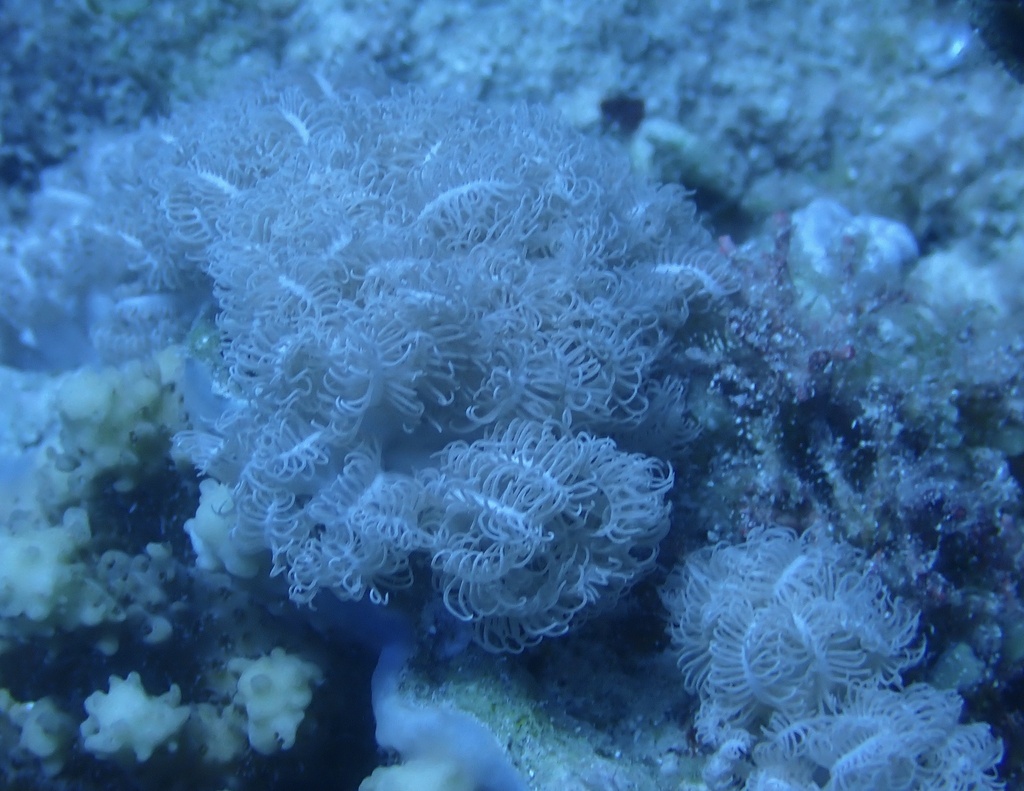
White/Glaucous Anthelia
The common pale white-to-grey form (A. glauca) with translucent feathery polyps.
representative
Green Anthelia
A greenish-tinted morph that shows mild fluorescence under blue lighting.
Easy in any stable, slightly nutrient-rich reef from 40 L (10 gal) up. Maintain salinity 1.024-1.026 SG, temperature 24-27 C (75-81 F), pH 8.1-8.4, alkalinity 8-11 dKH, calcium 400-450 ppm, magnesium 1250-1350 ppm. It often does best in tanks with measurable nutrients and adequate trace elements (notably iodine); pristine ULNS systems can cause it to crash. Place on an isolated rock so its mat does not overtake neighbors.
Substrate
Grows on hard surfaces — encrust onto a dedicated rock, plug, or tile and keep it physically separated from the reef. Avoid placing on sand. An isolated island rock is the recommended way to contain its creeping spread.
Equipment & setup
Provide gentle to moderate flow so the polyps can wave freely — too strong a jet flattens them, too little leads to detritus buildup. Low to moderate light (~30-120 PAR) suits it under LED or T5. Standard skimmer, heater, and a trace-element/iodine supplement round out the setup; no specialized gear is required.
Diet
Mainly photosynthetic via zooxanthellae and absorbs dissolved organic nutrients straight from the water, which is why it favors slightly dirtier tanks. Its tiny polyps capture little particulate food, so target feeding is unnecessary; maintaining trace elements and light feeding of the tank generally fuels its rapid growth.
Behavior & temperament
Peaceful with no sting or sweeper tentacles, but invasive by growth — its encrusting base spreads across the rock and can smother slower corals. The pulsing/waving motion of the polyps is normal feeding and gas-exchange behavior, not distress. Not handleable beyond fragging; mucus is harmless but gloves are still good practice.
Health
Generally bulletproof, but like its Xeniid relatives it can undergo sudden unexplained 'melts' where a colony rapidly disintegrates, often linked to swings in alkalinity, salinity, or trace elements. Polyps that stop waving and stay closed signal a parameter problem, low iodine, or irritation. Keep parameters stable and dose iodine modestly to prevent crashes.
Tips, DIY & hacks
Frag by cutting or peeling a mat-covered piece of rock and gluing it onto a new plug; it re-establishes fast. House it on an isolated rock to keep it from carpeting the tank. If polyps stop waving, check alkalinity stability and dose a little iodine. Do not confuse it with stalked Xenia — Anthelia grows from a flat mat, not individual trunks.
 representative
 representative
 representative
 representative
 representative