Mushroom coral
Discosoma sp. · also called Disc anemone, Mushroom anemone, Discosoma mushroom, Actinodiscus
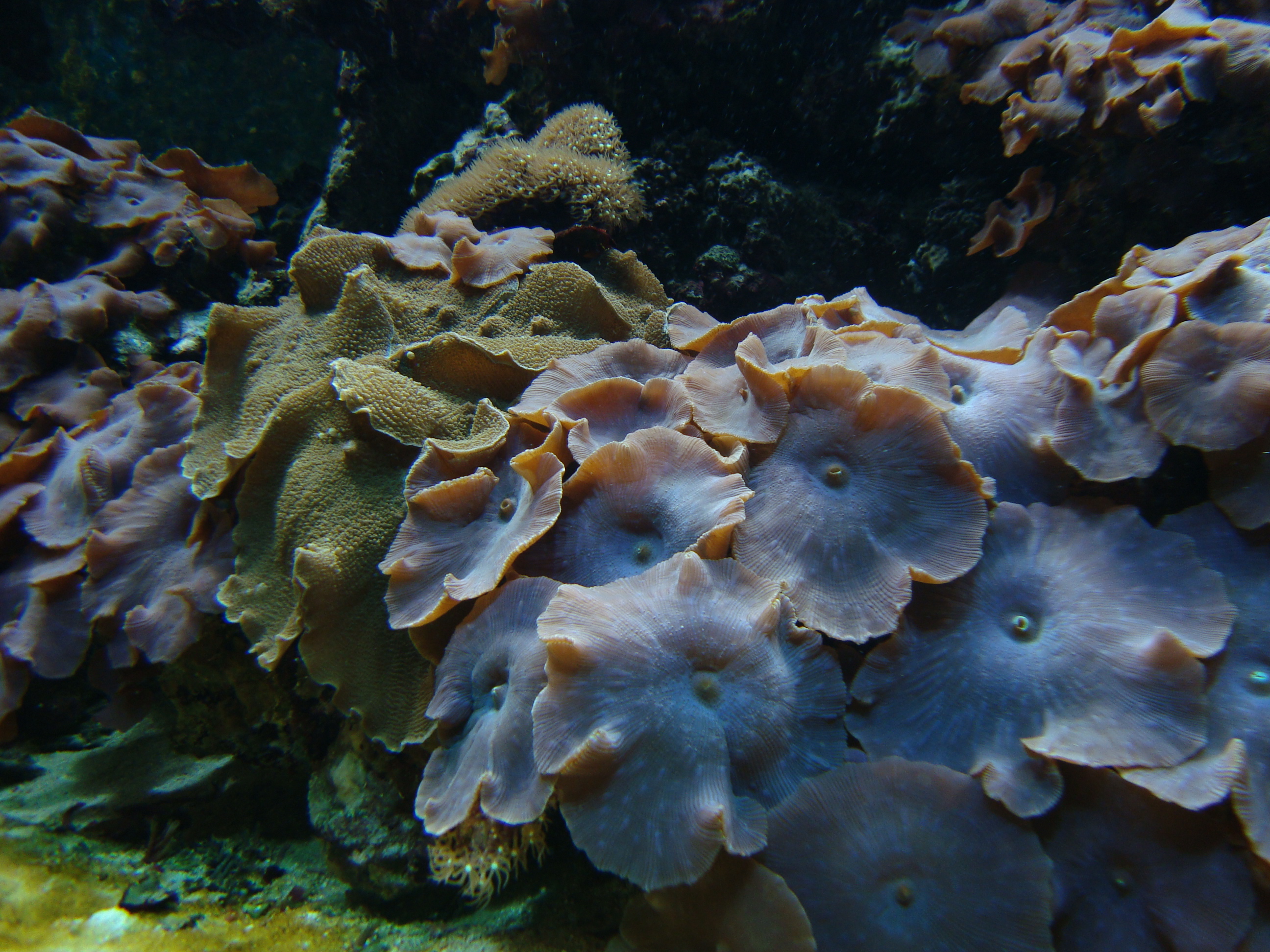
Photo · CC BY-SA 3.0
Discosoma mushrooms are corallimorphs — soft, disc-shaped relatives of stony corals that lack a skeleton. They are among the most forgiving photosynthetic invertebrates available, thriving in low light and high nutrients where pickier corals struggle, which makes them a perfect beginner coral.
🩺 Need expert help with your mushroom coral?
Connect with a specialist near you or ask a licensed vet — never substitute online guidance for hands-on care in an emergency.
Quick facts
| Size | Flat circular disc usually 2-8 cm across; spreads into colonies of many polyps over time. |
| Lifespan | 5–50 years |
| Social needs | solo |
| Native region | Indo-Pacific |
| Origin | Old World |
| Climate | 🌴 Tropical |
| Water type | 🌊 Marine |
| Family | Discosomatidae |
| Genus | Discosoma |
Part of the Soft Corals
Soft corals such as leathers, colt, cloves, Anthelia, gorgonians and Sympodium. Non-skeletal octocorals with flexible, often swaying colonies and eight-tentacled polyps; mostly hardy, beginner-friendly reef corals driven by photosynthesis and tolerant of a wide range of light, flow and nutrients.
Habitat & space requirements
From the minimum an animal needs to be kept humanely, up to the ideal setup. Bigger is almost always better — minimums are floors, not targets.
Life & growth stages
How this animal changes through its life — each stage often has its own care, diet and space needs.
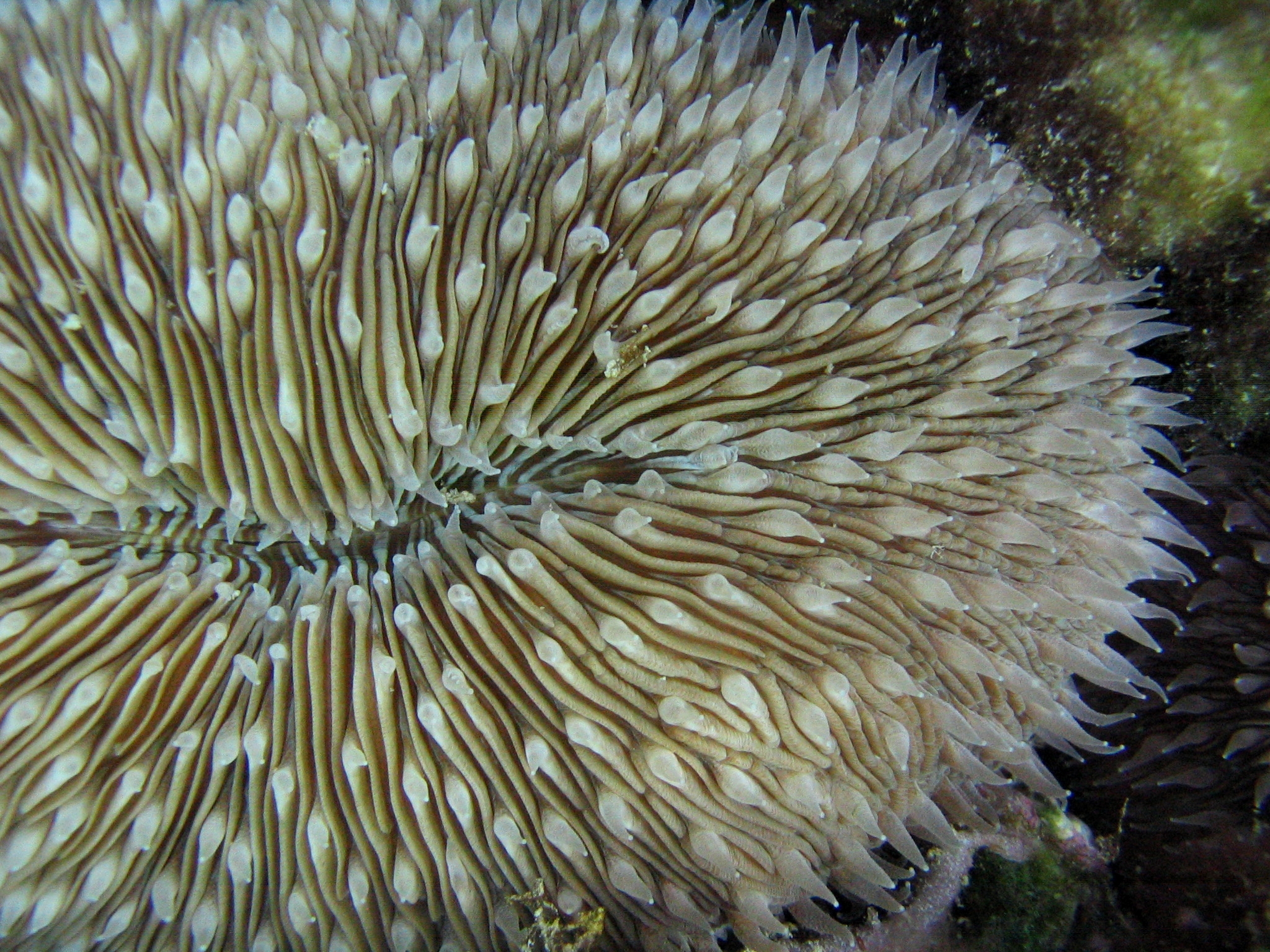
Color & pattern variants
Natural variants occur in the wild; selectively bred (man-made) variants were developed in captivity.
 representative
Blue/electric blue mushroom →
Vivid blue-to-purple discs that fluoresce strongly under actinic light.
 representative
Blue Mushroom →
Smooth-disc *Discosoma* in a powdery blue; very common and forgiving.
Tip: Blue pops hardest under actinic-heavy light at low intensity; if it pales, lower it rather than raising the light.
 representative
Watermelon Mushroom →
A bicolor disc with a green center fading to a red/pink rim, resembling a watermelon slice.
Tip: Low flow and modest light preserve the two-tone contrast; place it where it won't be blasted, as flow stress dulls the rim color.
 representative
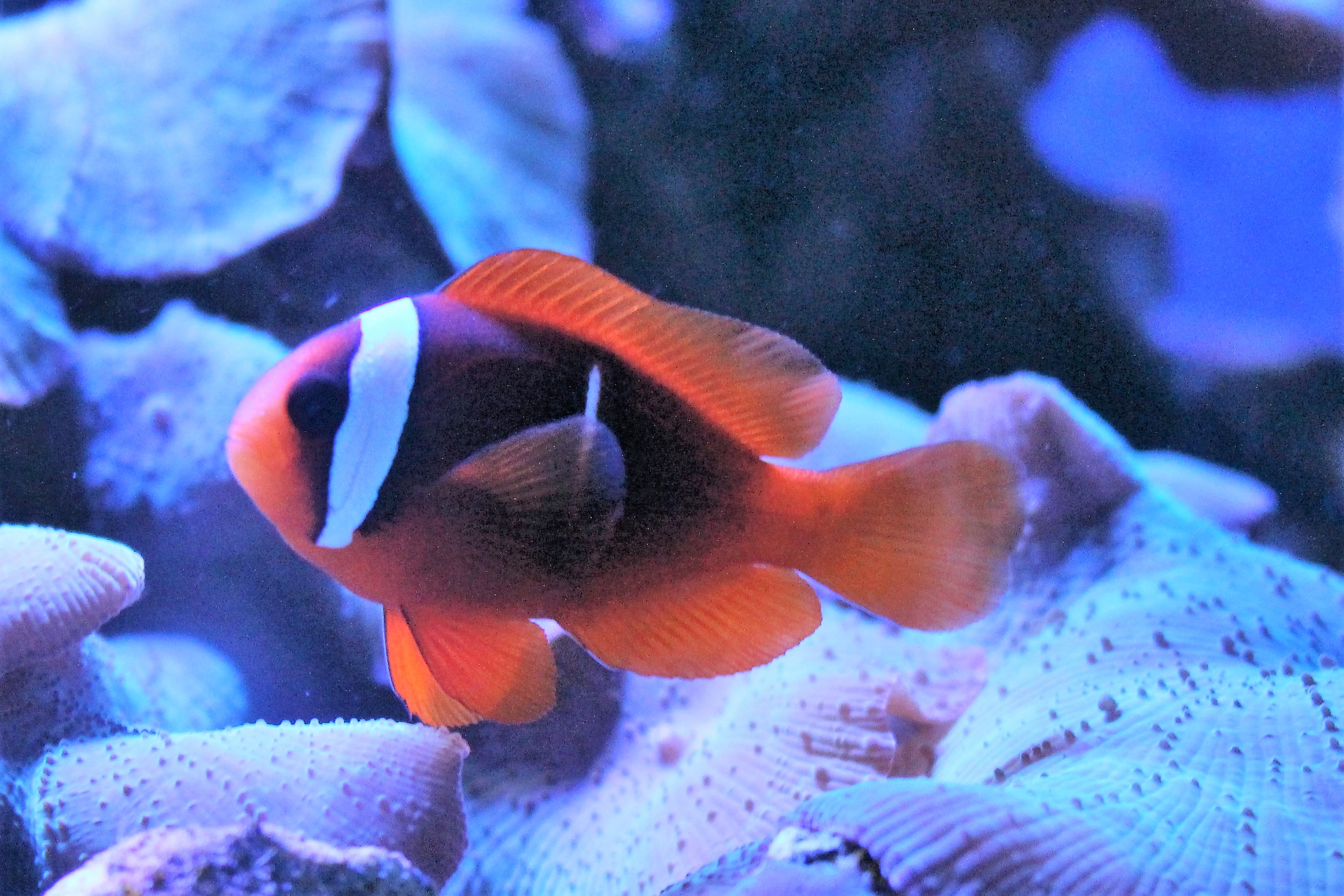
Bounce Mushroom (Rhodactis) →
A *Rhodactis* mushroom covered in inflated, bubble-like vesicles ('bounces'); OG/Sunkist/rainbow bounces are among the most expensive corals in the trade.
Tip: Bounces inflate their signature bubbles only in LOW flow and moderate light — too much flow flattens them; never blast a bounce, and let it attach undisturbed.
 representative
Jawbreaker Mushroom (Rhodactis) →
A *Rhodactis* with dense multicolor speckling resembling a jawbreaker candy; one of the most prized and pricey designer mushrooms.
Tip: Color is light-dependent — too dim and it goes plain, too bright and it bleaches; find the moderate sweet spot and leave it put, as these are slow to settle and split.
representativeGreen Hairy Mushroom (Rhodactis) →
A *Rhodactis* mushroom covered in short tentacle-like 'hairs', usually green; fast-spreading and very hardy.
Tip: Hairy mushrooms can sting and overgrow neighbors — give them their own rock, as they spread aggressively into a mat.
representativeJawbreaker Mushroom →
A marbled, candy-like mushroom with swirled multicolor coloration (pinks, oranges, greens, blues) resembling a jawbreaker candy, among the most prized and expensive shrooms in the trade.
Tip: Stable placement on lower-to-mid rock under low-to-moderate light and low flow; let it settle undisturbed, as the high-value disc colors deepen over time.
representativeSunkist Mushroom (non-bounce) →
A solid bright-orange *Discosoma*-type mushroom (the flat, non-bubbled form) named for its uniform citrus-orange disc.
Tip: Lower-light, lower-flow placement keeps the orange saturated; bright direct light can bleach the color.
representativeSuperman Mushroom →
A *Discosoma*/*Rhodactis* mushroom with a blue body and bright red/orange flecks, echoing the blue-and-red 'Superman' color scheme used across many reef corals.
Tip: Moderate light brings out the blue base; keep flow gentle so the disc stays open and flat.
representativeWWC Orange Flame Disco →
A *Discosoma* mushroom with a fiery orange disc streaked and speckled in deeper red and gold, giving a flaming, mottled look across the cap.
Tip: Place low in the rockwork under low-to-moderate light (around 50-100 PAR) with gentle, indirect flow so the disc can fully expand and develop color. Too much flow makes Discosoma detach and wander.
representativeWWC King Tut Disco →
A *Discosoma* morph with a gold-and-bronze patterned cap reminiscent of Egyptian gold leaf, with darker banding radiating from the mouth.
Tip: Keep on lower rock or sand-adjacent ledges under subdued light and low flow; too much current makes Discosoma detach and wander.
representativeWWC Red Jaguar Disco →
A deep red *Discosoma* broken up by spotted, jaguar-like darker markings across the disc, giving a high-contrast animal-print appearance.
Tip: Low light and low flow on the lower third of the aquascape lets the spotting deepen; avoid bright SPS-level lighting, which can wash out the reds.
representativeTrippin Iguana Disco →
A psychedelic green-and-orange *Discosoma* with a reptilian, mottled pattern that mixes lime, teal, and warm orange tones.
Tip: Position on lower rock under modest lighting with low, indirect flow so the multi-color pattern stays expanded and vivid.
representativeSuperman Discosoma →
A classic 'Superman' *Discosoma*: a deep red disc covered in raised, bright blue spotting, echoing the comic-book red-and-blue color scheme.
Tip: Low light and gentle flow on lower rockwork; Discosoma color holds best under bluer, lower-intensity lighting rather than full SPS-level PAR.
representativeRed Alert Discosoma →
A vivid, deeply colored red *Discosoma* mushroom with a smooth disc and a contrasting lighter mouth.
Tip: Easy beginner placement: lower rock or sand-edge under low-to-moderate light with calm flow; it will spread readily once settled.
representativeBlood Red Discosoma →
A deep blood-red *Discosoma* mushroom, one of the classic hardy red shrooms with a uniform dark-red cap.
Tip: Great starter coral for low-light, low-flow zones; redder coloration develops under lower light, so avoid placing it high in bright tanks.
representativeFruity Pebble Discosoma →
A confetti-colored *Discosoma* splashed with reds, oranges, yellows, greens, and purple, with each polyp showing unique color breaks like the cereal.
Tip: Low-to-moderate light with gentle flow on lower rock keeps the multicolor splashes vibrant; bright light can wash out the pastel tones.
 representative
Watermelon →
Line-selected green-and-red mushroom resembling watermelon flesh, propagated for its color contrast.
representativeJF Bounce Mushroom →
A *Discosoma*-type bounce mushroom covered in raised, bubble-like vesicles that swell into a popcorn texture, the original line carrying a green-to-pink gradient across an inflated body.
Tip: Place on a low-flow sandbed or low rockwork under moderate light (PAR ~50-100); too much flow keeps the bubbles from inflating fully.
representativeSunkist Bounce Mushroom →
A bounce mushroom prized for its solid orange-to-tangerine coloration over a heavily bubbled body, named for its citrus-orange tone.
Tip: Keep under moderate, slightly warmer-spectrum light to hold the orange; low indirect flow lets the vesicles bubble up.
representativeRainbow Bounce Mushroom →
A bounce mushroom displaying multiple colors — typically green, orange, pink and red bubbles across one body — for a multicolored 'rainbow' look.
Tip: Stable moderate light brings out the multiple pigments; place in calm flow so the bubbles stay inflated and colors spread evenly.