Finger leather coral
Sinularia sp. · also called Finger leather, Flexible leather coral, Cabbage leather, Sinularia
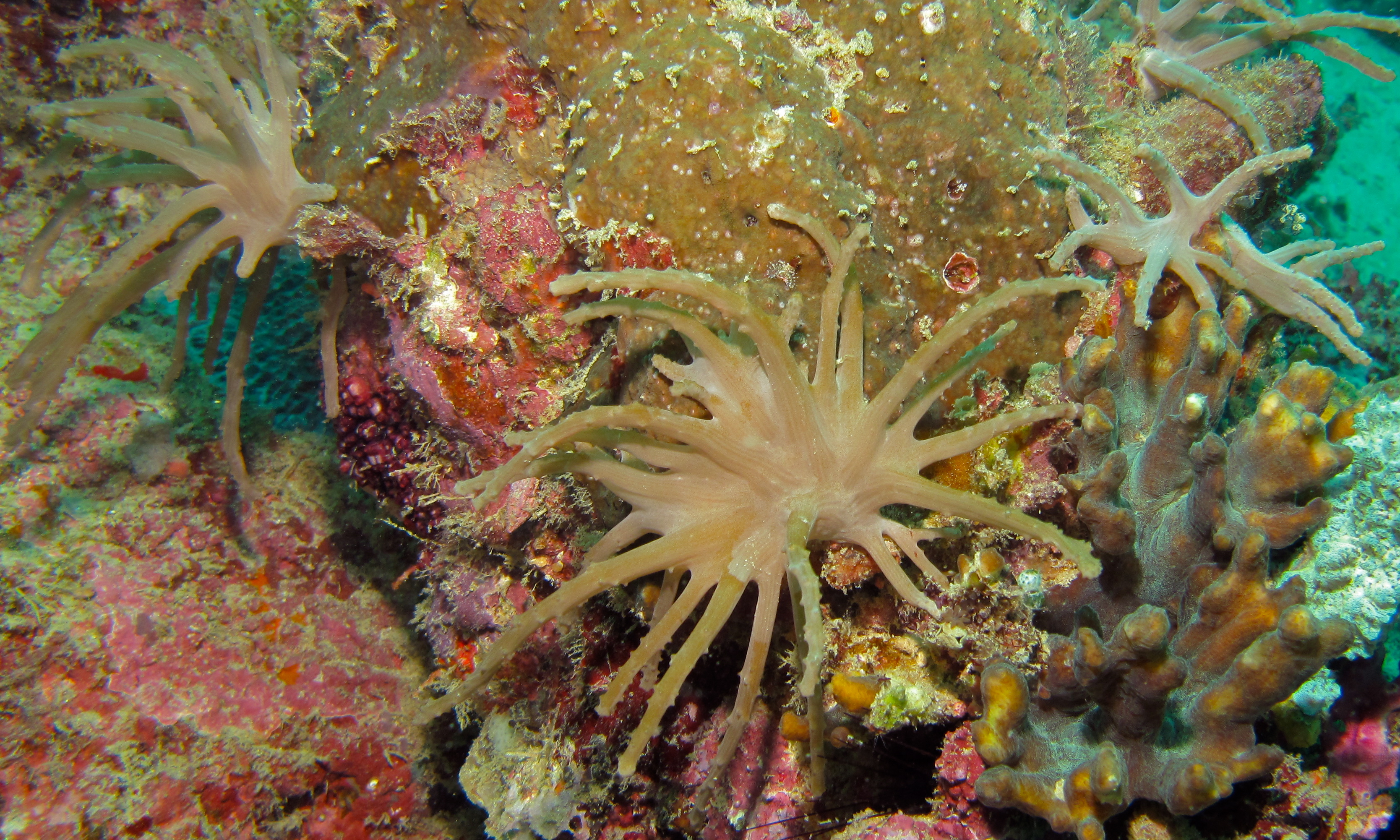
Photo · CC BY-SA 2.0
Sinularia finger leathers are soft corals forming branching, finger-like or lobed leathery colonies in cream, tan, green, and yellow tones. They are exceptionally hardy, fast-growing, and forgiving, making them a staple beginner soft coral.
🩺 Need expert help with your finger leather coral?
Connect with a specialist near you or ask a licensed vet — never substitute online guidance for hands-on care in an emergency.
Quick facts
| Size | Colonies commonly 4-12 in (10-30 cm) tall/wide, growing into branching finger-like or lobed leathery masses; large specimens exceed a foot. |
| Lifespan | 10–50 years |
| Social needs | solo |
| Native region | Indo-Pacific reefs |
| Origin | Old World |
| Climate | 🌴 Tropical |
| Water type | 🌊 Marine |
| Family | Sinulariidae |
| Genus | Sinularia |
Part of the Soft Corals
Soft corals such as leathers, colt, cloves, Anthelia, gorgonians and Sympodium. Non-skeletal octocorals with flexible, often swaying colonies and eight-tentacled polyps; mostly hardy, beginner-friendly reef corals driven by photosynthesis and tolerant of a wide range of light, flow and nutrients.
Habitat & space requirements
From the minimum an animal needs to be kept humanely, up to the ideal setup. Bigger is almost always better — minimums are floors, not targets.
Life & growth stages
How this animal changes through its life — each stage often has its own care, diet and space needs.

Color & pattern variants
Natural variants occur in the wild; selectively bred (man-made) variants were developed in captivity.
 representative
Green finger leather
The classic Sinularia with fleshy, finger-like lobes carrying green-to-tan polyps; a wild-occurring color form and one of the hardiest soft corals in the trade.
Tip: Give it low-to-moderate light and moderate flow; it sheds a waxy cuticle periodically (it will look shriveled for a day) so don't panic or 'rescue' it during the sloughing phase.
 representative
Yellow Sinularia (S. flexibilis/dura types)
Yellow-toned branching or cabbage-like colonies prized for their bright color among leather corals.
 representative
Cream / Tan finger leather
The classic hardy tan-to-cream branching form, fast-growing and ideal for beginners.
 representative
Yellow Finger Leather (Sinularia flexibilis 'Yellow') →
A buttery-yellow finger leather; the yellow pigment is light-dependent and washes out to tan under weak lighting.
Tip: Hold the color with moderate-to-high PAR (roughly 150-250) and good flow — too little light and it fades to plain tan, losing what you paid for.
 representative
Neon/Toxic Green Finger Leather →
An electric, fluorescent-green finger leather that pops hard under actinic/blue lighting; same easy Sinularia care as the standard green.
Tip: Run heavy blue/actinic light to make the neon fluoresce; place it where its allelopathy (chemical warfare) won't reach sensitive SPS — run carbon and skim well.
 representative
Purple Finger / Knobby Sea Rod (Sinularia dura type) →
Thicker, more rigid lobes with a purple-gray cast and short polyps; a stiffer-bodied Sinularia sometimes sold as 'cabbage' leather.
Tip: Tolerates strong flow well thanks to its rigid skeleton-like body; mount it on a high rock where current keeps detritus off the lobes.
 representative
Pom Pom / Cauliflower Finger Leather →
A bushy, densely branched Sinularia whose tips clump like cauliflower; a vigorous grower and reliable beginner soft coral.
Tip: It grows fast and will overtake neighbors — give it open space downstream and frag the branch tips, which propagate extremely easily.
 representative
Spaghetti Finger Leather →
A *Sinularia* form with long, thin, drooping branches that resemble strands of spaghetti, usually tan to cream or pale green, swaying heavily in flow.
Tip: Moderate flow keeps the long fingers from collecting detritus; tolerant of low-to-moderate light. Easy to frag by snipping a finger and attaching it to rubble.
representativeYellow Fiji Finger Leather →
A *Sinularia* in a genuine yellow-to-mustard coloration with stubby fingers — the rarer yellow pigment sets it apart from the usual green and tan forms.
Tip: Higher light helps hold the yellow tone; provide moderate flow and room to spread. Standard leather shedding cycle applies.
representativeCabbage Leather (Sinularia dura) →
A flat, folded, lettuce- or cabbage-like *Sinularia dura* rather than true fingers, with a smooth fluorescent-green to tan surface and ruffled edges.
Tip: Moderate light and moderate flow; the broad folds can trap detritus, so periodic flow helps. Grows into a large plating mass over time.
representativeGreen Sinularia (Green Finger Leather) →
The classic green color form of finger leather, ranging from soft sage to brighter green, in contrast to the more common plain tan colonies. Forms a branching, many-fingered tree.
Tip: Moderate light and moderate-to-strong flow suit it; flow is key for shedding the periodic waxy film these corals cast off. Highly adaptable to lower flow if needed.
representativePink Indo Sinularia Leather →
A pink color form of the branching finger leather, an unusual departure from the typical green and tan colonies. Forms the same large branching, many-fingered stalks as other Sinularia.
Tip: Medium light (~50-150 PAR) and adaptable flow; like all Sinularia it periodically retracts and forms a waxy film before shedding, a normal multi-week cleansing cycle that is nothing to worry about.
representativeEaster Egg Finger Leather (Sinularia) →
A teal-to-green finger leather whose pastel coloration earned the 'Easter Egg' trade name. It shares the standard Sinularia finger growth form, branching into many soft stalks.
Tip: Medium lighting (~50-150 PAR) and moderate flow; adaptable to a range of flow intensities. Allow it to shed its periodic waxy coat and keep flow up so detritus does not settle between fingers.
representativeToxic Green / Neon Green Cabbage Leather (Sinularia) →
A fluorescent toxic/neon green form of the cabbage-type Sinularia (S. dura/brassica), forming ruffled, folded plates rather than fingers and glowing bright green under blue light. A sister growth-form of the finger leather within the same genus.
Tip: Moderate light and moderate flow; like other Sinularia it benefits from enough flow to shed its waxy coat and to keep detritus from settling in the folds. Running activated carbon helps manage any terpenes it may release toward sensitive stony corals.
 representative
Aquacultured Green Finger Frag (Maricultured) →
Tank-raised/maricultured cuttings of the common green finger leather, now the standard way it's sold; genetically identical but reef-friendlier than wild colonies.
Tip: Best entry soft coral — glue the frag plug to rock and leave it; aquacultured stock acclimates faster and carries fewer pests than wild imports.
representativeORA Neon Green Sinularia →
An intensely fluorescent green base with greenish-yellow polyps, branching in a tree-like manner with many irregular fingers. The neon glow pops hardest under blue/actinic light, and like all Sinularia it can inflate and deflate, sometimes staying deflated for a day or two.
Tip: Place in moderate light (~50-150 PAR) and moderate-to-strong flow; good flow is essential so it can shed its periodic waxy tunic cleanly. Iodine, strontium and trace element supplementation is appreciated.
representativeORA Yellow Polyp Sinularia →
Thick, finger-like stalks rise from a wide, stocky base, densely covered in fuzzy yellow polyps that give the colony a soft golden-to-greenish glow. Depending on the lighting spectrum the color shifts from yellow to a light green.
Tip: Keep it at roughly 50-150 PAR (low to high light is tolerated); brighter light pulls out yellow tones while too much can wash it toward green. Low-to-moderate flow is fine, though stronger flow helps it shed and stay fully extended.
representativeBIOTA Yellow/Green Sinularia →
A vivid neon light-green strain with off-white-to-beige fingers and big fluffy polyps that wave in the current. It has stouter branches than the similar-looking Nephthea and shows its strongest color and growth under brighter light.
Tip: Give it medium-to-high light and medium flow; it is forgiving but rewards stronger flow and brighter light with maximum extension and color.