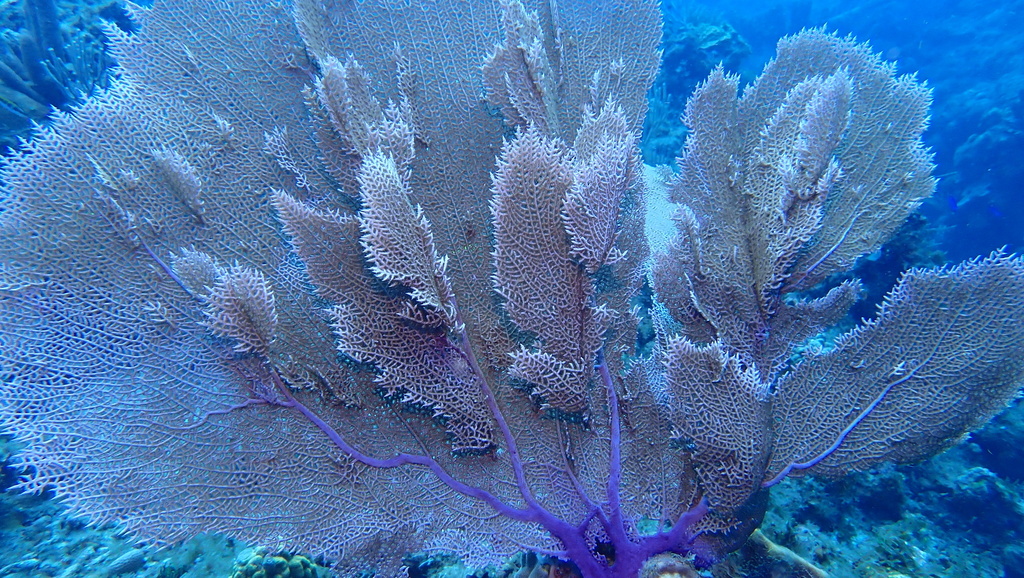
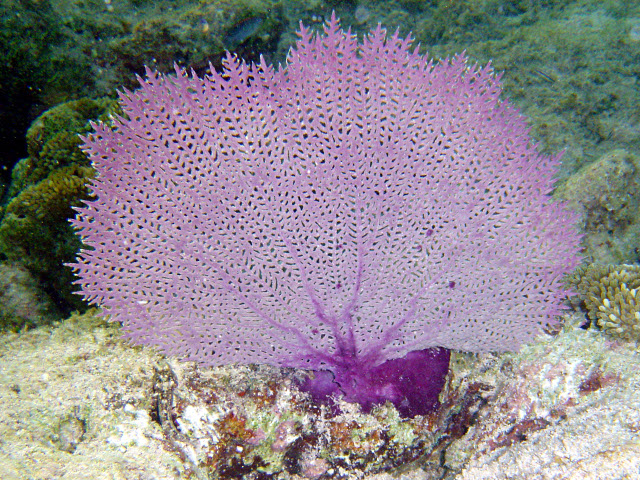
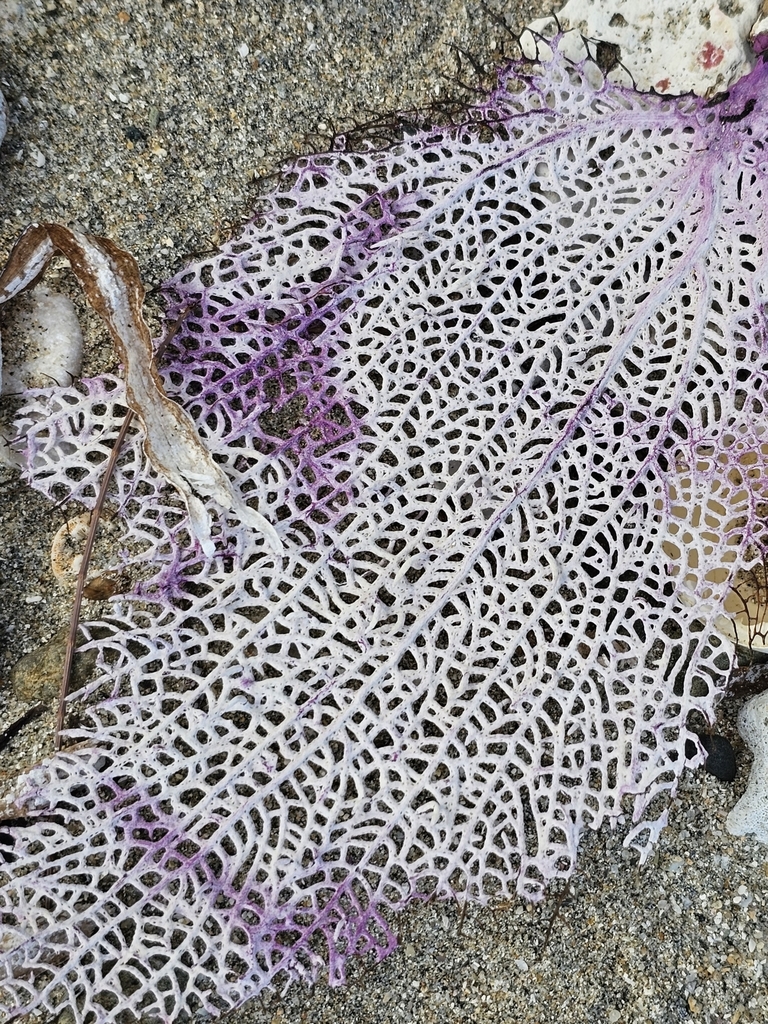
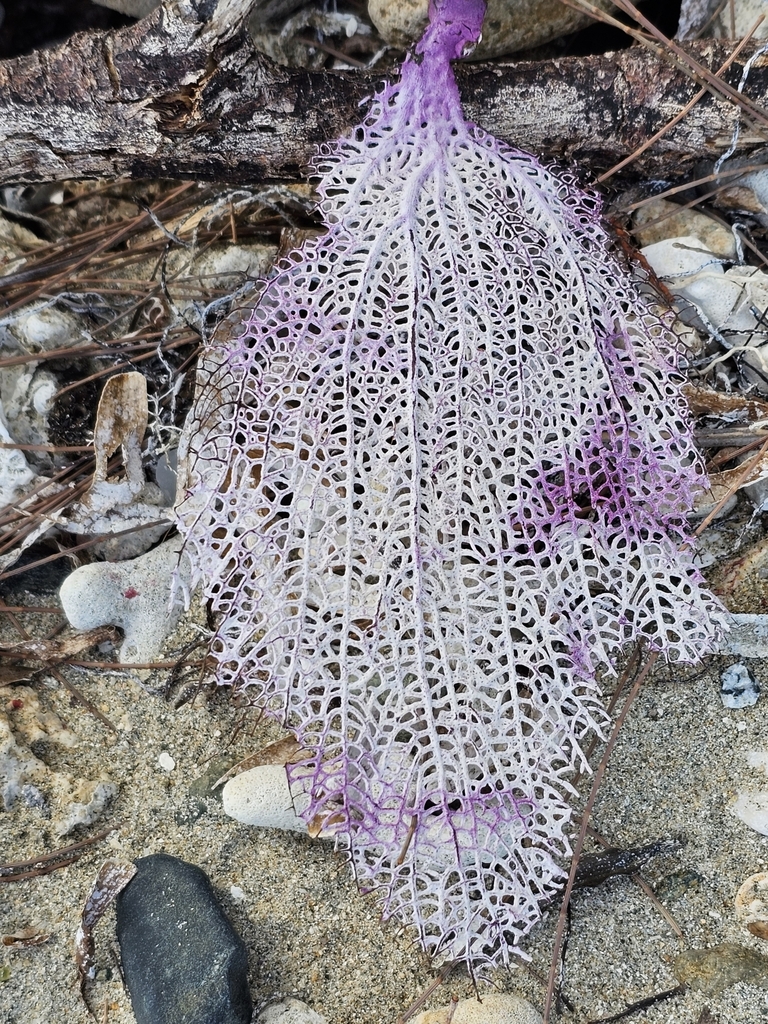
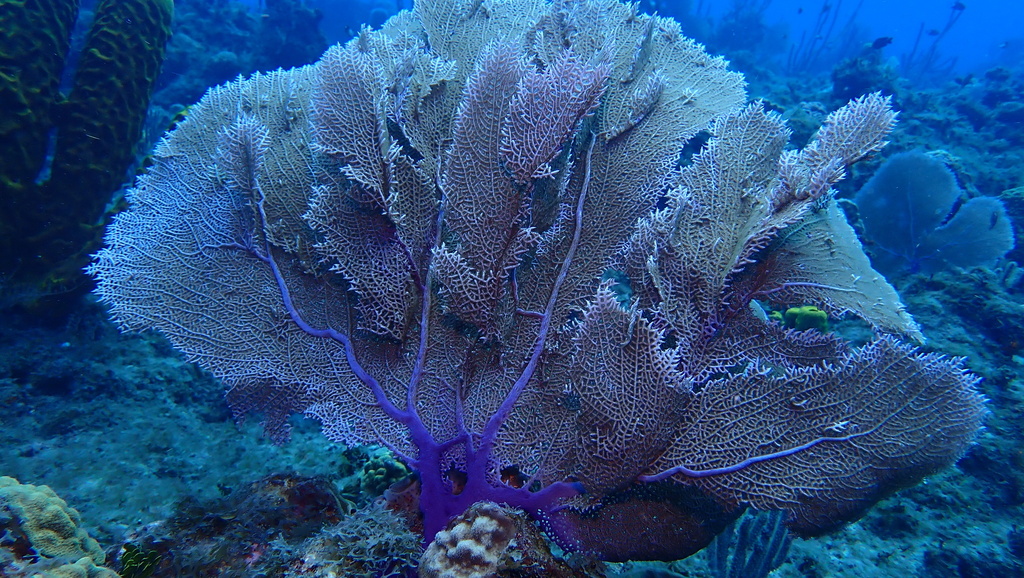
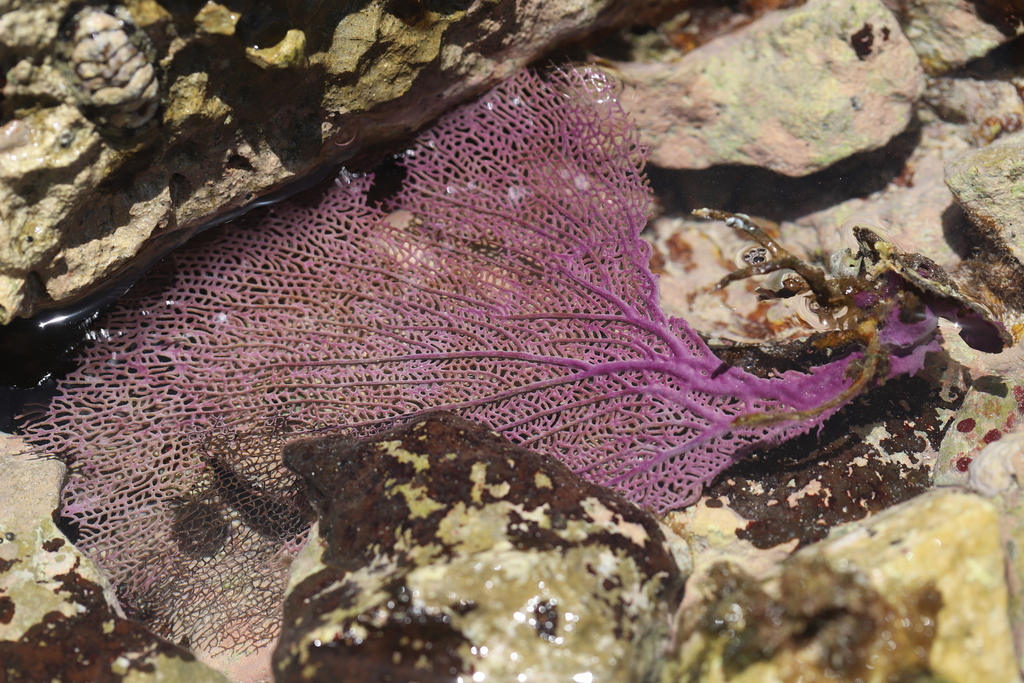
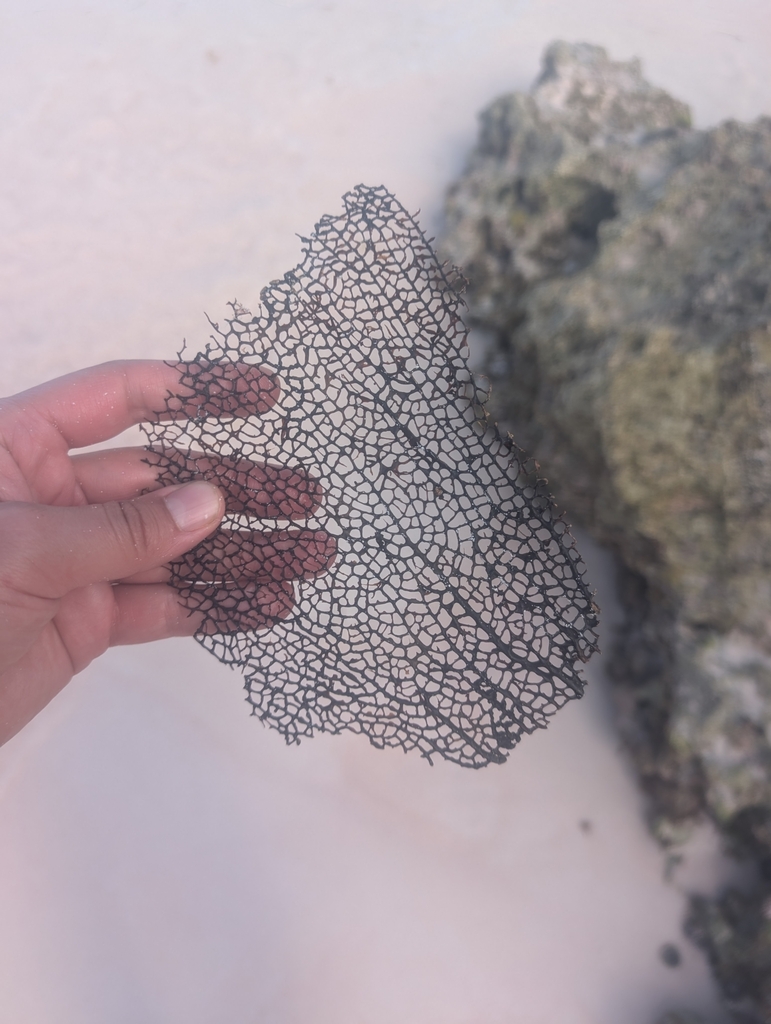
A flat, lattice-shaped Caribbean sea fan with a flexible proteinaceous (gorgonin) skeleton oriented across the current to filter the water. The purple photosynthetic G. ventalina is more forgiving than non-photosynthetic gorgonians, but it is among the harder photosynthetic sea fans, demanding strong flow and spotless tissue — and wild collection is legally restricted in U.S. waters.
ℹ️
Educational only. KinStation content is reviewed by licensed veterinarians but cannot replace an in-person exam. Always consult a licensed veterinarian or board-certified specialist for diagnosis, treatment, or any decision affecting your pet's health.
🩺 Need expert help with your gorgonian sea fan?
Connect with a specialist near you or ask a licensed vet — never substitute online guidance for hands-on care in an emergency.
Flat fan-shaped colony; aquarium specimens 15-40 cm tall, wild fans can exceed 1.5 m
Lifespan
10–50 years
Social needs
solo
Native region
Western Atlantic and Caribbean reefs (Florida, Bahamas, Caribbean Sea)
Origin
New World
Climate
🌴 Tropical
Water type
🌊 Marine
Family
Gorgoniidae
Genus
Gorgonia
Part of the Soft Corals
Soft corals such as leathers, colt, cloves, Anthelia, gorgonians and Sympodium. Non-skeletal octocorals with flexible, often swaying colonies and eight-tentacled polyps; mostly hardy, beginner-friendly reef corals driven by photosynthesis and tolerant of a wide range of light, flow and nutrients.
From the minimum an animal needs to be kept humanely, up to the ideal setup. Bigger is almost always better — minimums are floors, not targets.
Photo coming soon
Minimum
Established reef
30+ gal cycled 6+ mo / strong random flow
Photosynthetic gorgonians (most aquacultured species) need STRONG random flow — without flow they coat with cyano and die. Place mid where flow is best. Generic gorgonian entry — identify whether your specimen is photosynthetic or NPS BEFORE buying; NPS require daily target feeding.
Photo coming soon
Recommended
Mature 75-gal reef with strong flow
75+ gal mature reef / chaotic flow patterns
Mature reef + multiple flow pumps creating chaotic gyre. Photosynthetic species are self-feeding.
Photo coming soon
Ideal
Show reef + NPS feeding routine if applicable
120+ gal mature show reef
Mature show reef. Non-photosynthetic (NPS) gorgonians (e.g. Diodogorgia, Swiftia) require daily target feeding with phyto/zooplankton — specialist setup. Generic gorgonian entry — identify whether your specimen is photosynthetic or NPS BEFORE buying; NPS require daily target feeding.
Life & growth stages
How this animal changes through its life — each stage often has its own care, diet and space needs.
Photo coming soon
Planula larva
Corals begin as a free-swimming planula larva released into the water column after spawning or brooding. The tiny, ciliated larva drifts and swims until it finds suitable hard substrate to settle on.
Photo coming soon
Single polyp
Once settled, the larva metamorphoses into a single founding polyp that secretes a calcium-carbonate (or proteinaceous) base and extends a ring of tentacles to feed. Reef-building corals begin laying down skeleton at this stage.
Mature colony
The founding polyp buds asexually into a colony of many genetically identical polyps, building the species' characteristic growth form — branching, plating, encrusting, or massive. A mature colony can reproduce and contributes to reef structure.
Color & pattern variants
Natural variants occur in the wild; selectively bred (man-made) variants were developed in captivity.
A close relative with a yellower cast and a slightly different branch-network geometry; cared for similarly and likewise best sourced as aquacultured stock.
Best in an established reef of 110 L (30 gal) or more with strong, varied flow. Maintain salinity 1.024-1.026 SG, temperature 24-27 C (75-81 F), pH 8.1-8.4, alkalinity 8-11 dKH, calcium 400-450 ppm, magnesium 1250-1350 ppm. Position the flat fan broadside to the dominant current so water passes through the mesh, mid to upper rockwork. It needs good water movement above all else to keep its surface free of algae and films. Legality note: Gorgonia ventalina is a protected species in Florida — the FWC prohibits harvest, possession, and sale of wild sea fans, so only aquacultured/captive-propagated specimens (e.g. on aquacultured rock) should be purchased. Source responsibly.
Substrate
Mount the base into a rock crevice or onto a plug and secure with reef-safe epoxy or super glue so the fan stands upright and broadside to flow. Do not lay it on sand. Ensure the holdfast is firmly anchored, as a wobbling fan abrades its own tissue.
Equipment & setup
Strong, turbulent, alternating flow (gyre or crossing powerheads) is the single most important piece of equipment — aim for brisk movement through the fan without a single laminar blast. Moderate lighting (~50-150 PAR) suffices for the photosynthetic species. Run a skimmer and good mechanical/biological filtration; a refugium or plankton reactor helps if keeping non-photosynthetic gorgonians.
Diet
Gorgonia ventalina hosts zooxanthellae and is largely photosynthetic, but it still benefits from feeding fine plankton — phytoplankton, rotifers, and fine particulate or coral foods broadcast into the current a few times a week support its filter-feeding polyps. Note that many other Caribbean gorgonians (e.g., red/yellow Diodogorgia, Swiftia) are non-photosynthetic and require heavy, frequent plankton feeding and are far harder (advanced).
Behavior & temperament
Peaceful and sessile with no sweeper tentacles; it does not sting neighbors. Polyps extend into the current to feed and retract when disturbed. Its branches are flexible and sway in the flow. Not handleable beyond mounting and fragging; handle by the skeleton, avoid touching the living tissue (coenenchyme), and wear gloves since some gorgonians can irritate skin.
Health
The number-one killer is algae or cyanobacteria overgrowing the tissue where flow is inadequate, leading to tissue recession down the branches. Bare skeleton, peeling tissue, or persistent films signal too little flow or excess nutrients. Aspergillosis fungal infection affects wild G. ventalina but is rarely an aquarium issue. Keep flow strong and surfaces clean, and dip/inspect new imports for tissue damage.
Tips, DIY & hacks
Buy only aquacultured/propagated stock — wild Caribbean and Florida sea fans are legally protected, and tank-raised frags also acclimate far better. Orient the fan flat-side into the main current, not edge-on, so water flows through the mesh. Frag by snipping a branch and gluing the cut base to a plug; keep the wound in strong flow to prevent infection. If tissue starts receding, immediately increase flow and reduce nutrients. Brush off any algae film gently. Avoid the brightly colored red/yellow non-photosynthetic gorgonians unless you can commit to heavy daily plankton feeding.

 representative
 representative
 representative
 representative
 representative