Coral reefs are shallow tropical marine ecosystems built over millennia by colonies of reef-building (hermatypic) corals living in symbiosis with photosynthetic algae. They cover a tiny fraction of the ocean floor yet shelter roughly a quarter of all marine species, making them among the most biodiverse habitats on Earth.
Geography
Reefs form in clear, warm, shallow tropical and subtropical seas, mostly between about 30°N and 30°S where winter water stays above roughly 18 °C. The largest systems lie in the Indo-Pacific 'Coral Triangle' (Indonesia, the Philippines, Papua New Guinea) and along Australia's Great Barrier Reef, with smaller reefs throughout the Caribbean and Red Sea. Fringing, barrier, and atoll reefs each record a different stage of slow sea-floor and island change.
Climate
Stable warmth is everything: reef corals thrive in a narrow band of roughly 23–29 °C, in clear, nutrient-poor, fully marine water with strong light penetration. Even a 1–2 °C heat spike sustained for weeks can trigger mass coral bleaching. Salinity, clarity, and gentle water motion all matter, which is why river plumes, sediment, and runoff exclude reefs from many coastlines.
Flora & fauna
The 'plants' of a reef are mostly microscopic — symbiotic *zooxanthellae* inside coral tissue plus turf and coralline algae that cement the structure. The fauna is staggering: hundreds of stony and soft corals, anemones, clownfish, tangs, wrasses, angelfish, gobies, parrotfish, eels, urchins, shrimp, crabs, molluscs, sea turtles, and reef sharks. Cleaner shrimp and gobies run 'cleaning stations,' and grazers like parrotfish keep algae in check.
Conservation
Reefs are among the most threatened ecosystems on the planet. Warming-driven mass bleaching, ocean acidification, overfishing, destructive fishing, coastal pollution, and disease have degraded reefs worldwide. Protection relies on marine protected areas, emissions reduction, reef restoration and coral gardening, and reducing local runoff and sediment.
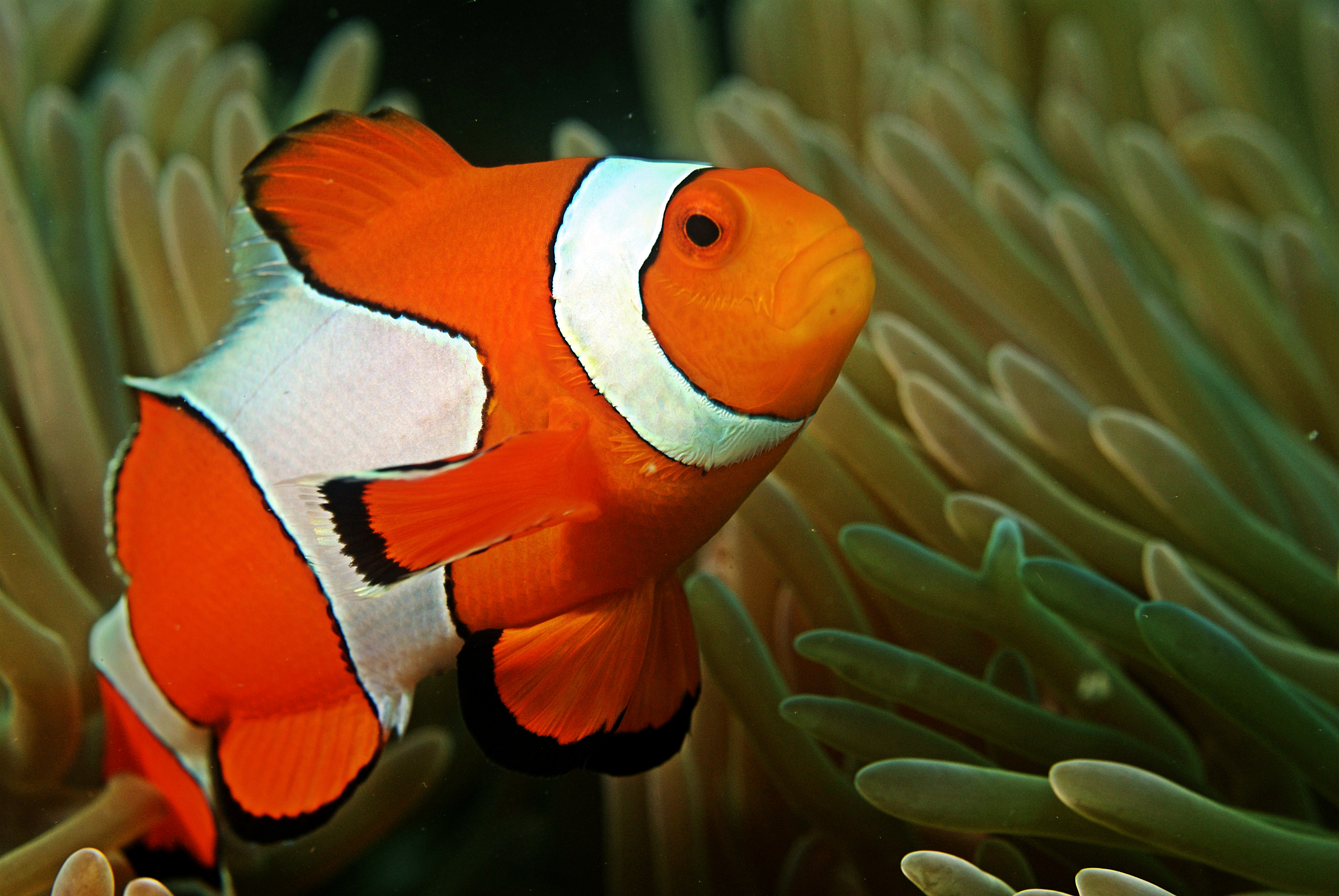
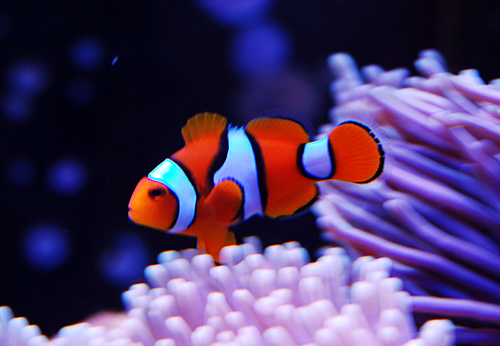
Ocellaris clownfish are small, hardy saltwater fish made famous by film. Captive-bred individuals are widely available, well-suited to nano reef tanks, and considered one of the best beginner marine fish — though saltwater husbandry itself is advanced.
The classic orange-and-white anemonefish made famous by popular film, the percula is one of the hardiest and most beginner-friendly marine fish. Captive-bred stock is widely available, peaceful, reef-safe, and well suited to nano and community reef tanks. It is very similar to the ocellaris clownfish but typically shows thicker black margins around its three white bars.
The largest and most aggressive of the clownfish, the maroon is a striking deep-red fish crossed by three white or gold bars and named for the bony spine on its cheek. It is hardy and long-lived but bold and territorial, making it a poor choice for timid tankmates or for keeping with other clownfish.
Royal blue tangs (also called regal tangs or palette surgeonfish) are reef-associated surgeonfish from the Indo-Pacific. Most aquarium specimens are wild-caught, and they grow much larger than commonly assumed — they are not a beginner reef fish.
The yellow coris wrasse is a bright canary-yellow, reef-safe Halichoeres wrasse that is active, hardy, and valued for eating pest invertebrates like flatworms and small bristleworms. Although sold as a 'coris,' it belongs to the genus Halichoeres and is far more peaceful and reef-friendly than true Coris species.
Acropora is the iconic small-polyp stony (SPS) coral and the genus most reef-keepers aspire to — fast-growing branching and tabling colonies in electric blues, greens and reds. They demand pristine, ultra-stable water and high light/flow, making them an advanced coral that defines a 'true SPS reef'.
Montipora is the beginner-friendly gateway into SPS keeping — a fast-growing acroporid small-polyp stony coral in encrusting, plating ('cap') and branching forms, with a smooth or velvety surface of tiny polyps. It is far more forgiving than Acropora while still rewarding good light and stable chemistry, making it a great intermediate SPS.
A hardy, popular LPS coral instantly recognized by its fleshy tentacles tipped with T- or anchor-shaped (hammer-shaped) ends that sway in the current. Available in branching and wall (single-skeleton) forms and a range of fluorescent green, gold, and metallic morphs, it is a forgiving choice for the mid-range reef but carries potent stinging sweeper tentacles that demand respectful spacing from neighbours.
An iconic, high-value LPS coral with long, flowing tentacles each ending in a brightly colored tip, giving a 'torch' or flaming appearance as they wave in the flow. Premium aquacultured morphs (e.g., Gold Torch, Indo Gold, Hellfire, Dragon Soul) command high prices. Beautiful but armed with strong sweeper tentacles, so it must be spaced well away from other corals.
A hardy Euphyllia whose tentacles split into multiple grape- or egg-shaped tips that resemble a mass of frogspawn. Available in branching and wall forms and in green, gold, and metallic morphs, it is one of the more forgiving LPS corals — though, like its relatives, it wields stinging sweeper tentacles and needs space from neighbours.
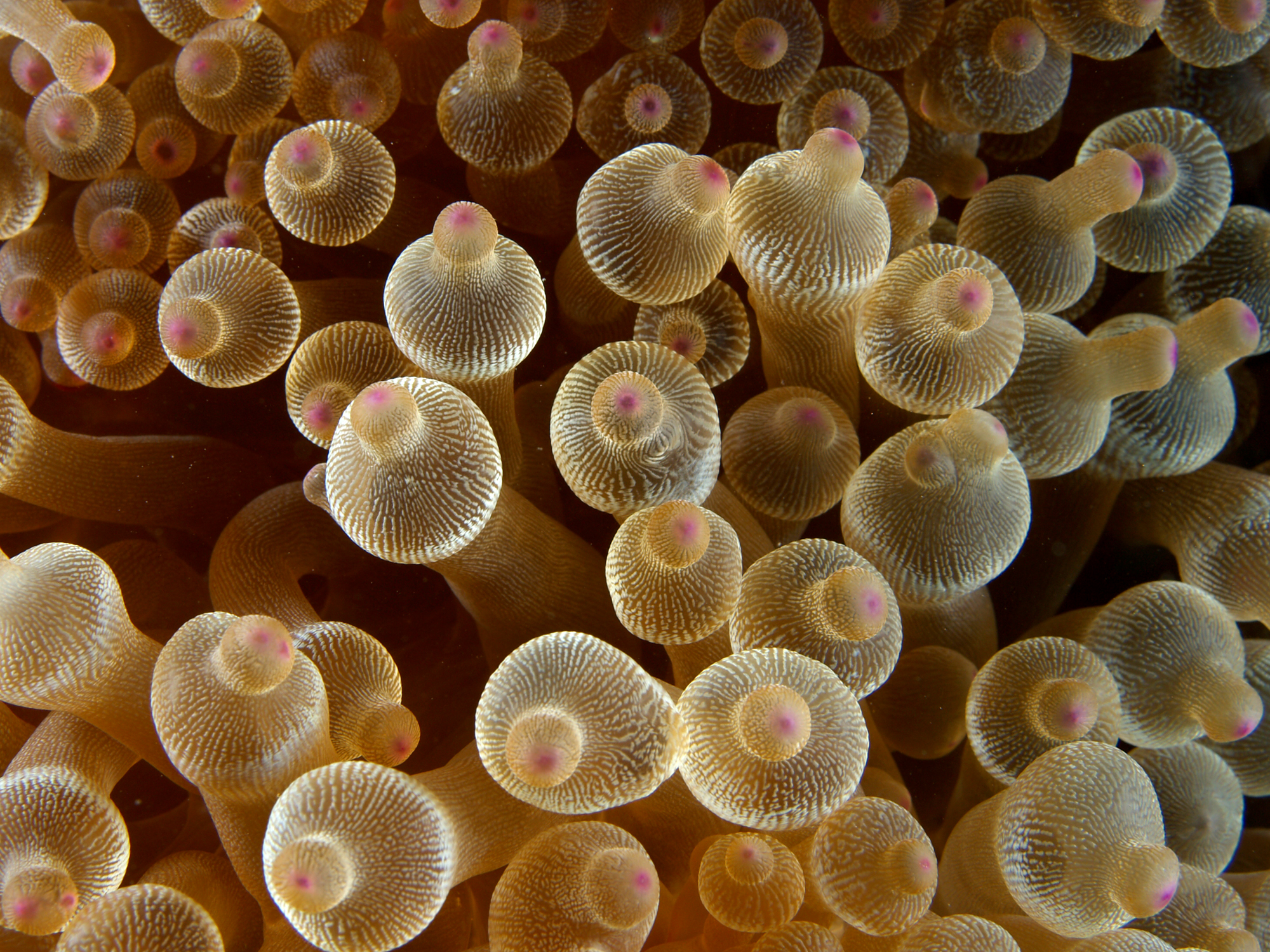
The bubble tip anemone is the most beginner-accessible of the true host anemones, named for the distinctive bulbous swellings at its tentacle tips. It is the natural and captive favorite host for many clownfish, especially maroon and tomato clowns, and is widely aquacultured in colors from drab brown to the prized rose/rainbow morphs. Though hardier than other host anemones, it still demands strong light, stable mature water, and powerful equipment, and it will roam until it finds a spot it likes.
Zoanthids are colonial soft-bodied polyps prized for an almost unlimited range of fluorescent color morphs, making them one of the most popular beginner reef corals. They are hardy and fast-spreading, but their flesh contains palytoxin, a potent toxin demanding careful handling.
Ricordea yuma is the Pacific 'yuma' mushroom, covered in jewel-like fluorescent bubble vesicles and a contrasting mouth. More light-demanding and slower-growing than common mushrooms, it is a colorful intermediate-level corallimorph.
The lined seahorse is a hardy, temperate-to-subtropical western Atlantic seahorse and one of the best species for captive seahorse keeping, especially as a tank-raised animal. All seahorses (genus Hippocampus) are CITES Appendix II listed, so captive-bred stock is both more sustainable and far easier to keep, and international trade is regulated.