Hammer coral
Euphyllia ancora · also called Anchor coral, Hammerhead coral, Bubble hammer, Branching hammer

A hardy, popular LPS coral instantly recognized by its fleshy tentacles tipped with T- or anchor-shaped (hammer-shaped) ends that sway in the current. Available in branching and wall (single-skeleton) forms and a range of fluorescent green, gold, and metallic morphs, it is a forgiving choice for the mid-range reef but carries potent stinging sweeper tentacles that demand respectful spacing from neighbours.
🩺 Need expert help with your hammer coral?
Connect with a specialist near you or ask a licensed vet — never substitute online guidance for hands-on care in an emergency.
Quick facts
| Size | Individual polyps with hammer/anchor-shaped tentacle tips ~1-2 in (2.5-5 cm); colonies can spread to 12+ in (30+ cm) over years, either branching (wall) or with |
| Lifespan | 5–50 years |
| Social needs | solo |
| Native region | Indo-Pacific |
| Origin | Old World |
| Climate | 🌴 Tropical |
| Water type | 🌊 Marine |
| Family | Euphylliidae |
| Genus | Euphyllia |
Part of the LPS Corals
Large-polyp stony corals (brains, Euphyllia, Goniopora, Scolymia, Lobophyllia, Favites, Acan, Dendro, Octospawn) with fleshy polyps over a calcium-carbonate skeleton. Intermediate-care reef corals that appreciate moderate light/flow and direct feeding.
Habitat & space requirements
From the minimum an animal needs to be kept humanely, up to the ideal setup. Bigger is almost always better — minimums are floors, not targets.
Life & growth stages
How this animal changes through its life — each stage often has its own care, diet and space needs.
Color & pattern variants
Natural variants occur in the wild; selectively bred (man-made) variants were developed in captivity.
 representative
Gold Hammer →
A classic Euphyllia ancora morph with warm golden-yellow tentacles, often with slightly brighter T-shaped tips that glow under blue light.
Tip: Place low-to-middle in the tank under moderate light (roughly 100-150 PAR) with gentle, indirect flow so the fleshy polyps can fully extend without tearing on neighbors. Keep 6+ inches from other corals to avoid sweeper-tentacle stings.
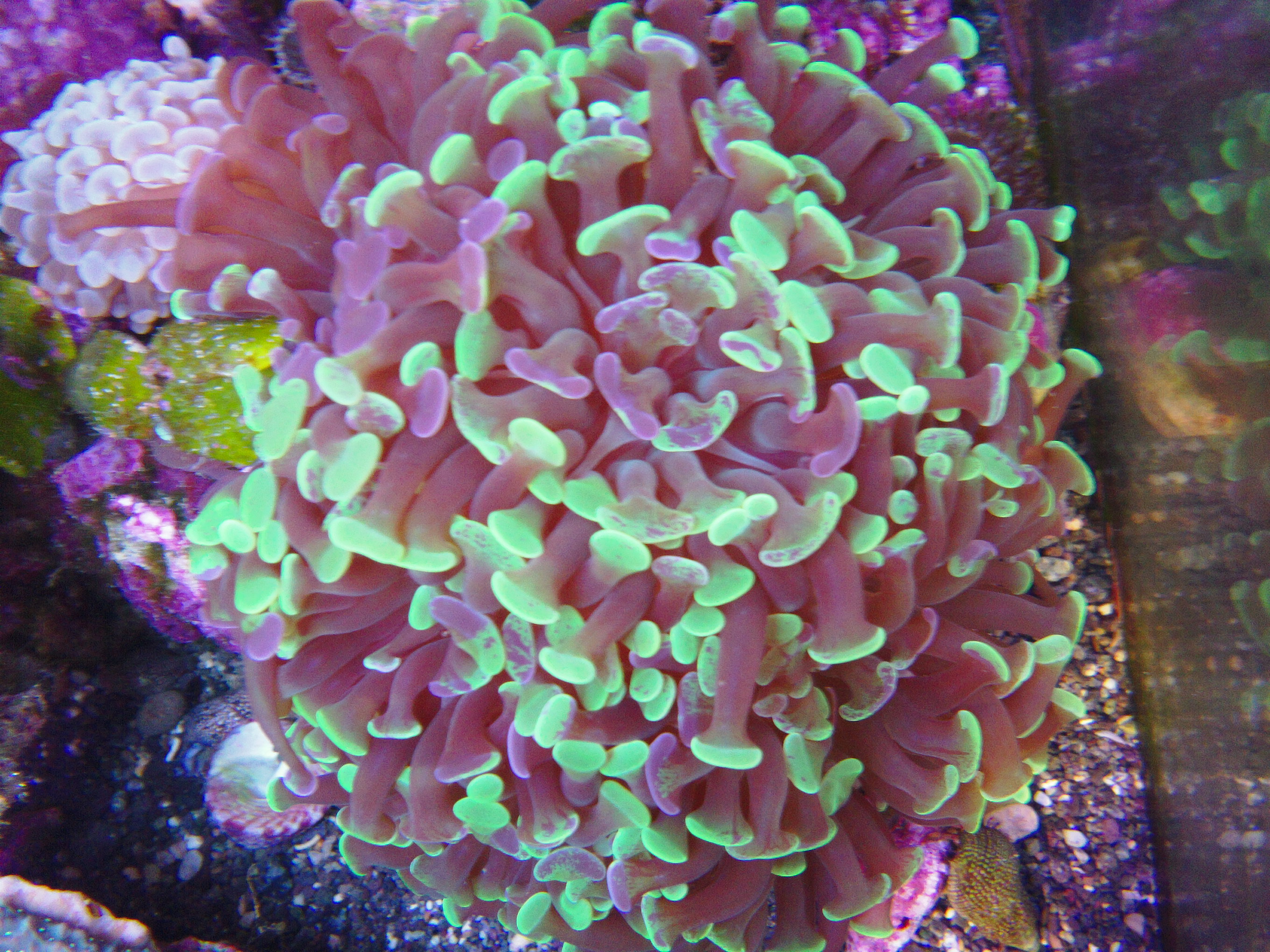 representative
Toxic Green Hammer →
An intensely fluorescent lime/neon-green branching hammer whose tentacle tips practically glow, often paired with a contrasting gold or brown stem.
Tip: Give it moderate blue-spectrum light to maximize the green fluorescence and keep flow gentle and indirect to protect the inflated tentacles. Allow space from neighbors for the sweeper tentacles.
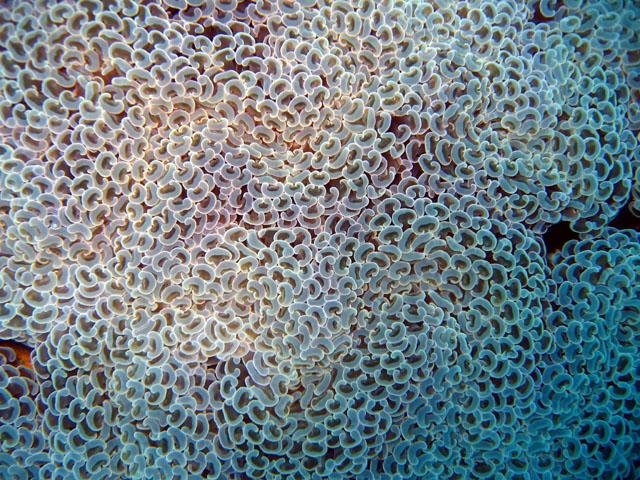 representative
Green Hammer (Wall) →
Classic Euphyllia ancora with green, hammer/anchor-shaped tentacle tips in a wall form. The most common and hardy hammer.
Tip: Moderate indirect flow and PAR 80-120 keeps the polyp fully inflated; aim flow so the tentacles drift rather than blast them.
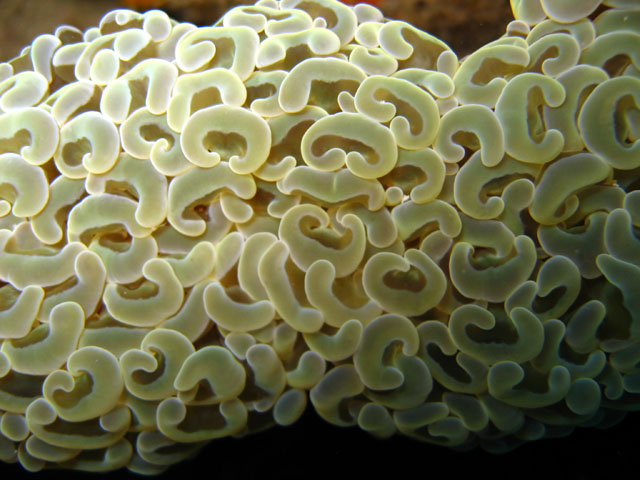 representative
Branching Hammer →
Branching skeleton with each head on its own stalk, ideal for fragging. Same anchor-tipped tentacles as the wall form.
Tip: Frag by snapping a branch at the base with bone cutters and glue the skeleton (not the flesh) to a plug.
 representative
Gold/Torch-Gold Hammer (Gold Hammer) →
Golden-yellow body with green or contrasting tips, a brighter pigment line than standard green. Very popular mid-range piece.
Tip: Stable alkalinity is critical — Euphyllia hate alk swings and the gold morphs brown-out and recede fast when parameters drift.
 representative
Octo / Wall Octo Hammer →
Hammer with rounded, multi-lobed anchor tips and a denser polyp, blending hammer and frogspawn traits. Fuller-looking than standard hammer.
Tip: Acclimate light slowly; the fuller polyps can bleach if moved straight under high PAR from a dim holding tank.
 representative
Gold Torch / 24K Hammer →
Premium intensely golden hammer with luminous tips, among the priciest Euphyllia trade names. Sensitive high-color line.
Tip: Most prone to 'brown jelly' and rapid tissue necrosis — quarantine, keep flow steady, and never let it touch or sting a neighbor.
 representative
Rainbow Hammer →
Multicolor morph with pink/purple/orange tips over a green or gold body. True rainbows command high prices and sell out fast.
Tip: Protect the pigment with dimmer blue-heavy light and rock-solid parameters; high-end Euphyllia are the first to crash in an unstable tank.
 representative
Indo / Aussie Gold Hammer →
Regional collection variant; Aussie hammers tend to have thicker tissue and richer gold than Indo imports. Both share anchor-tipped tentacles.
Tip: Space all hammers 6+ inches apart — their long sweeper tentacles deliver a powerful sting to anything within reach at night.
 representative
Orange Hammer →
A hammer with warm orange-toned tentacles, often graduating to lighter tips, sitting between gold and the rarer red/pink hues. A vivid, warm-spectrum standard.
Tip: Mid-tank placement with gentle, turbulent flow so all heads inflate evenly; avoid sandbed grit blowing onto the flesh which causes tissue recession.
representativeBranching Green Hammer →
The branching form of hammer coral (Euphyllia/Fimbriaphyllia ancora) with fluorescent green hammer-tipped tentacles on a tree-like skeleton, each branch capable of producing new heads. The accessible workhorse hammer.
Tip: Branching hammers frag more easily and tolerate slightly stronger flow than wall types; mount mid-tank where dropped daughter heads can re-attach to nearby rock.
representativeWall (Octopus) Green Hammer →
The wall/meat form of green hammer (Euphyllia/Fimbriaphyllia ancora) where many tentacles emerge from a continuous folded skeleton rather than branches, creating a dense field of green anchor tips.
Tip: Wall hammers cannot drop frags as easily, so position once and leave it; rest it on sand or a flat ledge in moderate light and keep gentle flow to avoid flesh tearing on the sharp skeleton edges.
representativeRainbow Branching Hammer →
A multicolor branching hammer blending neon green, pink, gold and purple tones across the tentacles for a 'rainbow' effect under mixed lighting.
Tip: Mount on a low-to-mid rock with moderate light and soft flow; too much intense light can wash out the pinks and purples. Give it room from aggressive neighbors.
representativeSplatter Branching Hammer →
A branching hammer with a mottled 'splatter' pattern of contrasting green, gold and purple blotches scattered across the tentacles.
Tip: Keep under moderate light with indirect flow; position where the patterned tentacles stay extended and visible from the front glass. Leave space for the stinging sweeper tentacles.
representativeGolden Splatter Branching Hammer →
A premium splatter hammer dominated by rich gold with green and darker splatter accents, noticeably more saturated than the standard splatter.
Tip: Moderate light and gentle flow; give it space from aggressive neighbors since the long sweeper tentacles can sting. Acclimate lighting slowly to keep the gold from washing out.
representativeHoly Grail Hammer →
A highly sought multicolor hammer combining gold, green, orange and pink in a vivid 'holy grail' palette, named for its premium coloration.
Tip: Provide stable moderate light and gentle indirect flow; acclimate light slowly to preserve the warm gold and orange tones. Keep well away from neighbors due to aggressive sweepers.
representativeIndo Gold Branching Hammer →
An Indonesian-collected gold branching hammer with smaller, faster-growing 'micro' heads than the Australian type, showing warm gold tentacles over a purplish body.
Tip: Because the Indo heads are smaller, give moderate light and gentle indirect flow and let colonies branch out on open low rock. Still leave space for sweeper tentacles.
representativeAussie Gold Hammer →
An Australian-collected gold hammer with larger, fleshier heads showing orange-brown tentacles tipped in gold.
Tip: The big Aussie heads need room to inflate, so place on open rock with moderate light and low indirect flow to avoid tissue damage. Account for its semi-aggressive sweeper tentacles.
representativeGold Wall Hammer →
A wall-form (non-branching) Euphyllia ancora that grows as a continuous meandering wall of gold tentacles with T-shaped tips rather than separate heads.
Tip: Wall hammers grow slowly and prefer a stable spot with moderate light and gentle flow; avoid high flow that can fold or tear the wall tissue, and keep them clear of neighboring corals.
representativeGolden Octospawn →
An octospawn (a related Euphyllia, typically E. paradivisa, NOT the true hammer E. ancora) with rounded clusters of eight-pointed tentacle tips in warm solid gold.
Tip: Octospawn likes slightly lower flow than hammers; place low-to-mid with moderate light and gentle current so the puffy tips inflate. Still allow space from neighbors.
representativeRainbow Octospawn →
An octospawn (a related Euphyllia, not the true hammer E. ancora) displaying a multi-tonal mix of neon green, pastel pink, gold and orange across its rounded tentacle tips.
Tip: Use blended white/blue light to show the full rainbow and keep flow gentle; octospawn tissue is delicate and tears in strong current. Leave space from other corals.
representativeGold Tip Frogspawn →
A frogspawn (Euphyllia divisa/paradivisa) — the grape-tipped genus-mate of the hammer, NOT the true hammer E. ancora — with green bodies and bright gold-tipped, branching tentacles.
Tip: Frogspawn extends a lot of tissue, so give it room from neighbors, moderate light and gentle indirect flow to avoid sweeper-tentacle stings.
 representative
Designer metallic / splatter hammers →
Line-selected and aquacultured color strains (e.g., metallic gold-tip, splatter, and rainbow hammers) propagated for enhanced coloration in captivity.
representativeNeon Splatter Branching Hammer →
A bright neon-green-based splatter hammer with electric fluorescent blotches. World Wide Corals also markets a related 'Neon Splatter Frammer' — a frogspawn/hammer (Euphyllia) hybrid growth form — under the same Neon Splatter name.
Tip: Use blue-heavy lighting to pop the neon fluorescence and keep flow low so the splatter-patterned heads inflate fully. The Frammer form tolerates a touch more light but keep PAR under ~175 to avoid burning.
representativeCornbred Dreamsicle Hammer →
A creamy orange-and-white branching hammer named for its 'dreamsicle' pastel orange tones blended with lighter tips.
Tip: Moderate light keeps the soft pastel orange from bleaching; pair with gentle indirect flow so the delicate coloration stays even across heads. Leave space for sweeper tentacles.
representativeGold Rainbow Mint Hammer →
A branching hammer mixing minty green, gold and rainbow pastel tones across the tentacles for a soft multicolor look.
Tip: Moderate blue-leaning light brings out the mint and rainbow tones; keep flow indirect to let the patterned heads stay fully open. Give it room from aggressive neighbors.
Habitat & enclosure
Substrate
Equipment & setup
Diet
Behavior & temperament
Health
Tips, DIY & hacks
Sources
- Euphyllia ancora — WoRMS World Register of Marine Species (reference)
- Hammer Coral Care — Reef Builders (care guide)
- Wikipedia: Hammer coral (wiki)