Chalice coral
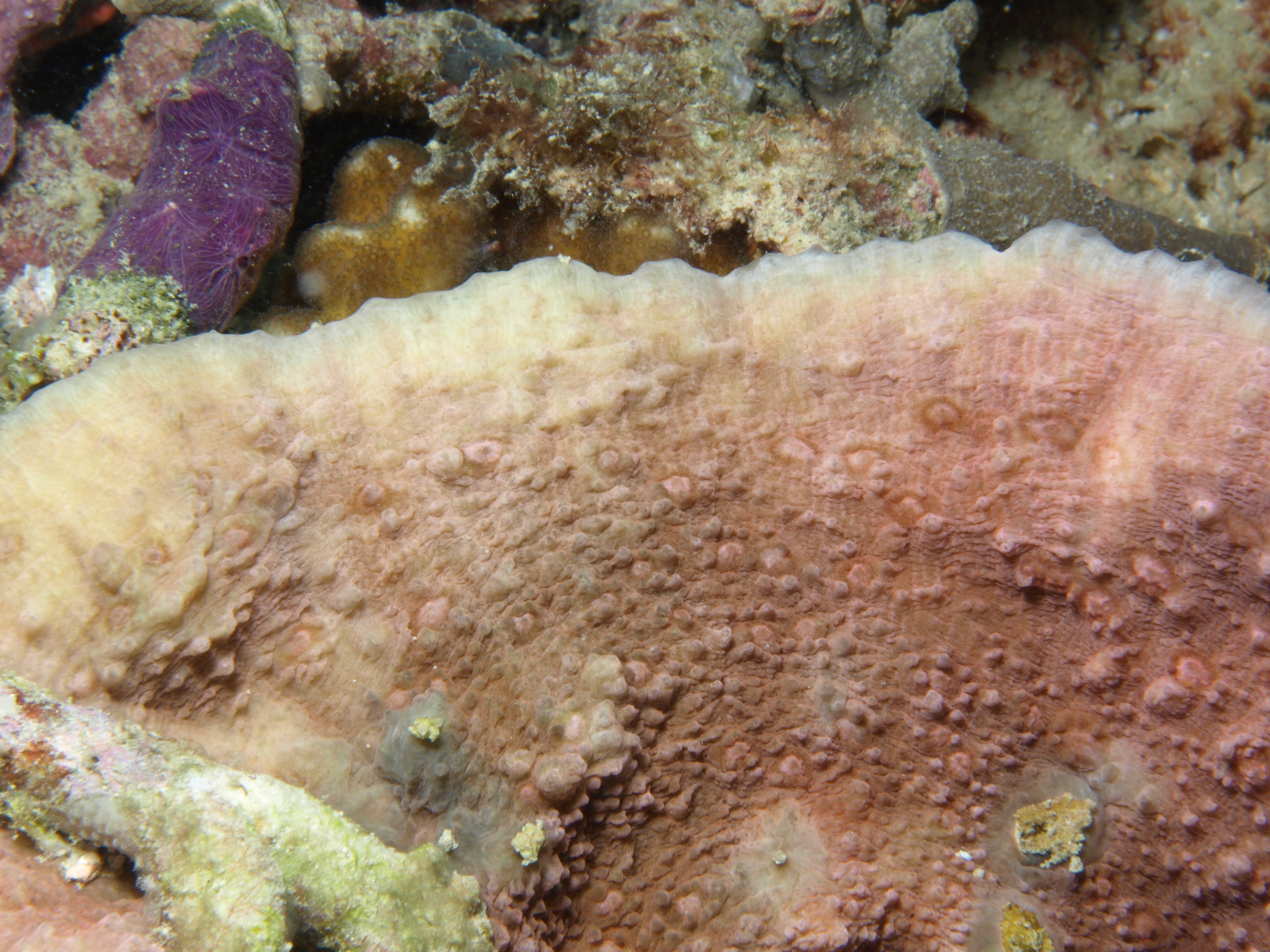
Echinophyllia sp. · also called Chalice, Echino, Plate coral (encrusting), Echinophyllia

Photo: The original uploader was Albert Kok at Dutch Wikipedia . ( Original text: Albert Kok ) · Public domain
A highly collectible encrusting LPS coral prized for jaw-dropping color combinations, contrasting 'eyes' (corallites), and rims that fluoresce intensely under blue light. Generally hardy once established, but color-sensitive to light and flow, and armed with long, potent nighttime sweeper tentacles that make placement critical.
🩺 Need expert help with your chalice coral?
Connect with a specialist near you or ask a licensed vet — never substitute online guidance for hands-on care in an emergency.
Quick facts
| Size | Encrusting/plating LPS that grows as a thin sheet; aquarium frags start at 1-2 in (2.5-5 cm) and colonies can spread to dinner-plate size (12 in / 30 cm or more |
| Lifespan | 5–100 years |
| Social needs | solo |
| Native region | Indo-Pacific (Red Sea to the western Pacific) |
| Origin | Old World |
| Climate | 🌴 Tropical |
| Water type | 🌊 Marine |
| Family | Lobophylliidae |
| Genus | Echinophyllia |
Part of the LPS Corals
Large-polyp stony corals (brains, Euphyllia, Goniopora, Scolymia, Lobophyllia, Favites, Acan, Dendro, Octospawn) with fleshy polyps over a calcium-carbonate skeleton. Intermediate-care reef corals that appreciate moderate light/flow and direct feeding.
Habitat & space requirements
From the minimum an animal needs to be kept humanely, up to the ideal setup. Bigger is almost always better — minimums are floors, not targets.
Life & growth stages
How this animal changes through its life — each stage often has its own care, diet and space needs.
Color & pattern variants
Natural variants occur in the wild; selectively bred (man-made) variants were developed in captivity.
representativeWatermelon Chalice →
Named for its fruit-like palette: a green-to-teal body rind with red or pink eyes, evoking watermelon flesh and skin across the encrusting plate.
Tip: Low flow and moderate, blue-leaning light suit it; place where it can encrust across rock and avoid blasting it with flow, which keeps the polyps retracted and dulls color.
 representative
Red/Orange Eye Chalice
Morphs with neon orange or red corallites that fluoresce intensely under actinic/blue lighting; color is strongly light- and spectrum-dependent.
 representative
Mummy Eye Chalice →
A famous Echinophyllia with a contrasting body and big, vividly colored 'eyes' (corallite mouths); a benchmark designer chalice.
Tip: Acclimate it slowly to your lighting over weeks; sudden bright light bleaches the body, while too little kills the eye contrast you bought it for.
 representative
Hollywood Stunner Chalice →
A legendary trade morph with a green/teal body, hot-pink rim, and bright orange-yellow eyes; one of the most reproduced premium chalices.
Tip: Low light and low flow bring out the pink rim; let it encrust a frag plug undisturbed — chalices are slow to heal and dislike being moved.
 representative
Bubblegum Monster Chalice →
Pink/red body with oversized contrasting eyes; a high-end chalice known for huge, well-spaced corallites.
Tip: Feed small meaty foods in the evening when feeder tentacles emerge to speed growth and color; keep it away from neighbors since chalices have potent stinging sweeper tentacles at night.
 representative
Miami Hurricane Chalice →
Orange/red body with green eyes in a storm-like swirl pattern; a popular, frequently fragged named chalice.
Tip: Stable alkalinity matters more than light here — swings cause tissue recession at the growth edge; hold ALK steady and let it creep across the plug.
 representative
Pink Polka Dot / Jason Fox Chalice →
Designer-vendor chalices (e.g. Jason Fox lines) featuring contrasting dotted eyes scattered across a vivid body.
Tip: These ultra-colored lines need blue-heavy light to fluoresce but low intensity to avoid bleaching — dial spectrum up, intensity down.
representativeHollywood Stunner →
A purple-and-green base with bright neon-green eyes that develops swirling, scrolling plates as it matures. Technically an Echinopora (often listed as Echinopora lamellosa) but universally sold as a chalice.
Tip: Moderate flow and medium light (roughly 150-250 PAR); unlike most chalices it plates outward into open water and grows aggressively, so give it room to scroll rather than crowding it against rock or neighbors.
representativeMummy Eye →
A classic mustard-green to olive plating body punctuated by pinkish-orange to red mouths (the "eyes"), giving a reverse-watermelon look. One of the oldest and most beloved chalice strains in the hobby.
Tip: Place low-to-mid in the rockwork under moderate light (roughly 50-150 PAR) and gentle flow; it colors up best and encrusts readily without bleaching at lower PAR.
representativeBubblegum Monster →
A green body with yellow-green highlights on its raised bumps that create a textured, lizard-skin look, set off by pink-to-orange mouths. Heavily tissued and showy.
Tip: Give it moderate light and moderate flow to keep the bumpy texture and mouth color vivid; mid-tank placement works well.
representativeMiami Hurricane →
A blue-to-purple base flesh accented by a clash of orange, red, yellow and green mouths, named for its swirling storm of color. One of the recognizable old-line named chalices.
Tip: Mid-to-low placement under low-to-moderate light and gentle flow; too much light can wash out the warm orange and red tones.
representative24k / Gold Chalice (Echinophyllia) →
A warm gold-to-orange bodied chalice with green eyes, glowing a metallic gold under blue light across a flat encrusting plate.
Tip: Moderate light brings out the gold; keep flow low and placement mid-low, and feed to push the slow encrusting edge.
representativeAussie Rainbow Chalice (hand-selected) →
Top-tier hand-picked Australian chalices showing multiple contrasting body and eye colors at once — blues, purples, reds and greens swirled across a single plate.
Tip: Treat as a showpiece: low, shaded placement, gentle flow, and very gradual light acclimation under blues to preserve the full multicolor without bleaching.
representativeWatermelon →
A red-to-pink colony body ringed by a neon-green growth edge with green eyes, evoking watermelon flesh and rind.
Tip: Moderate light and low-to-moderate flow keeps the red body rich; brighter light can fade it toward orange.
representativeHyper Watermelon →
A hot-pink base with purple undertones leading out to a neon-green growth edge, with eyes that can develop golden tones as it grows — a more saturated take on the classic watermelon.
Tip: Moderate light around 100 PAR keeps the pink-to-purple base from bleaching; place mid-tank with low-to-moderate flow.
representativeCherry Garcia →
A warm cherry-red and pink chalice with contrasting eyes, named after the ice-cream flavor for its rich reds.
Tip: Keep light moderate to protect the deep red tones; low-to-moderate flow and mid-to-low placement.
representativePumpkin Patch →
A warm olive-green base with clustered bright-orange corallites that resemble a field of pumpkins.
Tip: Moderate light keeps the orange warm without washing out; mid-tank placement and gentle flow.
representativePacker →
A green-and-gold chalice named after the Green Bay Packers' colors, pairing a green base with yellow-gold eyes.
Tip: Moderate light and low-to-moderate flow; mid-tank placement maintains the green/gold color split.
 representative
Hollywood Stunner / Designer Chalices
Line-named, aquacultured collector morphs (e.g., 'Hollywood Stunner,' 'Mummy Eye,' 'Bizarro') selected and propagated for extreme multicolor patterns and fluorescent rims, often commanding premium per-polyp prices.
 representative
Aquacultured ('WYSIWYG') Chalice Frag →
Tank-grown cuttings of named chalice morphs sold as what-you-see-is-what-you-get frags; the standard way collector chalices are distributed.
Tip: Give a new frag 2-4 weeks of stable, dim conditions before judging color — freshly cut chalices often pale and 'color up' only once encrusted and settled.
representativeRaja Rampage →
A glowing lime-to-neon-green base with bright yellow eyes and a fiery orange-to-purple rim, producing high contrast across the plate.
Tip: Low-to-moderate light and flow; mid-to-low placement preserves the contrast between the green base and the eyes.
representativeGoldmeister →
A reddish-pink skin covered in bright yellow-gold spots, giving a freckled, metallic look.
Tip: Moderate light brings out the gold spotting; mid-tank with gentle-to-moderate flow.
representativeChemical Reaction →
Searing red eyes over a base splattered with purple, yellow and neon green — a chaotic, high-contrast Mycedium-type chalice.
Tip: Low-to-moderate light (around 100-150 PAR) and low-to-medium alternating flow; the red eyes pop most without intense lighting.
representativeStellaria →
A textured chalice with speckled, star-like eyes; also traded in 'Grafted' and 'Seared' variants showing extra swirled gold, violet, green and pink color.
Tip: Medium light and medium flow; encrusts readily on rock at mid-to-low placement.
representativeMountain Dew →
A bright lime-and-yellow-green chalice named for the soda, with electric neon tones.
Tip: Medium light brings out the neon green; mid-tank with medium flow.
representativeAvatar →
An icy-blue base contrasted with neon-green and red mouths, giving a cool, glowing, otherworldly look.
Tip: Lower light (roughly 75-150 PAR) helps hold the cooler blue tones; mid-tank placement and moderate flow.
representativeSure Fire →
A fiery red-and-orange chalice with bright contrasting eyes.
Tip: Medium light protects the warm reds; low-to-moderate flow and mid-tank placement.
representativeLime in the Sky →
A lime-green chalice with bright, contrasting eyes and a clean green plate.
Tip: Medium light keeps the lime tones vivid; mid-tank with medium flow.
representativeSpace Invader →
A brilliantly bright green Mycedium-type chalice with striking yellow eyes arranged in rows reminiscent of the arcade aliens.
Tip: Moderate light and moderate flow; it grows explosively fast and is aggressive, so give it plenty of room to plate out away from neighbors.
representativeCrayola Meltdown →
A multicolored chalice splattered with melting crayon-box colors — reds, oranges, greens and yellows blending across the plate.
Tip: Low-to-moderate light and low-to-moderate flow; the full color range shows best without bleaching at mid-to-low placement, and weekly target feeding speeds growth.
representativeStained Glass →
A mosaic of bright colors separated by darker borders, resembling a stained-glass window.
Tip: Low-to-moderate light and gentle flow; mid-tank placement keeps the mosaic contrast sharp.
representativeJelly Bean →
A candy-colored chalice with assorted pastel and bright mouths scattered like a handful of jelly beans, in a compact encrusting form.
Tip: Low-to-moderate light keeps the pastel tones; mid-tank with gentle-to-moderate flow.
representativeCrocodile Smile →
A green chalice whose ridged, toothy eye pattern evokes a crocodile's grin.
Tip: Low-to-moderate light and flow; mid-tank placement preserves the ridged pattern and green tones.
representativeTropic Thunder →
A loud, multicolor chalice blending greens, oranges and reds in a tropical-storm palette.
Tip: Low-to-moderate light and flow; mid-tank placement maintains the warm-color balance.
representativeTaste the Rainbow →
A full-spectrum rainbow chalice with eyes spanning red, orange, yellow, green and blue tones across one plate; typically a slow grower.
Tip: Low-to-moderate light (roughly 100-155 PAR) and low-to-medium flow; place mid-to-low and target feed sparingly to support the slow growth without bleaching the warm tones.