Bubble coral
Plerogyra sinuosa · also called Bladder coral, Grape coral, Pearl coral, Bubble coral

Photo: Oceanamazon · CC0
Plerogyra sinuosa is a large-polyp stony coral that inflates rows of grape-like, water-filled vesicles by day and extends long, stinging sweeper tentacles by night. Its hardy nature and dramatic appearance make it popular, but its powerful sweepers require generous spacing from neighbors.
🩺 Need expert help with your bubble coral?
Connect with a specialist near you or ask a licensed vet — never substitute online guidance for hands-on care in an emergency.
Quick facts
| Size | Colonies commonly 4-8 in (10-20 cm) across; grape-sized vesicles ~0.5-1 in (1.5-2.5 cm) each, inflating to cover the skeleton. |
| Lifespan | 10–75 years |
| Social needs | solo |
| Native region | Indo-Pacific and Red Sea reefs |
| Origin | Old World |
| Climate | 🌴 Tropical |
| Water type | 🌊 Marine |
| Family | Plerogyridae |
| Genus | Plerogyra |
Part of the LPS Corals
Large-polyp stony corals (brains, Euphyllia, Goniopora, Scolymia, Lobophyllia, Favites, Acan, Dendro, Octospawn) with fleshy polyps over a calcium-carbonate skeleton. Intermediate-care reef corals that appreciate moderate light/flow and direct feeding.
Habitat & space requirements
From the minimum an animal needs to be kept humanely, up to the ideal setup. Bigger is almost always better — minimums are floors, not targets.
Life & growth stages
How this animal changes through its life — each stage often has its own care, diet and space needs.
Color & pattern variants
Natural variants occur in the wild; selectively bred (man-made) variants were developed in captivity.
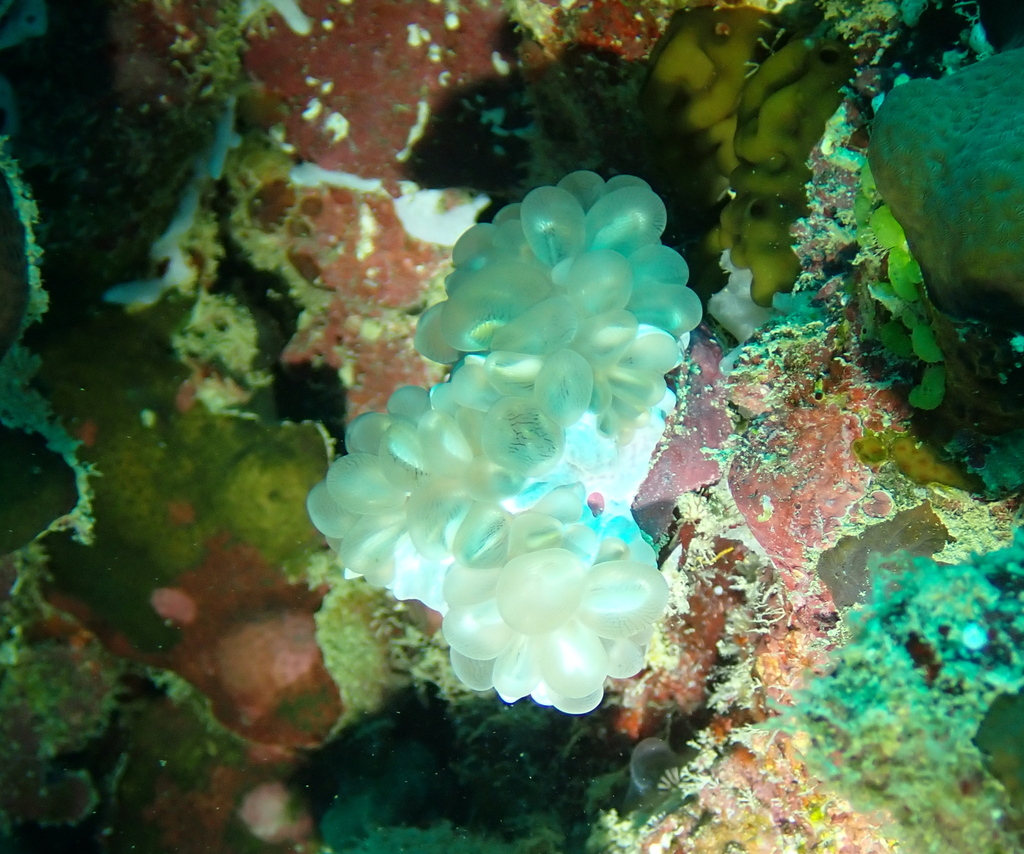 representative
White/Cream bubble
Classic pearly white-to-cream vesicles, the most common wild form of *Plerogyra sinuosa*.
Tip: Bubbles inflate under LOW flow and moderate light — strong current keeps them deflated and shreds the delicate vesicles, so place low with gentle indirect flow and watch for long sweeper tentacles at night.
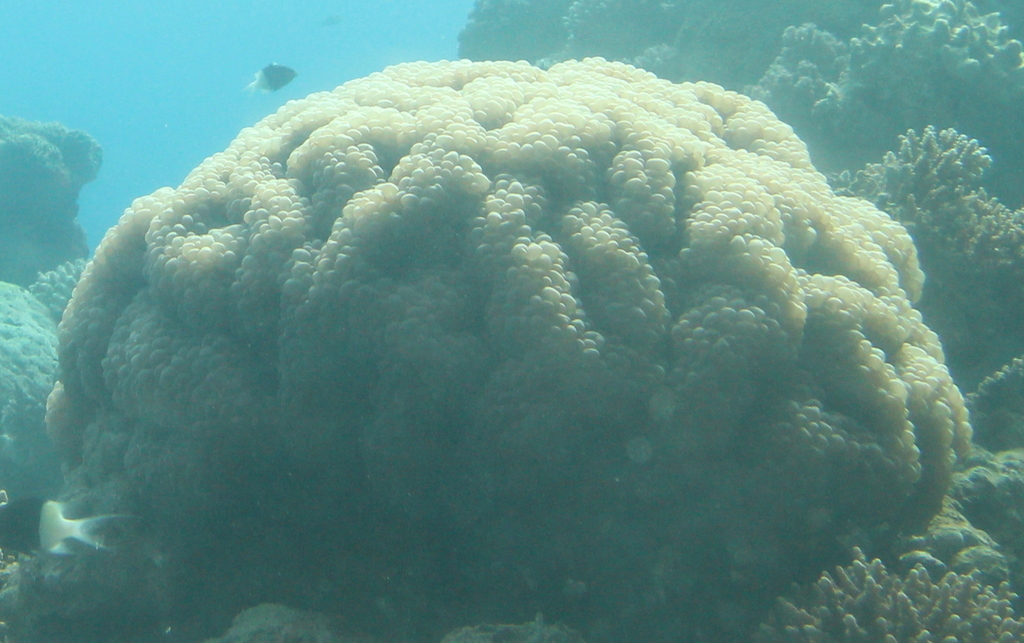 representative
Green bubble
Vesicles tinted fluorescent green, a more colorful and sought natural variant.
Tip: The green fluoresces under actinics but the coral still wants low light — keep PAR around 50-100 and let the blue spectrum carry the color rather than raising intensity.
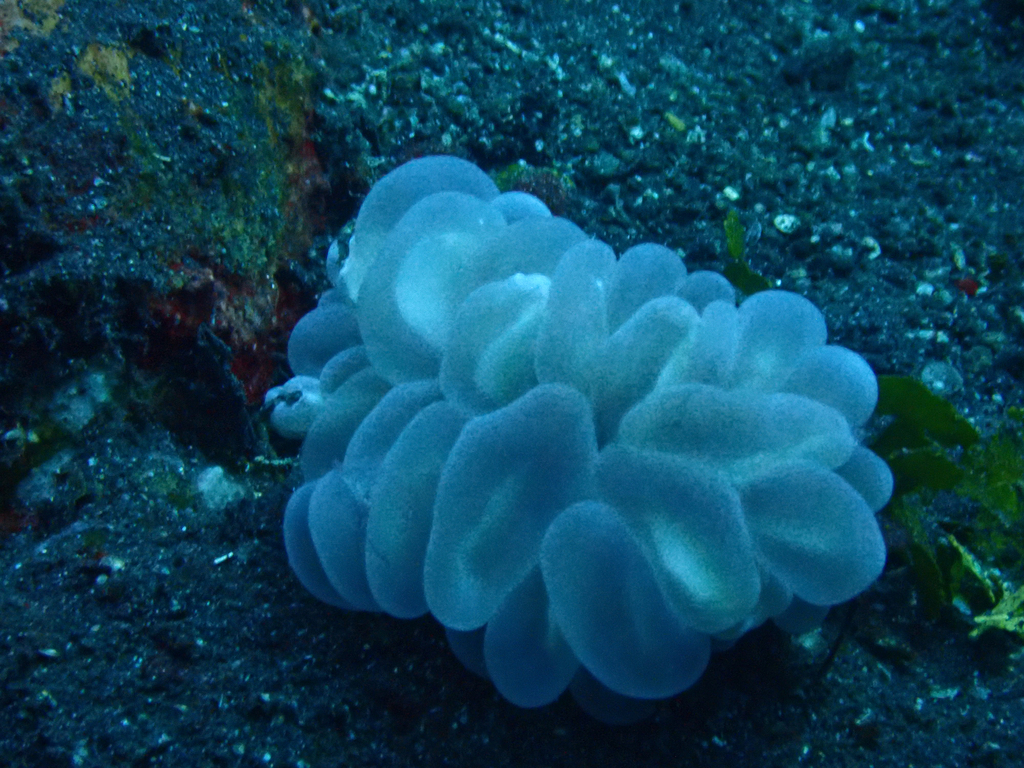 representative
Gold / Yellow bubble →
A scarce form with golden to yellow-tinted vesicles, among the more prized natural color variants.
Tip: Gold coloration fades fast if stressed — keep it on a stable low shelf, avoid moving it, and target-feed small meaty foods weekly to maintain the warm tone.
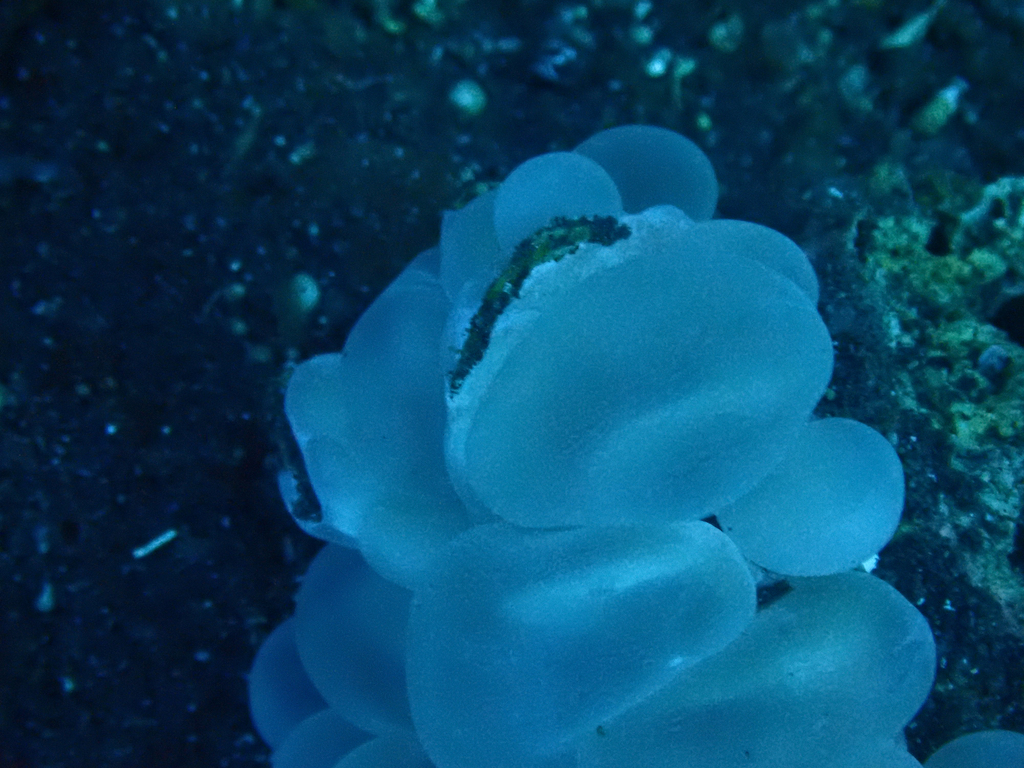 representative
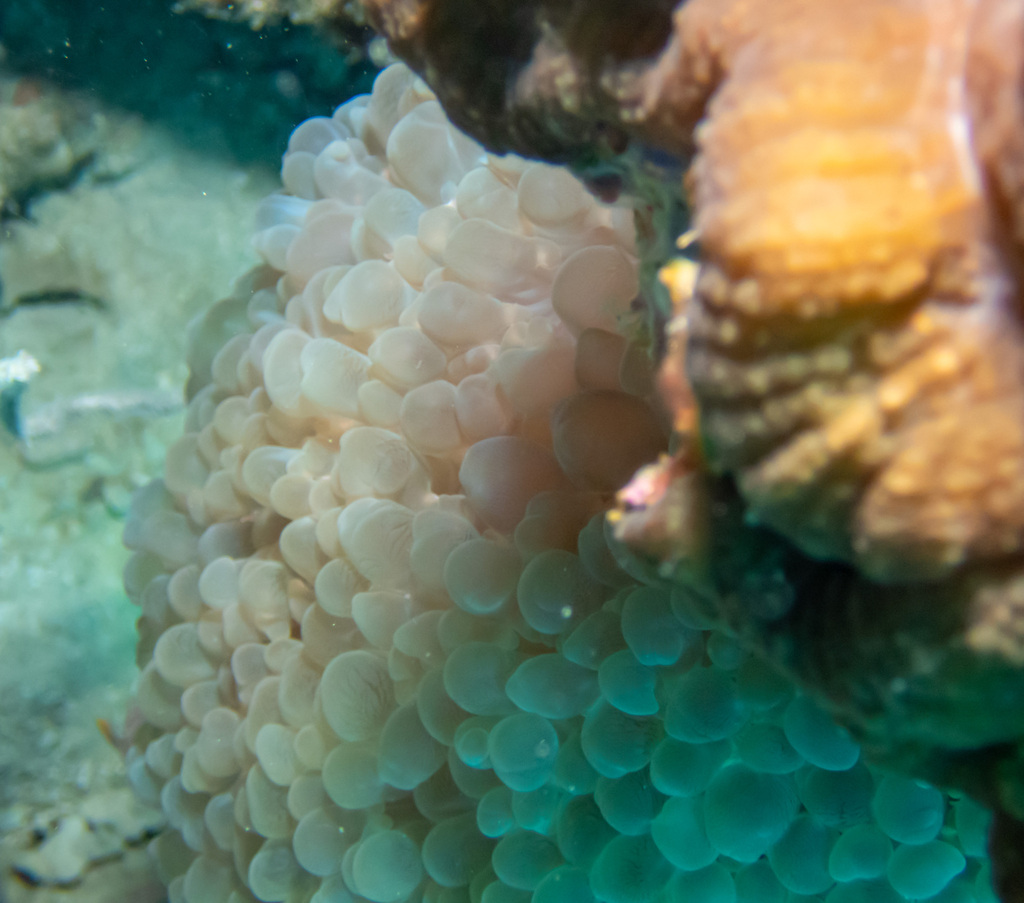
Branching / Wall bubble (Plerogyra simplex) →
A branching/folded-wall growth form of *Plerogyra* rather than the rounded single head, traded for its sprawling skeleton shape.
Tip: The branching skeleton catches detritus between folds — position it where gentle flow can rinse the crevices, and blow it off with a turkey baster during water changes to prevent tissue recession.
 representative
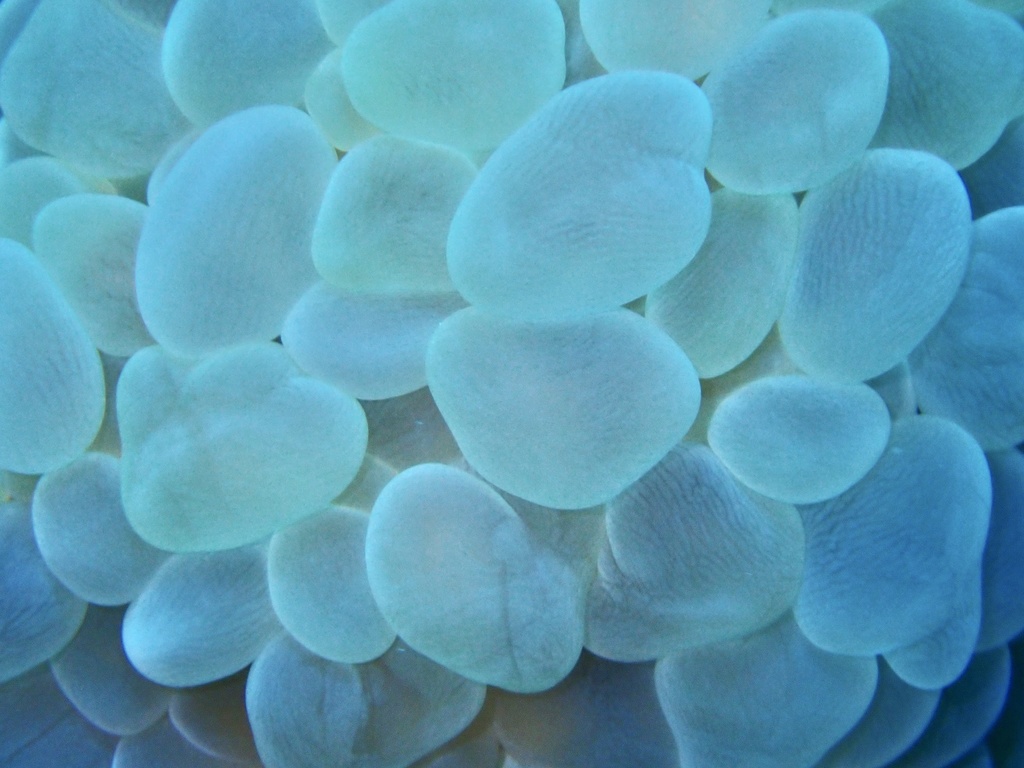
Rainbow / Metallic bubble →
Uncommon specimens showing blue, green, and gold metallic highlights across the vesicles, a premium collector pick.
Tip: Multicolor expression is fragile and stress-sensitive — lock in stable parameters and a fixed low-light position, as any deflation or bleaching event can permanently dull the metallic sheen.
 representative
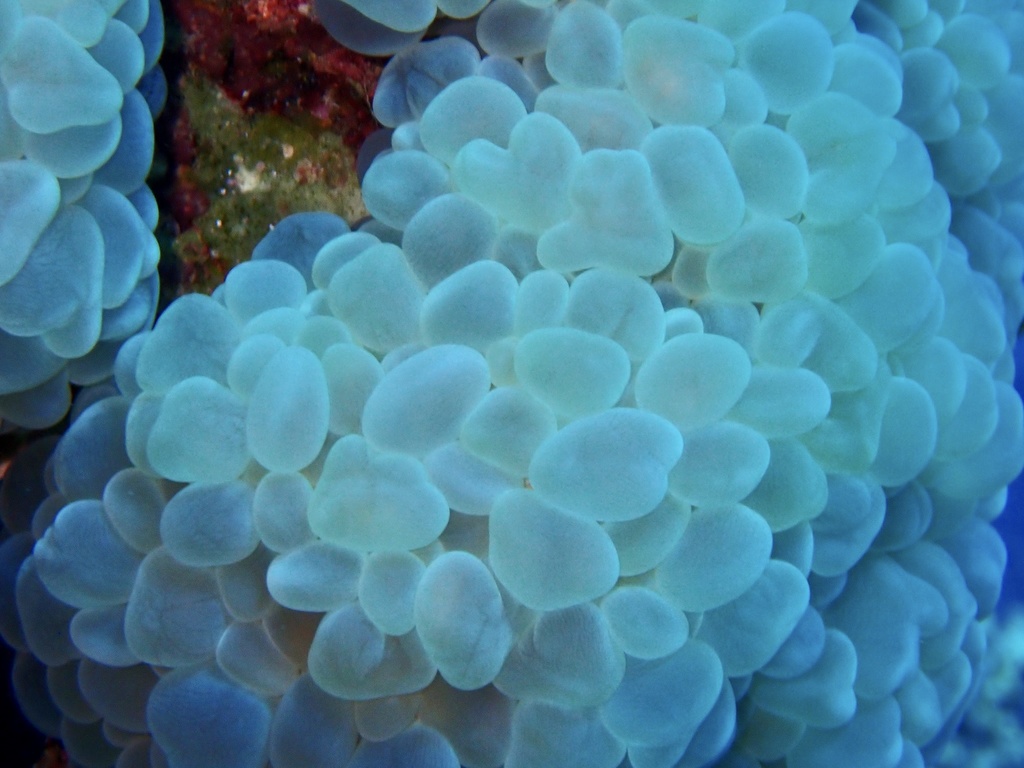
Pearl Bubble Coral (White Plerogyra) →
The classic Plerogyra sinuosa form: clusters of pearly white-to-silver grape-like vesicles that inflate during the day and deflate at night to reveal feeder tentacles.
Tip: Place on the sand bed or low rock under low light and very gentle flow; strong flow tears the delicate bubbles, so keep it in a calm corner and feed meaty foods after dark.
 representative
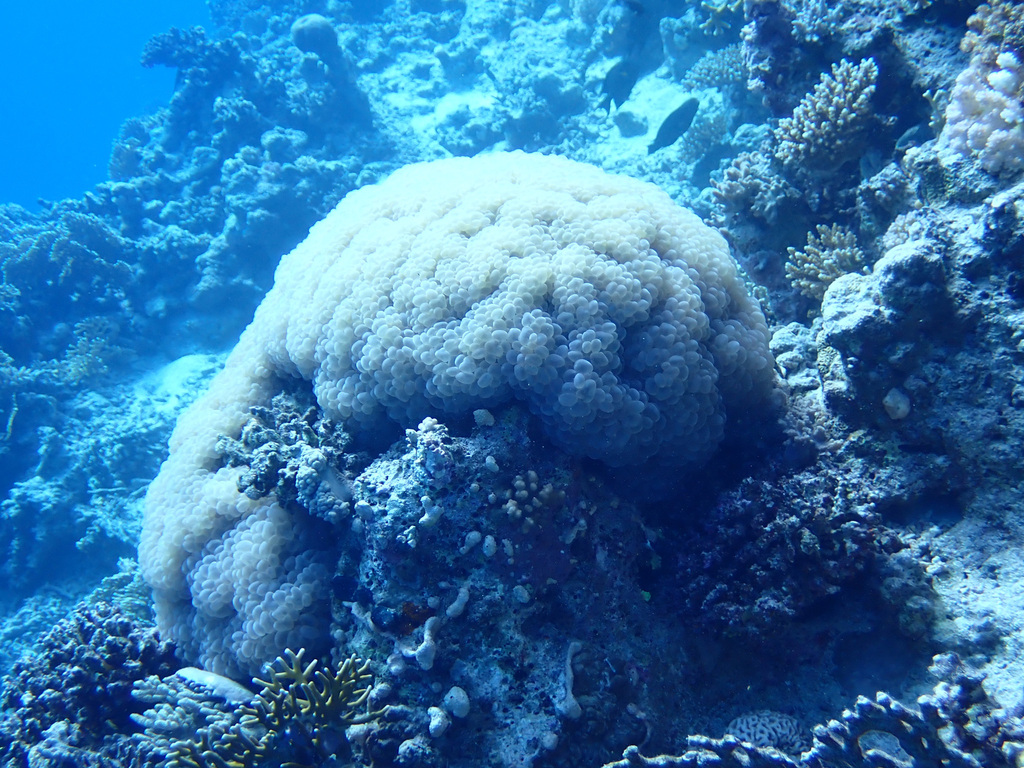
Green Bubble Coral →
A *Plerogyra sinuosa* whose inflated grape-like vesicles glow a translucent fluorescent green, the most sought-after of the standard color forms. The hard skeletal ridges often pick up a brighter neon line under blue light, while the bubbles stay a soft lime-to-emerald.
Tip: Place low to mid-tank in gentle, indirect flow. The genus is fairly adaptable on lighting (it occurs on both shaded slopes and brighter shallows), so low-to-moderate light is fine — the real risk is flow: strong, direct current or contact with rockwork tears the fragile bubbles, so give it open sand or a flat ledge with room to inflate.
 representative
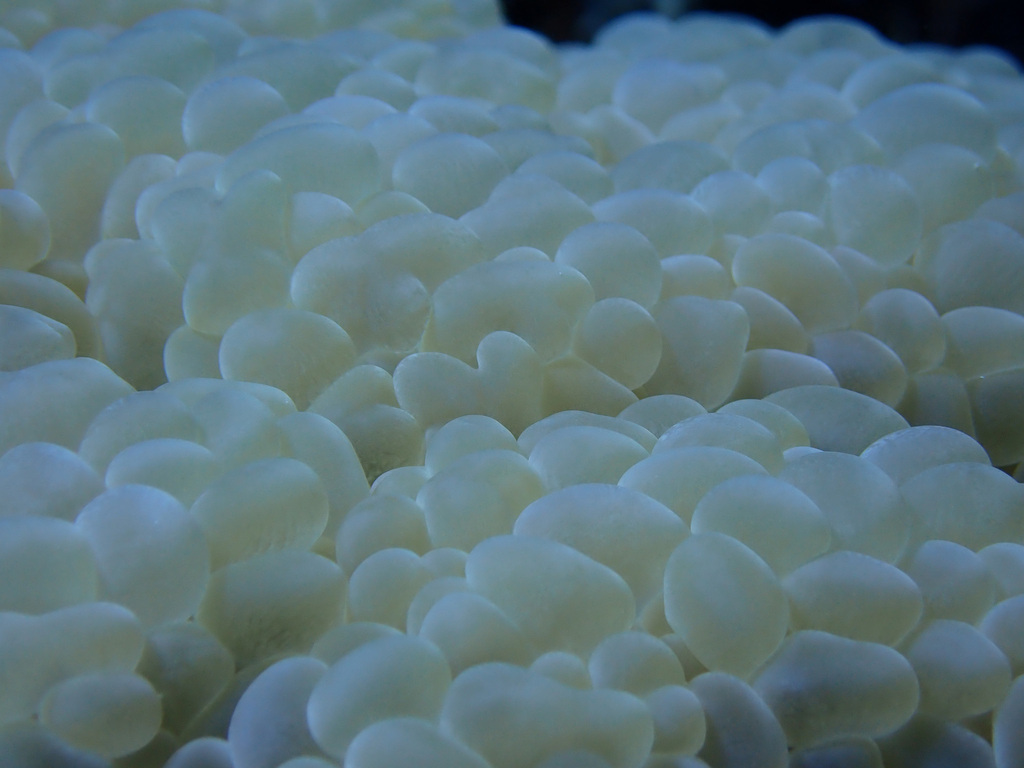
Pearl / White Bubble Coral →
The classic form, with creamy white to pale gray inflated bubbles that look like a cluster of pearls or grapes when fully expanded. The most widely available and least expensive color of *Plerogyra sinuosa*.
Tip: Give it low-to-moderate light and gentle flow on the sandbed or a low ledge. Flow is the key variable — keep it weak and indirect so the bubbles can fully inflate and aren't abraded; the species tolerates a range of lighting but reacts to strong, direct current by staying deflated.
 representative
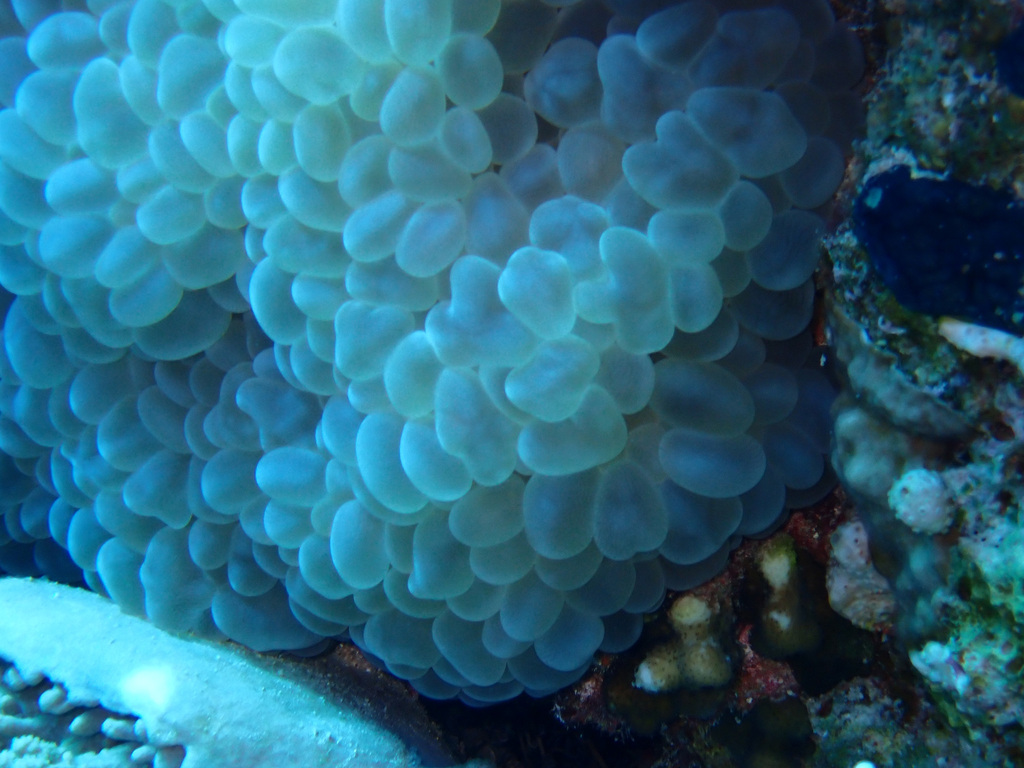
Octo-Bubble Coral →
A teardrop-bubble form where each vesicle is more convoluted and lobed than the round bubbles of *P. sinuosa*, with small pointed outgrowths giving a more textured look. Colors run brown through gray-green to blue.
Tip: Treat like other bubbles — shaded-to-moderate light and weak, indirect flow — but handle with extra care, as the skeleton beneath carries thin, sharp projections that snap and that can tear the tissue if the coral is bumped or moved while deflated.
 representative
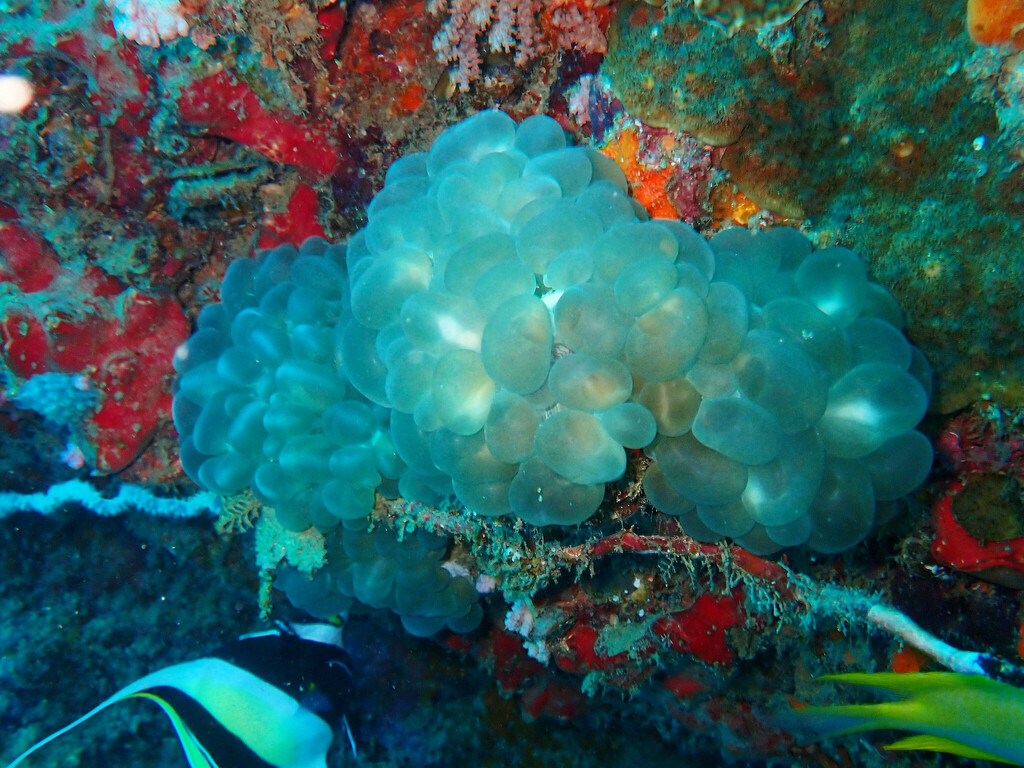
Branching / Grape Bubble Coral (Plerogyra simplex) →
A branching bubble with smaller, tighter grape-like heads that build a domed, multi-mouth colony, distinct from the large single-mouth *P. sinuosa*. Usually green or grayish-green, sometimes blue.
Tip: Mount low in the tank with gentle, indirect flow; the smaller bubbles still bruise easily, and like all Plerogyra it does best on weak current with adaptable, low-to-moderate lighting rather than high-flow placement.
 representative
Metallic Green Bubble Coral →
A higher-grade green selection where the bubbles carry a brighter metallic-green sheen and the skeletal ridges fluoresce strongly under actinic light. Sold under *Plerogyra* sp.
Tip: Keep it under moderate light with a good blue spectrum to hold the metallic green, paired with weak, indirect flow so the bubbles inflate without tearing. As with all bubbles, gentle current and careful handling matter more than exact light intensity.
 representative
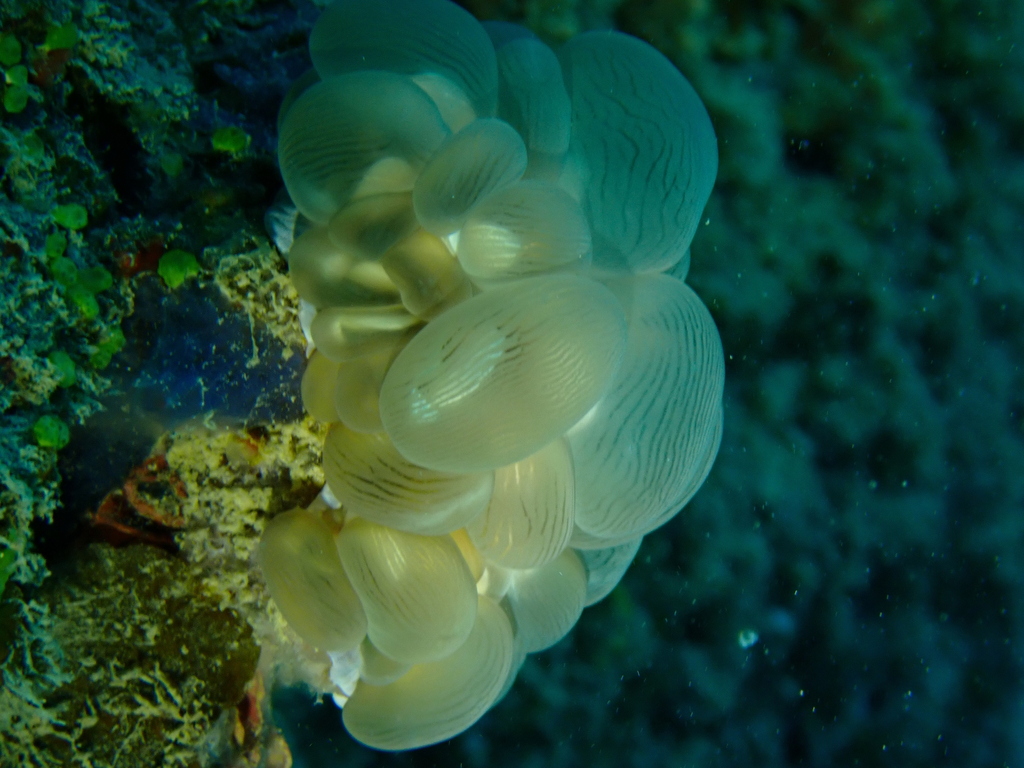
Aquacultured Marshall Island (MIMF) Bubble Coral →
Tank-raised *Plerogyra* from ORA's Marshall Islands maricultured stock, prized for soft, pillow-like bubbles with fine lined striations that inflate around a tightly ridged skeleton. Colors run from light green to creamy beige, with a brighter 'Nuclear Green' selection also offered.
Tip: As a maricultured piece it adapts well to aquarium conditions and tolerates a range of light and placement; still keep it on weak, indirect flow on the sandbed or a low ledge so the delicate bubbles can fully inflate, and mind its long, aggressive sweeper tentacles toward neighbors.
 representative
Biota Cultured Pearl Bubble Coral →
A captive-propagated pearl bubble from Biota's hatchery program, with clustered cream-to-green fleshy vesicles and a fully aquacultured, reef-safe pedigree. Biota and resellers identify it as *Physogyra lichtensteini*, whose bubbles run somewhat smaller than those of true *Plerogyra*.
Tip: Acclimate to low-to-moderate light and gentle flow; cultured specimens are often more forgiving, but the bubbles are just as delicate and the skeleton beneath has sharp projections, so avoid direct powerhead flow and abrasive contact.