Frogspawn coral
Euphyllia divisa · also called Grape coral, Honeycomb coral, Octospawn (related), Wall frogspawn, Branching frogspawn

Photo: Gdiggers · CC BY-SA 3.0
A hardy Euphyllia whose tentacles split into multiple grape- or egg-shaped tips that resemble a mass of frogspawn. Available in branching and wall forms and in green, gold, and metallic morphs, it is one of the more forgiving LPS corals — though, like its relatives, it wields stinging sweeper tentacles and needs space from neighbours.
🩺 Need expert help with your frogspawn coral?
Connect with a specialist near you or ask a licensed vet — never substitute online guidance for hands-on care in an emergency.
Quick facts
| Size | Clusters of forked tentacles tipped with rounded bubble-like ends resembling frog/fish eggs; colonies branch or form walls and spread to 8-12+ in (20-30+ cm) ov |
| Lifespan | 5–50 years |
| Social needs | solo |
| Native region | Indo-Pacific |
| Origin | Old World |
| Climate | 🌴 Tropical |
| Water type | 🌊 Marine |
| Family | Euphylliidae |
| Genus | Euphyllia |
Part of the LPS Corals
Large-polyp stony corals (brains, Euphyllia, Goniopora, Scolymia, Lobophyllia, Favites, Acan, Dendro, Octospawn) with fleshy polyps over a calcium-carbonate skeleton. Intermediate-care reef corals that appreciate moderate light/flow and direct feeding.
Habitat & space requirements
From the minimum an animal needs to be kept humanely, up to the ideal setup. Bigger is almost always better — minimums are floors, not targets.
Life & growth stages
How this animal changes through its life — each stage often has its own care, diet and space needs.
Color & pattern variants
Natural variants occur in the wild; selectively bred (man-made) variants were developed in captivity.
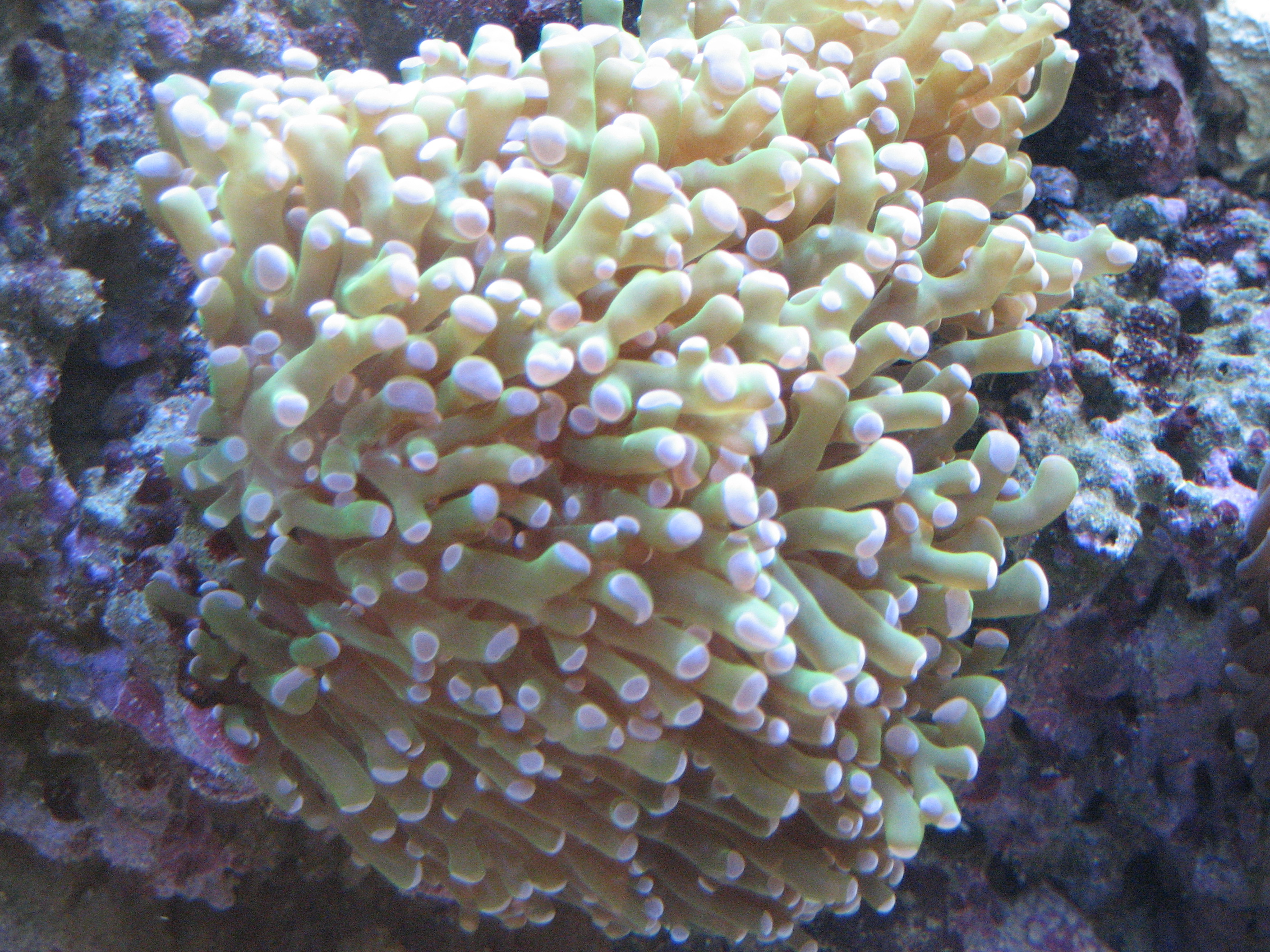 representative
Green Frogspawn →
The classic frogspawn (*Euphyllia divisa*, now often placed in *Fimbriaphyllia*) with branching, grape-like tentacle tips in fluorescent green, often with paler or pink-tipped ends, billowing in gentle flow.
Tip: Moderate light (PAR ~80-150) and gentle, indirect flow so the tentacles inflate fully; keep it away from other corals since its sweeper tentacles sting neighbors.
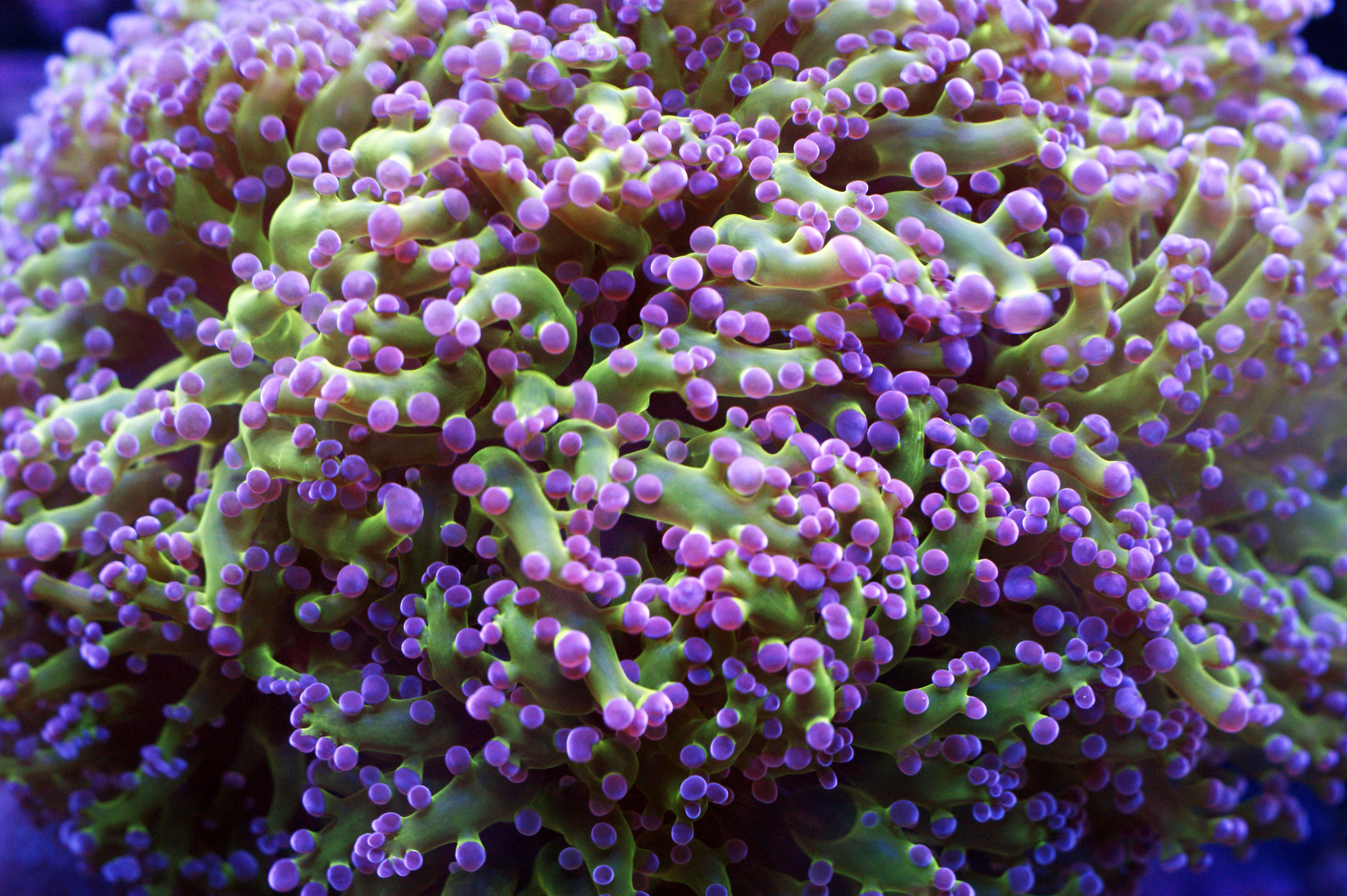 representative
Gold/Metallic Frogspawn →
Wild morphs with golden or metallic bodies and contrasting tips, valued for richer coloration.
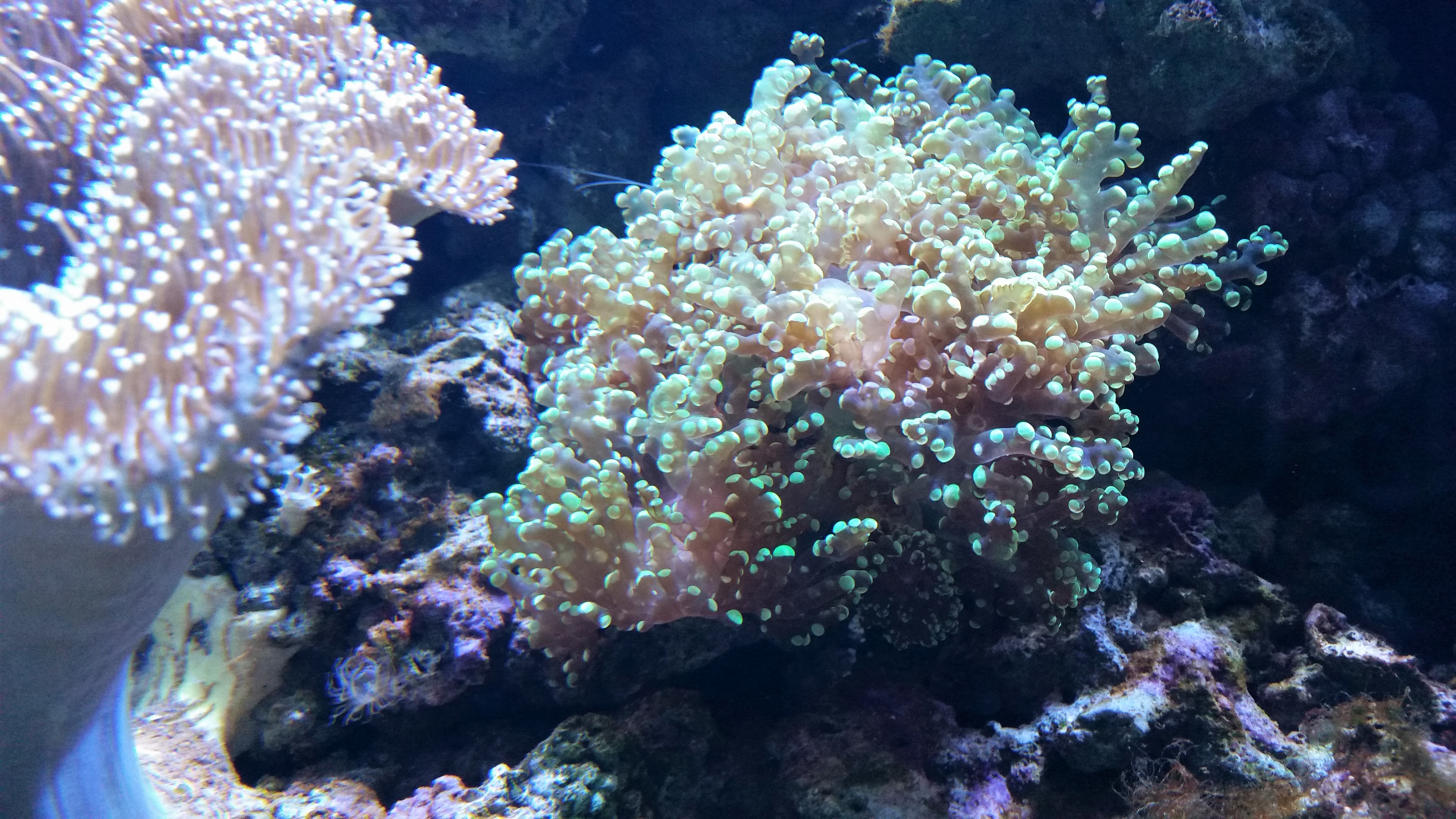 representative
Green Frogspawn (Wall) →
The standard fluorescent-green-tipped Euphyllia divisa in a wall (non-branching) form. The most common and hardy Euphyllia in the trade.
Tip: Place in moderate, indirect flow so the tentacles sway gently — too much flow keeps the polyp from fully inflating.
representativeBranching Frogspawn →
Branching skeletal form where each head sits on its own stalk, making it easy to frag. Same flowing grape-like polyps as the wall type.
Tip: Frag by snapping individual branches with bone cutters; the branching form recovers faster than cutting a wall colony.
representativeGold/Toxic Green Frogspawn →
A high-color form with golden-yellow to 'toxic' neon-green tentacles and contrasting tips. Brighter pigment than the standard green.
Tip: Hold the gold tone with stable alkalinity (7-9 dKH) and moderate blue light; alk swings cause rapid tip browning and tissue loss.
representativeOctospawn / Octo Frogspawn →
A frogspawn-type Euphyllia (often Euphyllia paraancora/glabrescens cross-labeled) with rounded eight-tipped polyps. Sits visually between hammer and frogspawn.
Tip: Give a bit more light than standard frogspawn (PAR 100-150) to fuel the fuller polyps, but acclimate slowly to avoid bleaching.
representativeRainbow / Metallic Frogspawn →
Premium morph with purple, pink, or orange tips over a green or gold body. Genuine rainbows are scarce and pricey.
Tip: These high-end pieces are the first to react to 'Euphyllia brown jelly' — quarantine new arrivals and never let detritus settle in the polyp.
representativeDragon Soul Frogspawn →
A named designer line with fiery orange/red tentacles tipped in contrasting green or white. One of the most sought-after Euphyllia trade names.
Tip: Maintain steady, dimmer blue-heavy light to protect the red pigment; if it starts to recede, dose amino acids and stabilize parameters immediately.
representativeBicolor / Tip Frogspawn →
Two-tone form with a green or tan body and bright pink, purple, or white tips. A budget-friendly step up from plain green.
Tip: Keep at least 6+ inches from other corals — frogspawn has long, potent sweeper tentacles that will sting any neighbor at night.
representativeGold/Toxic Frogspawn →
A frogspawn whose tentacle bodies glow gold-to-neon-yellow-green, often with contrasting tips — brighter and more saturated than the standard green form.
Tip: Slightly higher PAR than green frogspawn helps drive the gold fluorescence; keep flow gentle and indirect, and give space for its sweepers.
representativeRainbow Frogspawn →
A multicolor frogspawn blending neon green, pink, gold, and orange across the tentacles and tips so the colony reads as a true rainbow. Highly prized and significantly pricier than single-color forms.
Tip: Mid-tank under moderate, blue-rich light with gentle turbulent flow to spread color across the heads; stable parameters help hold the multicolor pigments, which can fade if conditions swing.
representativePurple Tip Frogspawn →
The classic frogspawn look: neon-to-grass green tentacles capped with violet-to-blue 'purple' tips that pop hard under actinic light. One of the most popular and recognizable euphyllia color forms.
Tip: Low-to-mid placement under moderate light and gentle indirect flow; blue-heavy light intensifies the purple-tip contrast. A forgiving beginner LPS.
representativeGreen Tip Frogspawn →
A frogspawn with gold-brown to tan tentacles tipped in ultra-bright neon green, producing a high-contrast glowing tip under blue light. The simplest and hardiest classic color form.
Tip: Place low-to-mid under moderate light with gentle flow; even modest blue light brings out the neon green tips. The baseline frogspawn most reefers start with.
representativeOG Bicolor Green & Purple Tip Frogspawn →
A specific long-established bicolor frogspawn combining bright green tentacles with strong purple tips, prized for its mature, well-conditioned coloration. Effectively an 'original' green-and-purple combo line.
Tip: Mid-tank under moderate, blue-leaning light and gentle flow; this older line colors up best once fully acclimated and stable. Hardy once settled.
representativeToxic Green Frogspawn →
An intensely saturated, almost radioactive neon-green branching frogspawn with little to no contrasting tip, so the whole colony reads as one screaming green. The most vivid of the solid-green forms.
Tip: Moderate light low-to-mid in the tank with gentle flow; avoid very high PAR, which can bleach the toxic green toward washed-out pale. A hardy beginner LPS otherwise.
representativeNeon Wall Frogspawn →
A wall-form (single fused skeleton) frogspawn in bright neon green, more compact and dense than the common branching type. Wall frogspawn are scarcer and grow as a continuous mat of tentacles.
Tip: Wall frogspawn are touchier than branching forms: give stable, slightly lower flow, moderate light (roughly 50-150 PAR), and a clean spot with no detritus trapping at the base to avoid recession and brown-jelly infections.
representativeAussie Minty Gold Tip Frogspawn →
An Australian wall-form frogspawn with minty green tentacles transitioning to gold-yellow tips, a premium Aussie color combo. The 'minty + gold tip' contrast on a wall colony is the signature.
Tip: Treat it as a wall coral: stable moderate light, gentle flow, and a debris-free placement. Aussie euphyllia reward slow acclimation and consistent alkalinity; wall forms are more prone to recession than branching ones.
representativeGold Indo Branching Octo-Frogspawn →
An Indonesian branching frogspawn/octospawn intermediate with gold-to-yellow coloring across thick, short-branched tentacles. The warm gold tone over the whole head is the draw.
Tip: Low-to-mid placement under moderate light with gentle flow; the gold pigment holds best under a blue-leaning spectrum rather than very white light.
representativeSolomon Islands Gold Rainbow Octospawn →
A premium octospawn (often listed as *Euphyllia paradivisa*) from the Solomon Islands showing yellow-gold bodies washed with rainbow tones, with the dense, compact eight-tip clusters octospawn are named for.
Tip: Mid-tank under moderate light and gentle flow; octospawn have shorter, denser tentacles than branching frogspawn but still need room to avoid stinging neighbors. Stable parameters keep the gold-rainbow color rich.
representativeRainbow Octospawn →
A multicolor octospawn whose thick tentacles display neon green, pastel pink, gold, and orange together, with the characteristic compact octospawn tip clusters. One of the most sought-after euphyllia color forms.
Tip: Place mid-tank under moderate, blue-rich light with gentle turbulent flow to light up all the colors evenly; keep parameters stable to hold the multicolor pigments.
representativeGold Octospawn →
A solid gold-to-yellow octospawn (often listed as *Euphyllia paradivisa* or a 'Gold Tip' *yaeyamensis*), with warm golden tentacles and contrasting paler or gold tips. A clean, single-color premium look.
Tip: Mid-tank under moderate light with gentle flow; a blue-leaning spectrum keeps the gold rich rather than fading it toward brown. A hardy, forgiving octospawn.
representativeMetallic Green Octospawn →
A bright metallic-green octospawn with a reflective sheen across the dense tentacle clusters. The simplest and hardiest octospawn color form, glowing strongly under blue light.
Tip: Low-to-mid placement under moderate light and gentle flow; octospawn appreciate slightly less direct flow than long-tentacled branching frogspawn. A forgiving beginner LPS.
representativeOrange Octospawn →
An uncommon octospawn in warm orange-to-amber tones (often on a lime-green base with orange tips), with the compact octospawn tip clusters. The orange coloration is unusual for euphyllia and commands a premium.
Tip: Mid-tank under moderate, blue-leaning light with gentle flow; avoid overly bright white light, which can dull the orange pigment.
 representative
Designer / Rainbow Frogspawn →
Line-selected and aquacultured strains chosen for multicolor 'rainbow' bodies and tips, propagated for the frag trade.
representativeWWC Glowbug Frogspawn →
A vivid chartreuse-to-neon-yellow branching *Euphyllia divisa* whose long flowing tentacles practically glow under blue light. Reads more yellow than green under actinics, with a uniform single color rather than contrasting tips.
Tip: Place low-to-mid in the tank under moderate light and gentle, indirect flow so the long tentacles sway without retracting or tearing on neighbors. Give plenty of clearance from torches and hammers, which it will sting (and be stung by).
representativeSuper Sour Branching Frogspawn →
A hardy branching frogspawn with bright lime-green and teal coloration that carries a slightly acidic, 'sour' neon tone. Tentacles are long and bubble-tipped in the classic *divisa* style.
Tip: Give it medium light and medium, turbulent flow on the lower-to-mid rockwork; allow space because branching frogspawn add heads quickly and will sting nearby corals. Like most branching euphyllia it is forgiving of minor parameter swings.
representativeSplatter Tip Frogspawn →
A branching frogspawn with green tentacles ending in randomly speckled, multi-color 'splattered' tips mixing pink, gold, and cream. The mottled tip pattern is the defining trait.
Tip: Mount on the lower rockwork in moderate flow and moderate light; the long tentacles need room to extend without contacting hammers or torches. A hardy, forgiving branching form.
representativeLot of Peaches Frogspawn →
A branching frogspawn in soft peach, salmon, and cream tones rather than the usual green, giving a warm pastel look. Tips can carry a lighter contrasting blush.
Tip: Use moderate, blue-leaning light to hold the pastel peach color and keep gentle flow; too much intense light can wash the warm tones out. Otherwise an easy, hardy branching euphyllia.
representativeBi-Color Frogspawn →
A two-tone frogspawn pairing a green or teal tentacle body with sharply contrasting differently-colored tips (commonly pink, purple, or gold). The clean color break between body and tip is the appeal.
Tip: Place mid-tank under moderate light with gentle alternating flow; consistent lighting helps preserve the contrast between body and tip. A hardy, beginner-friendly branching form.
representativeLemon Lime Octospawn →
A two-tone octospawn pairing lemon-yellow and lime-green (often with hints of purple) across the head, giving a bright citrus appearance. The yellow-into-green gradient over compact tips is the signature.
Tip: Place mid-tank under moderate light with gentle flow; moderate PAR keeps both the lemon and lime tones distinct. A hardy, beginner-friendly octospawn.
Habitat & enclosure
Substrate
Equipment & setup
Diet
Behavior & temperament
Health
Tips, DIY & hacks
Sources
- Euphyllia divisa — WoRMS World Register of Marine Species (reference)
- Frogspawn Coral Care Guide — Reef Builders (care guide)
- Wikipedia: Frogspawn coral (wiki)