Alveopora
Alveopora catalai · also called Alveo, Daisy Coral, Flowerpot Coral (shared with Goniopora), Ball Coral
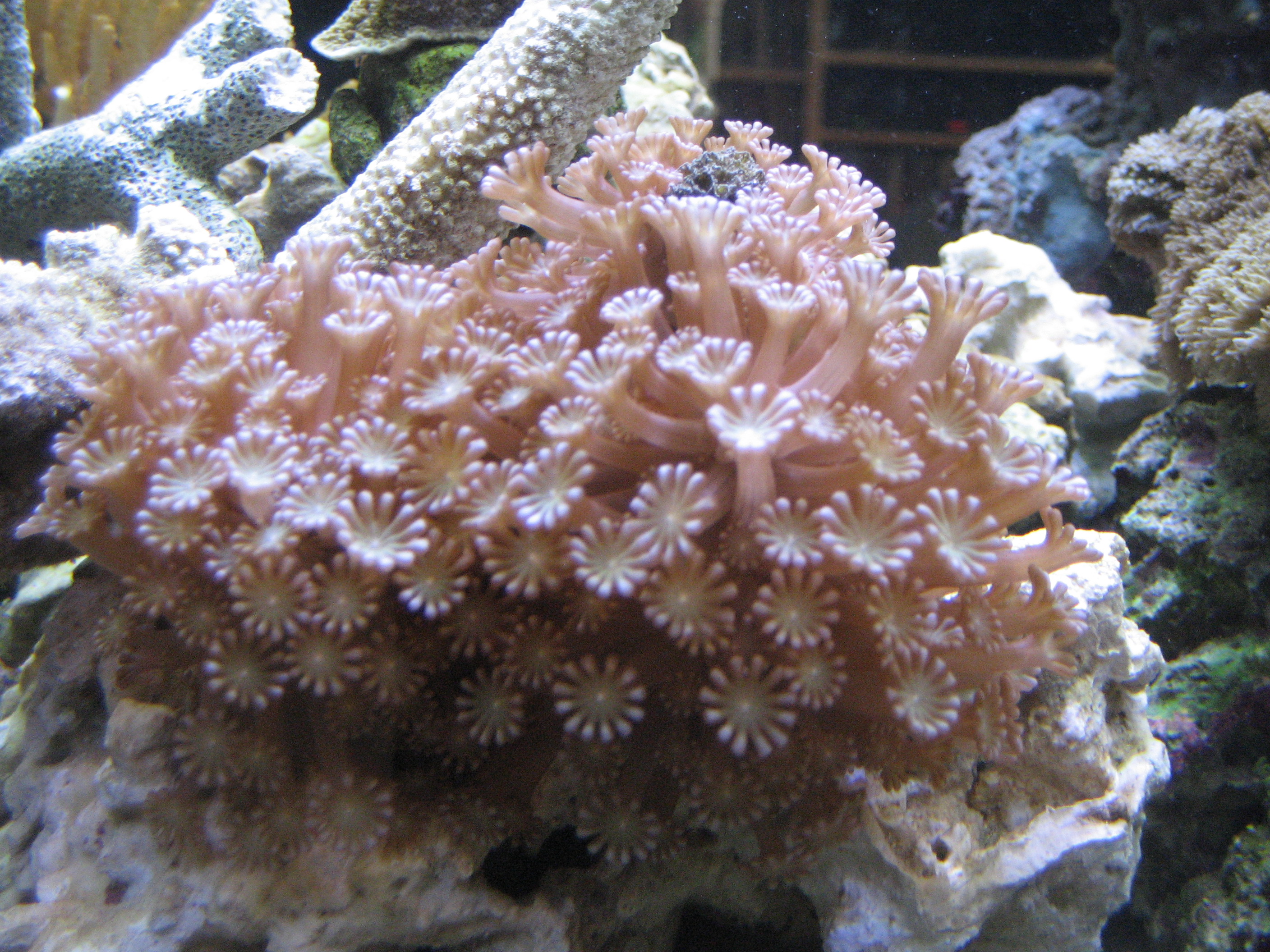
A flowing daisy-like LPS coral very similar to Goniopora but distinguished by 12 tentacles per polyp (versus Goniopora's 24). Generally considered a bit more forgiving than Goniopora, with gentle swaying polyps. Modern molecular work moved Alveopora from Poritidae into Acroporidae.
🩺 Need expert help with your alveopora?
Connect with a specialist near you or ask a licensed vet — never substitute online guidance for hands-on care in an emergency.
Quick facts
| Size | Colonies 8-20 cm (3-8 in) across; polyps extend 2-6 cm, each tipped with 12 tentacles. |
| Lifespan | 10–50 years |
| Social needs | solo |
| Native region | Indo-Pacific lagoons and reef slopes (Indian Ocean to the western Pacific) |
| Origin | Old World |
| Climate | 🌴 Tropical |
| Water type | 🌊 Marine |
| Family | Acroporidae |
| Genus | Alveopora |
Part of the LPS Corals
Large-polyp stony corals (brains, Euphyllia, Goniopora, Scolymia, Lobophyllia, Favites, Acan, Dendro, Octospawn) with fleshy polyps over a calcium-carbonate skeleton. Intermediate-care reef corals that appreciate moderate light/flow and direct feeding.
Habitat & space requirements
From the minimum an animal needs to be kept humanely, up to the ideal setup. Bigger is almost always better — minimums are floors, not targets.
Life & growth stages
How this animal changes through its life — each stage often has its own care, diet and space needs.
Color & pattern variants
Natural variants occur in the wild; selectively bred (man-made) variants were developed in captivity.
representativeGreen Alveopora
Bright green flowing polyps, the most frequently seen and hardy color form.
representativePurple-tip Alveopora
Polyps with contrasting purple or pink tentacle tips over a tan/green base, a desirable natural morph.
representativeSunburst / Orange Alveopora
Warm orange-to-yellow polyps that glow under reef lighting.
representativeHologram Alveopora →
A metallic Alveopora whose long, fuzzy daisy-like polyps shift with a holographic green-to-gold sheen as the lighting angle changes. The 'Hologram' look gave the whole family its name and spawned Emerald and Rose variants.
Tip: Place low-to-mid under low-to-moderate light (roughly 100-175 PAR) with moderate, indirect flow so the long polyps extend fully without being blasted. Target-feed a fine meaty/SPS food a few times a week.
representativeEmerald Hologram Alveopora →
A bright emerald-green member of the Hologram line, with metallic green polyps that fluoresce strongly and hold a daisy-like fuzzy bloom during the day.
Tip: Give it low-to-moderate light and moderate, indirect flow; if polyps stay retracted, drop it lower in the tank and soften the flow until the fuzzy extension returns. Target-feed fine foods a few times weekly.
representativeRose Hologram Alveopora →
The pink/rose-toned Hologram variant, blending soft rose and metallic highlights across long, swaying flower-pot polyps that shift in color between daylight and actinic lighting.
Tip: Keep it low-to-mid under low-to-moderate light with gentle, indirect flow; pink Alveopora pigments can wash out under very intense light. Target-feed fine meaty foods regularly.
representativeSandstorm Alveopora →
A warm tan-and-gold Alveopora with sandy beige polyp bases tipped in lighter cream, giving a soft swirling 'sandstorm' look as the polyps sway in flow.
Tip: Low-to-moderate light and moderate, indirect flow suit it best; the muted tones show most under a balanced blue-white spectrum rather than heavy actinic. Target-feed fine foods a few times weekly.
representativeIrish Spring Alveopora →
A clean green-and-white Alveopora named for its fresh mint-green polyps with pale tips, evoking the classic soap color.
Tip: Mid-tank placement under low-to-moderate light with moderate, indirect flow keeps the green vivid and the polyps fully extended. Feed fine meaty foods regularly.
representativeI Love Lavender Alveopora →
A purple-lavender Alveopora whose polyps carry a soft violet wash, an unusual cool tone for this normally green/gold genus.
Tip: Lavender and purple tones hold best under low-to-moderate light with some blue spectrum; keep flow moderate and indirect so polyps extend and show the color. Target-feed fine foods.
representativeWWC Guava Berry Alveopora →
A fruity Alveopora named for its guava/berry coloration, mixing a pink polyp center with yellow tentacle tips for a warm two-tone bloom.
Tip: Low-to-moderate light and moderate, indirect flow at mid-tank keep both the pink and yellow tones balanced and the polyps fully open. Target-feed fine meaty foods a few times weekly.