Lobophyllia (Lobed Brain / Meat Coral)
Lobophyllia hemprichii · also called Lobed Brain Coral, Meat Coral, Modern Lobo, Lobed Cactus Coral

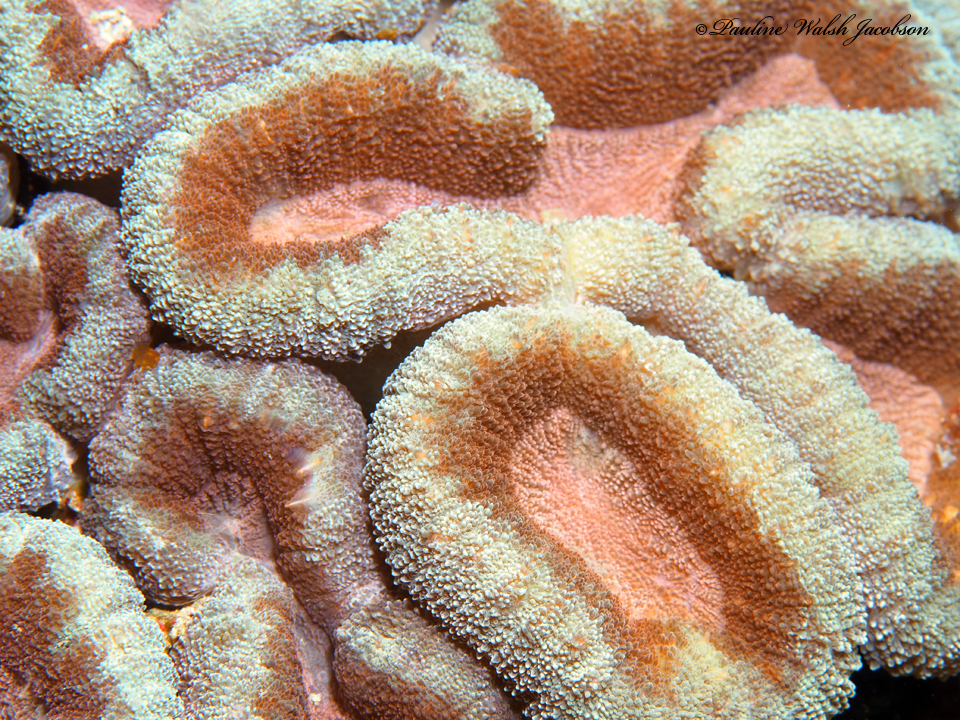
A large-polyp stony (LPS) brain coral prized for thick, fleshy, brightly colored lobes in reds, greens, and rainbow combinations. Hardy and forgiving, making it an excellent intermediate reef coral.
🩺 Need expert help with your lobophyllia (lobed brain / meat coral)?
Connect with a specialist near you or ask a licensed vet — never substitute online guidance for hands-on care in an emergency.
Quick facts
| Size | Colonies commonly 15-30 cm (6-12 in) across in captivity; wild colonies can exceed 1 m. Individual fleshy lobes 2-5 cm wide. |
| Lifespan | 20–100 years |
| Social needs | solo |
| Native region | Indo-Pacific (Red Sea, East Africa to the central Pacific, including Indonesia, the Philippines, and the Great Barrier R |
| Origin | Old World |
| Climate | 🌴 Tropical |
| Water type | 🌊 Marine |
| Family | Lobophylliidae |
| Genus | Lobophyllia |
Part of the LPS Corals
Large-polyp stony corals (brains, Euphyllia, Goniopora, Scolymia, Lobophyllia, Favites, Acan, Dendro, Octospawn) with fleshy polyps over a calcium-carbonate skeleton. Intermediate-care reef corals that appreciate moderate light/flow and direct feeding.
Habitat & space requirements
From the minimum an animal needs to be kept humanely, up to the ideal setup. Bigger is almost always better — minimums are floors, not targets.
Life & growth stages
How this animal changes through its life — each stage often has its own care, diet and space needs.
Color & pattern variants
Natural variants occur in the wild; selectively bred (man-made) variants were developed in captivity.
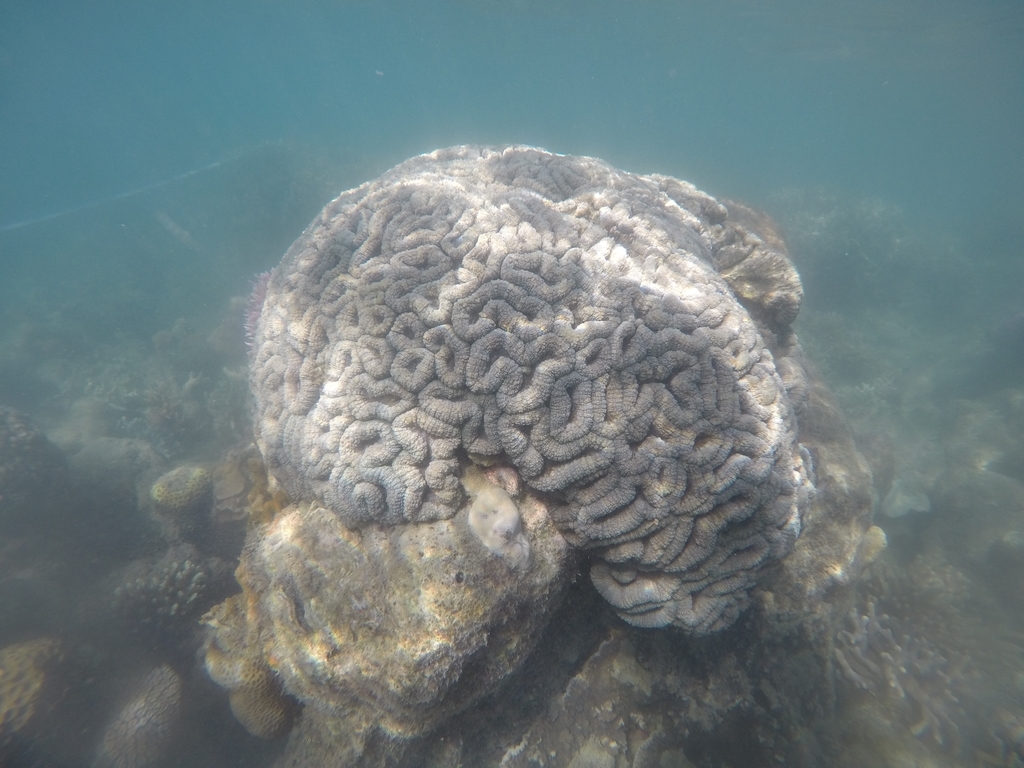 representative
Rainbow Lobo
Highly sought wild morph showing multiple contrasting colors—red, green, purple, and orange—across a single fleshy lobe. Commands premium prices in the reef trade.
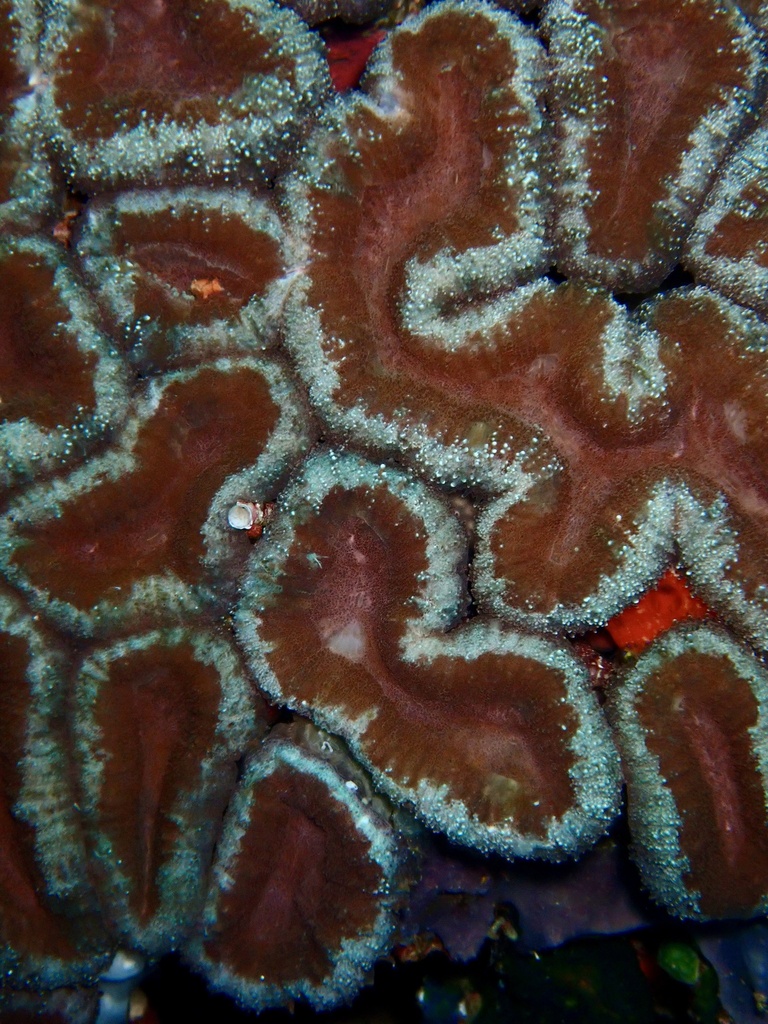 representative
Red Lobophyllia
Solid deep-red to maroon fleshy colony, a classic and durable display piece.
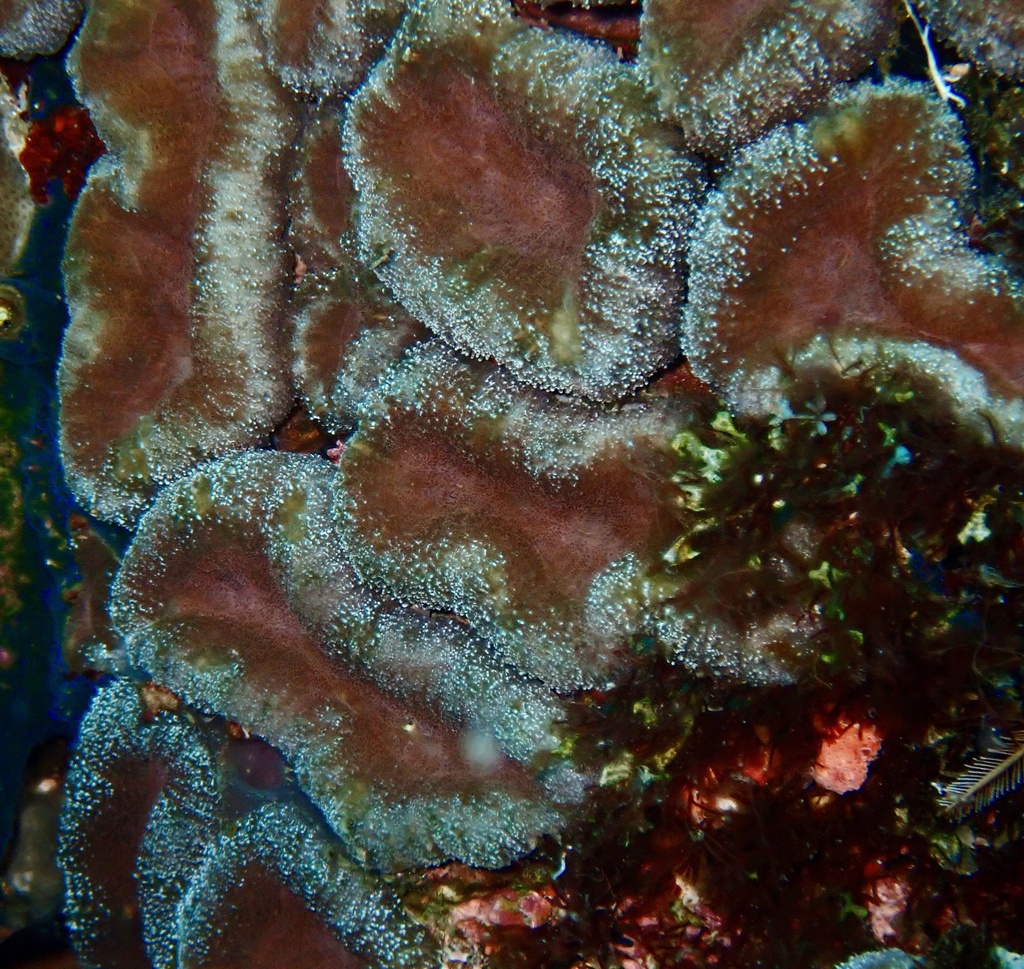 representative
Green Meteor / Bicolor
Green flesh with contrasting red or cream lobes, a common and attractive natural color form.
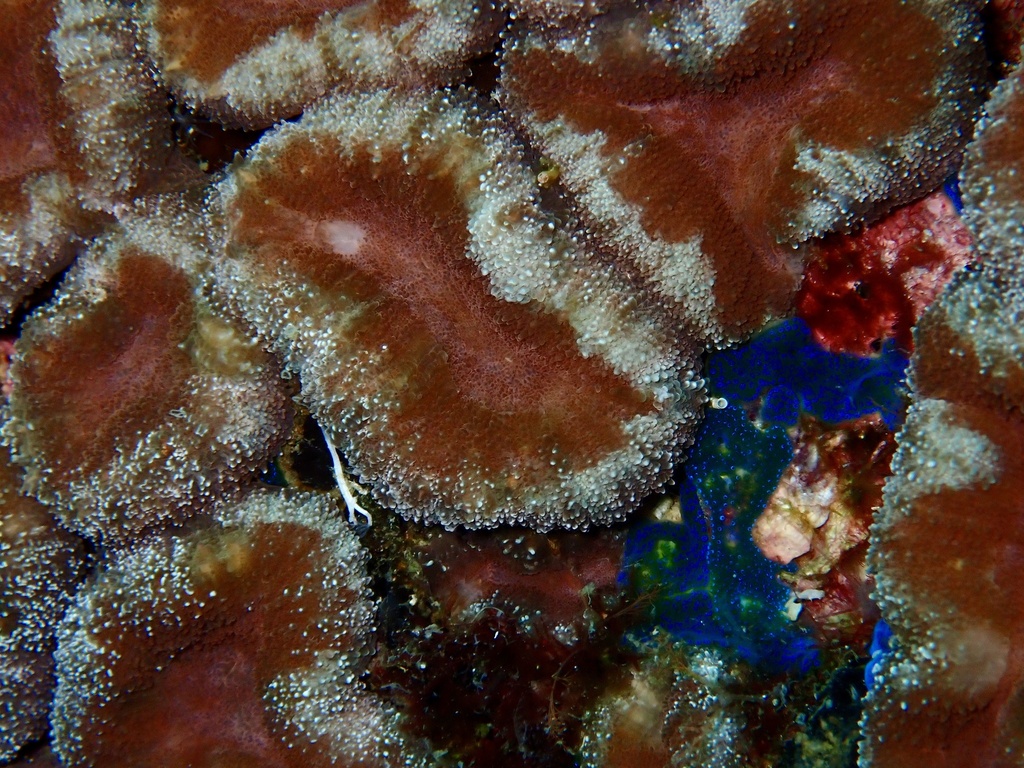 representative
Rainbow Lobophyllia →
A wild-collected lobed brain showing multiple banded colors across one head, typically a neon green or teal body with an orange-to-red rim and a contrasting center and mouths. The most widely sold collector descriptor for multicolor Lobophyllia.
Tip: Place on the sandbed or low rockwork under low-to-moderate light (roughly 80-120 PAR) with gentle, indirect flow so the fleshy tissue inflates without tearing. Hardy; target-feed meaty foods weekly to boost color and growth.
 representative
Ultra Lobophyllia →
A grade label for especially saturated single- or two-tone Lobophyllia, often a deep red, magenta, or toxic green head with metallic highlights. Used for premium wild pieces above standard color.
Tip: Keep on sand at the bottom of the tank under low-to-moderate PAR; too much light can bleach the rich pigments out. Gentle indirect flow and weekly spot-feeding help hold the intense color.
representativeToxitron Lobophyllia →
A toxic-green to lime body with a vivid contrasting rim, named for its almost radioactive green glow under blue light.
Tip: Sandbed placement with low-to-moderate blue-spectrum light brings out the toxic green; use low, alternating flow and avoid high PAR that washes out the pigment.
 representative
Rasta Lobophyllia →
A green, yellow, and red multicolor head evoking Rastafarian colors, with strong banding between the wall and valleys.
Tip: Bottom placement on sand under low-to-moderate light and slow indirect flow keeps the fleshy polyps fully expanded. Hardy and forgiving once water chemistry is stable.
 representative
Scarlet Crusader Lobophyllia →
A deep scarlet-red head with contrasting rim and mouths, prized for the intense solid red coloration that holds well in captivity.
Tip: Lower light helps preserve the deep red; place on sand with gentle flow at the tank bottom and feed meaty foods to maintain the saturated pigment.
 representative
Alien Slime Pool Lobophyllia →
A green-and-blue toxic-toned head whose valleys read like a glowing slime pool under actinics, with a contrasting wall.
Tip: Use low-to-moderate blue light on the sandbed to pop the green/blue; keep flow low so tissue doesn't recede.
 representative
Alien Experiment Lobophyllia →
A large multicolor head with green, teal, and orange zones giving an otherworldly mottled pattern across the lobes.
Tip: Bottom-of-tank sand placement with low alternating flow, as WWC notes for this piece, prevents tissue tearing; target-feed weekly with extended tentacles.
 representative
Toxic Pool Lobophyllia →
A neon green/yellow head with a contrasting darker wall, named for the toxic-pool glow of its valleys under blue light.
Tip: Low-to-moderate actinic-heavy light on sand maximizes the toxic glow; keep flow gentle and indirect.
 representative
Orangeade Lobophyllia →
A warm orange-dominant head with cream or contrasting mouths, named for its bright soda-orange tones.
Tip: Place on sand under low-to-moderate light; gentle flow keeps the orange fleshy lobes fully inflated. Hardy and a good centerpiece once acclimated.
representativeEarthen Ring Lobophyllia →
An earth-toned head with a distinct concentric ring of color around the wall, blending greens, tans, and warm rim tones.
Tip: Sandbed placement under low-to-moderate light with low flow shows off the ringed pattern best. Hardy LPS that benefits from occasional meaty feedings.
representativeUltra Orange Ring Lobophyllia →
A head featuring a bold orange ring banding the wall against a green or contrasting body, an ultra-grade version of the ringed pattern.
Tip: Low-to-moderate light on sand with gentle flow keeps the orange ring vivid and the polyps expanded; avoid high PAR that fades the ring.
representativeAfterburner Lobo Brain →
A sky-blue center ringed by a fiery red-orange rim and skirted by more sky blue, named for the jet-afterburner contrast between cool core and hot wall.
Tip: Place on the sandbed under medium light; low, indirect flow protects the inflated tissue. Hardy and slow-growing, it makes an easy centerpiece.
representativeRainbows On Fire Lobo Brain →
A rainbow-colored center surrounded by a fire-red and orange rim, combining multicolor valleys with a blazing wall.
Tip: Medium light on sand with gentle flow keeps both the rainbow center and red rim saturated; feed meaty foods to support the color.
representativeRing of Fire Rainbow Lobo →
A rainbow head encircled by a bright fiery rim, marketed as a collector-grade multicolor lobed brain.
Tip: Keep on sand under low-to-moderate light with slow flow so the fleshy lobes inflate and the rim color stays vivid. A hardy LPS suited to beginners through experts.
representativeJoker Lobophyllia →
A high-contrast green-and-purple/red head whose clashing colors earned the comic-villain name.
Tip: Sandbed placement under low-to-moderate light with gentle flow keeps the contrasting colors bright; avoid intense PAR that mutes the pigments.