Candy cane coral
Caulastraea furcata · also called Trumpet coral, Bullseye coral, Candy coral, Caulastrea

Photo · CC BY 2.0
A hardy, fast-growing LPS coral made of trumpet-shaped heads on branching stalks, often striped green-and-cream like candy canes or showing bullseye patterns. Tolerant of a wide range of conditions and inexpensive, it is an excellent beginner LPS that multiplies readily by budding new heads and frags easily.
🩺 Need expert help with your candy cane coral?
Connect with a specialist near you or ask a licensed vet — never substitute online guidance for hands-on care in an emergency.
Quick facts
| Size | Individual trumpet-shaped corallite heads ~0.5-1 in (1.5-2.5 cm) on branching stalks; colonies multiply head-by-head into clusters several inches to a foot acro |
| Lifespan | 5–50 years |
| Social needs | solo |
| Native region | Indo-Pacific |
| Origin | Old World |
| Climate | 🌴 Tropical |
| Water type | 🌊 Marine |
| Family | Merulinidae |
| Genus | Caulastraea |
Part of the LPS Corals
Large-polyp stony corals (brains, Euphyllia, Goniopora, Scolymia, Lobophyllia, Favites, Acan, Dendro, Octospawn) with fleshy polyps over a calcium-carbonate skeleton. Intermediate-care reef corals that appreciate moderate light/flow and direct feeding.
Habitat & space requirements
From the minimum an animal needs to be kept humanely, up to the ideal setup. Bigger is almost always better — minimums are floors, not targets.
Life & growth stages
How this animal changes through its life — each stage often has its own care, diet and space needs.

Color & pattern variants
Natural variants occur in the wild; selectively bred (man-made) variants were developed in captivity.
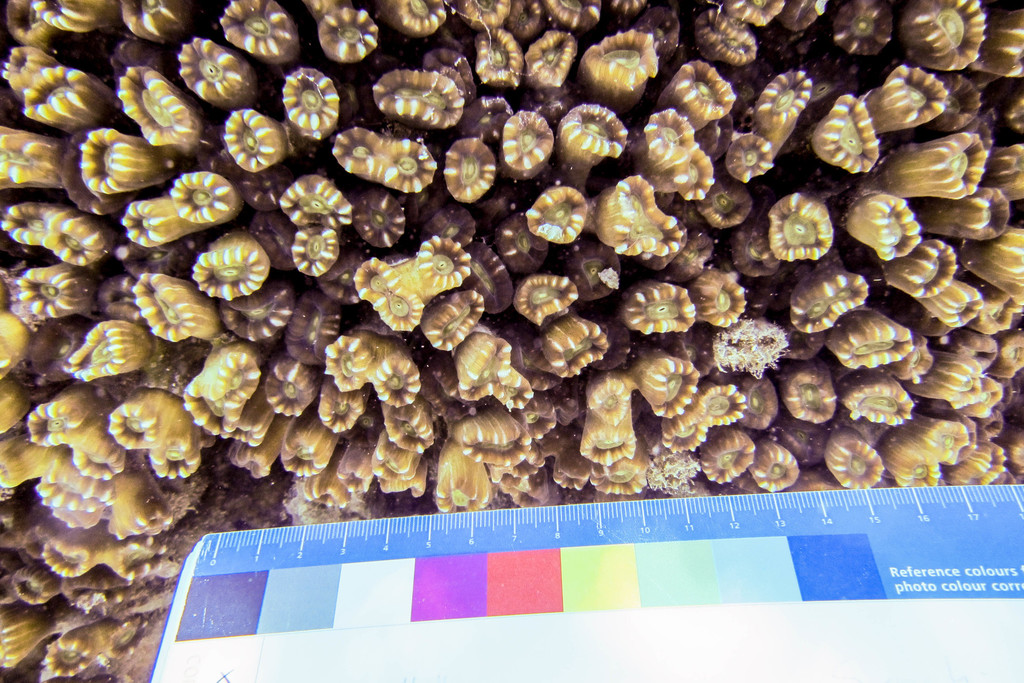 representative
Green/Cream Candy Cane →
The classic striped morph with green centers and cream-to-tan banding resembling candy canes; the most common and affordable form.
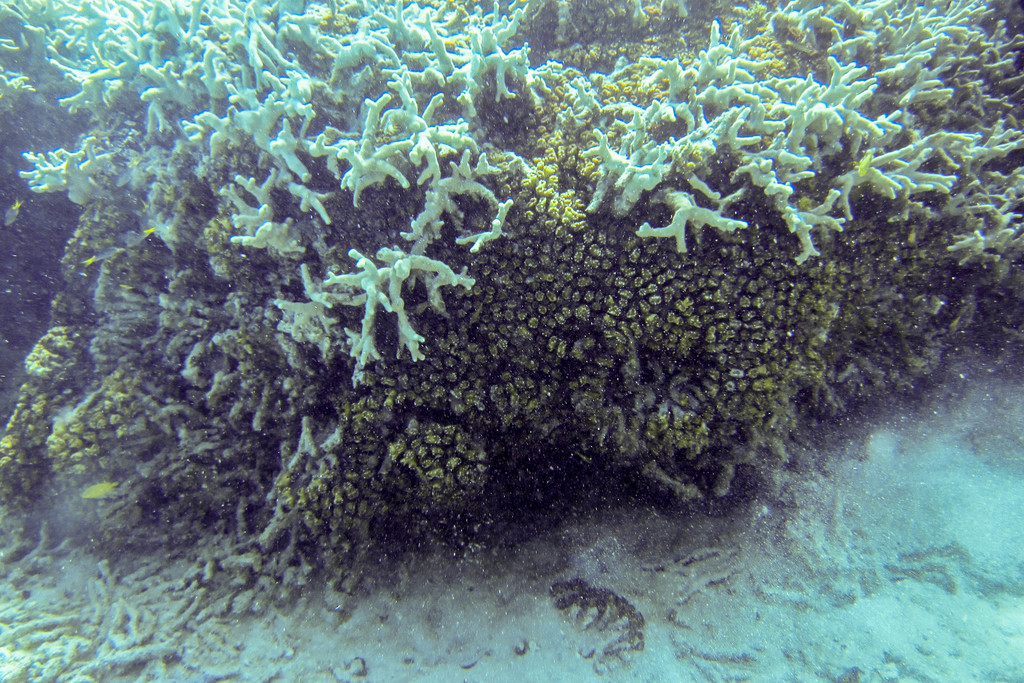 representative
Teal / Bullseye →
Morphs with teal or blue-green flesh and concentric bullseye-pattern heads.
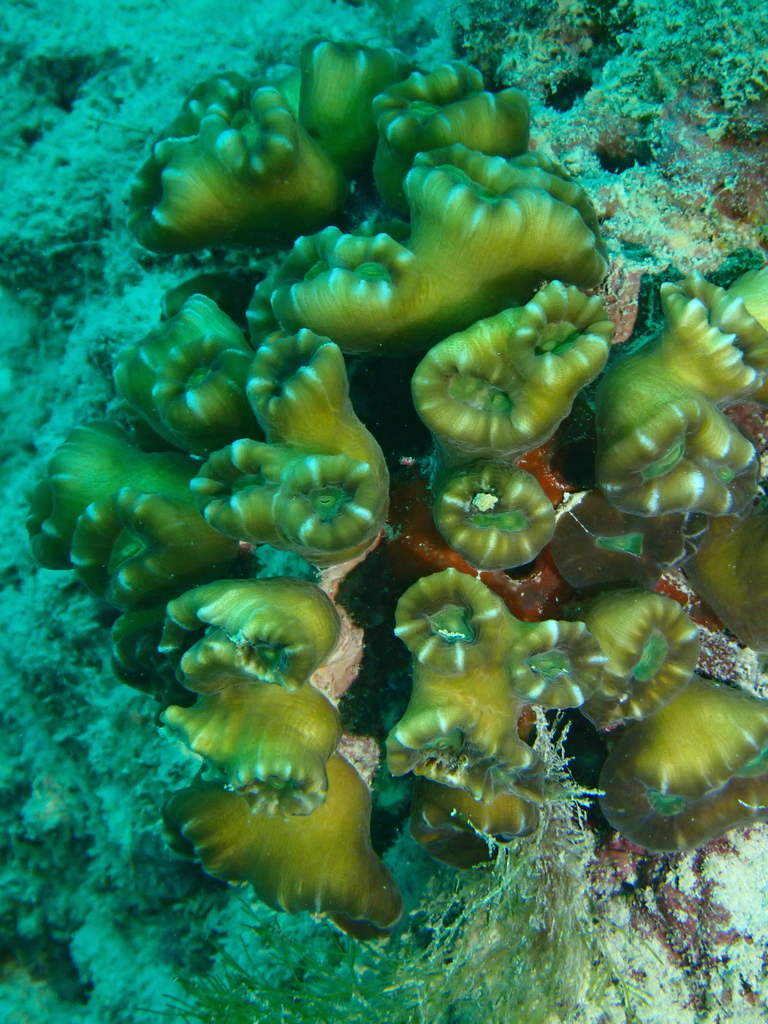 representative
Green Candy Cane →
The classic *Caulastraea furcata* with green corallites and brown-striped walls, giving the candy-cane look. The cheapest, hardiest LPS-starter trumpet coral.
Tip: Excellent beginner LPS — place low-to-mid in low/moderate flow and feed the polyps directly at night to speed up new head division.
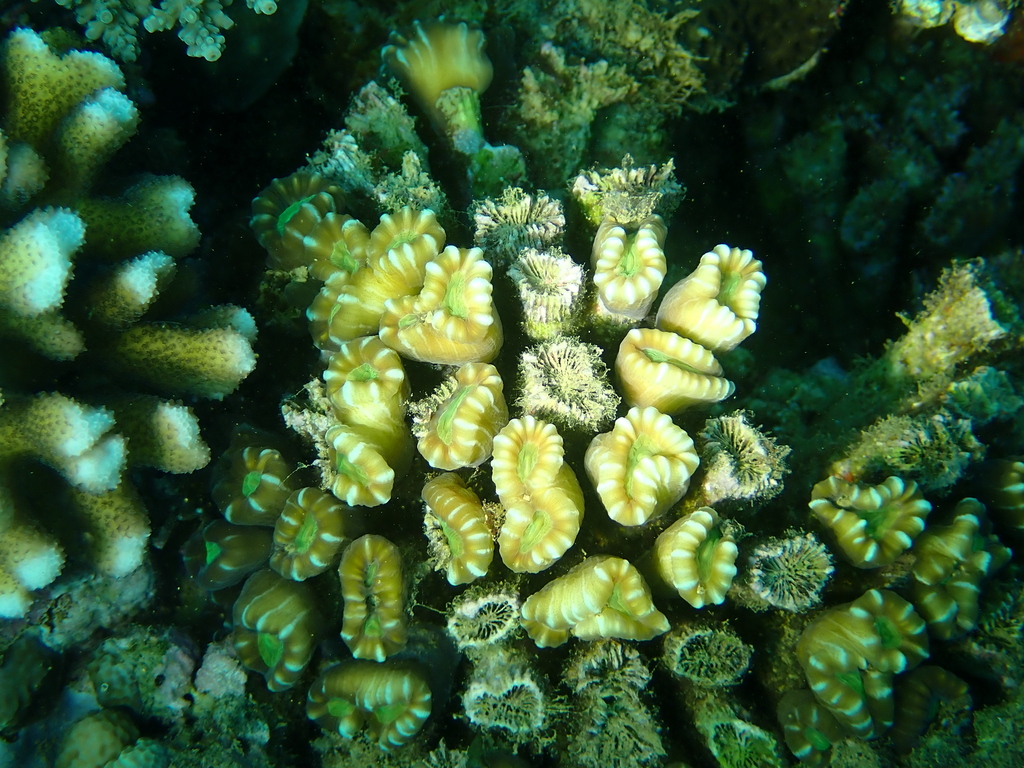 representative
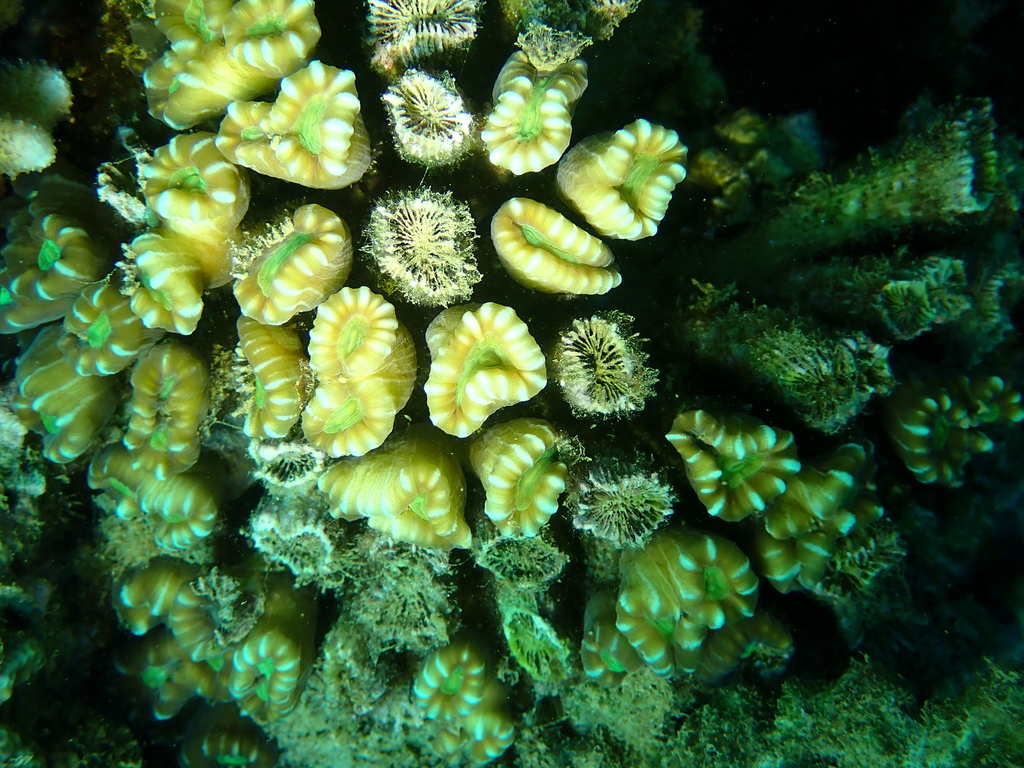
Neon Green Candy Cane →
A uniform, electric lime-green color morph where the entire head — center and skirt — glows the same fluorescent green, without the cream banding of the striped wild type.
Tip: Keep it under moderate blue-spectrum LED to pop the green fluorescence; mid-tank placement with gentle flow keeps the heads fully inflated and budding new branches.
 representative
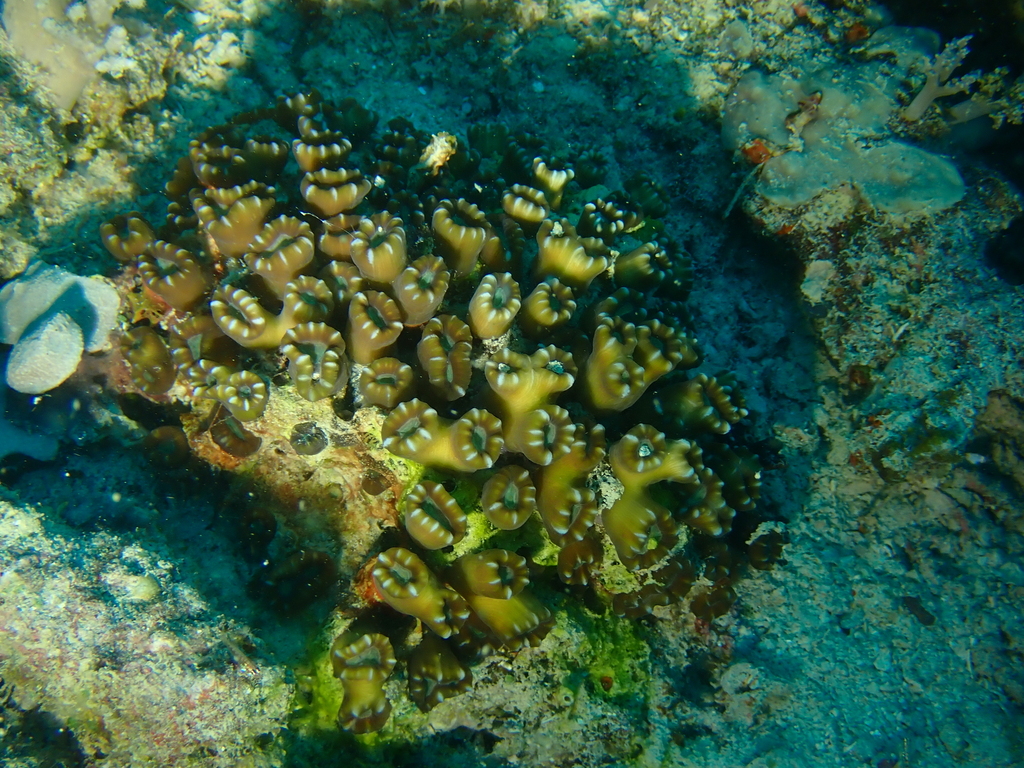
Trumpet / Metallic Green (Caulastraea curvata) →
The larger-headed 'trumpet coral' form with rounded metallic-green heads on longer stalks, traded interchangeably with candy cane.
Tip: Larger heads cast shade — give a little more flow than thin candy cane to keep detritus off, and space heads so they don't sting each other.
 representative
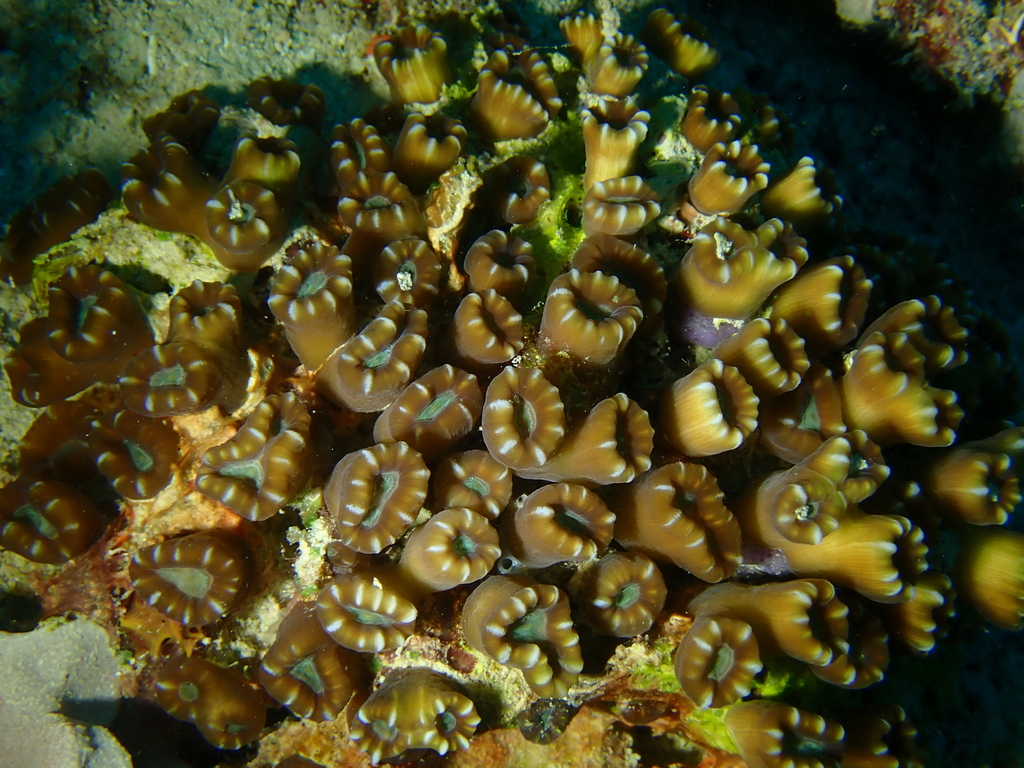
Orange/Gold Candy Cane →
A warm orange-to-gold corallite morph, less common than green and more striking, often with contrasting green stripes.
Tip: Orange pigment fades under intense PAR — keep lighting modest and feed well, as the warm color is better held in well-fed, lower-light placements.
 representative
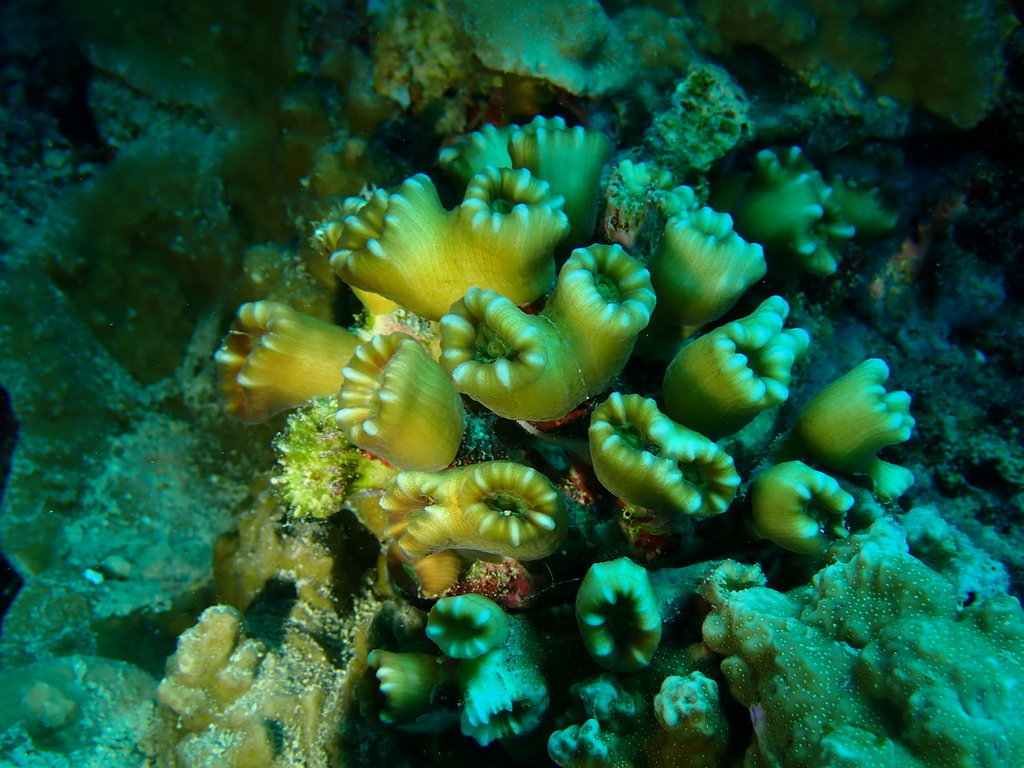
Two-Tone / Blue-Eye Candy Cane →
A bicolor morph with a green or teal body and a contrasting blue/purple center ('eye'). A more collectible candy cane colorway.
Tip: Contrast shows best under heavy blue spectrum; keep alkalinity stable, since trumpet corals sulk and lose color contrast with swinging dKH.
 representative
Warpaint / Rainbow Candy Cane →
A multicolor named line streaking green, blue, orange and pink across the heads ('warpaint'). The premium designer candy cane.
Tip: Multicolor lines need clean water and steady moderate light to hold every pigment — feed lightly but regularly and avoid burying it in high flow.
 representative
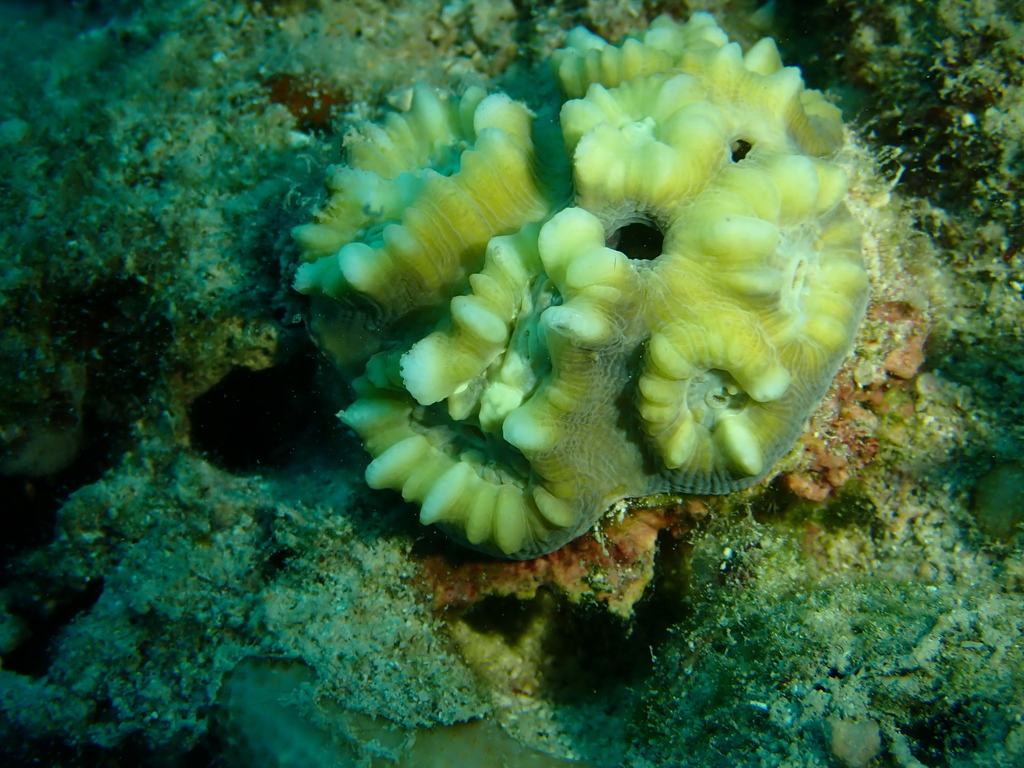
Trumpet/Candy Cane (Green & Cream Striped) →
The classic wild-type Caulastraea: fat trumpet-shaped heads on branching stalks, each with a fluorescent green center and cream-to-tan striped, banded skirt that reads like a candy cane under blue light.
Tip: Place low-to-mid on the rockwork in moderate, indirect flow and modest light (PAR 50-100); too much direct flow tears the inflated polyps, and they feed eagerly on meaty foods at night.
 representative
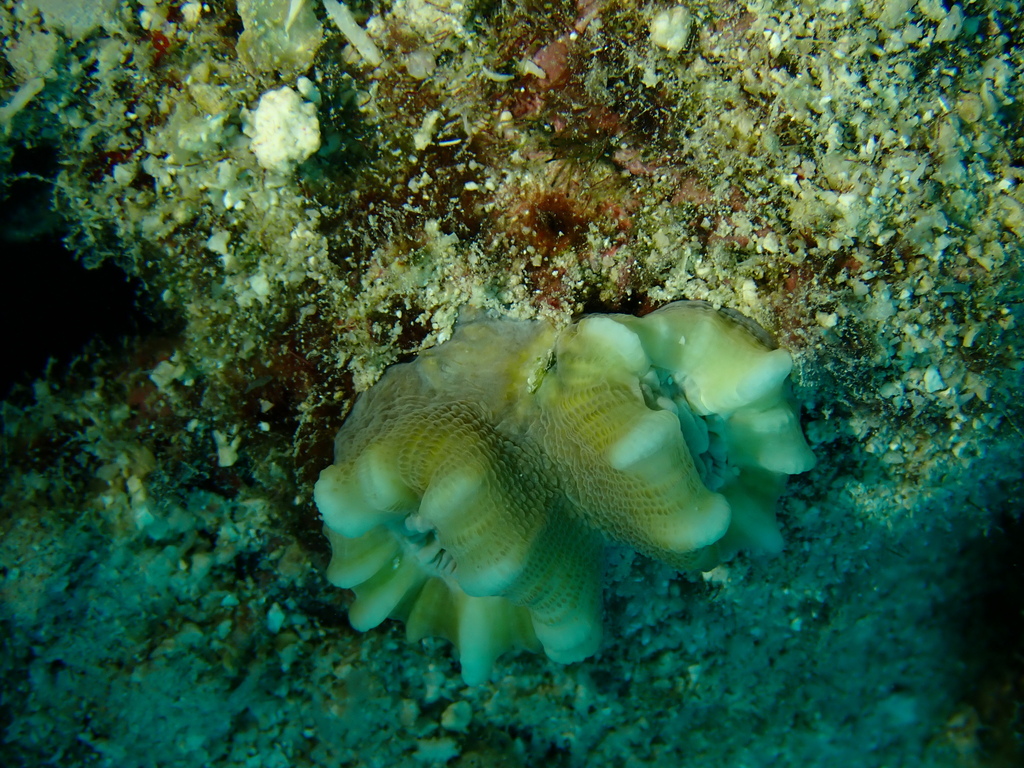
Metallic Teal / Blue Candy Cane →
A bluer color morph where the centers and skirts fluoresce a metallic teal-to-aqua rather than green, giving each trumpet head a cooler, jewel-toned cast under actinics.
Tip: Heavier blue lighting brings out the teal best; place in low flow so the polyps balloon out, and spot-feed mysis to speed branching.
 representative
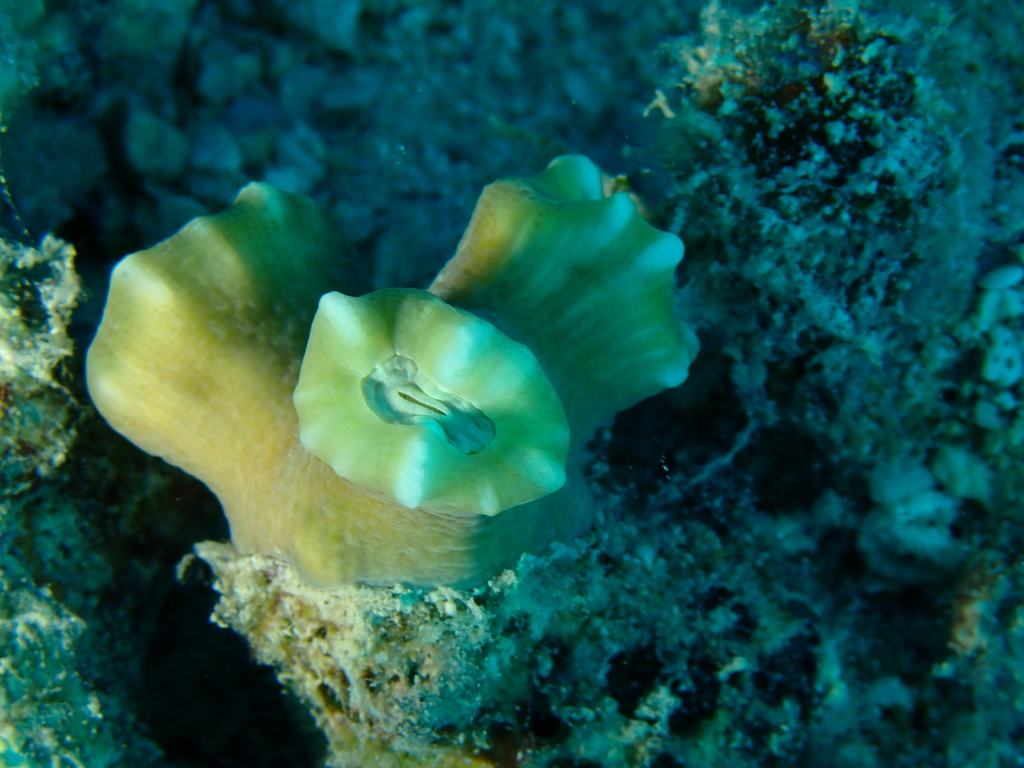
Orange/Warpaint Candy Cane (Caulastraea cf. echinulata) →
A bumpier-skinned Caulastraea with warm orange, tan and green 'war-paint' striping radiating across flatter, more oval heads rather than the round trumpets of furcata.
Tip: Treat like other candy canes — low light and gentle flow — but give it a touch more space, as the echinulata-type heads splay outward as they bud rather than staying tight.
representativeAlien Eye Candy Cane →
Purple coloration along the outer edges of each polyp surrounding a bright green center, giving a striking two-tone 'alien eye' bullseye appearance.
Tip: Mount on a low rock or sandbed under low-to-moderate light and gentle flow; the purple rim holds best with moderate, not intense, lighting and benefits from occasional target feeding.
 representative
Turquoise Candy Cane →
A blue-green / turquoise-toned candy cane sitting between the classic green and the pricier true-blue morphs, with soft turquoise heads.
Tip: Sandbed or low rock placement with low-to-moderate light and gentle flow; avoid strong direct flow so the fleshy heads can fully inflate.
representativeToxic Neon Green Candy Cane →
An intensely saturated, almost glowing neon-green candy cane marketed as 'toxic' for its over-the-top fluorescent green color.
Tip: Low-to-moderate light and low flow on the sandbed; the toxic green fluoresces hardest under blue-heavy LED or T5 actinic supplementation.
 representative
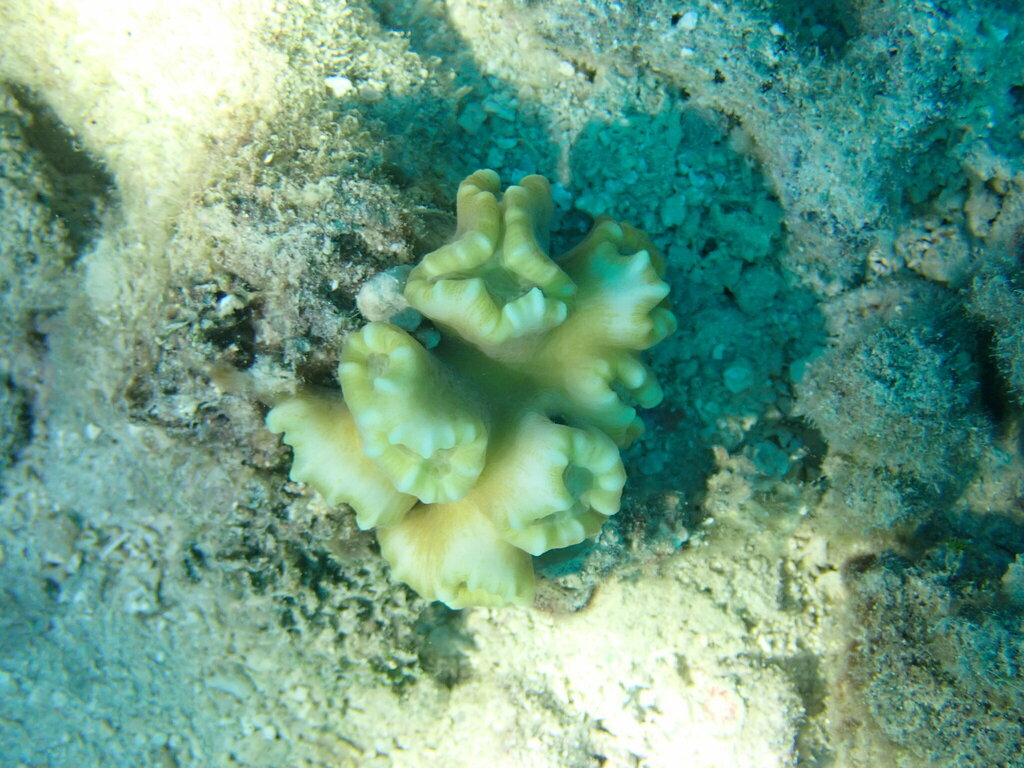
Designer / Rainbow Caulastrea →
Line-selected aquacultured strains chosen for vivid multicolor heads (orange, purple, neon), propagated for the frag trade.
 representative
Kryptonite Candy Cane →
A vivid, almost radioactive neon-green Caulastrea with a slightly darker green center mouth that glows hard under blue actinic light. The most iconic and recognizable colored candy cane in the hobby.
Tip: Place on the sandbed or a low rock shelf under low-to-moderate light and gentle flow; spot-feed the polyps at night when feeding tentacles emerge to speed up head splitting.
 representative
Cursed Candy Cane →
A bicolored, highly fluorescent candy cane with contrasting rim and center coloration that sets it apart from the plain neon greens. A long-running designer Caulastrea line.
Tip: Give it low-to-moderate light and low-to-moderate flow on a rock ledge; it colors up best without being blasted by direct flow, and individual heads can be target-fed to encourage faster division.
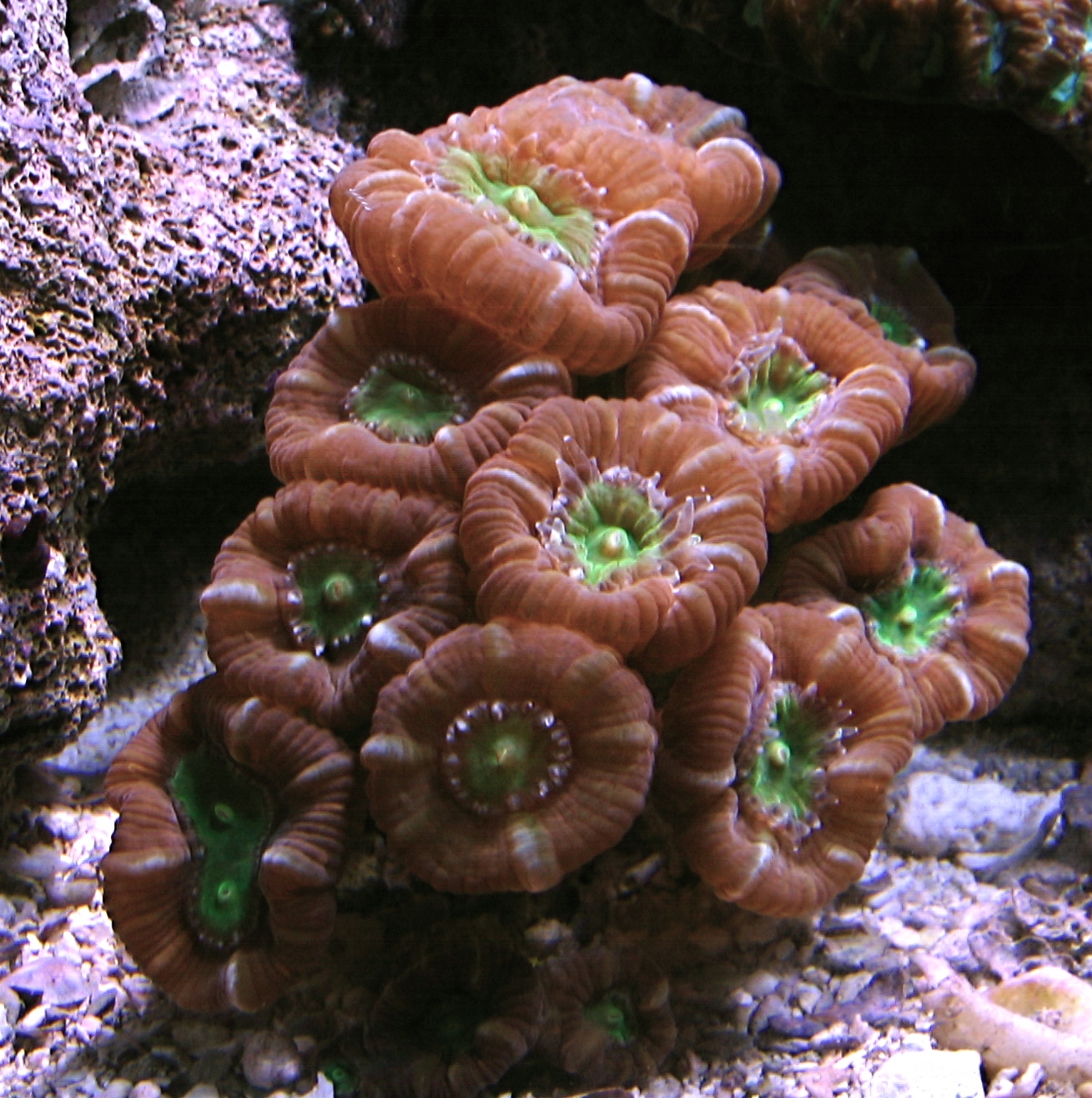 representative
Cursed Eye Candy Cane →
An 'eye'-style candy cane with a strongly contrasting central mouth set against a differently colored fleshy rim, a more dramatic bullseye look than the original Cursed.
Tip: Low-to-moderate light and gentle flow on the sandbed or a low frag shelf; the contrasting eye pops hardest under heavy blue/actinic lighting.
representativeNuclear Trumpet (JF) →
A neon-green trumpet/candy cane with intensely fluorescent fleshy heads; takes on a classic tentacled polyp look at night.
Tip: Low-to-moderate light and gentle flow on a rock shelf; feed the heads after dark when the feeding tentacles extend to push faster growth and division.
representativeBlue Spruce Candy Cane →
A blue-to-green Caulastrea color form named for its evergreen-like blue-green hue, distinct from the warmer red/green classic candy cane.
Tip: Sandbed or low rock under low-to-moderate light and gentle flow; keep it off the bottom of high-flow zones so the heads stay inflated.
representativeORA Candy Cane →
A classic two-toned candy cane with fleshy polyps and thin white stripes, propagated as a hardy maricultured strain valued for consistency over rarity.
Tip: Easy on the sandbed or low rockwork under low-to-medium light and moderate flow; very forgiving for beginners and responds well to weekly target feeding.