Goniopora (Flowerpot Coral)
Goniopora stokesi · also called Flowerpot Coral, Goni, Daisy Coral, Ball Coral

Photo · CC BY-SA 4.0
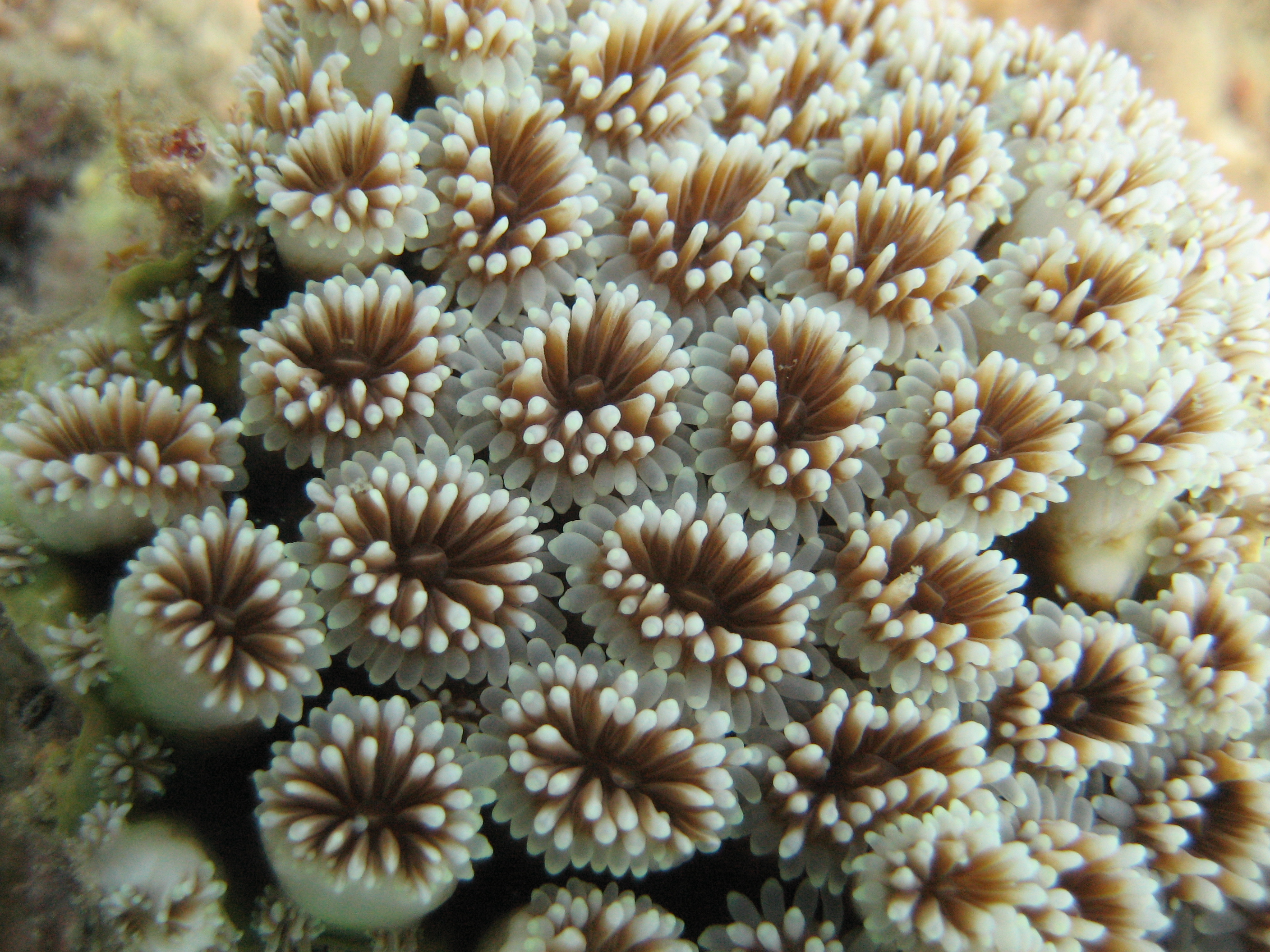
A daisy-like LPS coral whose long polyps, each tipped with 24 tentacles, sway in the current creating a flowing flowerpot effect. Historically notorious for slow decline, but modern aquacultured strains are far more sustainable and reliable.
🩺 Need expert help with your goniopora (flowerpot coral)?
Connect with a specialist near you or ask a licensed vet — never substitute online guidance for hands-on care in an emergency.
Quick facts
| Size | Colonies 10-25 cm (4-10 in) across; each long polyp extends 3-8 cm with 24 tentacles tipped by a fleshy disc. |
| Lifespan | 10–50 years |
| Social needs | solo |
| Native region | Indo-Pacific lagoons and turbid inshore reefs (Indonesia, Indian Ocean to the western Pacific) |
| Origin | Old World |
| Climate | 🌴 Tropical |
| Water type | 🌊 Marine |
| Family | Poritidae |
| Genus | Goniopora |
Part of the LPS Corals
Large-polyp stony corals (brains, Euphyllia, Goniopora, Scolymia, Lobophyllia, Favites, Acan, Dendro, Octospawn) with fleshy polyps over a calcium-carbonate skeleton. Intermediate-care reef corals that appreciate moderate light/flow and direct feeding.
Habitat & space requirements
From the minimum an animal needs to be kept humanely, up to the ideal setup. Bigger is almost always better — minimums are floors, not targets.
Life & growth stages
How this animal changes through its life — each stage often has its own care, diet and space needs.
Color & pattern variants
Natural variants occur in the wild; selectively bred (man-made) variants were developed in captivity.
representativeGreen Goniopora
Classic bright-green polyp colony, the most common and one of the hardier wild color forms.
 representative
Pink/Purple Goniopora
Pastel pink to lavender polyps; attractive but historically among the more demanding wild forms.
representativeWWC Hollywood Nights Goniopora →
A standout strain with deep royal-purple polyp bodies and bright neon-yellow tentacle tips that glow hard under blue reef lighting. Long, flowing polyps with constant motion make it one of the most sought-after flowerpot gonis in the hobby.
Tip: Keep it in lower-to-medium light (PAR ~125-175) with medium alternating flow on a mid-to-lower rockwork ledge; target-feed a fine SPS/coral food several times weekly to keep polyps extended. Give it space, as extended polyps can sting neighbors.
representativeWWC Electrified Goniopora →
A high-contrast goni with vivid neon coloration across the polyp field that lights up intensely under actinics. A WWC house-named piece prized for its saturated, glowing look.
Tip: Place it low-to-mid in the tank under lower-to-moderate light (PAR ~125-175) and gentle alternating flow; avoid blasting it directly so the long polyps can fully extend and feed. Target-feed fine coral foods several times weekly.
representativeWWC Jewel Thief Goniopora →
A rare, multi-colored 'jewel' morph WWC highlights as one of their top-tier gonis, with rich gem-like tones across the polyps. Considered a collector-grade flowerpot piece.
Tip: Give it stable, lower PAR (~125-175) and calm-to-moderate flow on a lower ledge; consistent target feeding is key to holding color and polyp extension. Best reserved for mature, stable systems.
representativeGlitter Goniopora →
A widely-circulated morph named for the sparkling, glitter-like speckling across green-to-multicolor polyps that catches light as the coral sways. Also traded as 'Glitter Bomb.'
Tip: Lower-to-moderate light and medium flow suit it best; mount it where the long polyps have room to flow freely and feed small meaty/coral foods a couple times a week. Keep water parameters stable.
representativeTCK Grand Master Goniopora →
A top-shelf, intensely multicolored 'grand master' goni representing TCK's highest-grade flowerpot offering. A rare, premium-priced collector morph.
Tip: Treat it as a delicate showpiece: stable lower light, gentle flow, a mature tank, and consistent target feeding to keep the long polyps healthy and extended.
representativeSunburst Micro Goniopora →
A small-polyp ('micro') Australian goni with a bright fluorescent-yellow face, a red mouth, and pink-and-red tentacles. Tidal Gardens considers their captive-grown stock of this one notably hardy and fast-growing for a flowerpot.
Tip: Aussie micro gonis like stable, mature tanks with lower-to-moderate light and gentle flow; place low and feed fine foods frequently. Captive-grown stock tolerates conditions better than fresh imports.
representativeRainbow Micro Goniopora →
A micro-polyp Aussie goni with a purple-pink base and polyps of orange, pink, red and green with yellow tips, showing a rainbow mix across a dense polyp field. Prized for combining the rainbow look with fine micro-polyp texture.
Tip: Like other Aussie micros, give it a stable mature system, lower-to-moderate PAR and gentle flow on a lower ledge, with frequent fine feedings. Sensitive to parameter swings.
representativeMiss Piggy Goniopora →
An all-pink flowerpot named for its soft, candy-pink polyps, which are among the longest of any goni in Tidal Gardens' collection and give it dramatic movement. A popular, recognizable pink goni.
Tip: Lower-to-moderate light with medium flow keeps the pink saturated; place it mid-to-low and target-feed to keep the long polyps full and extended. One of the more forgiving gonis once settled.
representativeTSA Rainbow Slide Goniopora →
A multicolor 'rainbow' flowerpot from Top Shelf Aquatics' goni lineup, blending several bright tones across the swaying polyps. Part of TSA's heavily-branded goni collection.
Tip: Moderate light and medium alternating flow on a lower ledge let the polyps flow; feed regularly to maintain color and polyp size, and keep parameters stable.
representativeCombo Rainbow Goniopora →
A 'combo'/rainbow flowerpot showing a blend of multiple colors in a single colony, sold as a WYSIWYG showpiece. Valued for the full rainbow spread of long, swaying polyps.
Tip: Give it lower-to-moderate light and gentle-to-medium flow with room for the polyps to extend; consistent target feeding keeps the multicolor display strong.
representativeGolden Inferno Goniopora →
A striking goni with red/pink polyp bodies and glowing gold-orange tips, sometimes traded as 'Gold Inferno.' The fiery tip-to-body contrast is its signature, looking electric under blues.
Tip: Lower-to-moderate PAR and low-to-medium flow bring out the tip color; place it low-to-mid and feed regularly to hold the inferno coloration. Don't crowd it, as it can send out night-time sweepers.
representativeInsane Rainbow Goniopora →
A vivid, high-saturation rainbow flowerpot marketed as 'Insane Rainbow,' packing greens, pinks, oranges and yellows into one colony. A bold, showy multicolor goni.
Tip: Lower-to-moderate light and medium alternating flow on a lower ledge let the long polyps sway and feed; target-feed a few times weekly for best color and keep parameters stable.
 representative
Aquacultured Designer Gonis
Tank-raised strains (e.g., bicolor and neon morphs propagated in captivity) selected for hardiness and color stability—far more reliable than wild colonies.
representativeJason Fox Kaleidoscope Goniopora →
A designer-named goni with a kaleidoscopic blend of colors across the polyp field, in the Jason Fox 'Signature' aesthetic. A recognizable named flowerpot line.
Tip: Jason Fox lists it as low light, medium flow; it does best target-fed and given a stable, mature tank. Place it low in the system and feed fine coral foods regularly.
representativeORA Ultra Red Goniopora →
A deep, solid blood-red flowerpot with intense metallic-red polyps and a purplish-blue center, one of the most recognizable red goni lines in the hobby. The aquacultured ORA reds are among the hardier, more forgiving gonis.
Tip: More tolerant than wild gonis but still prefers stable parameters; acclimate from dim toward medium-to-higher light and use moderate flow. Place it with space from neighbors, since it can supercharge stinging tentacles, and feed regularly to maintain pigment.