Leptoseris
Leptoseris mycetoseroides · also called Lepto, Leptoseris plating coral, Wrinkle coral

Photo · CC BY 4.0
Leptoseris is a hardy encrusting and plating small-polyp stony coral (a close Agariciid relative of Pavona) known for striking metallic two-tone morphs in orange, red, green and blue. It adapts well to low-to-moderate light and is one of the more forgiving SPS corals for an intermediate keeper.
🩺 Need expert help with your leptoseris?
Connect with a specialist near you or ask a licensed vet — never substitute online guidance for hands-on care in an emergency.
Quick facts
| Size | Thin encrusting-to-plating colony with fine ridged corallites; frags start ~2-4 cm and plates spread to 10-25 cm, forming low cups or sheets. |
| Lifespan | 5–50 years |
| Social needs | solo |
| Native region | Indo-Pacific |
| Origin | Old World |
| Climate | 🌴 Tropical |
| Water type | 🌊 Marine |
| Family | Agariciidae |
| Genus | Leptoseris |
Part of the SPS Corals
Small-polyp stony corals — fast-growing branching corals demanding strong light & flow.
Habitat & space requirements
From the minimum an animal needs to be kept humanely, up to the ideal setup. Bigger is almost always better — minimums are floors, not targets.
Life & growth stages
How this animal changes through its life — each stage often has its own care, diet and space needs.

Color & pattern variants
Natural variants occur in the wild; selectively bred (man-made) variants were developed in captivity.
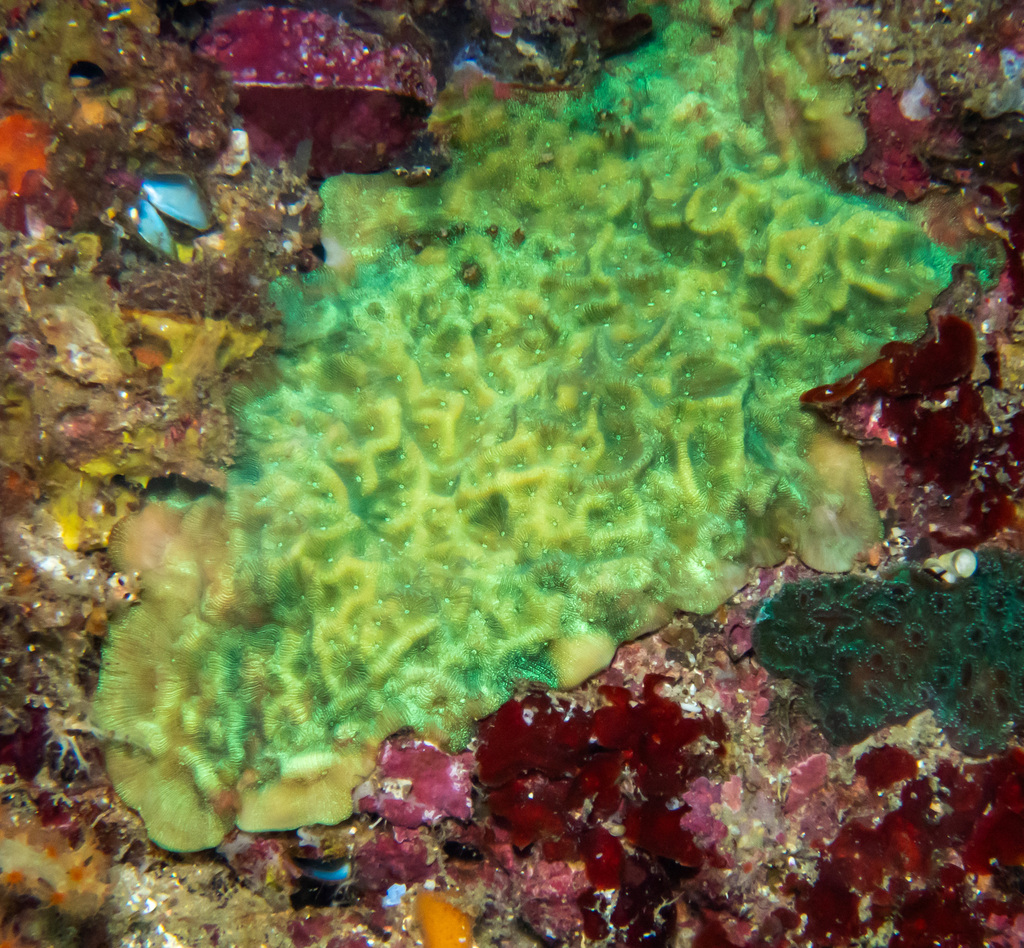 representative
Orange / Red Leptoseris
Vivid metallic orange-to-red plating morphs, often with a contrasting green or blue rim — among the most sought-after wild colour forms.
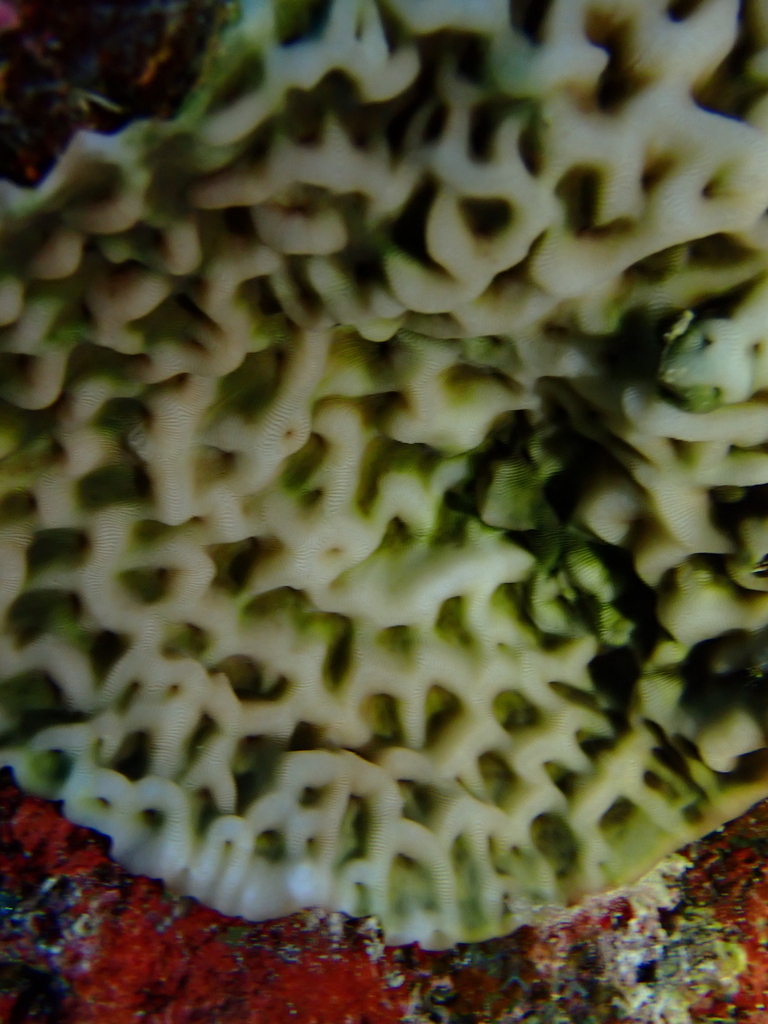 representative
Blue / Green Leptoseris
Cooler metallic blue and green two-tone forms that fluoresce strongly under actinic lighting.
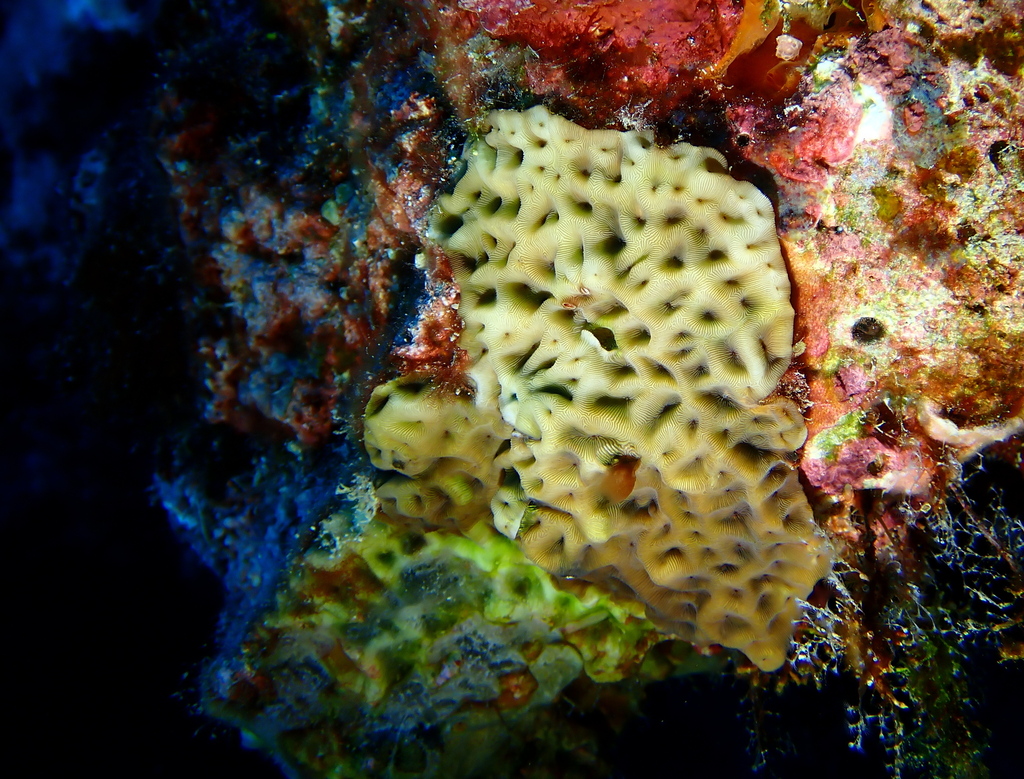 representative
Jason Fox Jack-O-Lantern Leptoseris →
A vivid orange to pumpkin-colored encrusting base studded with glowing green polyp "eyes," giving a circuit-board look that pops hard under blue light. One of the most recognizable Lepto morphs and a true splash of orange in the reef.
Tip: Place low-to-mid in the tank under low-to-moderate light (~50-100 PAR) with gentle-to-moderate flow; it tolerates shaded spots well and encrusts outward over rock. Like most Leptos, too much light can wash out the color.
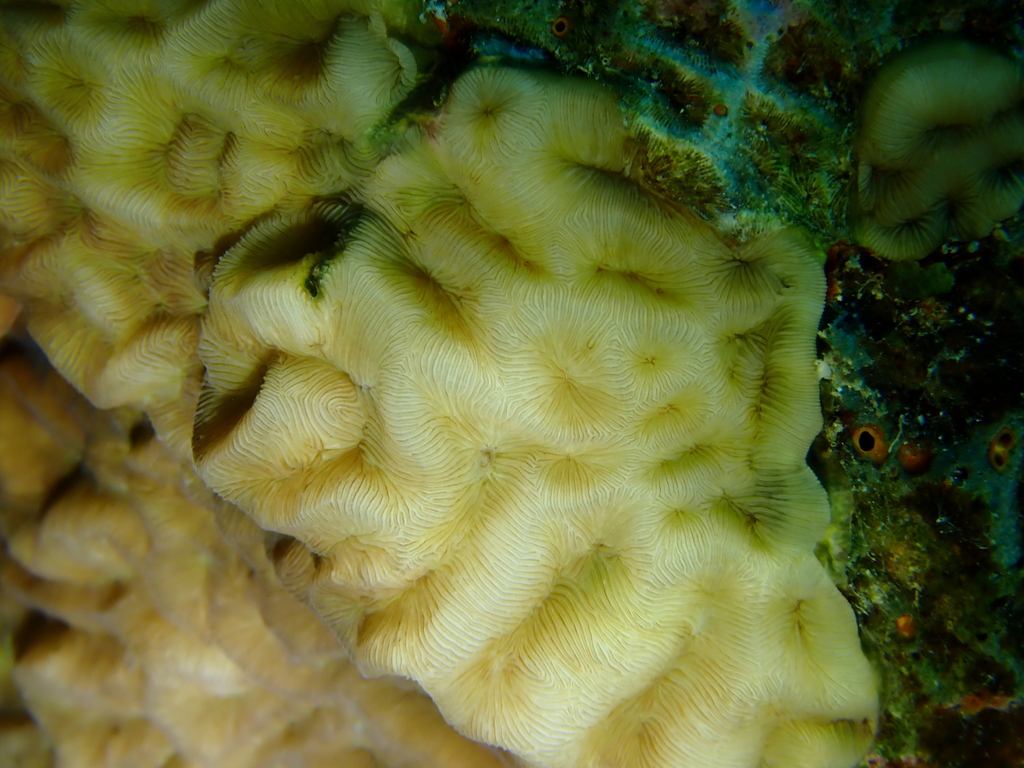 representative
Jason Fox Sun God Leptoseris →
A warm, fiery Lepto blending golds, oranges and yellows across an encrusting plate, marketed as a particularly bright and sought-after JF release. Glistens almost metallically under actinic lighting.
Tip: Give it low-to-moderate light (~50-120 PAR) and moderate flow; a blue-heavy spectrum brings out the gold/orange tones rather than letting it brown out. Avoid the highest-PAR zones.
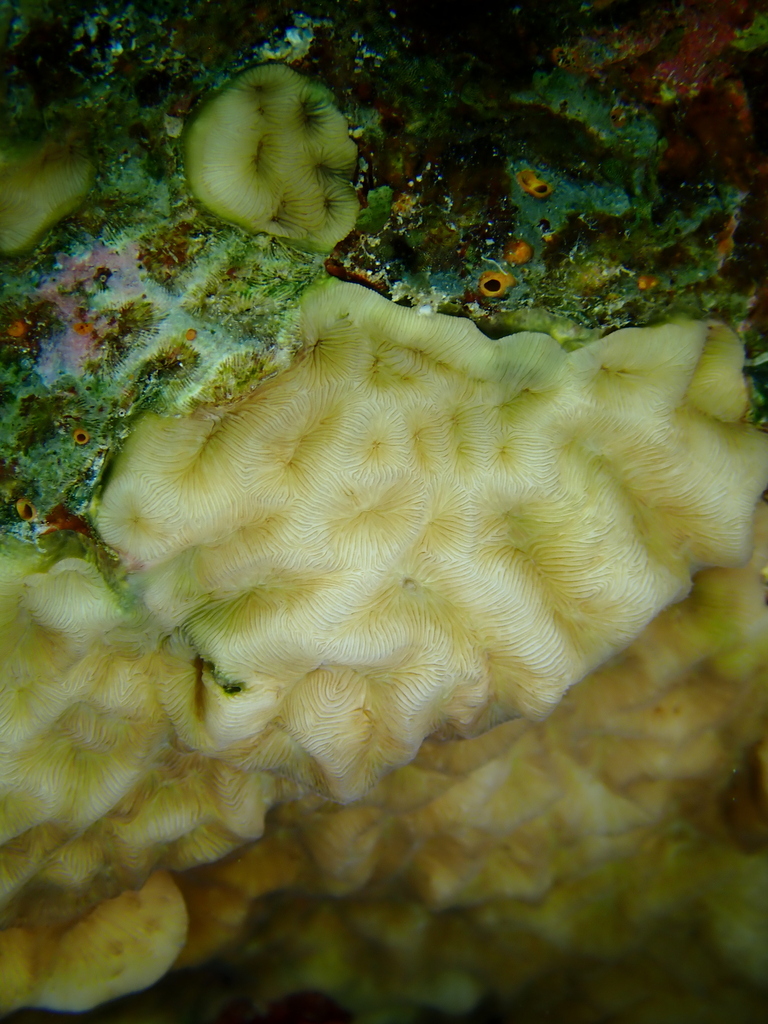 representative
Jason Fox Lethal Lepto →
An intensely saturated orange Leptoseris with green accents, sometimes sold as "Orange Lethal," prized for its punchy fiery base color. A bold, simple-but-striking morph.
Tip: Prefers low-to-medium light and medium flow; keep it off the highest-PAR zones so the deep orange stays saturated instead of bleaching lighter.
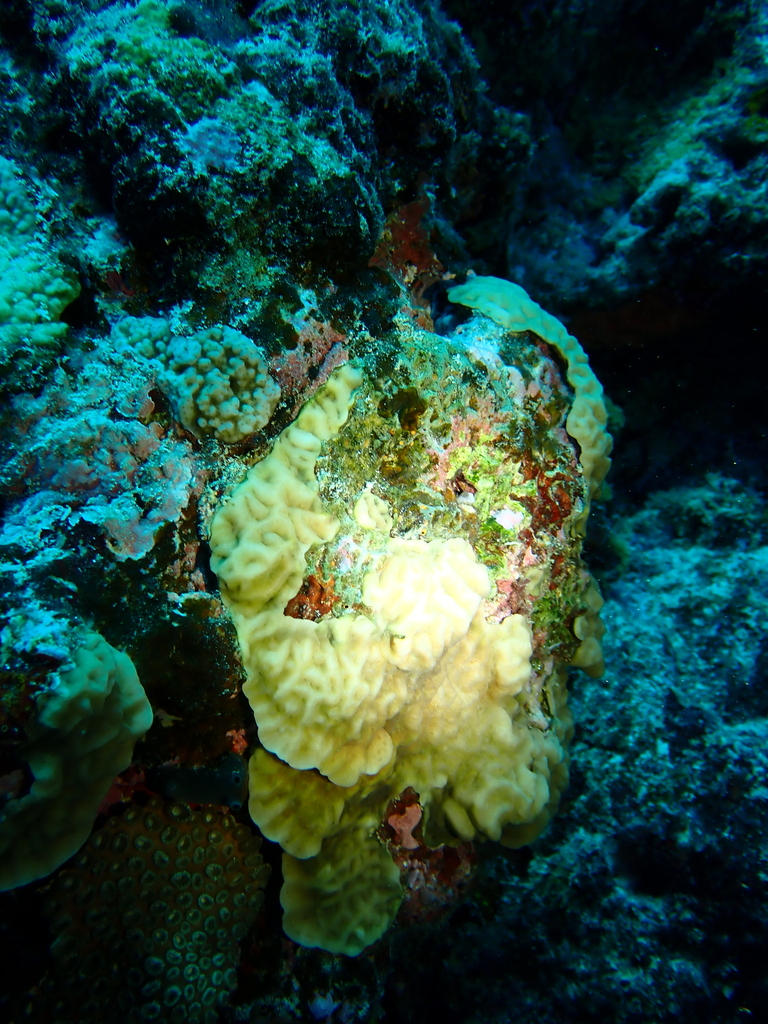 representative
JF Klepto Lepto →
A multicolor Jason Fox Lepto, commonly described with a pinkish-purple to red base, creamy pink swirls, white eyes and a yellow rim. A flashy designer encruster named with a play on the JF "lepto" theme.
Tip: Low-to-medium placement under low-to-moderate light and gentle-to-medium flow; like other Leptos it spreads as a thin sheet, so leave open rock beside it.
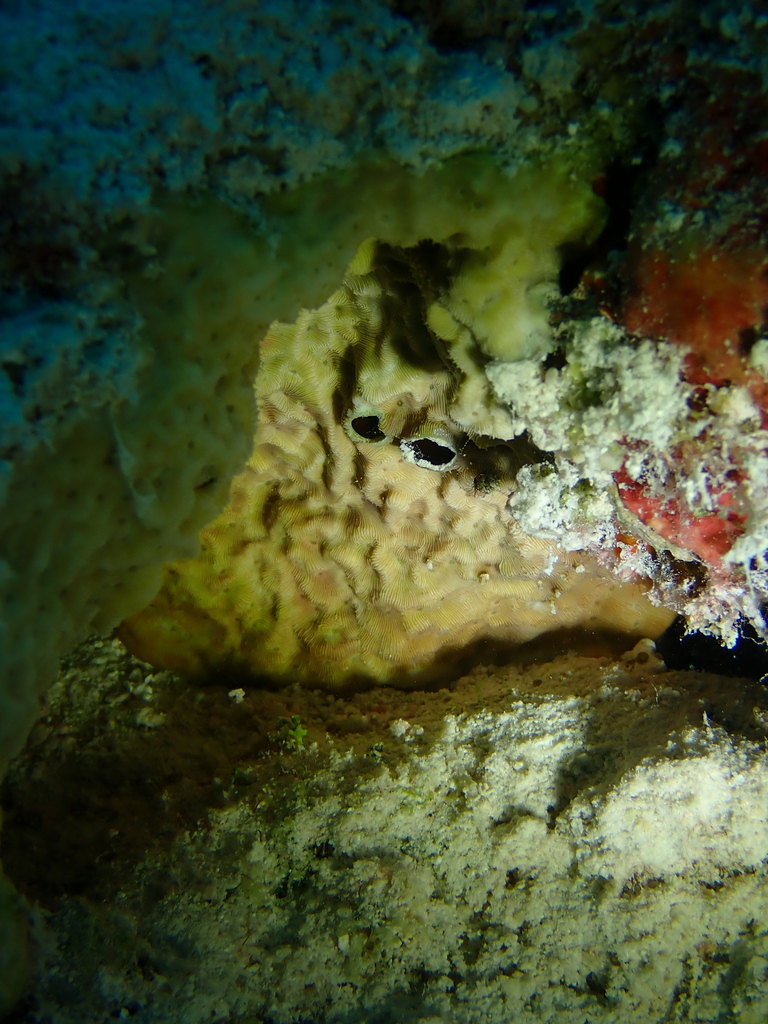 representative
WWC Pink Flamingo Leptoseris →
A clean, vivid bright-pink Leptoseris (often ringed by a lime-green growth edge), making it one of the most distinctive color morphs of the genus. Slow-growing and highly sought after.
Tip: Keep light low-to-moderate and stable (~50-150 PAR); pink Leptos hold color best out of the brightest light, with gentle flow to keep detritus off the plate.
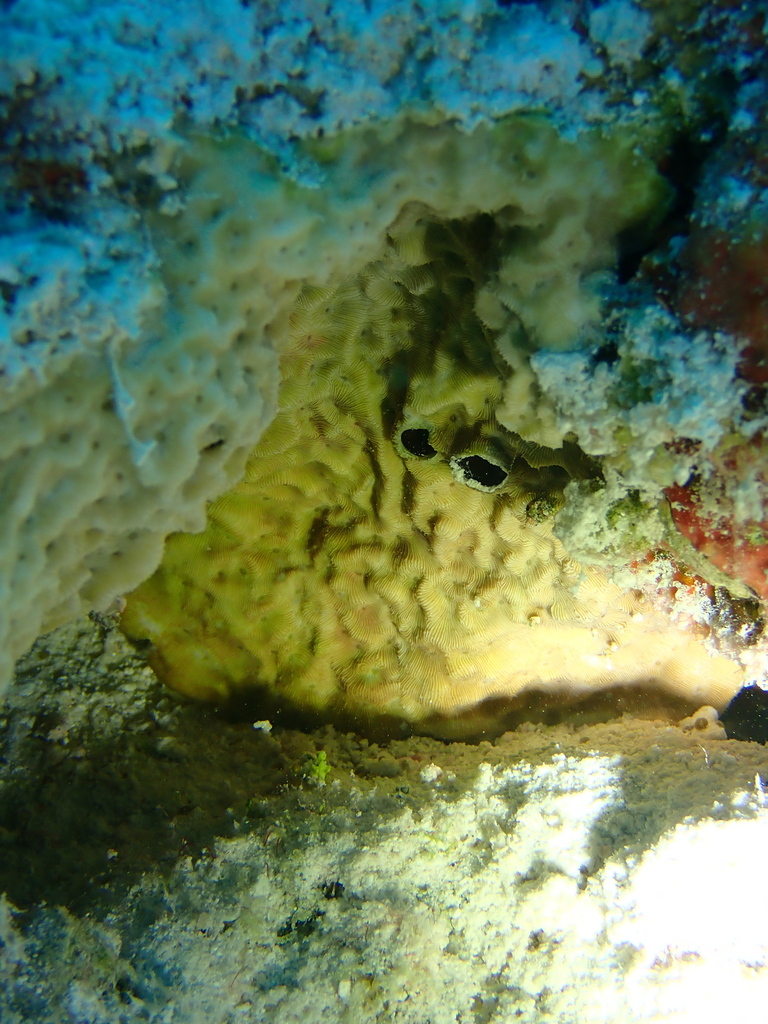 representative
WWC Incredible Hulk Leptoseris →
A bold neon-green encrusting Leptoseris whose color ripples across the plate and glows almost radioactive under blue light. A staple "green" Lepto in the hobby and a fast grower.
Tip: Excellent for shaded or lower-light areas (~50-120 PAR); keep nitrate ~5-15 ppm and phosphate ~0.03-0.1 ppm so the neon green stays bright instead of browning. Moderate flow.
 representative
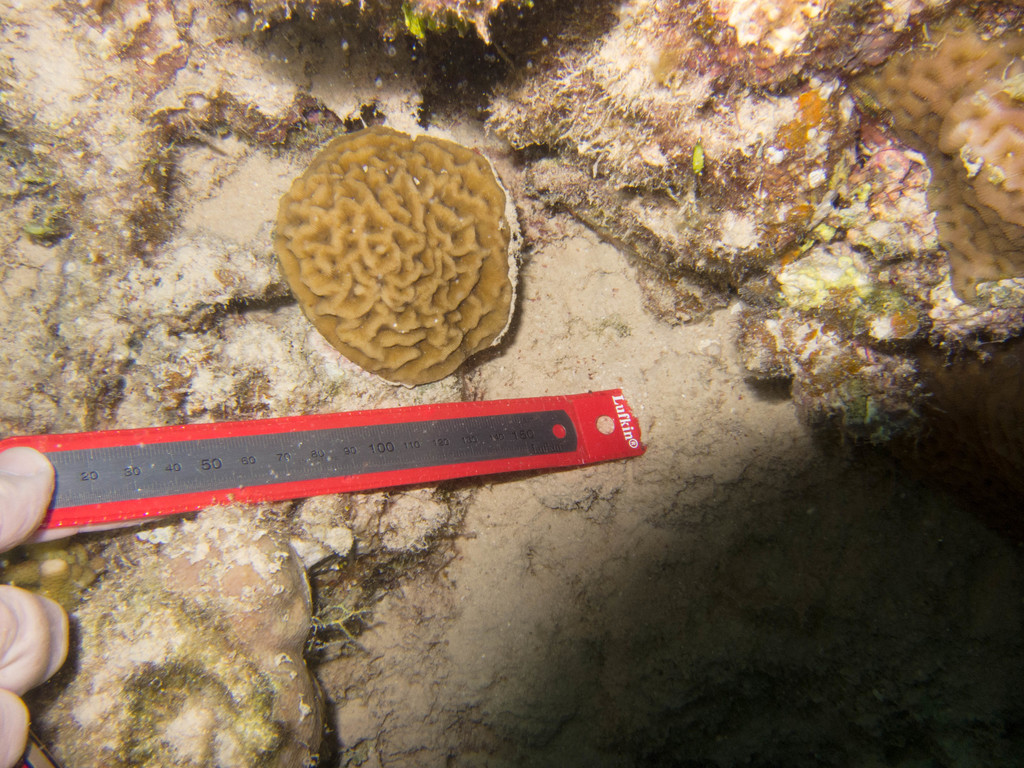
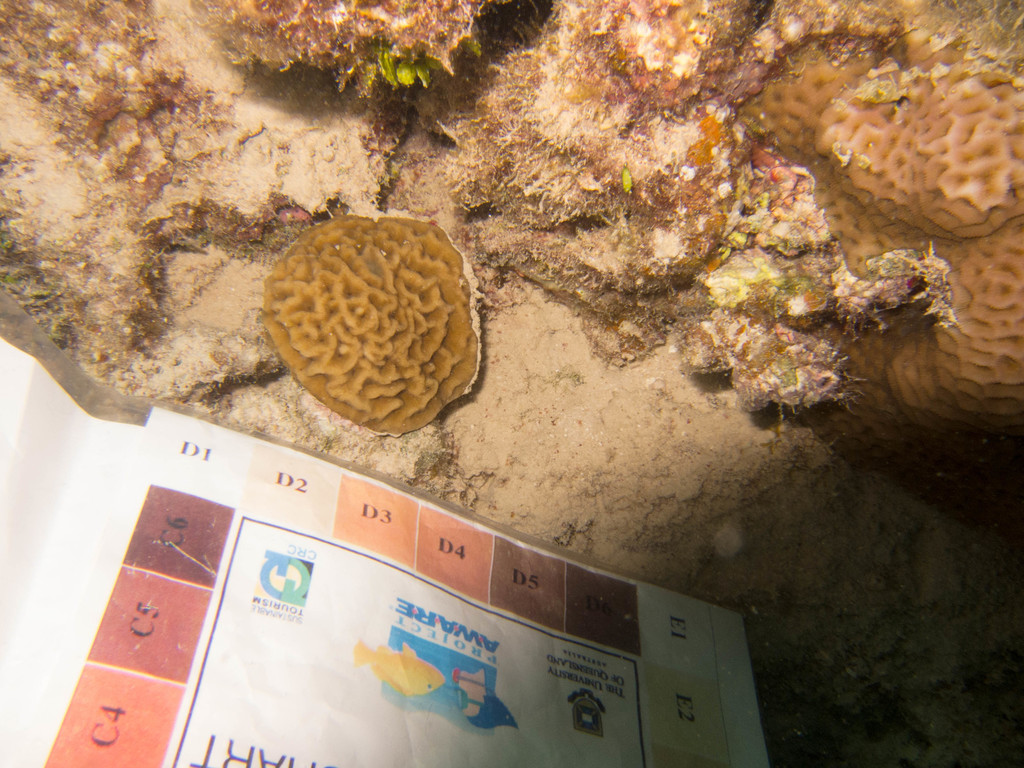
WWC Tan Lady Leptoseris →
A subtler Leptoseris with tan/beige tissue and contrasting eyes, a softer-toned morph among the otherwise loud Leptos. Understated but distinctive, true to its name.
Tip: Medium light and gentle-to-medium flow low in the tank; it encrusts steadily and does well in shaded niches. Listed by WWC as an easy-care coral.
 representative
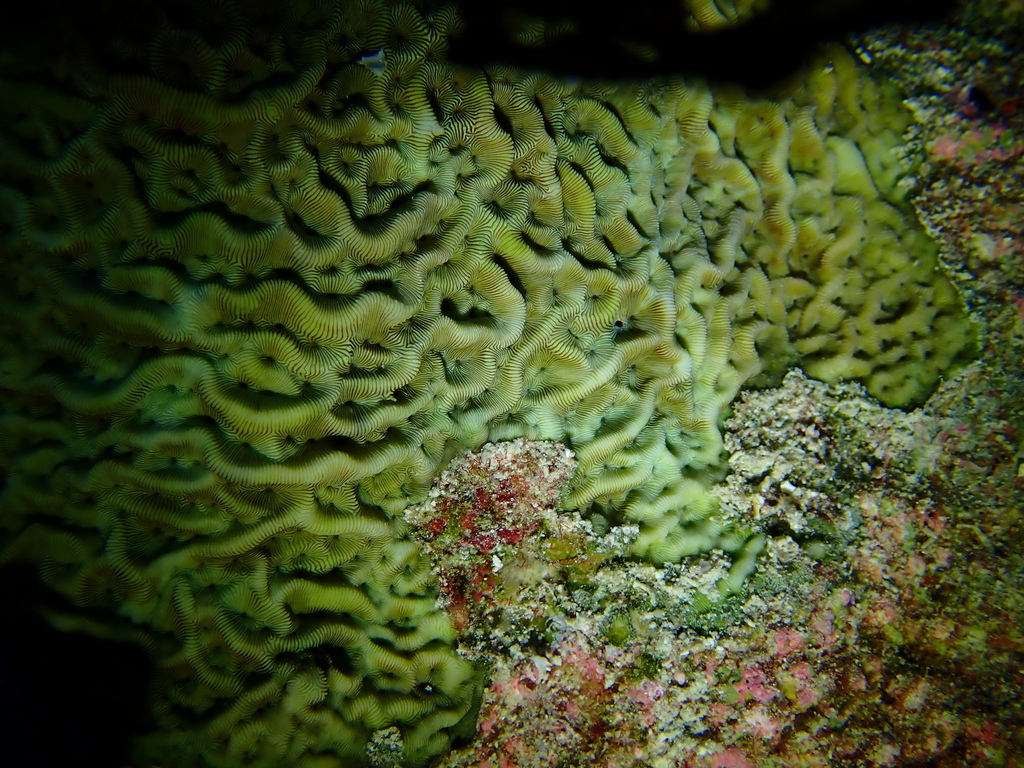
WWC Toxic Waste Leptoseris →
An acid-bright green/yellow Leptoseris named for its toxic, glowing coloration that fluoresces hard under actinics. A high-contrast neon encruster.
Tip: Low-to-mid placement under blue-heavy light (~50-120 PAR) with moderate flow; avoid constant laminar flow, which can damage the tissue. Stable, slightly elevated nutrients help keep the glow.
 representative
WWC Flubber Leptoseris →
A glowing green Leptoseris named after the cartoon goo, with a bright rubbery-green encrusting plate. A flashy WWC green morph.
Tip: Thrives in lower-light shaded zones (~50-120 PAR); moderate flow and a blue spectrum keep the green vivid.
 representative
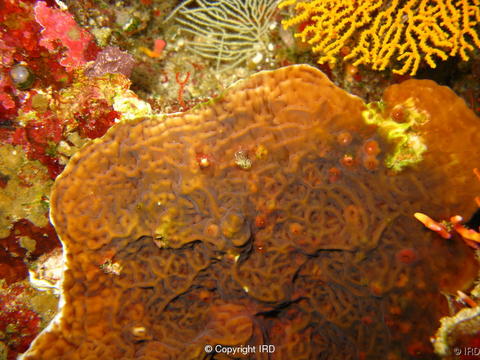
WWC Firebird Leptoseris →
A fiery red-orange Leptoseris with contrasting eyes, named for its blazing warm coloration. One of WWC's warmer-toned Lepto morphs.
Tip: Keep it off the highest light so the red/orange stays saturated (~50-120 PAR); moderate flow, low-to-mid placement.
 representative
WWC BBQ Chip Leptoseris →
A warm reddish-brown to orange encrusting Leptoseris named for its char-grilled "BBQ chip" tone. One of the most affordable, widely available Leptos and an easy entry into the genus.
Tip: Low-to-moderate light and moderate flow; like all Leptos it encrusts outward over rock, so leave open space alongside it. Keep flow strong enough to clear detritus off the plate.
 representative
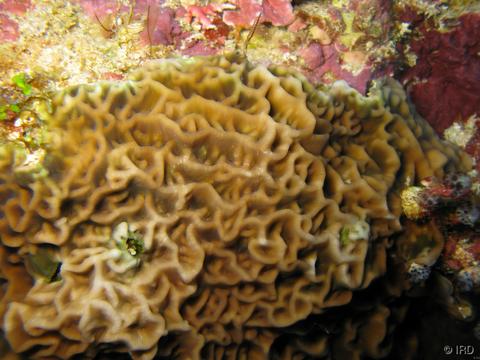
TSA Goldschlager Leptoseris →
A glittering gold Leptoseris named for the cinnamon-gold liqueur, with shimmering metallic-gold tissue. A flashy designer gold morph.
Tip: Low-to-moderate light (~50-100 PAR) brings out the gold flecking; place low-to-mid with gentle-moderate flow.
 representative
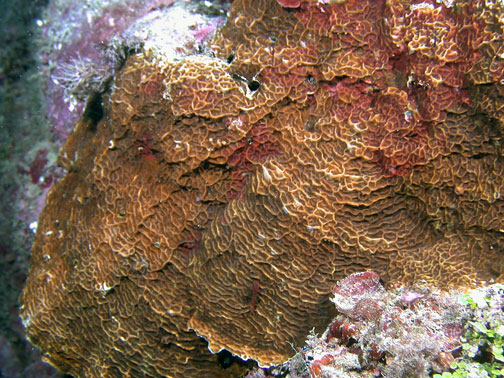
TSA Treasure Island Leptoseris →
A multicolor Leptoseris mixing gold, orange and green across the plate, named to evoke a chest of treasure. A varied, high-contrast TSA morph.
Tip: Low-to-moderate light and gentle-to-moderate flow, low-to-mid in the tank; encrusts outward so leave bare rock alongside it.
 representative
TSA High Beam Leptoseris →
A brilliant glowing Leptoseris named for its headlight-bright eyes/tissue that light up hard under blue. A high-fluorescence TSA morph.
Tip: Blue-heavy light and moderate flow maximize the glow; low-to-mid placement and ~50-100 PAR suit it.
representativeTSA Northern Lights Leptoseris →
A multicolor Leptoseris blending greens, golds and cooler tones reminiscent of the aurora. A varied, eye-catching TSA designer morph.
Tip: Low-to-moderate light and gentle-to-moderate flow, lower placement; stable nutrients keep the multiple colors from washing toward brown.
representativeTSA Lava Field Leptoseris →
A fiery orange-red Leptoseris evoking flowing lava, with warm molten tones across the encrusting plate. A warm-toned TSA morph.
Tip: Keep light low-to-moderate so the red/orange stays deep; low-to-mid placement with gentle-moderate flow.
representative24K Leptoseris →
An intense bright golden-yellow Leptoseris, often with purple/contrasting eyes, that sparkles almost metallically like its namesake bullion. One of the classic and most prized gold Lepto morphs.
Tip: Moderate, stable light (~75-125 PAR) maintains the gold (too much light can wash it pale); low-to-mid placement with gentle flow.
representativeBlood Orange Leptoseris →
A bright golden-orange Leptoseris with pink-to-purple coloration running along the raised ridges, creating strong contrast. A distinctive warm-plus-pink morph.
Tip: Moderate light (~75-125 PAR) keeps the orange base and pink ridges saturated; place low-to-mid with gentle-moderate flow.
representativeLava Flow Leptoseris →
A very unique Leptoseris with a pink-blue base and multi-colored eyes, unlike the typical orange or green Leptos. As it grows and the eyes split, each shifts in color. A cooler-toned, multicolor morph.
Tip: Moderate, stable light (~75-125 PAR) to preserve the pink-blue base; low-to-mid placement with gentle flow.
 representative
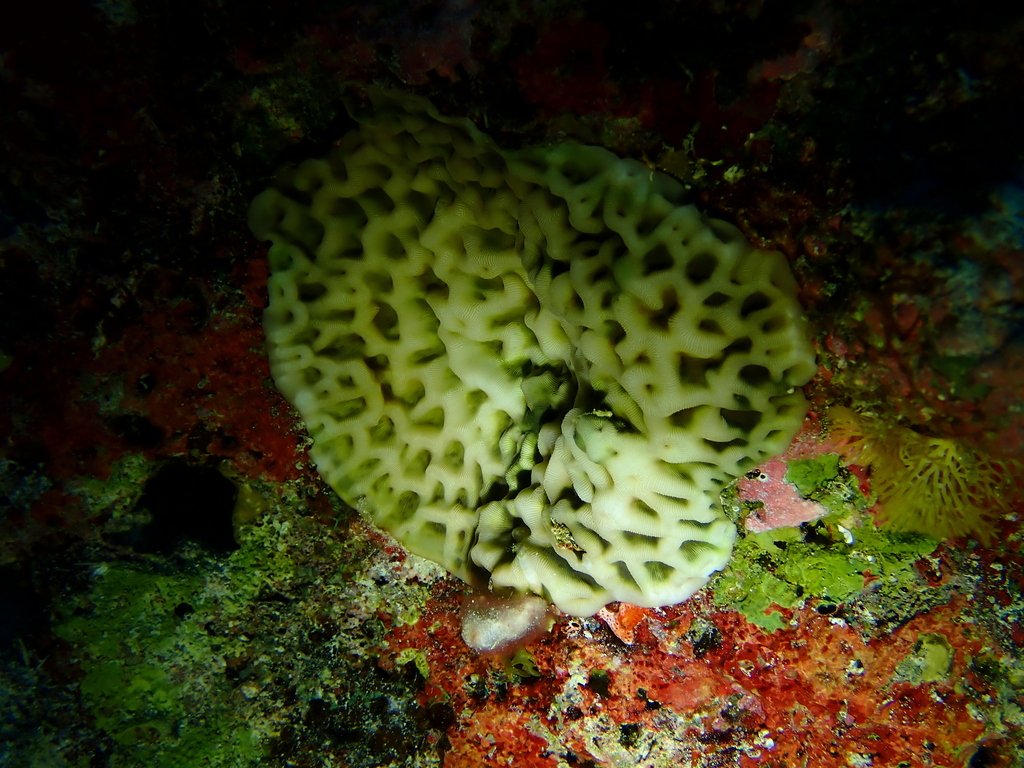
Jack-O-Lantern / designer Lepto
Named line-bred/aquacultured selections (e.g. 'Jack-O-Lantern') chosen for high-contrast orange-and-green coloration and propagated as frags.
representativeECC Shattered Light Leptoseris →
A vibrant neon green/yellow Leptoseris that shimmers and glitters under light with a unique shattered-glitter pattern, marketed as an easy color-bomb for low-light areas. A bright, fast-encrusting aquacultured morph.
Tip: Ideal for shaded, lower-light zones (~75-150 PAR); moderate flow and a blue spectrum maximize the shimmer and neon tones. Low-maintenance.
Habitat & enclosure
Substrate
Equipment & setup
Diet
Behavior & temperament
Health
Tips, DIY & hacks
Sources
- Leptoseris — WoRMS (World Register of Marine Species) (reference)
- Leptoseris Plating SPS Care — Reef2Reef (care guide)
- Wikipedia: Leptoseris (wiki)