Pocillopora (cauliflower coral)
Pocillopora damicornis · also called Cauliflower coral, Brush coral, Lace coral, Poci

Pocillopora is a hardy, fast-growing small-polyp stony coral forming dense bushy 'cauliflower' colonies covered in wart-like verrucae, in pink, green and brown. It is one of the easiest and most forgiving SPS corals, frequently aquacultured, and famous for spontaneously sprouting baby colonies all over a reef tank.
🩺 Need expert help with your pocillopora (cauliflower coral)?
Connect with a specialist near you or ask a licensed vet — never substitute online guidance for hands-on care in an emergency.
Quick facts
| Size | Bushy, finely branched colony with verrucae (wart-like bumps); frags start ~2-5 cm and colonies reach 10-30 cm, forming dense 'cauliflower' clumps. |
| Lifespan | 5–50 years |
| Social needs | solo |
| Native region | Indo-Pacific (circumtropical) |
| Origin | Old World |
| Climate | 🌴 Tropical |
| Water type | 🌊 Marine |
| Family | Pocilloporidae |
| Genus | Pocillopora |
Part of the SPS Corals
Small-polyp stony corals — fast-growing branching corals demanding strong light & flow.
Habitat & space requirements
From the minimum an animal needs to be kept humanely, up to the ideal setup. Bigger is almost always better — minimums are floors, not targets.
Life & growth stages
How this animal changes through its life — each stage often has its own care, diet and space needs.
Color & pattern variants
Natural variants occur in the wild; selectively bred (man-made) variants were developed in captivity.
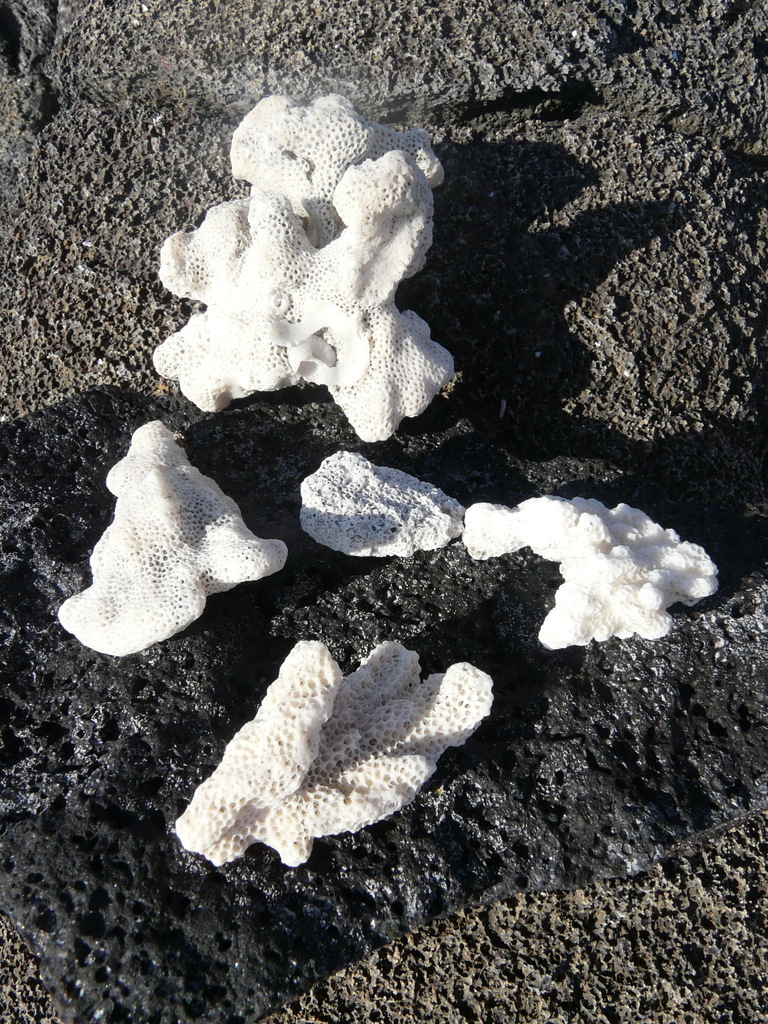 representative
Pink / Purple Pocillopora
The common 'cauliflower' colour form with pink to purple verrucose branches — the most frequently traded and aquacultured morph.
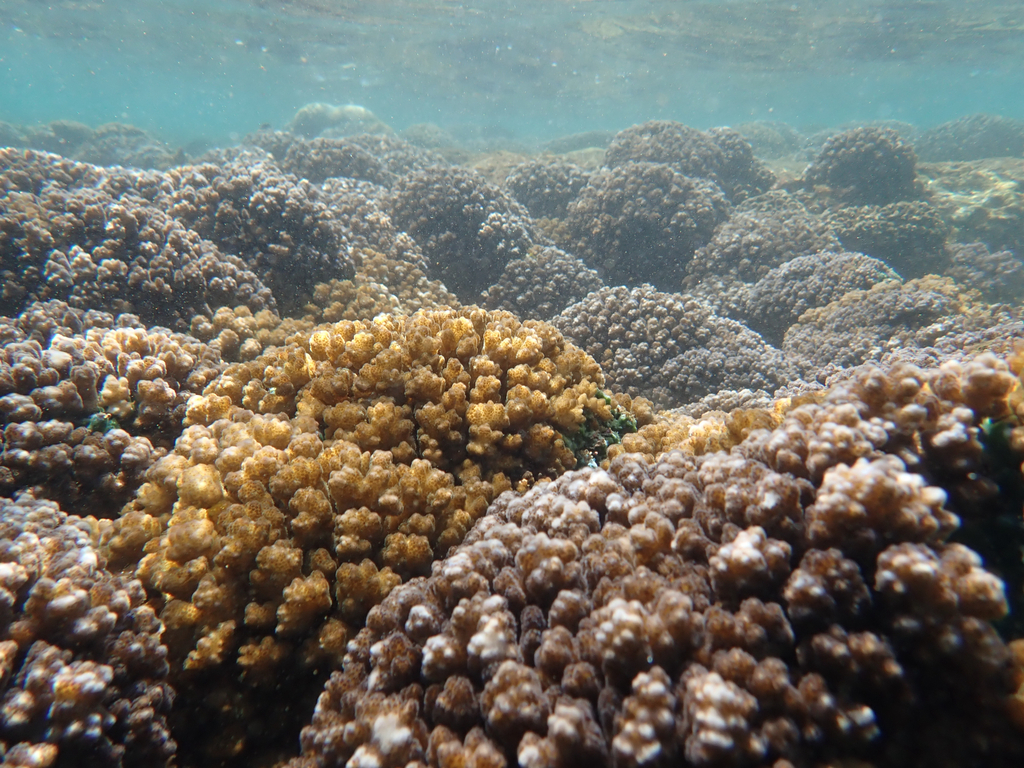 representative
Green Pocillopora
Green to neon-green colonies that fluoresce under blue light, popular for contrast against pink corals.
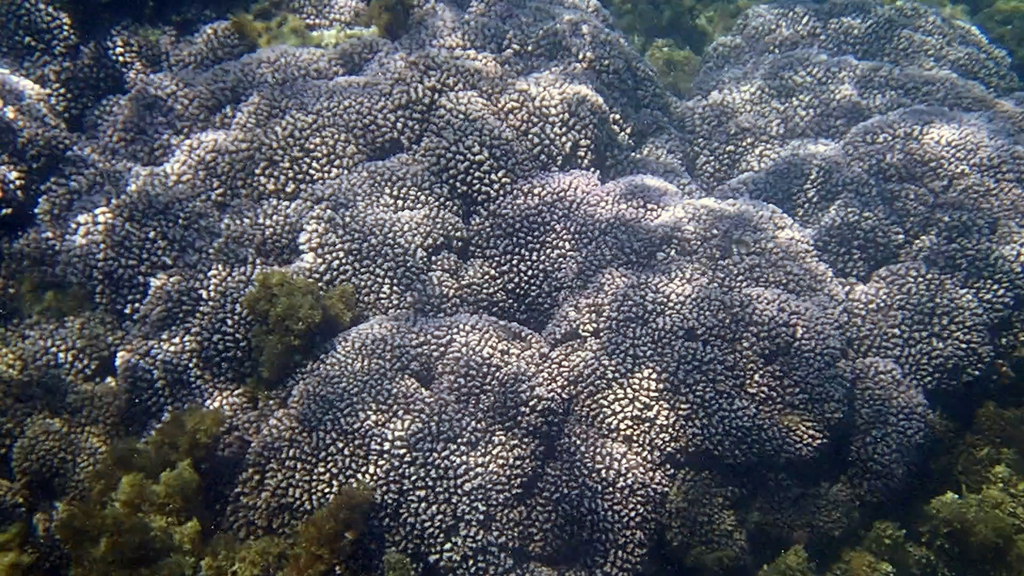 representative
Bird's Nest (Seriatopora)
A closely related Pocilloporid with much finer, needle-thin branches sold alongside Pocillopora under the 'bird's nest' name in pink, green and neon.
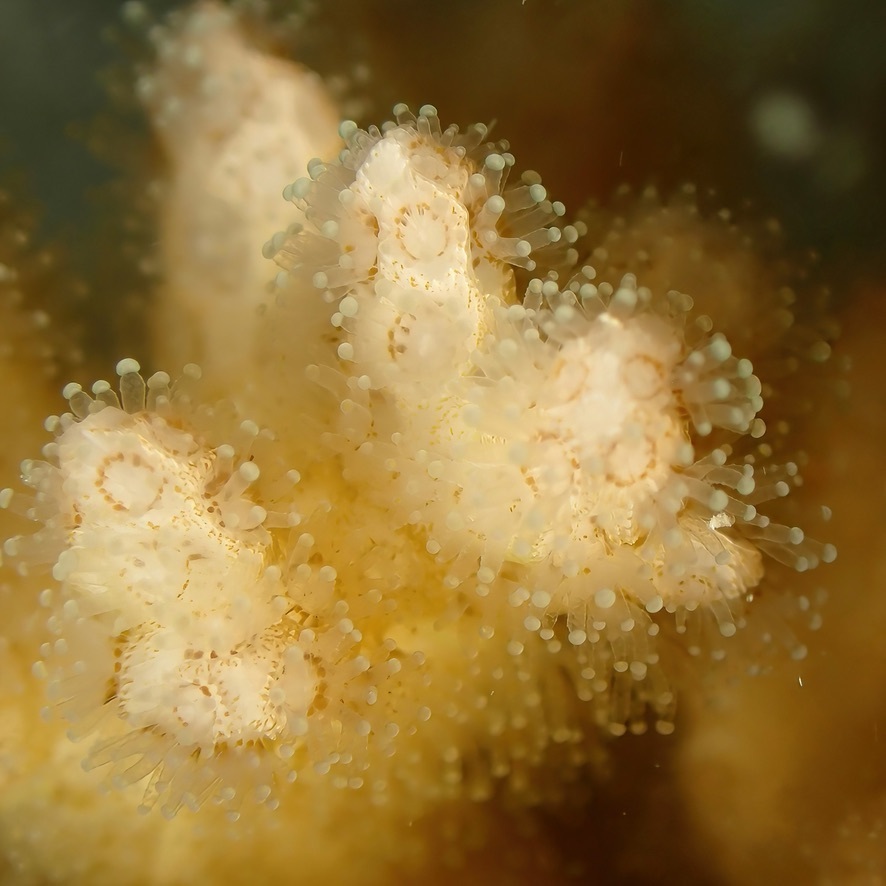 representative
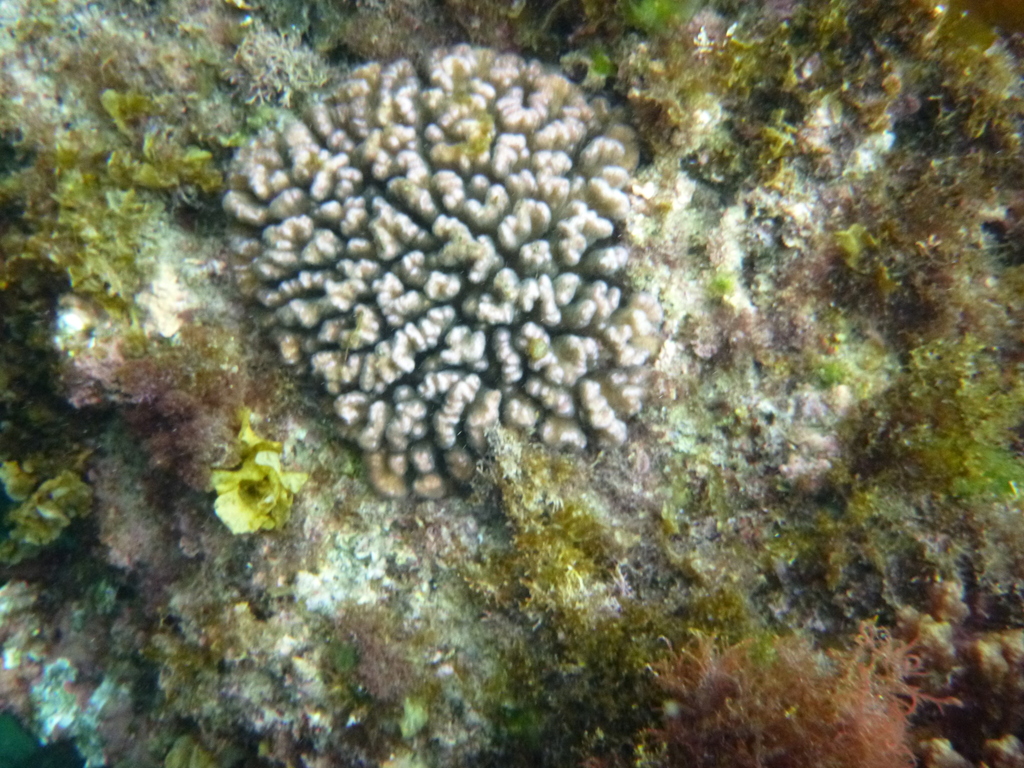
Neon Green Pocillopora →
A bright, fluorescent neon-green colony, typically a green body with green polyps that pops under blue light. The classic 'green poci' of the hobby.
Tip: Moderate-to-high flow and bright light hold the neon color; note this fast grower is prone to polyp bailout, so expect stray colonies on nearby rock.
 representative
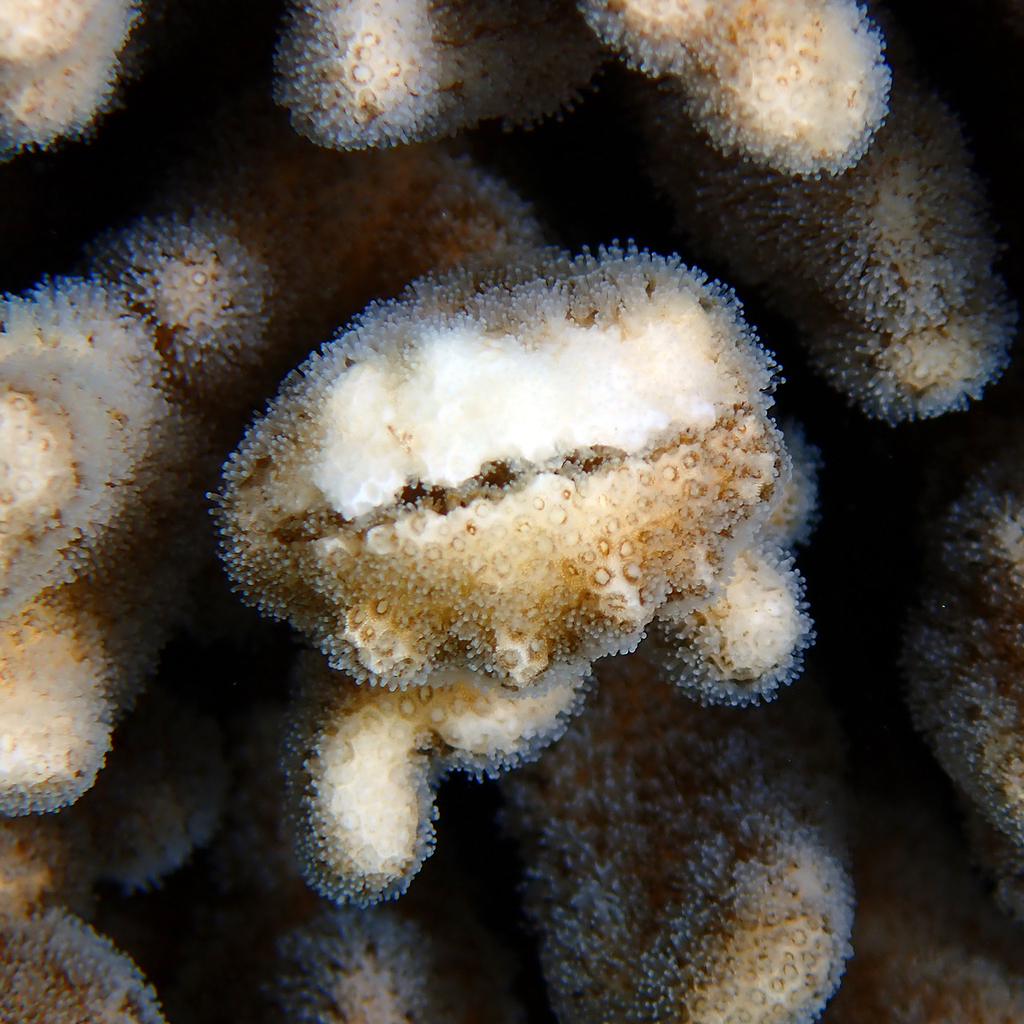
Purple Pocillopora →
A deep purple to lavender colony, sometimes with green polyps, recalling the classic purple Pocillopora look long present in the hobby. Sold simply as 'Purple Pocillopora.'
Tip: Give brighter light and moderate-to-strong flow; the purple pigment deepens with good light, while too little flow lets detritus collect in the dense branches.
 representative
Green Tip Purple Pocillopora →
A purple-bodied Pocillopora with contrasting green-tipped branches and polyps, a two-tone variant of the purple form. The green tips fluoresce under actinic light.
Tip: Bright light brings out the green tips and keeps the purple body saturated; pair with moderate-to-strong flow through the branch structure.
 representative
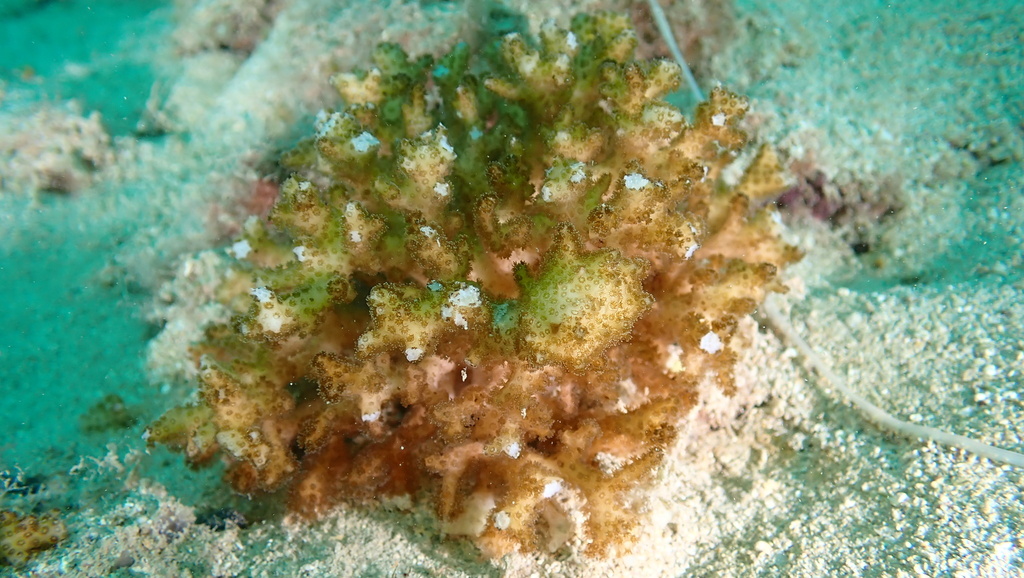
Pink Cauliflower Pocillopora →
A soft pink, densely branched 'cauliflower' Pocillopora, the wild-collected pink form that gives the coral its common name. Compact, rounded growth with a fuzzy look when polyps extend.
Tip: Wants high light and strong water movement once established; it can be tricky to acclimate at first but becomes quite hardy afterward. Keep flow strong to keep the tight branches detritus-free.
 representative
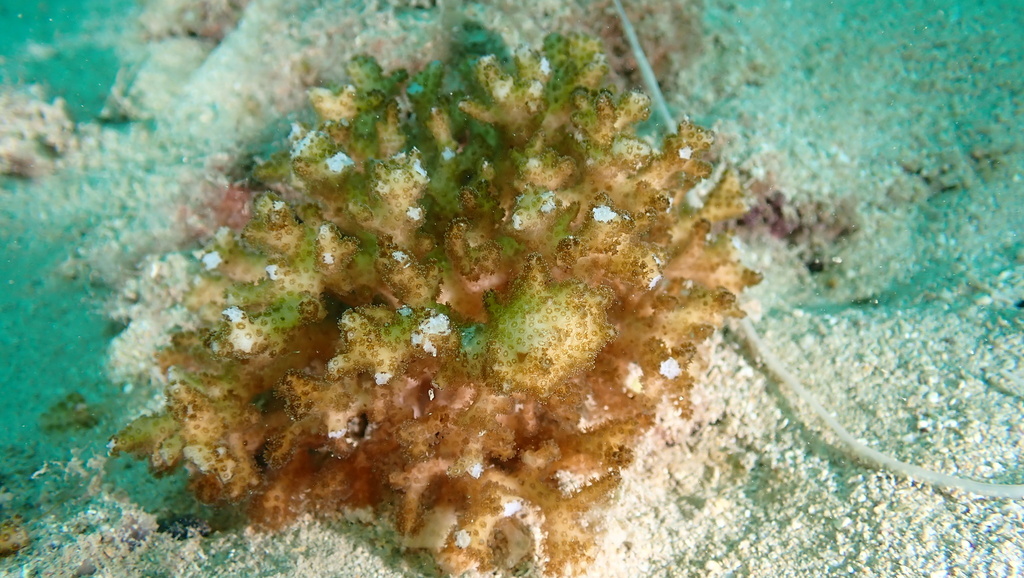
WWC Rainbow Pocillopora →
A lemon-lime to yellow-green base with contrasting blue-to-purple branch tips and polyps, giving it a multi-tone 'rainbow' look uncommon for this genus. One of the more colorful named Pocillopora pieces in the trade.
Tip: Medium light (roughly PAR 150-250) and medium flow suit it best; give it room to spread, as it grows fast and can seed nearby rock via polyp bailout.
 representative
WWC Fallout Pocillopora →
A WWC-branded Pocillopora damicornis with a contrasting body-and-polyp coloration sold as a named line alongside their Rainbow piece. Marketed as a fast, dense branching frag.
Tip: Place in moderate flow and moderate light; it adapts widely but colors best with stable parameters and steady water movement through the branches.
 representative
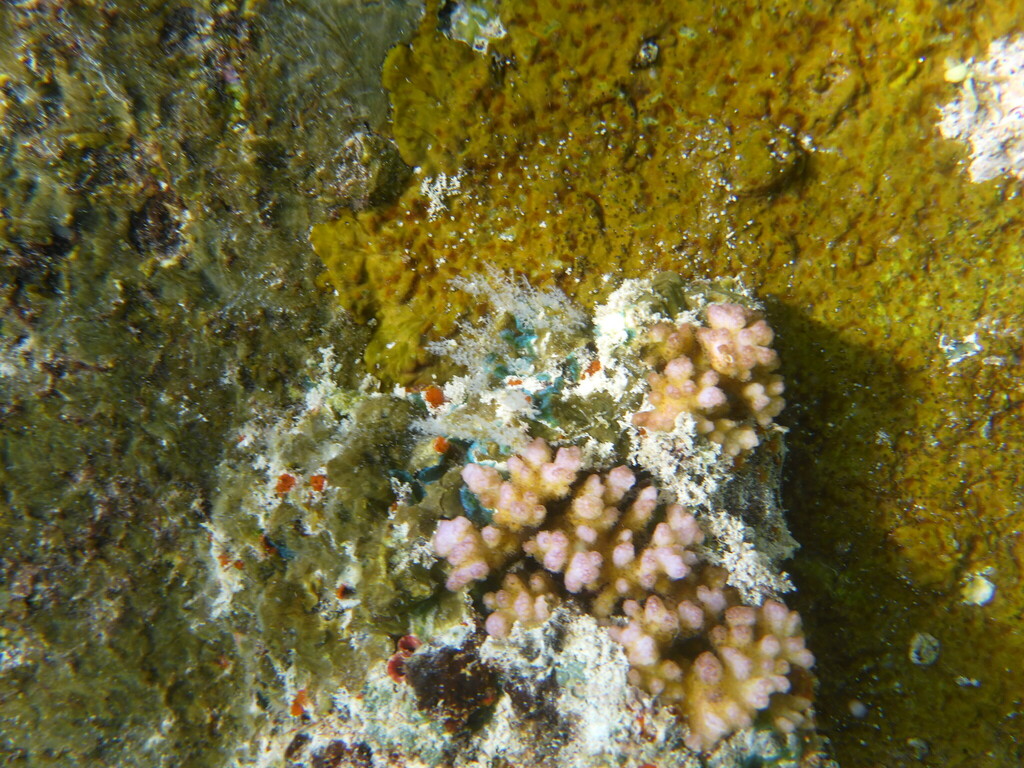
ORA Green Damicornis →
A bright yellowish-green, short-branched strain with very fine green polyps on dense growth. Often called a perfect beginner SPS for its hardiness and speed.
Tip: Tolerates a wide range of placement and lighting as long as it gets moderate light and moderate flow; expect rapid growth and possible polyp bailout seeding new colonies.
 representative
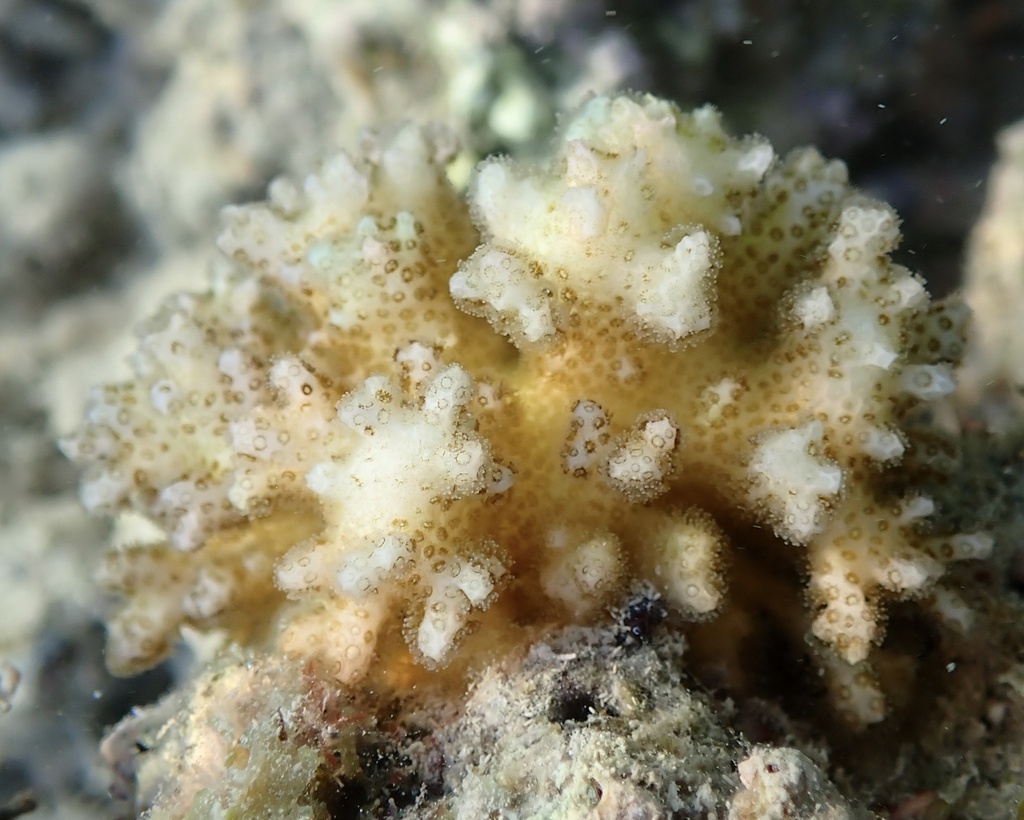
ORA Pink Damicornis →
A dramatically pink Pocillopora damicornis with short, delicate branches forming a compact, rounded colony. Stays smaller than ORA's green or pink-and-green strains.
Tip: Easy across a wide range of light and flow; give moderate flow to keep detritus off the tight branch structure and to preserve the pink coloration.
 representative
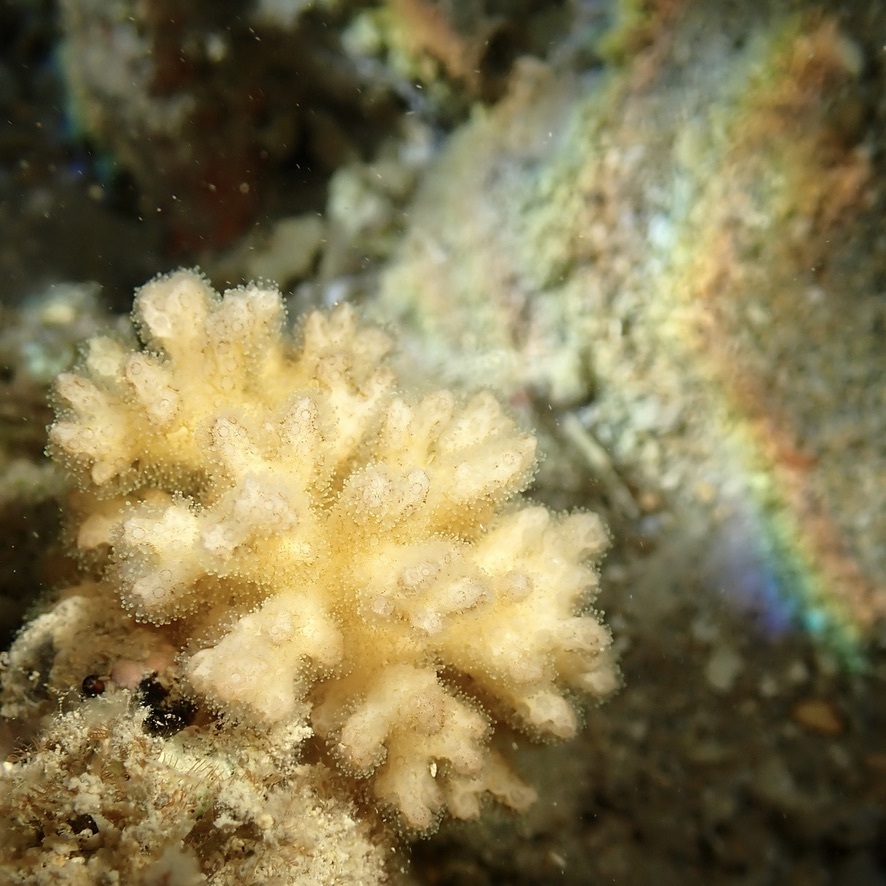
ORA Pink & Green Damicornis →
A thin-branching Pocillopora damicornis with long green polyps and pink branch tips, blending both ORA color lines on one colony. Marketed as extremely hardy.
Tip: Thrives across a wide range of lighting and flow; aim for moderate flow so the long polyps extend and the pink tips stay vivid.
 representative
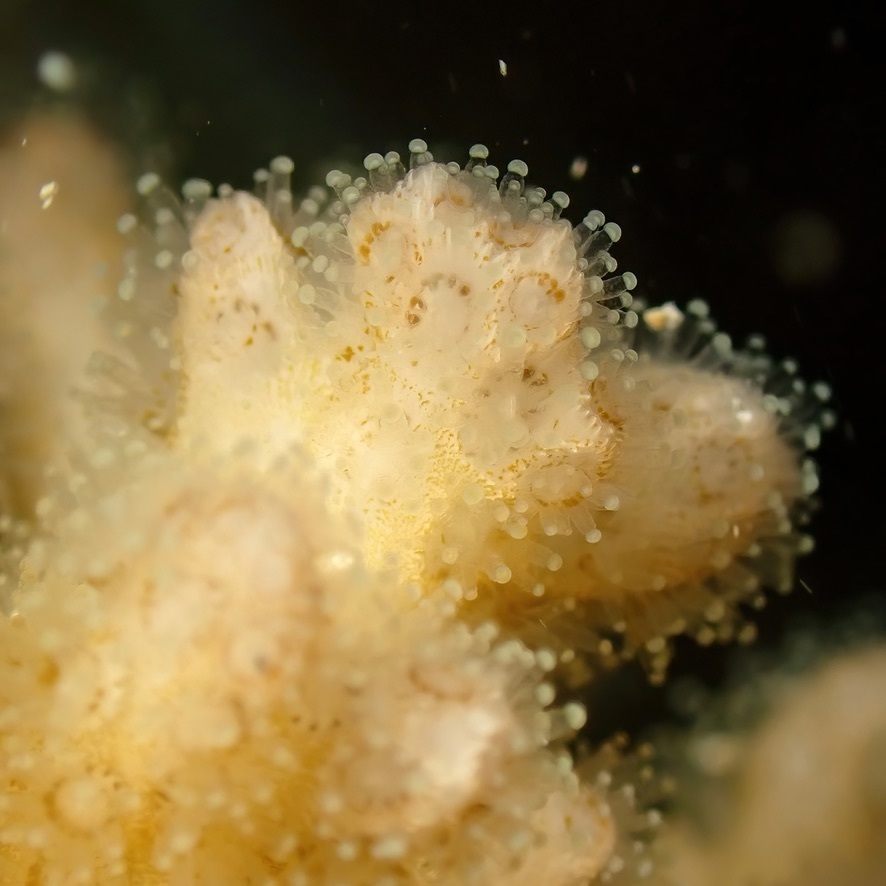
Vivid's Toxic Pocillopora →
A vibrant, saturated green ('toxic') Pocillopora cultivated as a Vivid Aquariums house piece. Brighter and more uniform than a standard green poci.
Tip: Wants moderate-to-high flow and bright light (PAR ~300-450) to hold its toxic-green coloration; benefits from target feeding with planktonic foods.
 representative
Pink Peony Pocillopora →
A pink aquacultured Pocillopora damicornis with full, rounded growth likened to a peony bloom. Branch density shifts with flow, tighter in strong flow and more open in low flow.
Tip: Provide moderate-to-high light and strong flow to hold the form and color; LiveAquaria rates it a moderate-care SPS rather than a true beginner coral.
 representative
Cadmium Pocillopora →
A yellowish-green Pocillopora damicornis sold under the 'Cadmium' trade name. Branch density varies with flow, compact in strong flow and more open in low flow.
Tip: Give moderate-to-high light and strong flow; place mid-to-top in the tank. LiveAquaria rates it a moderate-care SPS that benefits from added calcium, alkalinity and trace elements.