Acan coral
Micromussa lordhowensis · also called Acan lord, Lord coral, Micro lord, Acanthastrea lordhowensis (old name)
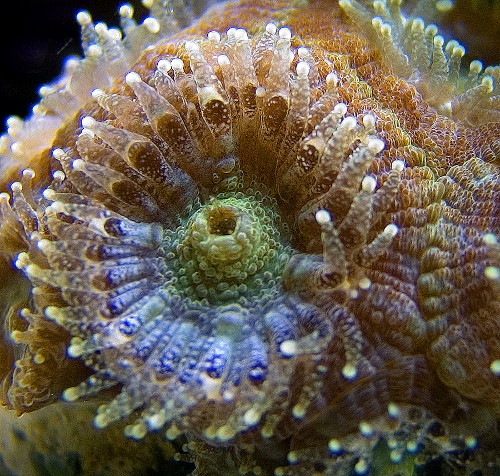
Photo: Haplochromis · CC BY 2.5
Often grouped loosely with 'stony corals', Micromussa lordhowensis (the trade 'acan lord') is actually a large-polyp stony (LPS) coral built from small, fleshy corallites — not a true SPS. It is prized for jaw-dropping multicolour polyps and is one of the most forgiving brightly coloured corals, making it a popular intermediate reef centrepiece.
🩺 Need expert help with your acan coral?
Connect with a specialist near you or ask a licensed vet — never substitute online guidance for hands-on care in an emergency.
Quick facts
| Size | Encrusting colony of fleshy polyps, each corallite ~0.7-1.5 cm across; colonies commonly grow as frags of a few polyps up to plates 15+ cm wide. |
| Lifespan | 5–50 years |
| Social needs | solo |
| Native region | Indo-Pacific |
| Origin | Old World |
| Climate | 🌴 Tropical |
| Water type | 🌊 Marine |
| Family | Lobophylliidae |
| Genus | Micromussa |
Part of the SPS Corals
Small-polyp stony corals — fast-growing branching corals demanding strong light & flow.
Habitat & space requirements
From the minimum an animal needs to be kept humanely, up to the ideal setup. Bigger is almost always better — minimums are floors, not targets.
Life & growth stages
How this animal changes through its life — each stage often has its own care, diet and space needs.
Color & pattern variants
Natural variants occur in the wild; selectively bred (man-made) variants were developed in captivity.
 representative
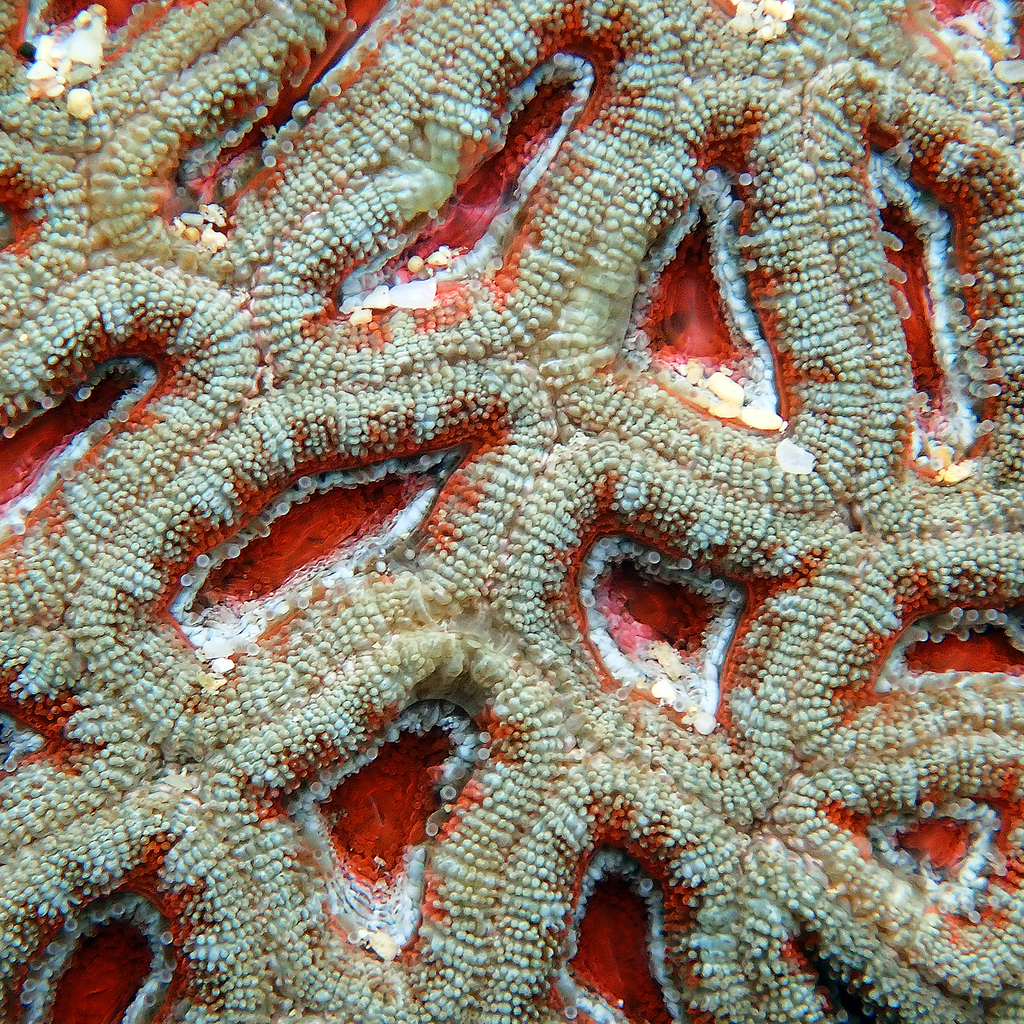
Rainbow Acan →
Multi-colored *Micromussa lordhowensis* with concentric rings of green, red, orange and blue across each polyp. The classic, widely-traded acan look.
Tip: Place low in the tank under modest light (PAR ~50-100) with gentle flow, and spot-feed meaty foods at night when the feeder tentacles emerge — high light bleaches the rainbow rings.
 representative
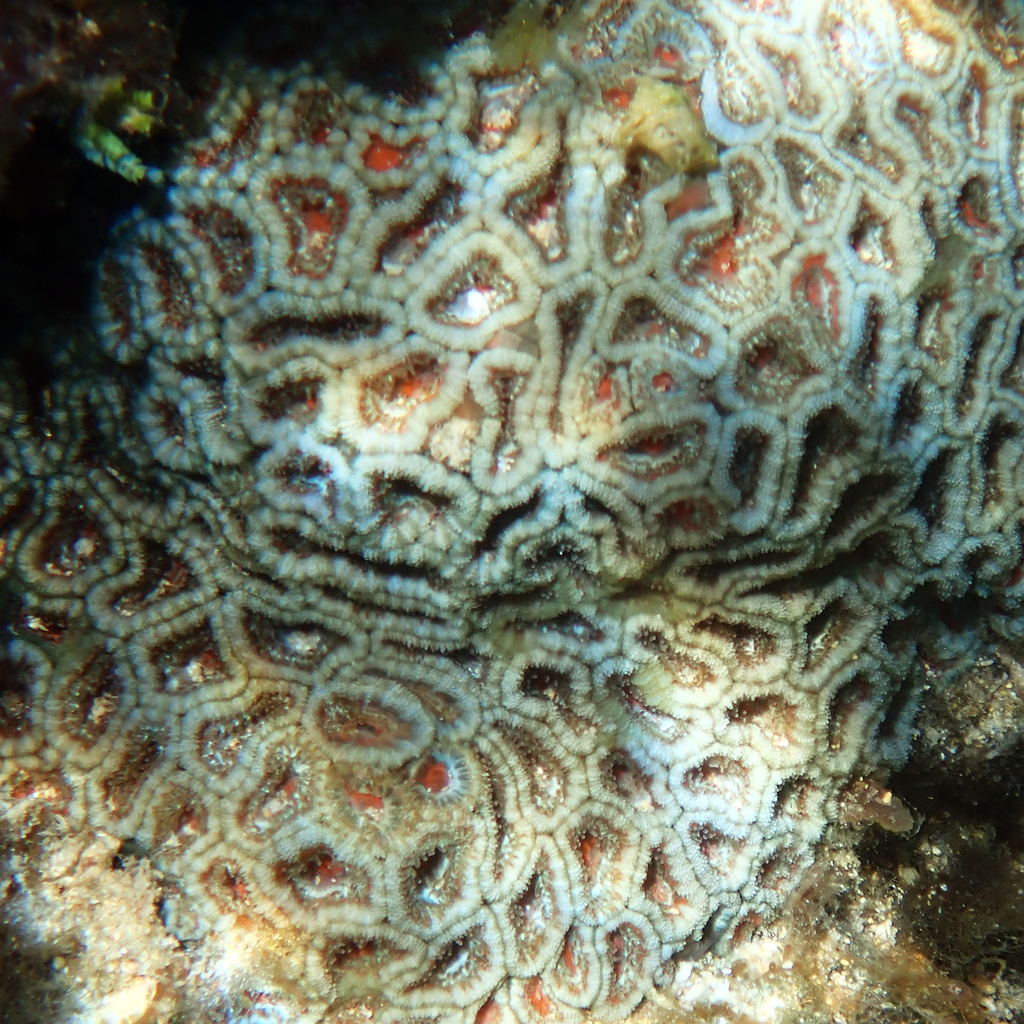
Bowerbanki →
Larger-polyped relatives (Homophyllia/Micromussa) sold alongside acan lords; flatter, fleshier polyps in similar rainbow colours.
 representative
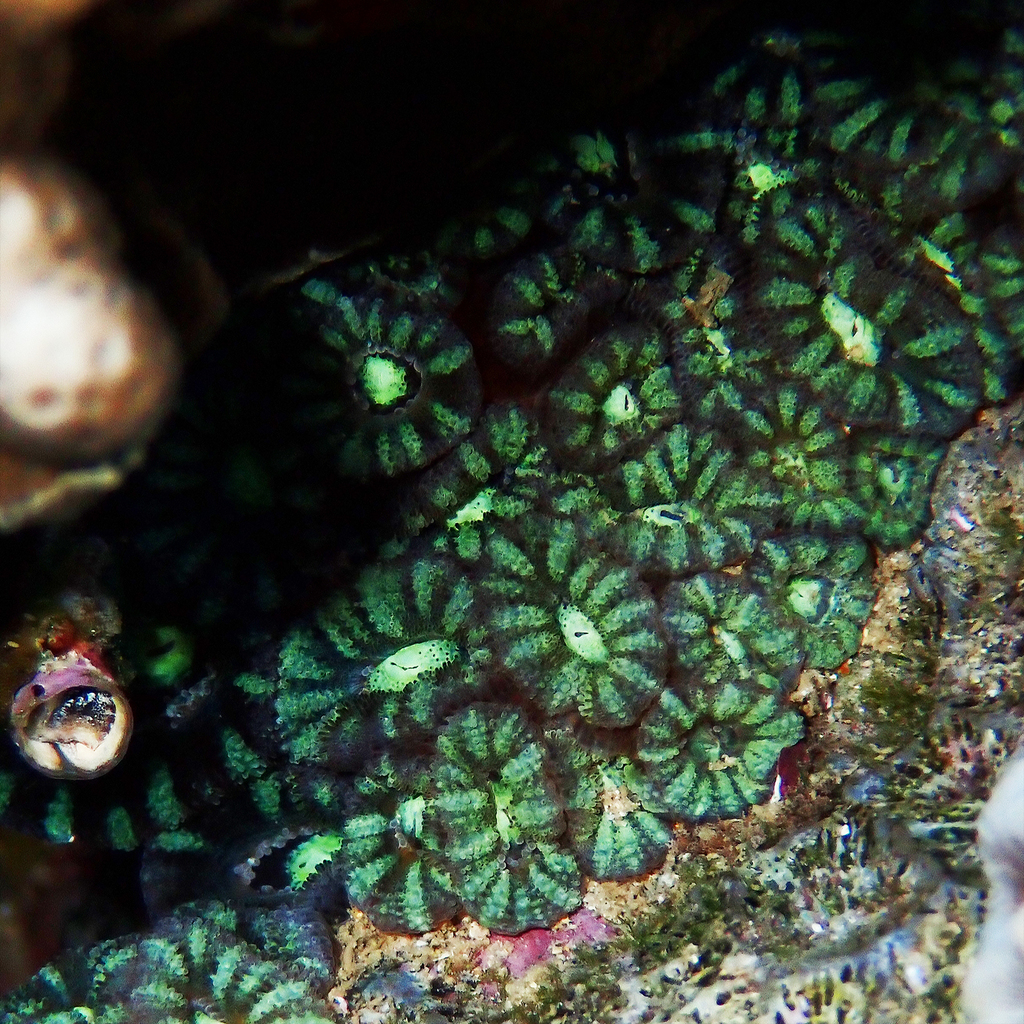
Master / Mastergrade Acan →
Premium-grade colonies with exceptionally bold, high-contrast color rings and bullseye centers. A hobby grading label rather than a distinct strain, applied to the most vivid wild/aquacultured pieces.
Tip: Maintain rock-steady alkalinity (7-9 dKH) and low nitrate — these high-color pieces show STN/tissue recession fastest when parameters swing, so stability matters more than peak lighting.
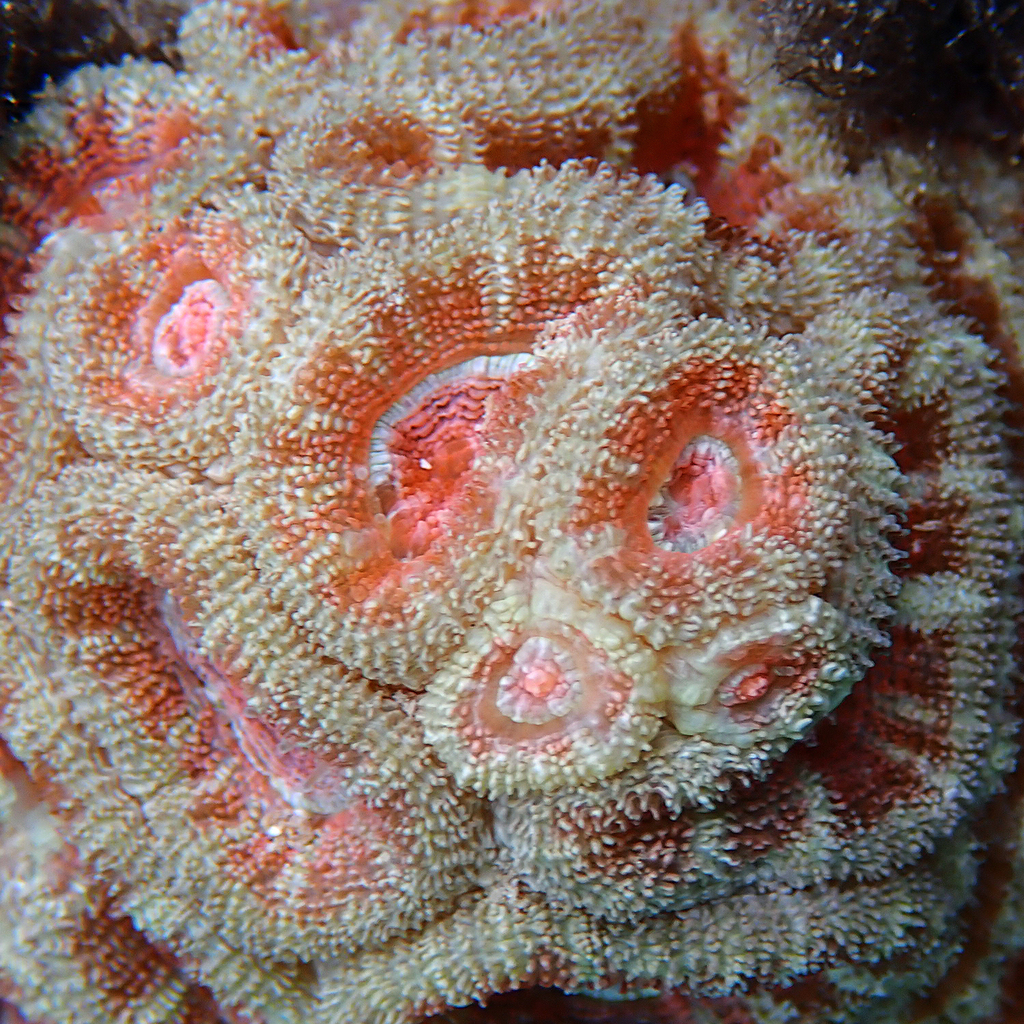 representative
Bullseye Acan →
Acans with a sharply contrasting central mouth color ringed by concentric bands, giving a literal bullseye per polyp. A pattern type highly sought for framragging.
Tip: Frag through the valley between polyps with a band saw, never through a mouth — clean cuts heal fast, and place fresh frags in low flow until tissue re-skins.
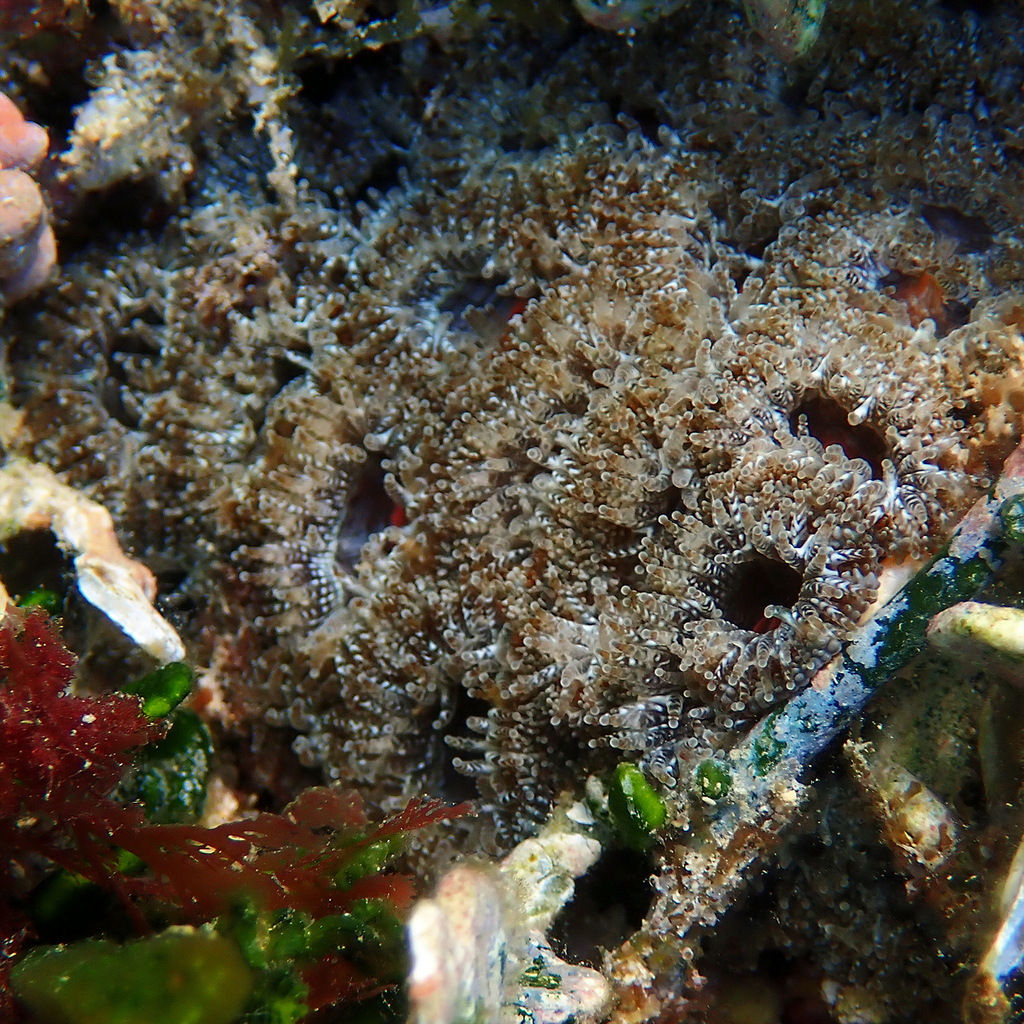 representative
Lordhowensis 'Lord' Acan →
The flat, large-polyp 'Lord' Micromussa that defined the acan craze, with broad fleshy polyps in red/green combos. The trade name predates the genus reclassification from Acanthastrea.
Tip: Give a few inches of space around the colony — Lords inflate dramatically when fed and happy, and will sting neighboring corals with sweeper tentacles if crowded.
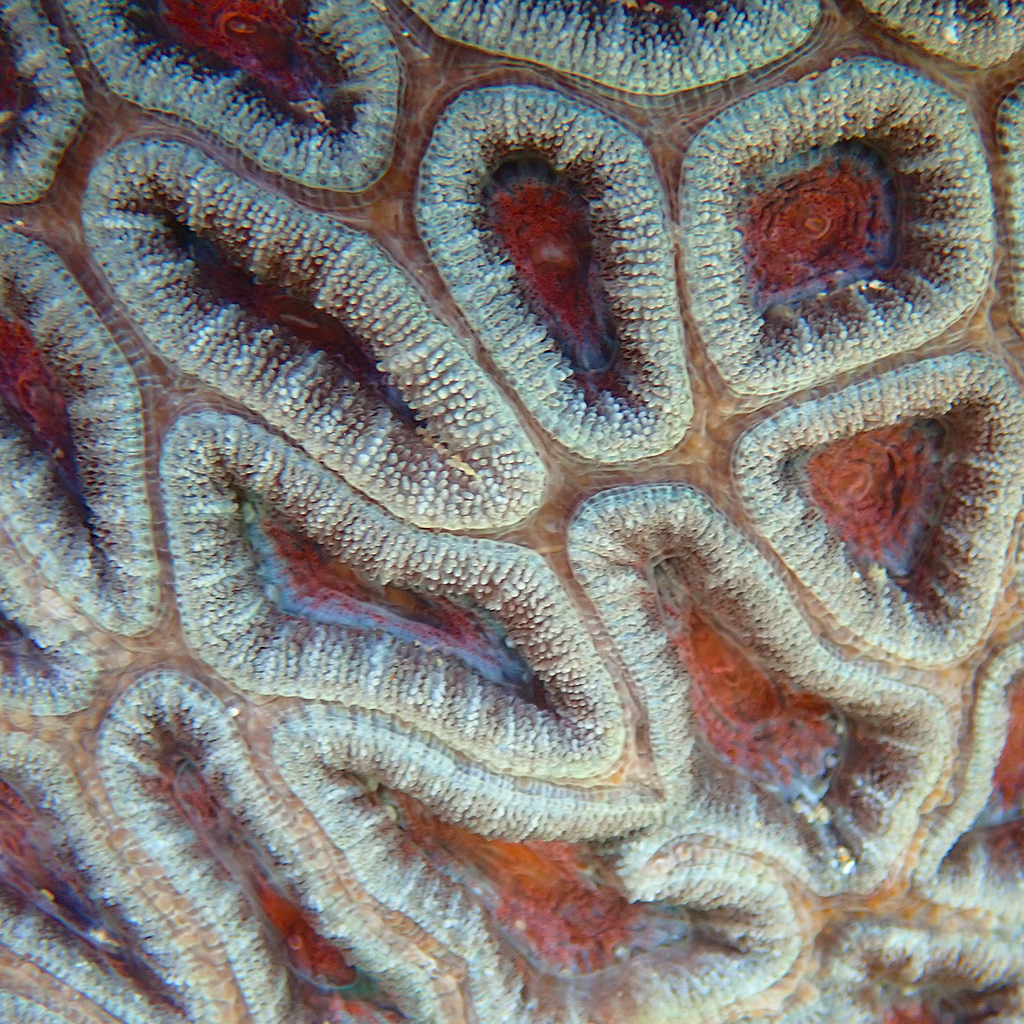 representative
Hellfire / Lava Acan →
Fiery red-orange dominant pieces with electric green or yellow centers, marketed under names like Hellfire, Lava, or Inferno. Selected for saturated warm coloration.
Tip: Hold reds with moderate (not high) light and consistent feeding — too much PAR pushes the warm pigments toward brown, so favor flow and feeding over cranking the lights.
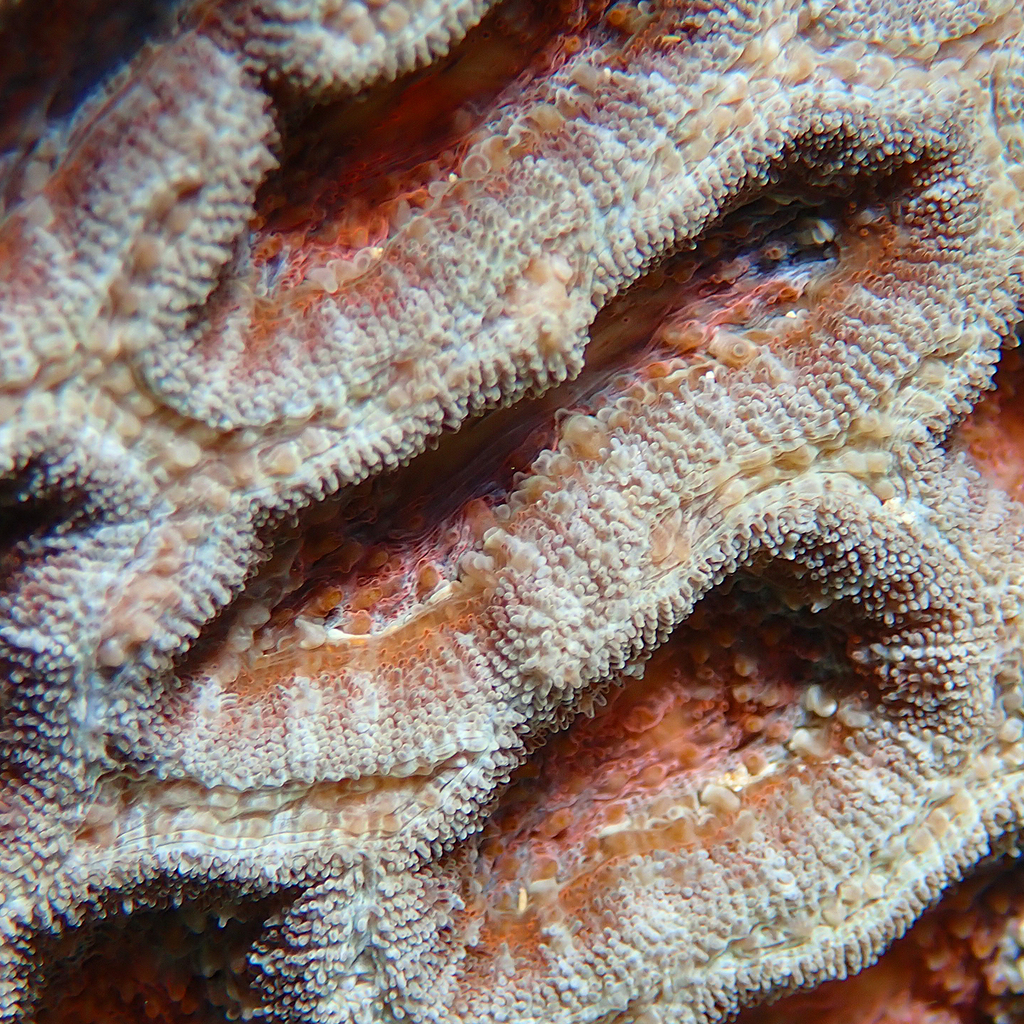 representative
Blue/Purple-rimmed Acan →
Acans displaying rare blue or purple fluorescent rim pigments around the polyp edges, a much less common pigment than red/green. Prized as collector pieces.
Tip: Add a touch more actinic/blue spectrum to pop the rim fluorescence, but keep overall intensity moderate — the blue pigment is delicate and bleaches before the reds do.
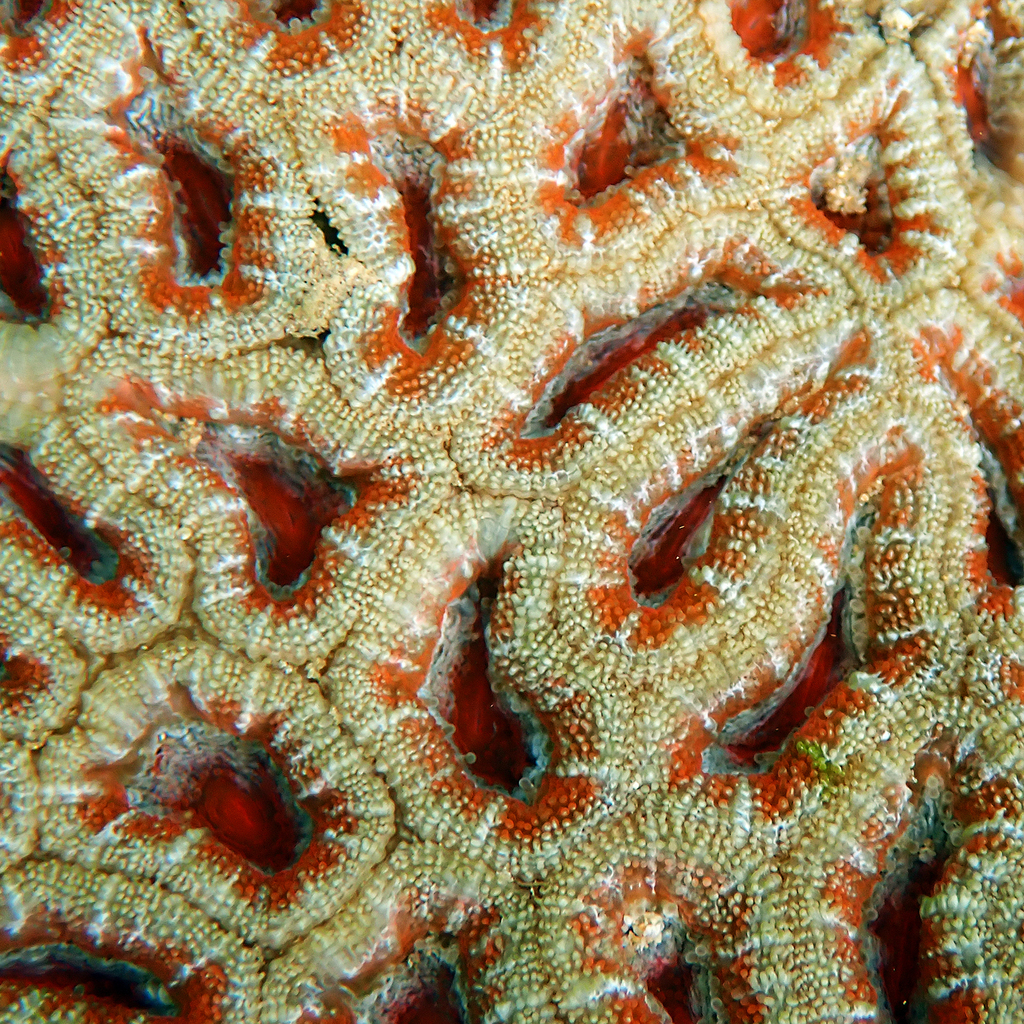 representative
Rainbow Acan (Rainbow Lord) →
A Micromussa lordhowensis colony where each fleshy polyp displays concentric rings of red, orange, green, and blue, creating a tie-dye 'rainbow' across the colony.
Tip: Place low in the tank on the sandbed or a low rock under moderate, indirect light (PAR 60-100) with gentle, indirect flow so the fleshy polyps fully inflate. Target-feed small meaty foods in the evening when feeder tentacles emerge.
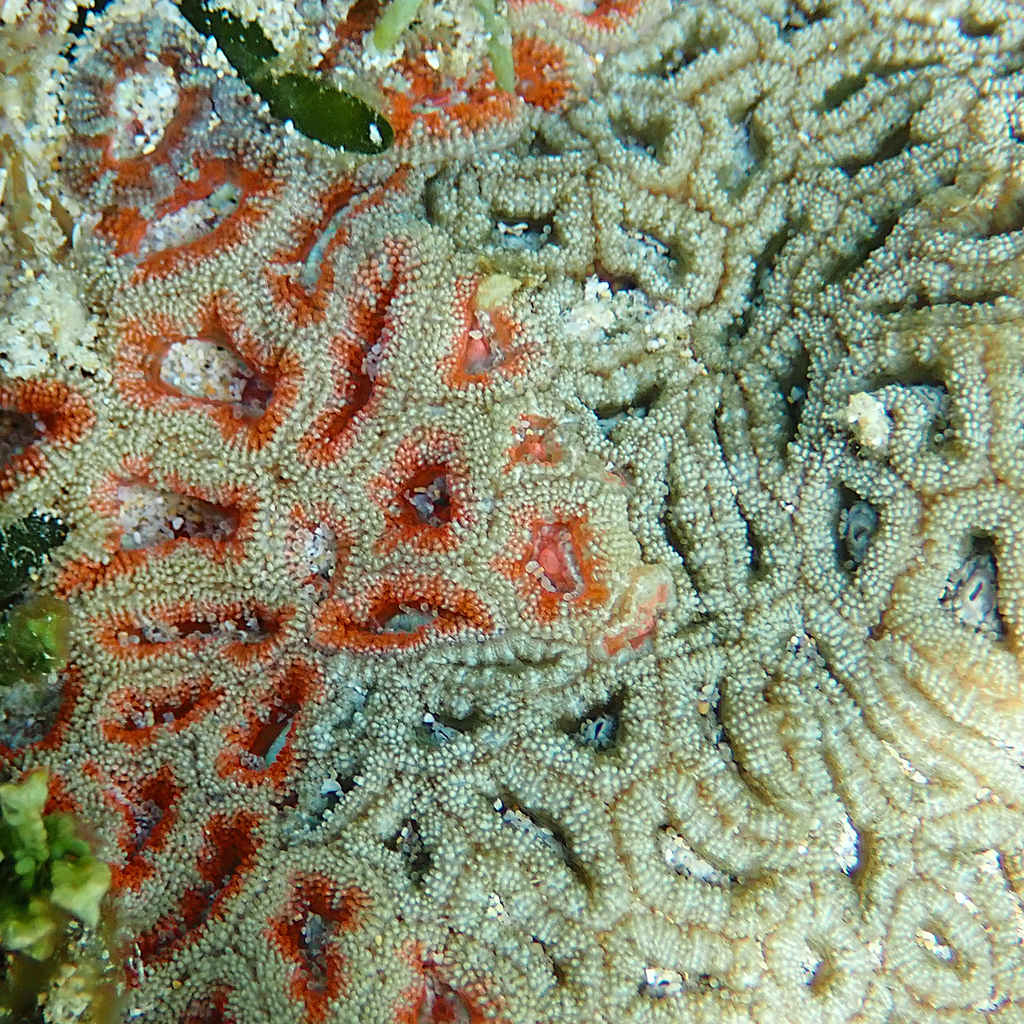 representative
Master Acan (Master Lord) →
An ultra-grade lord with bold contrasting centers and rims — typically a fiery red/orange body against a green or yellow mouth, with crisp, saturated color.
Tip: Keep on the lower third of the rockwork or sandbed under moderate light and low flow; feed small meaty foods in the evening when the feeder tentacles emerge.
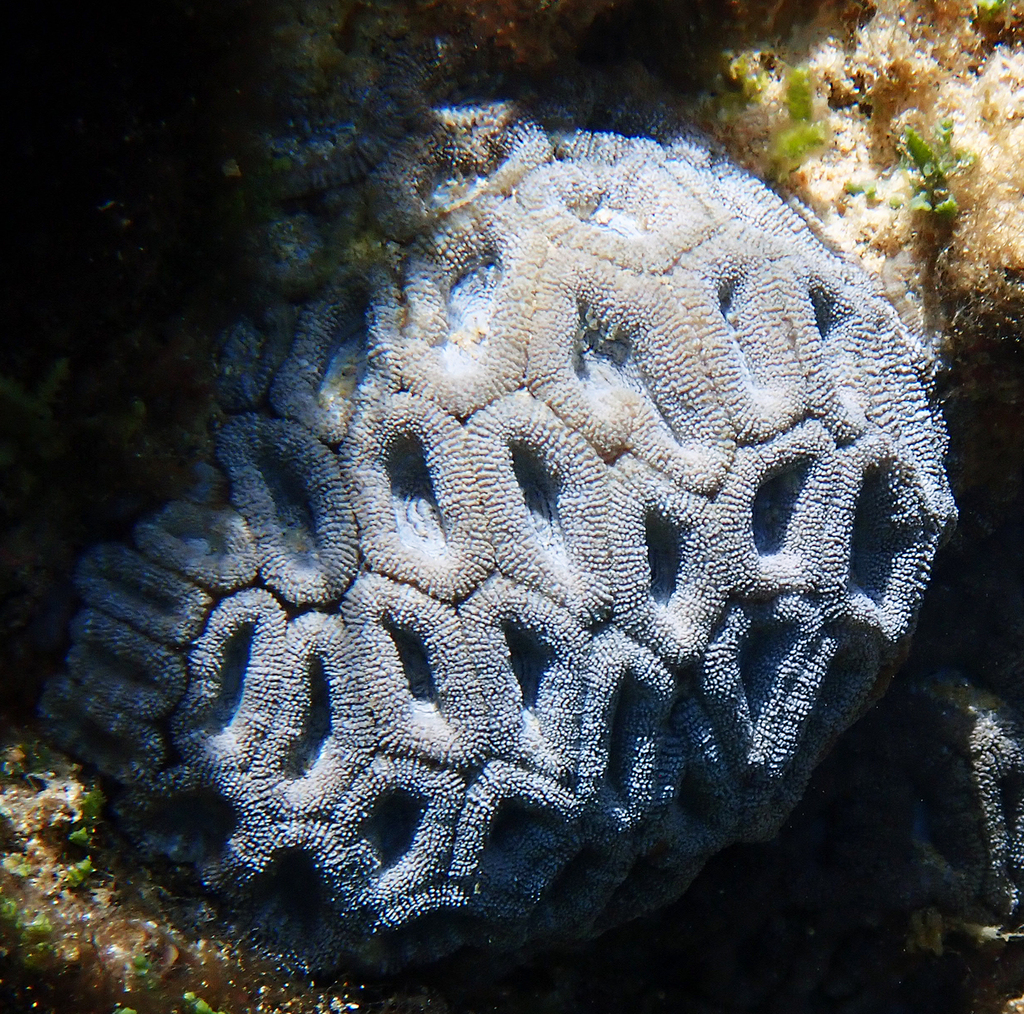 representative
Acan Lord (classic red/green) →
The standard hobby acan: large fleshy polyps with a green center surrounded by a red or maroon ring, the piece that defined 'acans' for a generation of reefers.
Tip: Low light and low flow on the sandbed; give space between colonies because acans extend sweeper/feeder tentacles at night that can sting neighbors.
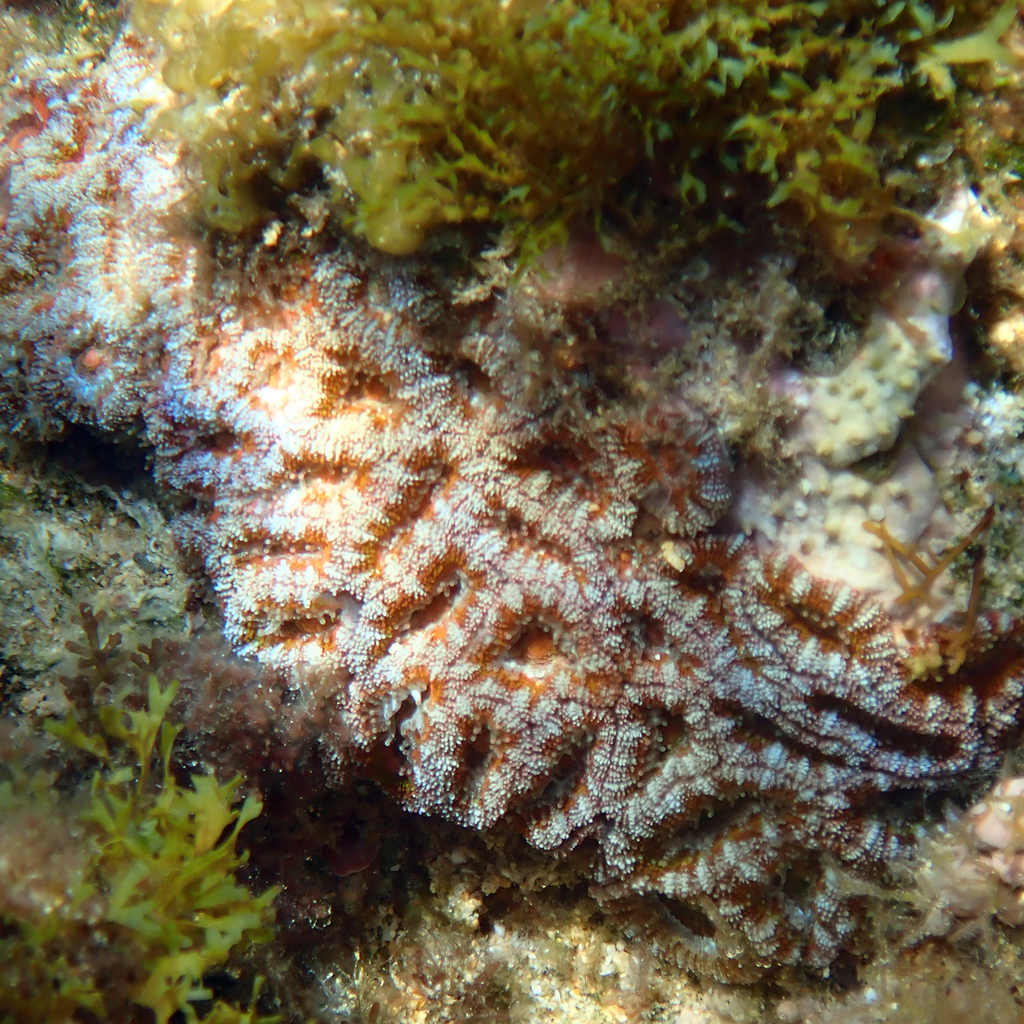 representative
Bubblegum Acan →
Pastel pink-to-magenta polyps ('bubblegum') often with green or blue centers, a softer-toned variation on the rainbow theme.
Tip: Moderate-low light brings out the pink pastels — too much PAR can wash out the delicate coloration; keep flow gentle and feed regularly to keep polyps plump.
representativeFire & Ice Acan →
Polyps that transition from a hot orange/red rim into a cooler green or teal center, evoking a 'fire and ice' or sunset gradient.
Tip: Position under moderate blue-heavy LED to pop the orange-green contrast; low flow and target feeding maximize polyp size and color saturation.
 representative
Micromussa amakusensis 'Rainbow' (Mini/Micro Acan) →
A smaller-polyped relative of the lord with tightly packed jewel-toned corallites in rainbow color combos, often sold as 'mini' or 'micro' acans.
Tip: These tolerate slightly more light than big lords; keep mid-low on rock with moderate-low flow and feed fine particulate foods to the small mouths.
representativeMystery Machine Aussie Lord →
A standout Aussie *Micromussa lordhowensis* in which **every single polyp carries a full rainbow** of green, teal, orange, red and blue concentric rings. One of the more recognizable named Aussie lords in the hobby.
Tip: Keep it on the sandbed or a low shelf at roughly 100-150 PAR with gentle, alternating flow so the fleshy polyps stay fully inflated. Like all acans it prefers lower light and will morph toward solid red under intense lighting, so favor a bluer spectrum and moderate intensity. Target-feed small meaty foods about once a week.
representativeTokyo Tart →
A famously oddball acan lord with a sour pastel palette — pinks, lavenders and yellow-greens — that looks nothing like the usual red and rainbow Aussie lords.
Tip: Place in low-to-moderate light (around 75-150 PAR) with low alternating flow and spot-feed small meaty foods weekly to keep its unusual pastels saturated. A bluer spectrum helps preserve the soft colors rather than pushing them toward red.
representativeIron Man Acan →
A classic Aussie acan lord prized for **intense metallic red flesh** with contrasting corallite walls — the deep 'Iron Man' red-armor look. Mature colonies show bold polyp extension.
Tip: Iron Man holds its red best under lower light; aim for roughly 75-100 PAR on a low shelf or sandbed with gentle flow and weekly target feeding to maintain the metallic saturation.
representativeF2M Holy Grail Micromussa →
A premium Micromussa with **concentric rings of neon green, purple, orange, red and light blue** radiating from each mouth — a true 'holy grail' multicolor. This is a small-polyp *Micromussa amakusensis* ('micro lord') rather than a classic lordhowensis acan.
Tip: Keep at low-to-moderate light (~75-100 PAR) with gentle flow; too much intense light pushes the colors toward solid red/orange, so favor a bluer spectrum to preserve the rings. Feed finely as the polyps are small.
representativeRainbow Road →
A knockout rainbow *Micromussa lordhowensis* with extremely fleshy polyps and a broad spread of color across the polyp face — a benchmark 'rainbow' display piece.
Tip: Low-to-moderate light and gentle flow keep the full color range; target-feed small meaty foods so the large fleshy polyps stay fully extended. Avoid high PAR, which morphs the color toward dominant red.
representativeFire and Ice Acan →
A two-tone acan named for its contrast of **fiery red/orange flesh against icy blue or white mouths and rings** — a hot-and-cold color split.
Tip: Low-to-moderate light (~75-100 PAR) keeps both the warm and cool tones; place with low alternating flow and feed weekly to maintain the contrast.
representativeRainbow Acan Lord →
The benchmark multicolor Aussie acan: concentric rings of red, orange, green, teal and blue across thick fleshy polyps — the 'rainbow' grade many keepers chase.
Tip: Aim for ~75-150 PAR with low alternating flow; a bluer spectrum and not-too-intense light keep the full rainbow from morphing to dominant red. Feed weekly.
representativeUltra Red Aussie Lord →
The classic deep-red Aussie acan lord — bold blood-red flesh with a defined mouth and often green or gold corallite highlights.
Tip: Reds hold best under lower light; keep it around 75-150 PAR on a low shelf or sandbed with gentle flow and weekly meaty feedings.
representativeMicromussa amakusensis (Micro Lord) Rainbow →
The smaller-polyp 'micro lord' cousin of the classic acan, with tight corallites in solid colors or subtle rings and contrasting mouths; rainbow pieces are highly sought.
Tip: Because the polyps are smaller, keep flow gentle and feed finely; low-to-moderate blue light around 75-120 PAR preserves the rainbow ring pattern.
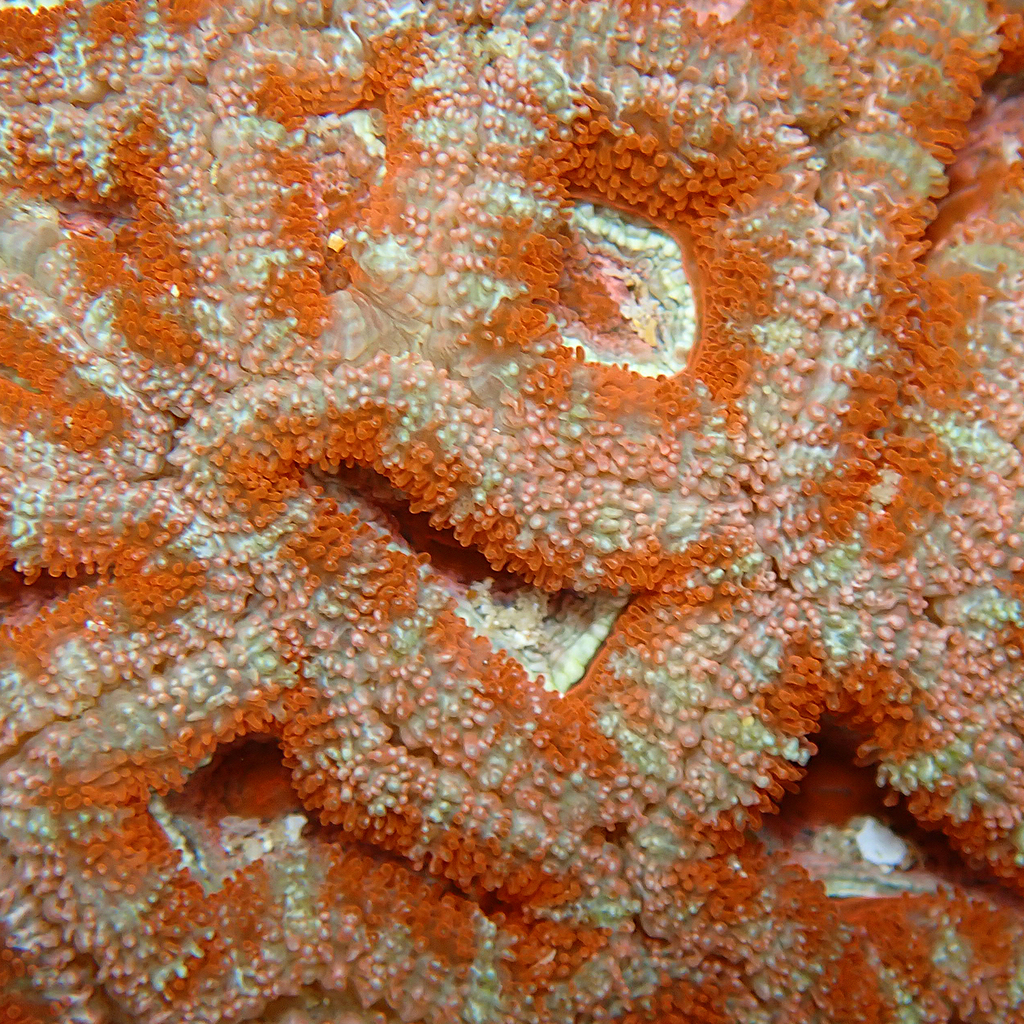 representative
Master / Mummy-Eye Acan →
Named line-bred/aquacultured selections (e.g. 'Master', 'Mummy Eye') chosen for extreme contrasting eye-and-rim colours and propagated as frags.
representativeTSA Freak Show Micromussa →
A vivid multicolor designer *Micromussa* acan with clashing neon flesh and contrasting eyes, part of Top Shelf's named line.
Tip: Place on a low rock or sandbed around 75-100 PAR with low alternating flow; weekly spot-feeding keeps the bright colors strong. Lower light preserves the multicolor pattern.
representativeTSA Death Rattle Micromussa →
A bold designer acan with dark, smoky base flesh punctuated by hot neon mouths and rings — a moody, high-contrast 'Death Rattle' look.
Tip: Low-to-moderate light (~75-100 PAR) and gentle flow keep the dark-and-neon contrast; avoid high PAR, which can wash out the deep tones. Feed weekly.
representativeTSA Sugar Rush Acan →
A candy-colored designer acan in sweet pinks, oranges and greens, named for its sugary pastel-to-neon palette.
Tip: Keep at low-to-moderate light (~75-100 PAR) with low flow; the soft pastels hold best under a bluer spectrum rather than intense white light. Feed weekly.
representativeTSA Black Hole Sun Acan →
A dramatic designer acan with dark, near-black outer flesh surrounding a blazing bright center, evoking an eclipse or 'black hole sun.'
Tip: Lower light and gentle flow preserve the dark halo; too much intensity will lighten the prized dark tissue, so keep it on the sandbed or a low shelf and feed weekly.
representativeTSA Candy Floss Acan →
A soft cotton-candy acan with pink and pastel flesh and a contrasting mouth — a gentle, sweet-toned designer piece.
Tip: Favor a blue-heavy spectrum at low-to-moderate PAR with low flow to keep the delicate pastel pinks from morphing toward solid red. Feed weekly.