Plate coral
Fungia sp. · also called Plate coral, Disc coral, Mushroom coral (not to be confused with corallimorphs), Fungia / Cycloseris / Danafungia
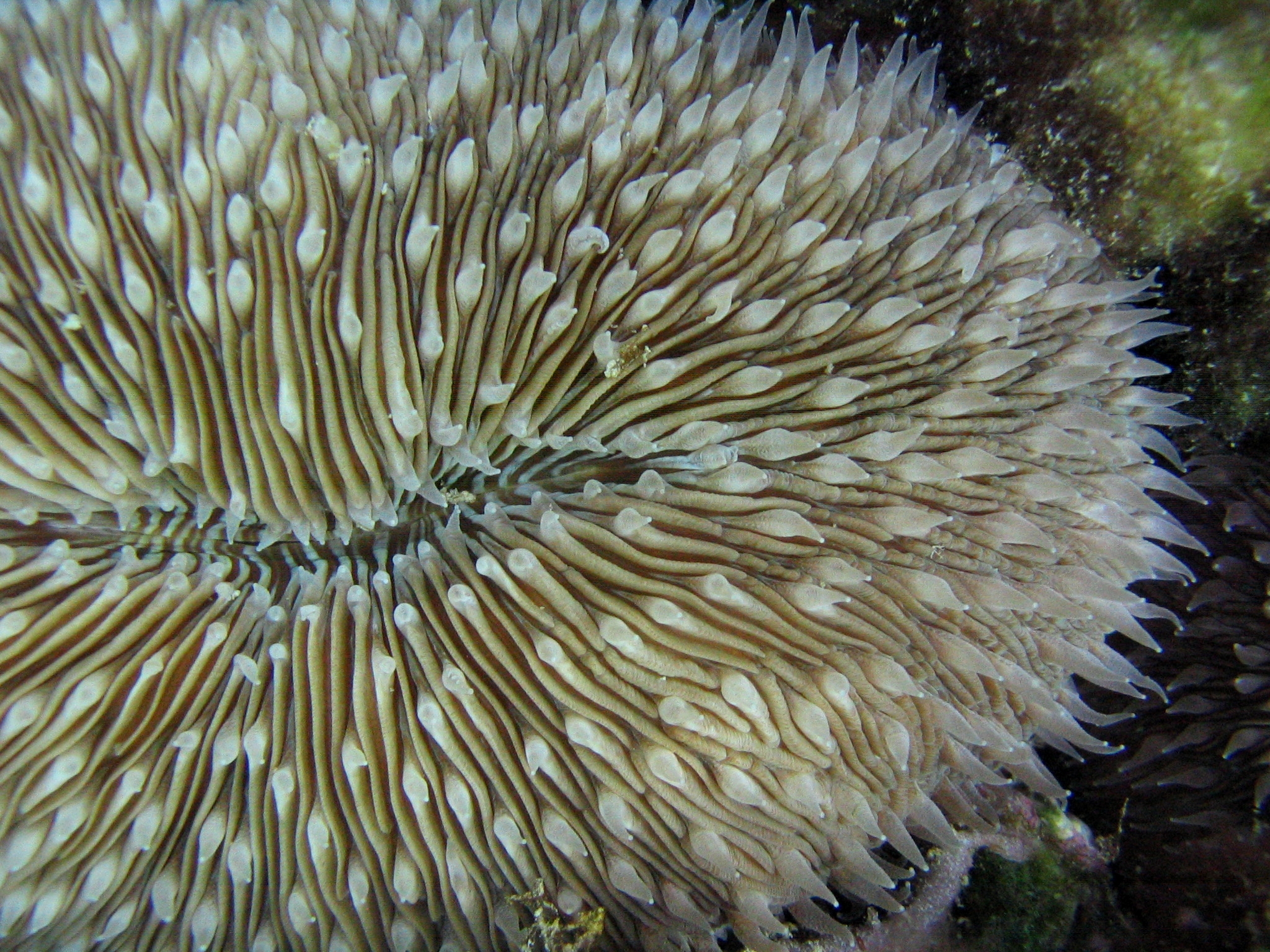
Fungia plate corals are unusual among stony corals in being **solitary, free-living single polyps** that as adults sit unattached on the substrate. As large-polyp stony (LPS) corals, the fleshy disc with radiating septa and a central mouth makes them LPS-like in care, and their mobility and hardiness make them a forgiving, fascinating reef inhabitant.
🩺 Need expert help with your plate coral?
Connect with a specialist near you or ask a licensed vet — never substitute online guidance for hands-on care in an emergency.
Quick facts
| Size | Solitary free-living disc, typically 5-20 cm in diameter; a single large polyp rather than a colony. |
| Lifespan | 5–50 years |
| Social needs | solo |
| Native region | Indo-Pacific |
| Origin | Old World |
| Climate | 🌴 Tropical |
| Water type | 🌊 Marine |
| Family | Fungiidae |
| Genus | Fungia |
Part of the SPS Corals
Small-polyp stony corals — fast-growing branching corals demanding strong light & flow.
Habitat & space requirements
From the minimum an animal needs to be kept humanely, up to the ideal setup. Bigger is almost always better — minimums are floors, not targets.
Life & growth stages
How this animal changes through its life — each stage often has its own care, diet and space needs.
Color & pattern variants
Natural variants occur in the wild; selectively bred (man-made) variants were developed in captivity.
 representative
Red / Orange Fungia →
Solid bright red or orange wild-collected discs, among the most sought-after colour forms.
 representative
Rainbow / Bicolor Plate →
Discs blending green, pink, purple and orange across the septa; striking natural multicolour specimens.
 representative
Tongue / Slipper Coral (Herpolitha / Polyphyllia) →
Elongated relatives in the same family sold alongside round Fungia plates, with multiple mouths along an oval body.
 representative
Green Plate (Fungia) →
Solid fluorescent-green disc-shaped *Fungia* plate coral; a hardy, free-living LPS that lies on the sand.
Tip: Always rest it flat on the sand bed, not on rock — if it falls or is wedged it can't right itself and the underside tissue will rot; keep flow gentle.
 representative
Orange Plate (Fungia) →
Orange-pigmented Fungia plate, a warmer and somewhat less common solid color form.
Tip: Moderate light holds the orange; spot-feed meaty foods to the central mouth a couple times a week and it will fatten noticeably.
 representative
Red Plate (Fungia) →
Red disc plate coral, a sought solid color among the otherwise common green/brown imports.
Tip: Keep grit and detritus from collecting under the skeleton — sweep a little gentle flow across the sand near it to prevent basal infections (brown jelly).
 representative
Rainbow / Ultra Plate (Fungia) →
Multicolor Fungia with green, orange, purple, and pink radiating from the mouth — the premium 'rainbow/ultra' plate.
Tip: Color holds best under blue-heavy light at modest PAR; these wild-collected pieces should be dipped and target-fed to recover after shipping.
 representative
Long-Tentacle Plate (Heliofungia) →
Technically *Heliofungia actiniformis*, sold as a plate coral, with long flowing anemone-like tentacles tipped in contrasting color.
Tip: Notoriously hard to keep long-term — it needs pristine water, gentle flow, and regular feeding; ships poorly and is best avoided by beginners despite its beauty.
 representative
Tongue / Slipper Plate (Herpolitha/Polyphyllia) →
Elongated 'tongue' or 'slipper' plate corals (Herpolitha, Polyphyllia) with a central seam and multiple mouths; same fungiid free-living habit.
Tip: Lay it flat on open sand with room to inflate; these can creep slowly, so don't crowd them against rock or other corals.
 representative
Aussie Ultra Red Fungia →
A deep blood-red to fire-orange wild-collected plate coral, the solid scarlet disc fluorescing intensely under blue light. Among the most saturated single-color Fungia available in the trade.
Tip: Place directly on the sandbed with low-to-moderate flow; plates are free-living and will inflate and 'walk' if buried or blasted by jets.
 representative
Rainbow Fungia →
A plate coral showing multiple colors at once — typically a green or red disc with contrasting orange, pink, or purple radial septa and tentacle tips. The multi-tone 'rainbow' effect is what collectors chase.
Tip: Sandbed placement, gentle indirect flow, moderate light around 50-100 PAR; feed meaty foods directly to the mouth at night to keep color and mass up.
representativeGold Fungia (Aussie) →
A solid golden-yellow to chartreuse plate, sometimes with long flowing tentacles, glowing yellow-green under actinics. The clean single gold tone distinguishes it from common green plates.
Tip: Sandbed, low flow, moderate light; long-tentacle ('hairy') plate forms benefit from spot-feeding meaty foods to fuel the fuller polyp.
representativeWYSIWYG Ultra Tongue Coral (Herpolitha 'Ultra') →
Elongated tongue/slipper-form free-living fungiids sold as 'Ultra' grade, often green with neon mouths or mottled metallic tones along the long oval body.
Tip: Lay flat on open sandbed with gentle flow; these elongated forms can be longer than a typical disc, so give them clear space to inflate.
representativeRainbow Plate / Rainbow Fungia →
The classic multicolor plate — a single round disc washing through **orange, green, purple and red** with fluorescent patterning that pops under blue light.
Tip: Set it flat on the sandbed (plates inflate and can damage themselves on rock); low-to-moderate light ~50-150 PAR and gentle indirect flow, with occasional meaty target-feeds.
representativeUltra Orange Fungia →
A solid, saturated **fluorescent orange** plate — one of the most popular and recognizable single-color Fungia forms in the trade.
Tip: Rest it flat on sand under low-to-moderate light; if it inflates large, give it open space so the fleshy tissue isn't shaded or abraded by neighbors. Hardy and forgiving once placed.
representativeTSA Funky Fungia →
A vendor-branded multicolor Fungia plate with mixed, irregular color patterning — TopShelf's house-named 'funky' pick of the colorful imports.
Tip: Place flat on the sandbed under low-to-moderate light and gentle flow; let it acclimate slowly before increasing intensity to avoid bleaching the fleshy disc.
representativeRed Devil Horns Cycloseris →
A small Cycloseris disc plate with a **red body and contrasting bright orange polyps/'horns'** (some with neon green streaking) — a compact, colorful mini-plate.
Tip: Cycloseris are small and mobile; rest on open sand under low-to-moderate light and gentle flow, and target-feed small meaty foods since they readily accept feeding. They inflate with water and can double in size.
representativeInsane Rainbow Diaseris →
A show-stopping Diaseris (fragmenting plate) with **bright orange, yellow, and green tentacles** erupting from a **blue/purple base** — one of the benchmark rainbow plates in the hobby.
Tip: Place on the **sandbed** (Diaseris are mobile and will glide off rock) under low-to-moderate light, roughly 50-150 PAR, with gentle indirect flow; spot-feed powdered/meaty coral foods to drive color. These plates are hardy and grow quickly, especially after fragging.
representativeDiablo Diaseris →
A **remarkably bright red** Diaseris plate that is **grafted**, gaining **streaks of purple, green and gold as it grows outward** — one of the more expensive named plates on the market.
Tip: Keep on sand under low-to-moderate light and low-to-moderate flow; allow it to mature in a stable spot, as the rainbow streaking only develops with age and good feeding.
representativeDante's Inferno Diaseris →
A **solid, remarkably bright orange** Diaseris plate — clean fluorescent orange with no other color, a striking single-tone piece.
Tip: Place on the sandbed under low-to-moderate light; feed regularly with meaty/powdered foods, which Tidal Gardens credits with bringing out and intensifying the orange.
representativeRed Devil Diaseris →
An **intensely bright red** Diaseris plate; some specimens develop **small spots of purple swirls** as they mature.
Tip: Keep on the sandbed under low-to-moderate light with gentle flow; target-feed to maintain the deep red. The purple swirling appears on some specimens with maturity, though the cause is not definitively known.
representativeColor Blind Diaseris →
A two-tone Diaseris with **bright red polyps protruding from a green base** — a high-contrast red-on-green look.
Tip: Place on sand under low-to-moderate light; consistent powdered-food feeding keeps both the green base and red tentacles saturated. Heals well from cutting.
representativeGlow Bug Diaseris →
A **blue-based** Diaseris with **pink/fuchsia tentacles** and a distinctive **neon green that develops around the mouths** — a multi-color glow piece.
Tip: Keep on the sandbed under low-to-moderate actinic-heavy light to pop the blue base and neon mouths; gentle indirect flow and regular feeding.
representativeTSA Popsicle Plate →
A bright, multi-hued aquacultured plate marketed under TopShelf's 'Popsicle' name for its vivid candy-like coloration.
Tip: Keep on sand under low-to-moderate light; as a cultured frag it benefits from a stable, gentle spot and regular feeding to size up.
representativeReefGen Project-X Fungia →
An aquacultured Fungia plate with a **purple disc and bright green tentacles** that glow vivid purple and green under blue light; trained to encrust with multiple mouths per frag.
Tip: Place flat on sand under low-to-moderate light; as a true cultured plate it adapts well to aquarium life and is beginner-friendly LPS, but appreciates regular target-feeding to grow out. A single frag can take up to six months to encrust.
Habitat & enclosure
Substrate
Equipment & setup
Diet
Behavior & temperament
Health
Tips, DIY & hacks
Sources
- Fungia — WoRMS (World Register of Marine Species) (reference)
- Fungia Plate Coral Care Guide — Reef2Reef (care guide)
- Wikipedia: Plate coral (wiki)