Psammocora (sandpaper coral)
Psammocora contigua · also called Sandpaper coral, Psammo, Cat's eye coral (Psammocora)

Psammocora is a hardy small-polyp stony coral named for its fine, velvety 'sandpaper' surface texture, growing as encrusting sheets or low nodular branches in green, brown and tan. Its smooth fleshy appearance and easy care make it a forgiving, distinctive intermediate SPS.
🩺 Need expert help with your psammocora (sandpaper coral)?
Connect with a specialist near you or ask a licensed vet — never substitute online guidance for hands-on care in an emergency.
Quick facts
| Size | Encrusting-to-nodular colony with a fine, velvety 'sandpaper' texture; frags start ~2-4 cm and colonies spread/branch to 10-25 cm. |
| Lifespan | 5–50 years |
| Social needs | solo |
| Native region | Indo-Pacific |
| Origin | Old World |
| Climate | 🌴 Tropical |
| Water type | 🌊 Marine |
| Family | Psammocoridae |
| Genus | Psammocora |
Part of the SPS Corals
Small-polyp stony corals — fast-growing branching corals demanding strong light & flow.
Habitat & space requirements
From the minimum an animal needs to be kept humanely, up to the ideal setup. Bigger is almost always better — minimums are floors, not targets.
Life & growth stages
How this animal changes through its life — each stage often has its own care, diet and space needs.
Color & pattern variants
Natural variants occur in the wild; selectively bred (man-made) variants were developed in captivity.
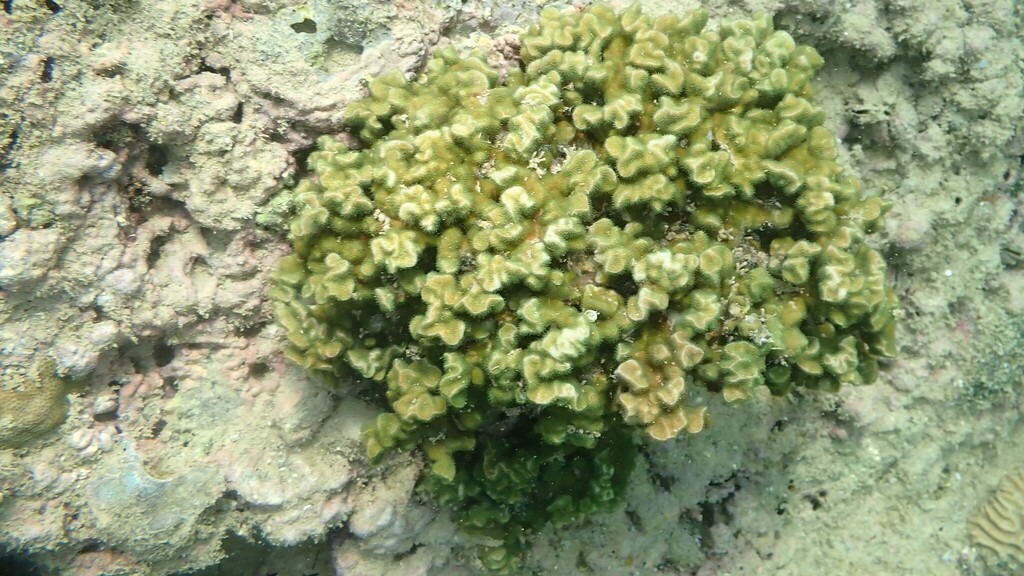 representative
Green Sandpaper Psammocora
The common form with green to neon-green velvety tissue over an encrusting or nodular skeleton — the most frequently traded morph.
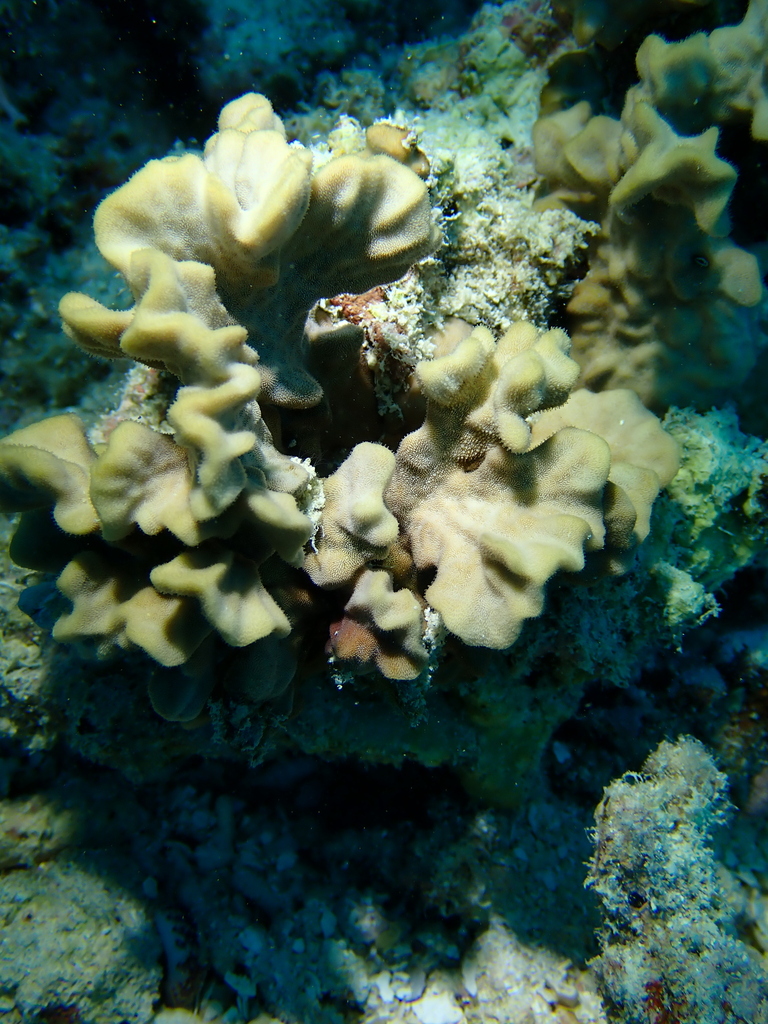 representative
Branching Psammocora
Forms (e.g. Psammocora contigua) that grow low stubby branches from the encrusting base rather than staying flat.
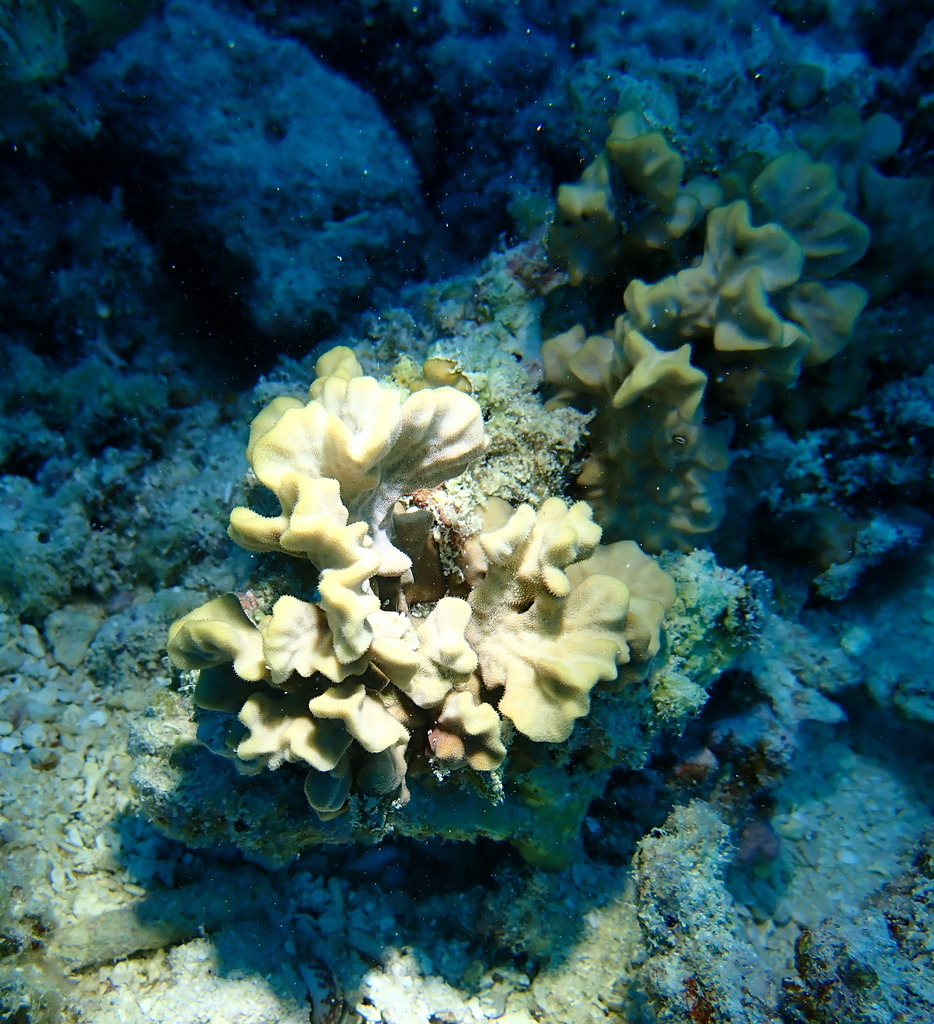 representative
Cat's Eye / two-tone Psammo
Morphs showing contrasting corallite centres ('eyes') against the base tissue, sometimes sold as 'cat's eye' Psammocora.
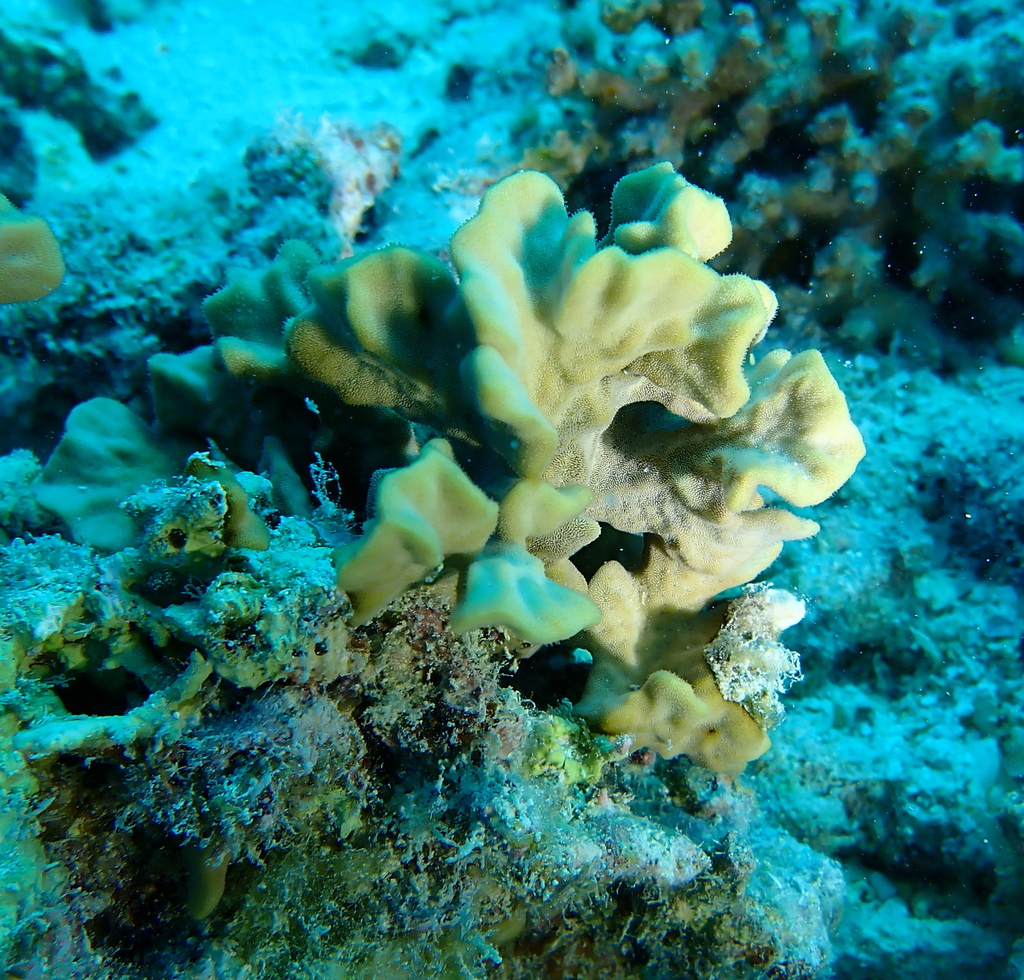 representative
Monster Jam →
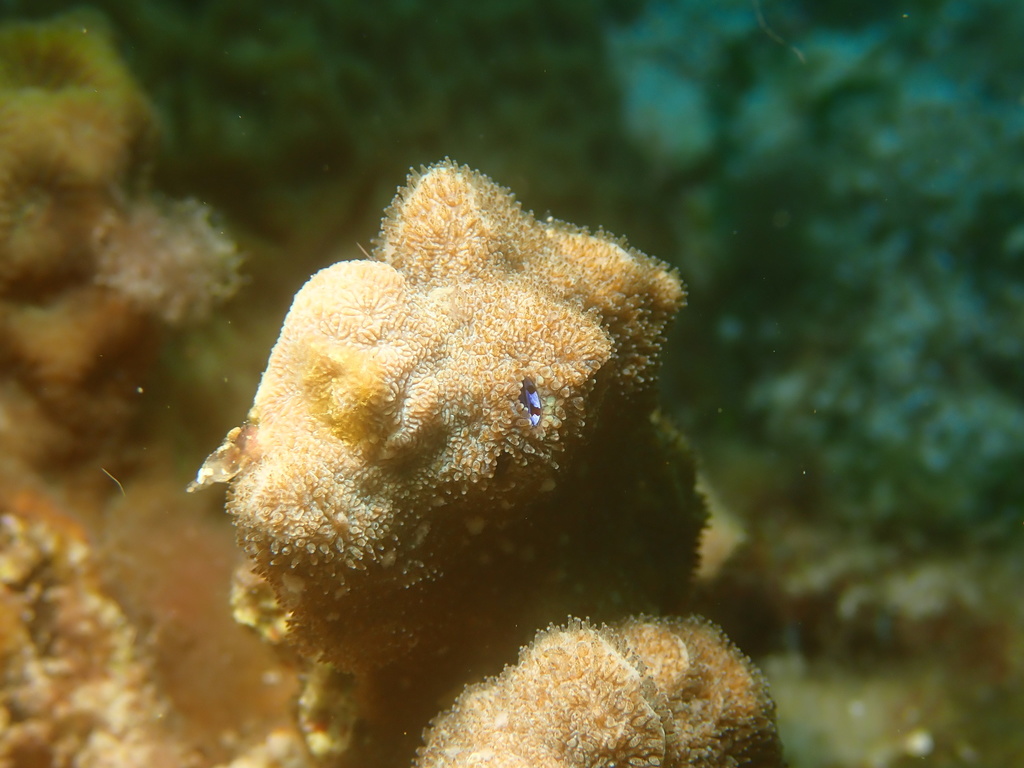
A two-tone *Psammocora* with a **deep purple base** and a **neon green growth edge** that can extend quite far across the colony, giving an excellent two-tone look. The retracted polyps give the characteristic velvety, sandpaper texture.
Tip: Give it medium light (roughly 150-250 PAR) and moderate-to-strong flow; it grows fast and tolerates a wide range of conditions, so it makes a forgiving SPS for newer reefers. Leave a little open rock so the green edge can spread.
 representative
City Lights →
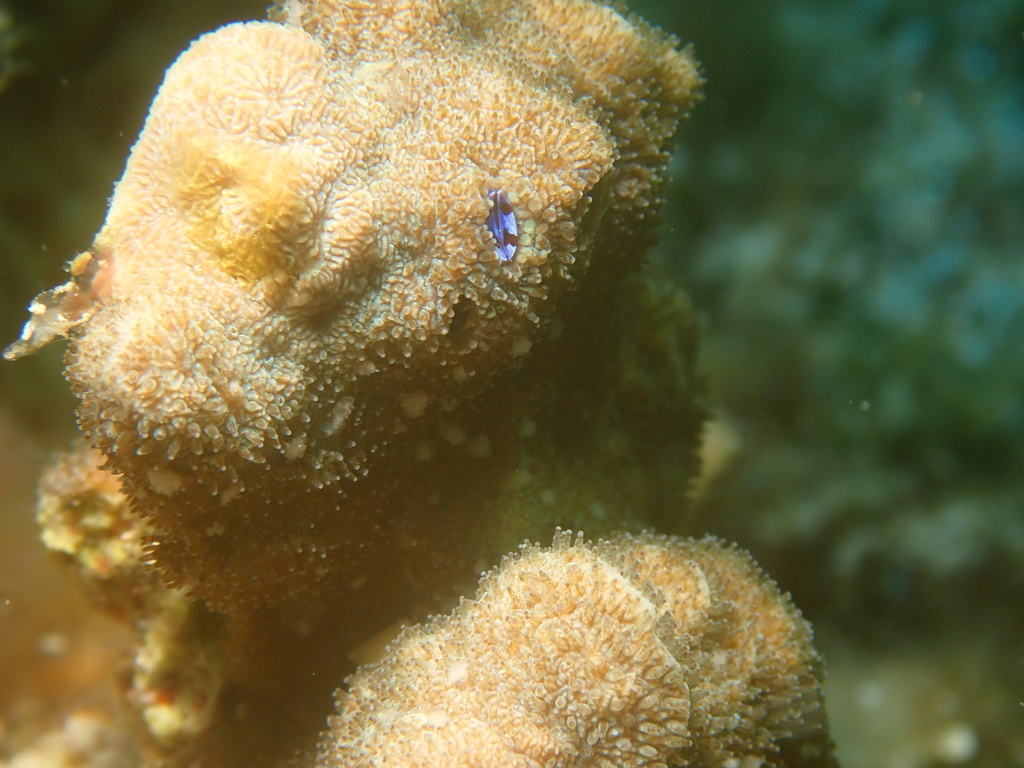
A reddish-purple based *Psammocora* with **bright neon yellow/green 'eyes'** (polyps), noted as one of the fuzziest, most velvet-textured Psammocora morphs around.
Tip: Place under moderate to high flow to keep its fuzzy, textured surface free of debris; medium blue-leaning light brings out the neon polyp color. Hardy and tolerant of a range of tank conditions.
 representative
Deep Space →
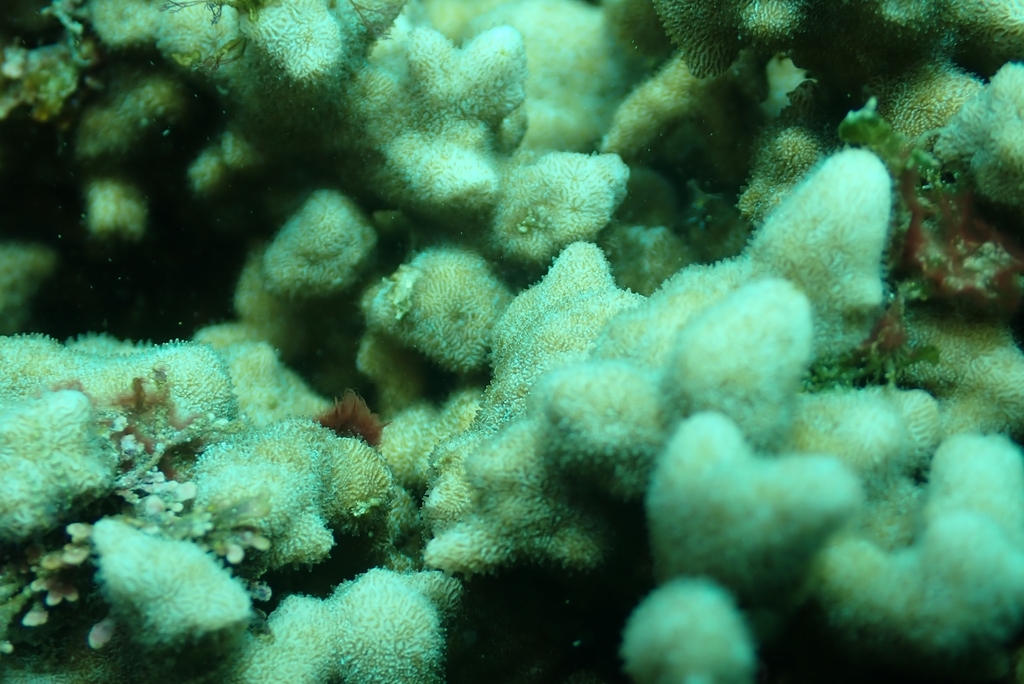
A dark *Psammocora* with a **rich deep purple/blue base and vibrant neon green polyps**, giving a starfield-like contrast that inspired the name.
Tip: Medium light (about 150-250 PAR) and medium flow suit it; like most Psammocora it encrusts first then branches, so seat the frag where it has room to spread. A forgiving, fast-growing SPS.
 representative
Watermelon →
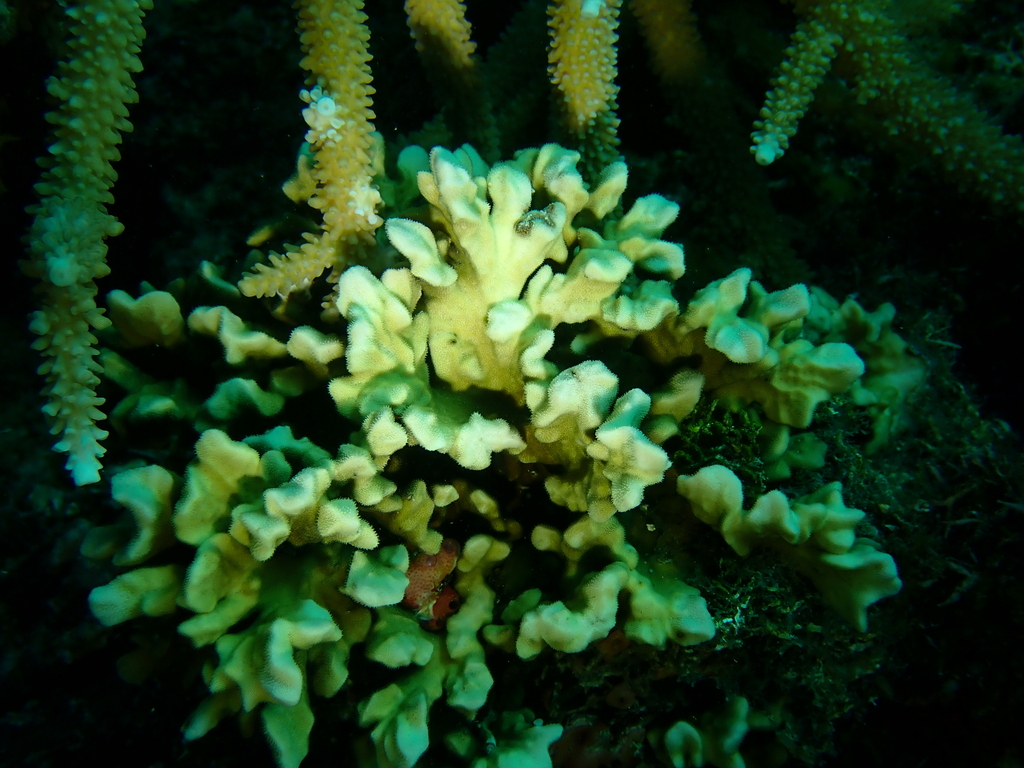
A two-tone *Psammocora* combining **orange/pink-red tones with a bright green growth edge**, the contrasting warm-and-cool palette giving it the 'watermelon' name.
Tip: Medium light with moderate flow develops the bright green leading edge; give it open rock to encrust and spread. Hardy and fast-growing.
 representative
Midas →
A *Psammocora* with a **bright golden base and small purple mouths**, reading as solid gold from a distance with a velvet sheen and fine polyp detail up close.
Tip: Medium light and medium-to-strong flow keep the velvety surface clean; it is fast-growing and tolerant of varied conditions.
 representative
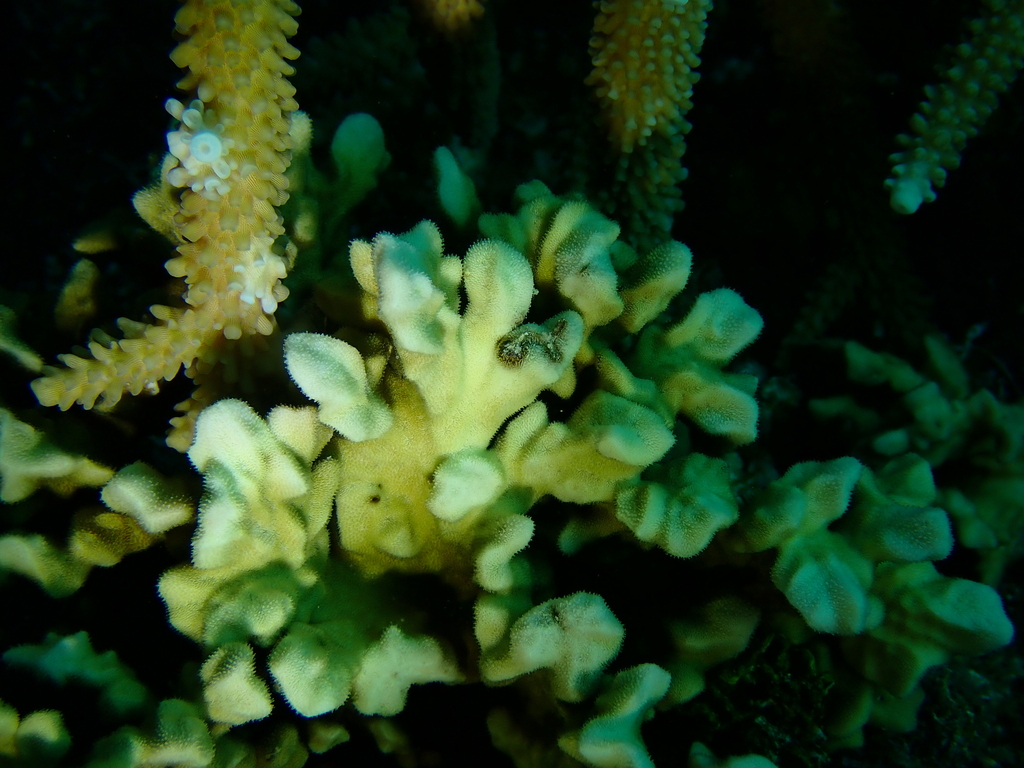
Fireworks →
A *Psammocora* with a **purple base and insanely bright neon orange eyes (polyps)**, with the leading growth edge tending toward orange for a burst-like effect.
Tip: Medium light and moderate flow; place it where the neon orange polyps catch viewing angles, and keep flow up to prevent debris on the fuzzy surface.
representativeSundrop →
A two-tone *Psammocora* with a **golden/lime-green base and a neon green growth edge**, giving a warm-to-bright gradient across the colony.
Tip: Medium light and medium flow; let it encrust a flat area so the neon green leading edge has room to advance. A forgiving, fast-growing SPS.
 representative
Forest Green →
A deep, uniform **forest-green** *Psammocora* with the genus's signature velvet look from afar and visible individual polyps up close.
Tip: Medium light and medium flow; its green color holds well across lighting, making it a reliable, forgiving green encrusting/branching piece.
representativeSunrise →
A 'sunrise'-themed *Psammocora* in Top Shelf Aquatics' signature lineup, implying warm orange/gold tones; frags are cut from a held mother colony and the vendor page shows the look photographically rather than describing it in detail.
Tip: Standard Psammocora care: medium light and medium flow on open rock where it can encrust and then branch. Hardy and forgiving.
representativeGolden Charm →
An encrusting *Psammocora* with a **bright orange base and a green outer rim** plus the fine, grainy sandpaper surface texture, spreading as a colorful mat over rock.
Tip: Medium light (about 150-250 PAR) and moderate flow; ideal for filling open space in the aquascape since it encrusts steadily and is peaceful and forgiving once established.
 representative
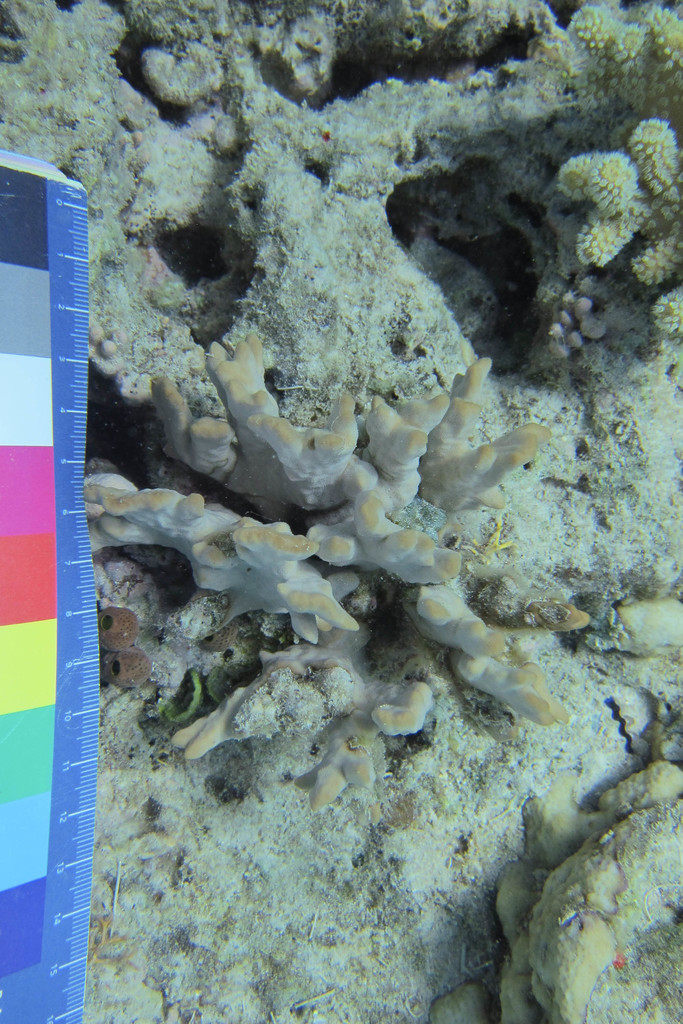
Harvest Moon →
An encrusting *Psammocora* with **bright yellow-green coloration** and the distinctive grainy, sandpaper surface texture as it sheets over rock.
Tip: Best on a flat patch of rock under medium light (150-250 PAR) and medium flow where it can encrust outward before branching. Rated easy/moderate care, so it tolerates a range of placements while it establishes.
 representative
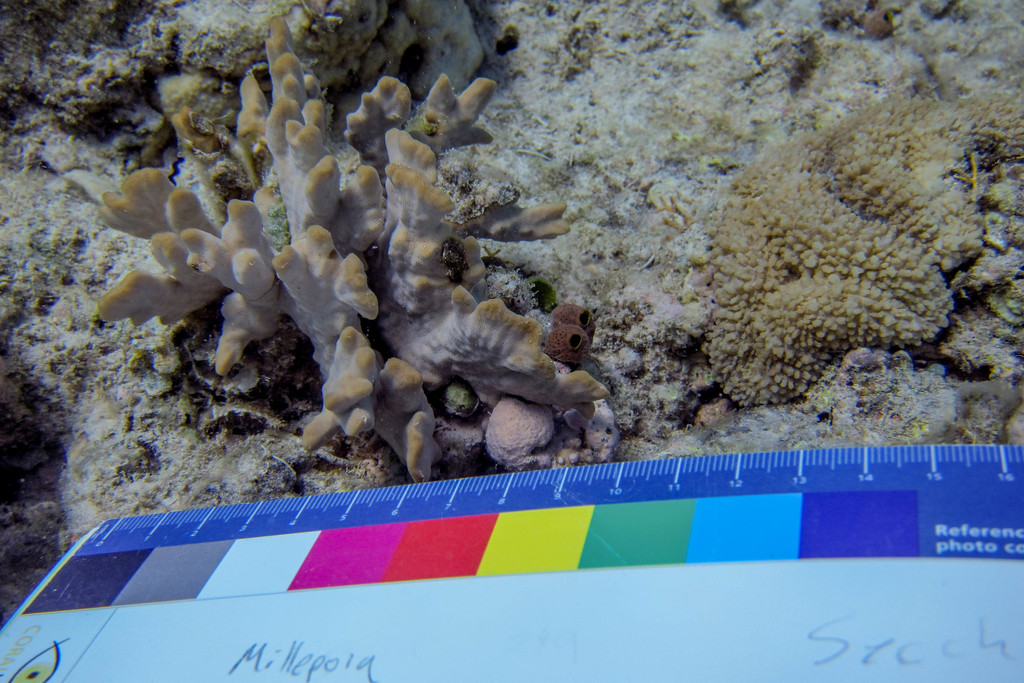
Grasshopper →
A green-toned *Psammocora* in the WWC named lineup; like its relatives it shows a velvety face up close and a sandpaper texture when polyps retract.
Tip: Medium light and medium flow; it is an easy, forgiving grower, so it tolerates a range of placements while it establishes and encrusts.
 representative
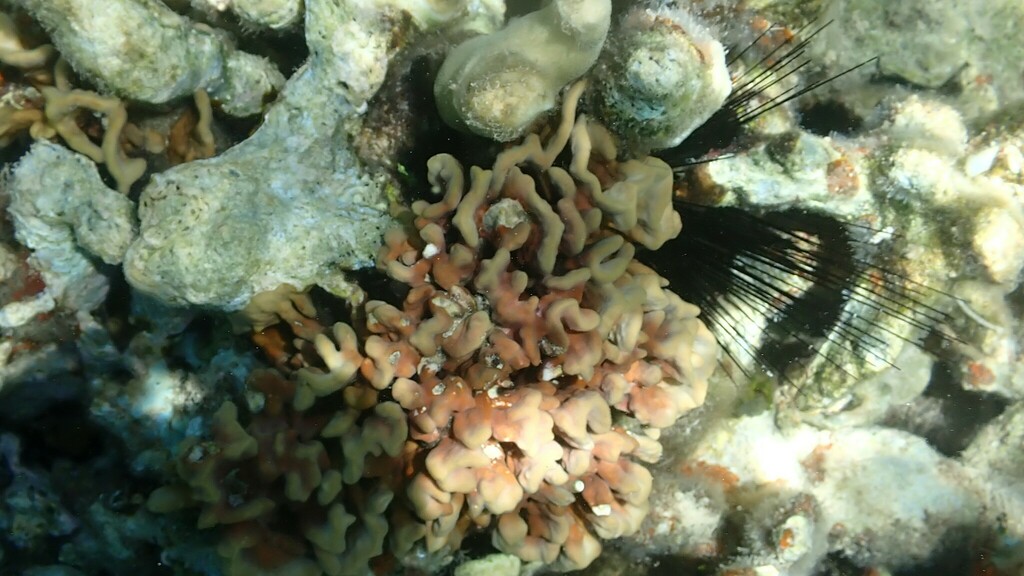
Golden →
A warm **golden/orange** *Psammocora*, matching the genus's natural bright-gold coloration, sold as a clean fully-cultured house frag.
Tip: Medium light and medium flow; one of the more forgiving Psammocora and a good first piece of this genus for newer SPS keepers.
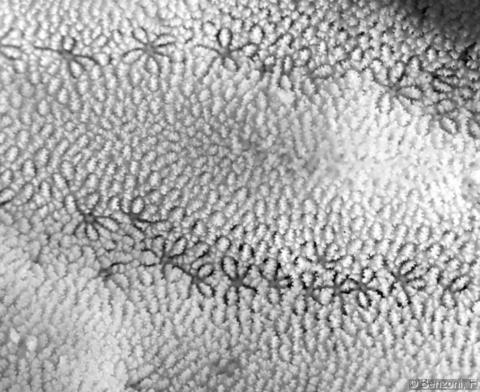 representative
Kelly Green Branching →
An **intense, bright kelly-green branching** *Psammocora* (P. contigua), among the brightest green SPS available; it heavily encrusts first, then forms thick irregular branches with a velvety extended-polyp look.
Tip: Colors up best under blue-spectrum-heavy light with moderate to strong flow to keep its textured surface clean; give branches room to thicken. One of the hardiest, most beginner-friendly SPS in the hobby.
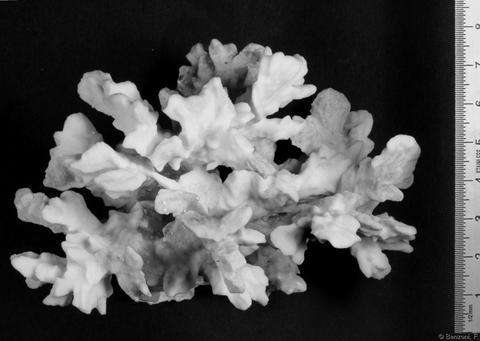 representative
Autumn Harvest →
A warm, autumn-toned *Psammocora* (orange/gold range implied by the name) carried as a Jason Fox signature frag; the vendor pages list care specs but limited written color detail, so the look is best read from the vendor photo.
Tip: Listed at medium light and medium flow; a standard encrusting-then-branching Psammocora placement on open rock works well. Forgiving and tolerant of a range of conditions.