Cyphastrea
Cyphastrea serailia · also called Cyph, Meteor shower coral, Lesser knob coral
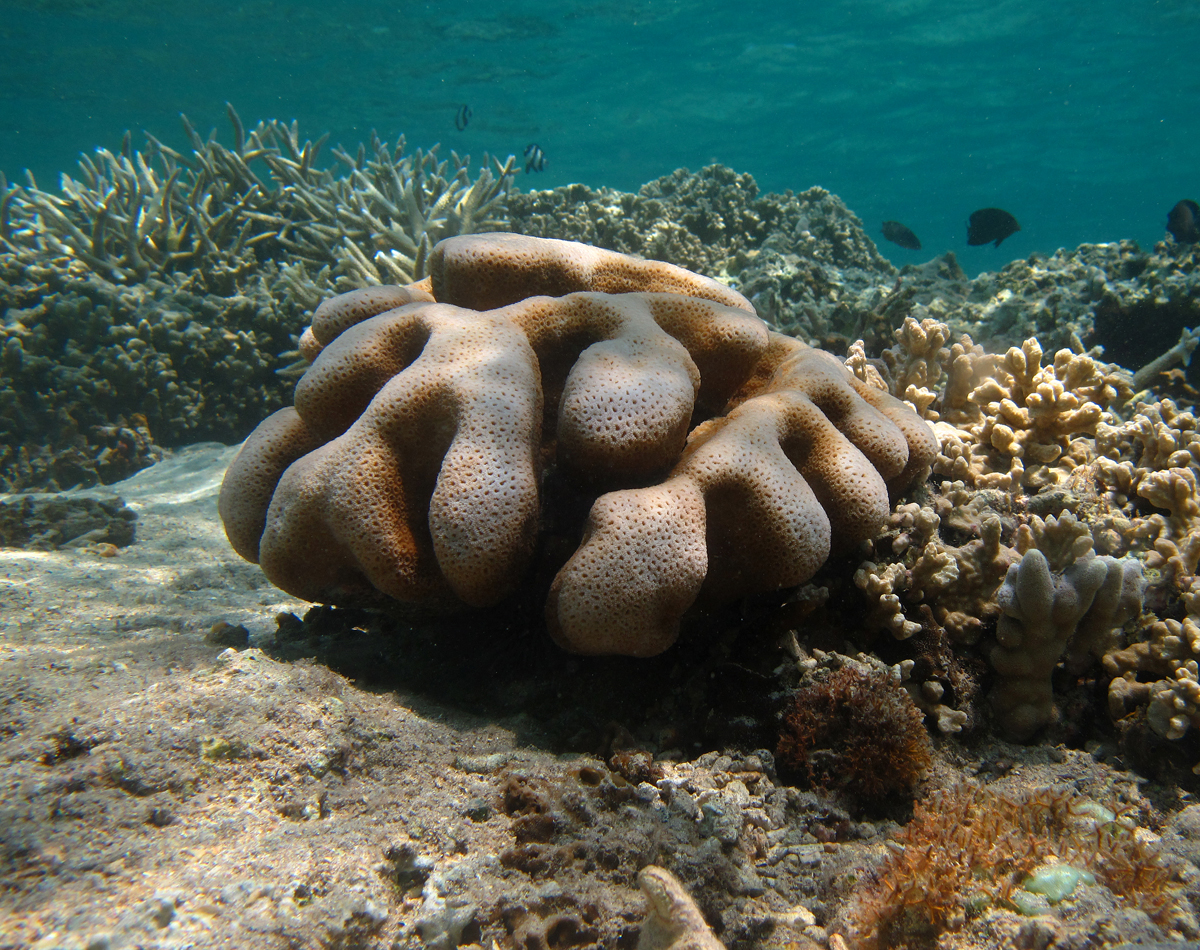
Cyphastrea is a hardy encrusting small-polyp stony coral with tiny, evenly spaced corallites, prized in the hobby for high-contrast 'meteor shower' morphs (dark base with neon polyps). It is one of the easier SPS corals — adaptable to lower light and flow — making it a forgiving and colourful intermediate pick.
🩺 Need expert help with your cyphastrea?
Connect with a specialist near you or ask a licensed vet — never substitute online guidance for hands-on care in an emergency.
Quick facts
| Size | Low encrusting colony of small, evenly spaced corallites; frags start ~2-4 cm and sheets spread to 10-25+ cm across rock, sometimes branching in some species. |
| Lifespan | 5–50 years |
| Social needs | solo |
| Native region | Indo-Pacific |
| Origin | Old World |
| Climate | 🌴 Tropical |
| Water type | 🌊 Marine |
| Family | Merulinidae |
| Genus | Cyphastrea |
Part of the SPS Corals
Small-polyp stony corals — fast-growing branching corals demanding strong light & flow.
Habitat & space requirements
From the minimum an animal needs to be kept humanely, up to the ideal setup. Bigger is almost always better — minimums are floors, not targets.
Life & growth stages
How this animal changes through its life — each stage often has its own care, diet and space needs.
Color & pattern variants
Natural variants occur in the wild; selectively bred (man-made) variants were developed in captivity.
 representative
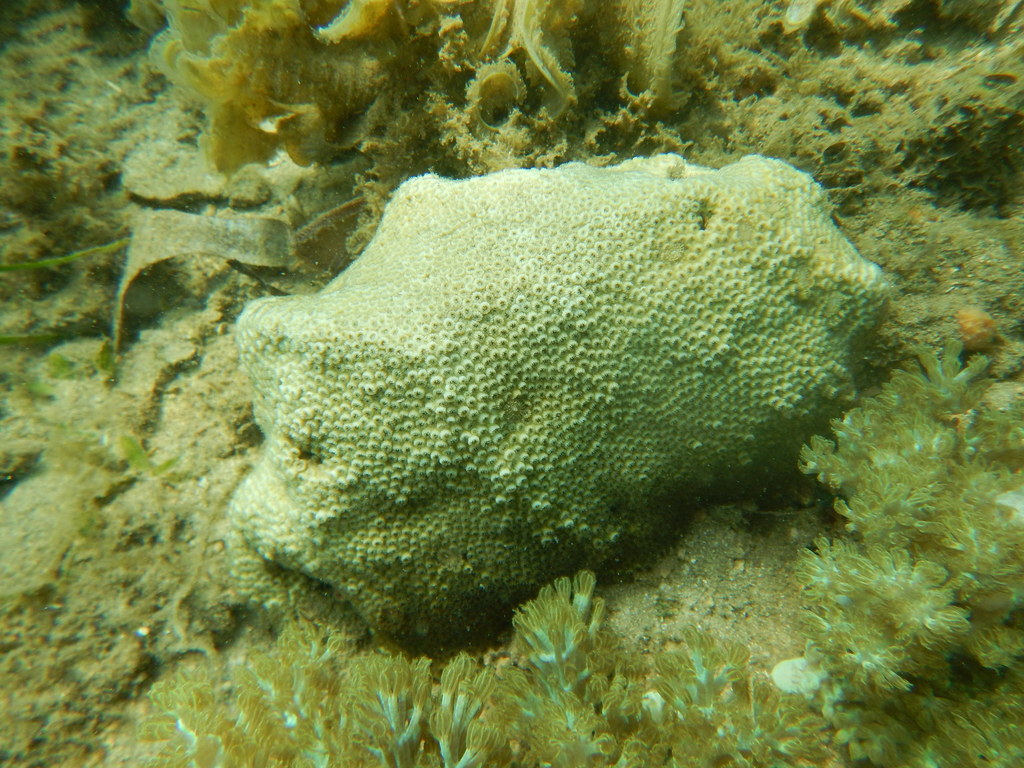
Meteor Shower Cyphastrea
The iconic morph — a dark purple/maroon base studded with bright neon-green or yellow polyps resembling falling meteors; the most coveted form.
 representative
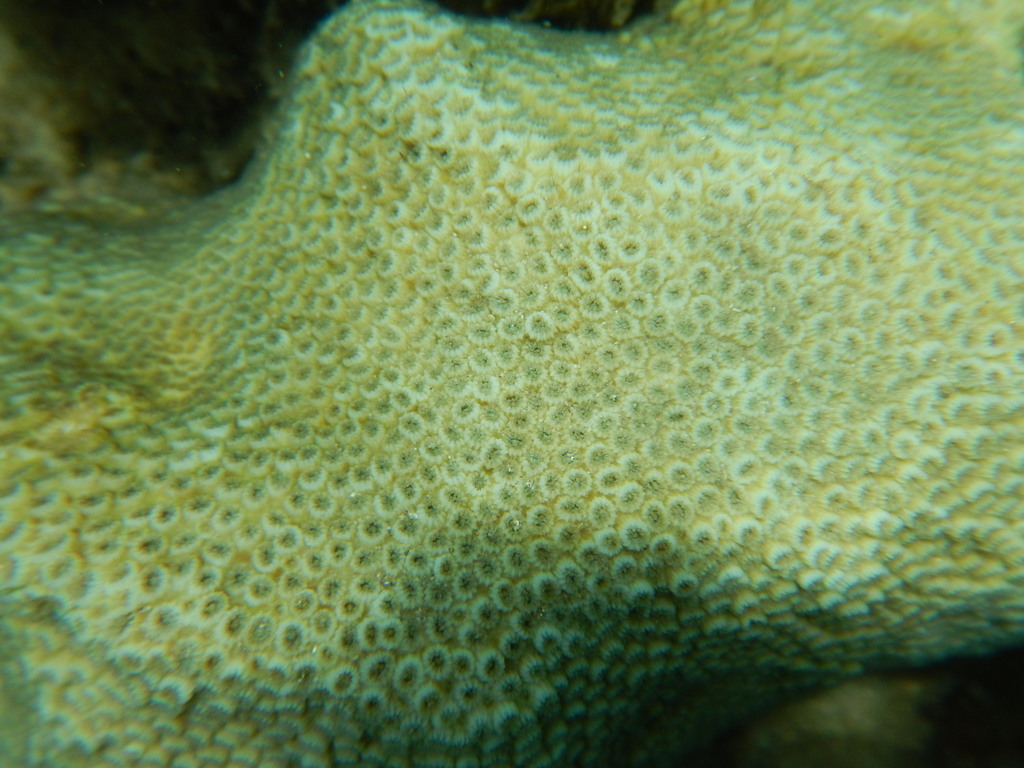
Branching Cyphastrea
Species/forms (e.g. Cyphastrea decadia) that throw up short branches from the encrusting base rather than staying flat, sold as 'branching cyph'.
 representative
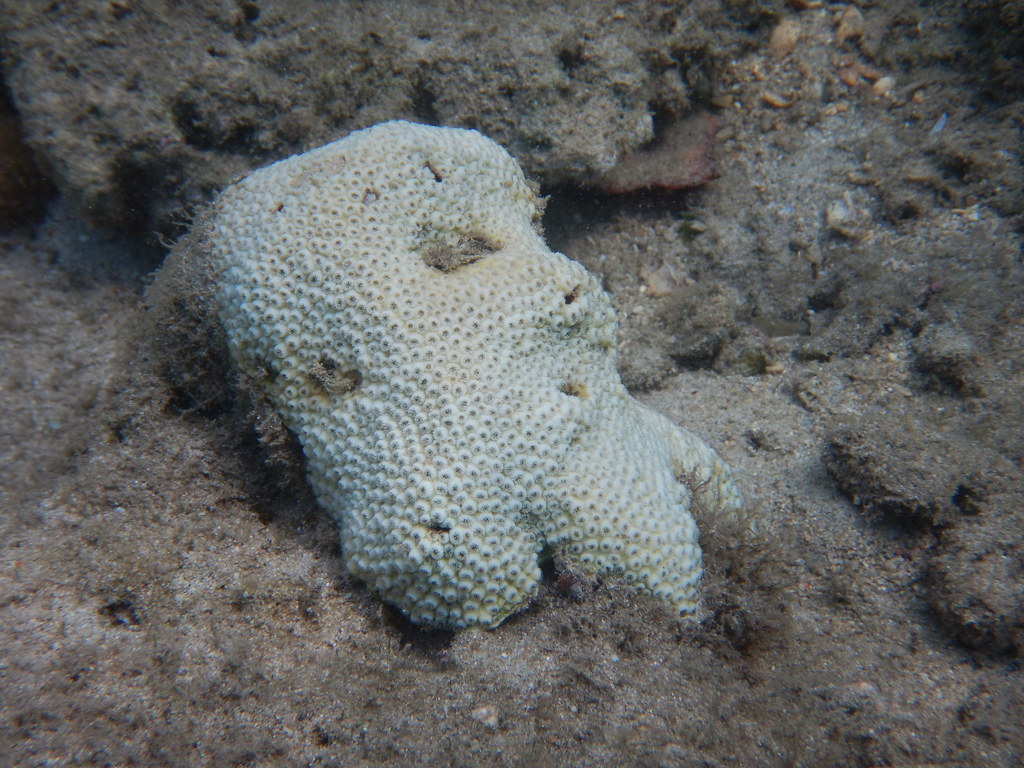
Meteor Shower →
The classic Cyphastrea morph: a turquoise-to-teal-green encrusting base studded with bright red/orange corallites that look like a shower of falling embers. The contrast of a cool base and hot polyps is what made the moon-coral genus a hobby staple.
Tip: Place low-to-mid in the tank under low-to-moderate light (roughly 100-200 PAR) with gentle-to-moderate flow; too much PAR can wash out the green base, while steady flow keeps detritus off the encrusting tissue. It encrusts fast and can sting neighbors, so leave open rock around it.
representativePurple People Eater (Master PPE) →
A green-based Cyphastrea with bright purple corallites/eyes that 'smear' and bleed into the green tissue as the colony grows. The purple-on-green is among the most recognizable Cyphastrea color schemes.
Tip: Low-to-moderate light and flow mid-tank; medium PAR helps the purple eyes stay vivid without bleaching the green base. It is a fast, easy grower.
representativeAlien Pox →
A green-based Cyphastrea covered in pink/magenta corallites that look like an outbreak of alien 'pox' across the tissue. A green-and-pink contrast with a slightly otherworldly texture.
Tip: Low-to-medium light and moderate flow; place mid-tank and keep flow steady so the dense corallites stay clean of detritus.
representativeTyree Brick Red →
A near-monochrome Cyphastrea with a bright brick-red/orange base that deepens into even more saturated red polyps. A bold, solid-red encruster rather than a contrast morph.
Tip: It does best in low light and low flow on a lower rock; under those conditions it grows quickly and the red stays rich rather than browning out. Great for darker gaps and crevices in the aquascape.
representativeSolar Flare →
An orange-dominant Cyphastrea with bright orange polyps and a swirled red/orange pattern described as a hybrid look between orange and red types. A warm, fiery single-family coloration.
Tip: Prefers lower light but can be acclimated up; start it on a lower rock with moderate flow and raise light gradually to intensify the orange.
representativePumpkin Patch →
A Cyphastrea named for its field of bright orange polyps that look like a patch of little pumpkins over a darker base. Cheerful, warm-toned and very approachable.
Tip: Low-to-moderate light and gentle flow on a lower rock; keep light modest so the orange polyps stay bright rather than browning.
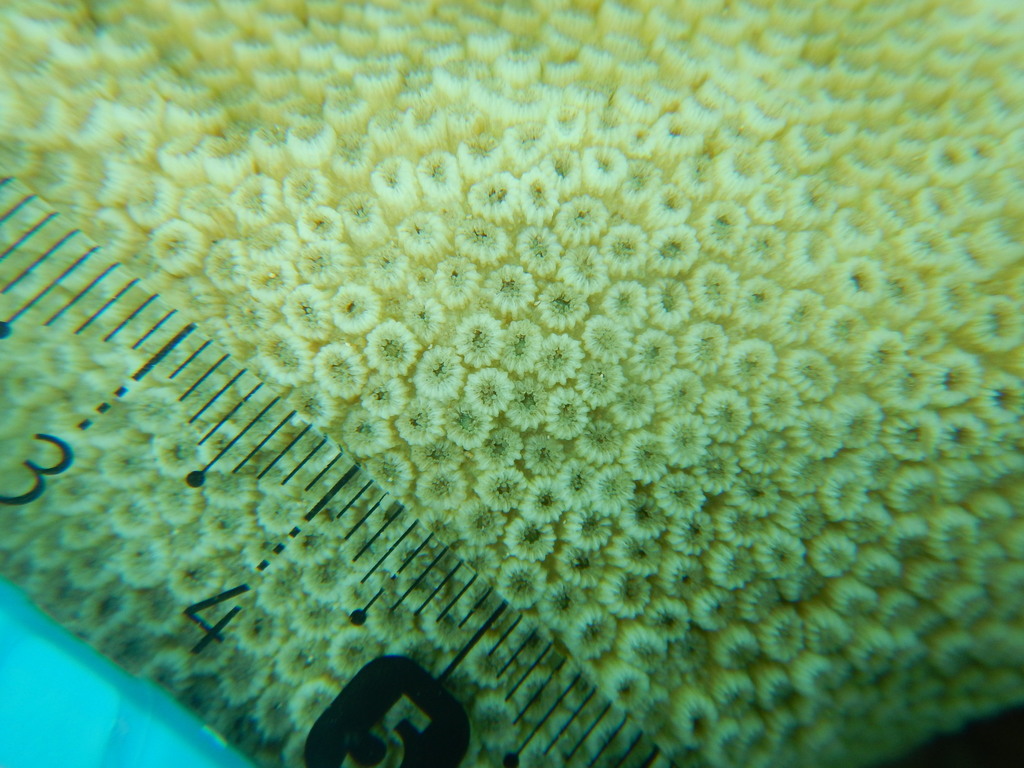 representative
Designer Cyphastrea
Aquacultured, named line-bred selections chosen for extreme polyp-to-base colour contrast and propagated as frags.
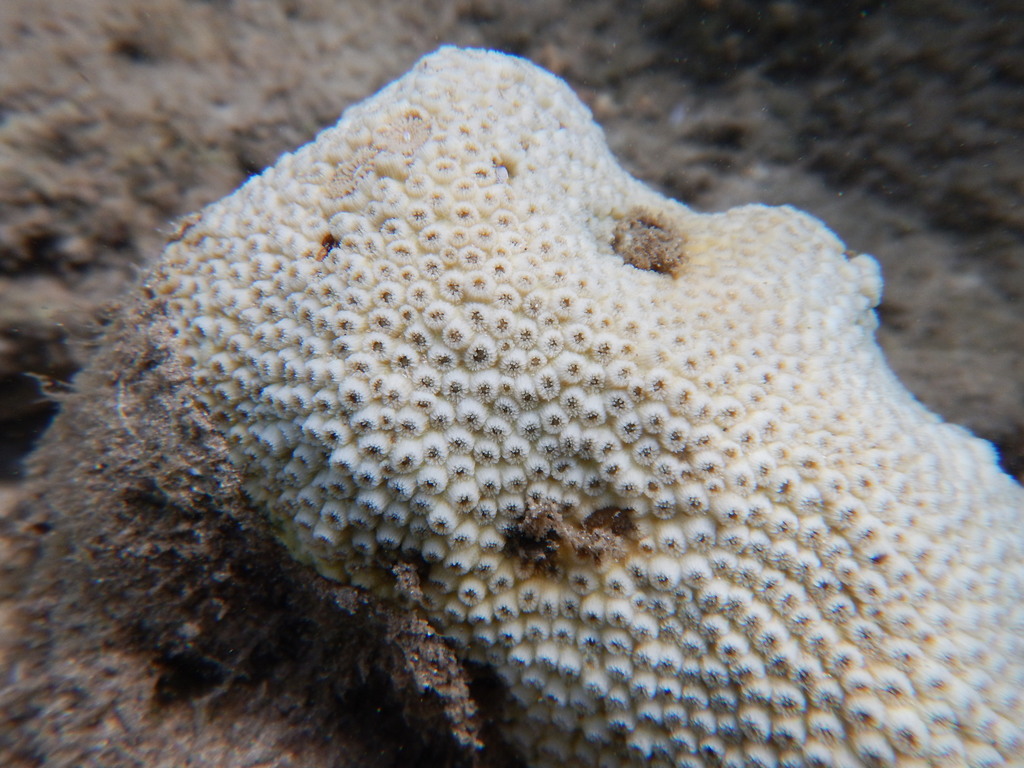 representative
Bizarro →
A blue-based Cyphastrea with bright red/orange polyps, essentially a cooler, bluer take on the meteor-shower color theme. The deep blue body makes the warm corallites pop hard under blue-heavy LEDs.
Tip: Give it moderate flow and low-to-mid light; the blue base holds best when it isn't blasted with high PAR, so favor a shaded ledge or lower rock. It encrusts readily and is forgiving of minor parameter swings.
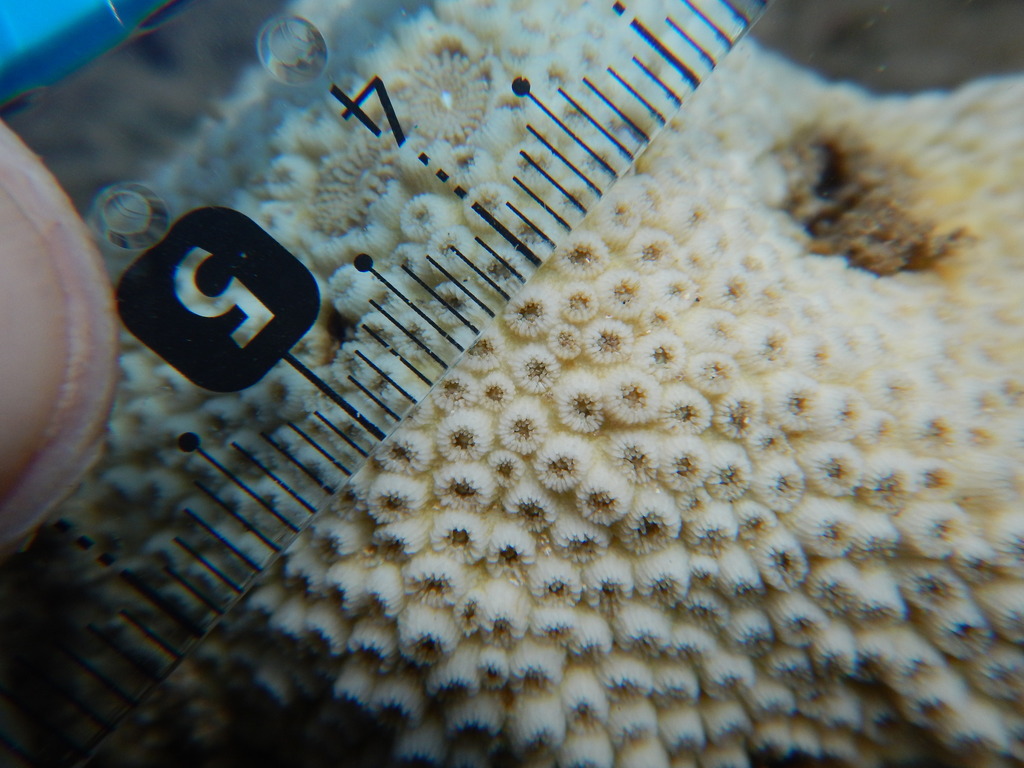 representative
Rainbow Madness →
A multicolor Cyphastrea showing a mix of green, orange and pink tones across the base and corallites for a confetti-like 'rainbow' effect. One of WWC's flagship colorful Cyphastrea strains.
Tip: Low-to-moderate light and moderate flow on a low-to-mid rock; rotating it so all sides get even light helps the multiple colors develop uniformly as it encrusts.
 representative
Skittles Bomb →
A vivid rainbow Cyphastrea: a blue-to-purple base that grows pink/orange centers and develops a spread of orange and green polyps as it encrusts, for a candy-colored 'taste the rainbow' look.
Tip: Mid-level placement with moderate flow and low-to-medium light keeps the base color saturated; very high light tends to bleach the base toward tan. It encrusts onto almost anything, so leave room to spread.
representativeMardi Gras →
A festive Cyphastrea with dark, near-black corallites set against a bright green encrusting base, for a high-contrast 'Mardi Gras' look. An affordable, colorful encruster.
Tip: Place on lower rock with moderate flow and low-to-medium light; it does well in nutrient-rich water, encrusts readily, and can sting, so leave open rock around it and keep it off neighboring corals.
 representative
Master Blaster →
A high-contrast Cyphastrea with a green base and intensely bright red/orange corallites that 'blast' across the colony. Reads as a punched-up, supersized meteor-shower type.
Tip: Moderate flow and low-to-medium light on a mid rock; keep flow strong enough to prevent detritus settling between the prominent corallites.
representativePeppermint →
A two-tone red-and-white Cyphastrea with a red base and pale white polyps for a clean, candy-cane 'peppermint' contrast that shows well in blue or white light.
Tip: Low-to-medium light and moderate flow; it brings red and white color to shaded or lower-light areas, and keeping alkalinity stable helps it hold color as it encrusts.
representativeHi-Ceee (Grafted Hi-C) →
A grafted Cyphastrea fusing intensely bright orange/citrus tissue with a neon green-to-teal base, named after the Hi-C orange-drink color. The grafted patches give a striped, two-toned citrus appearance.
Tip: Low-to-moderate light and moderate flow mid-tank; with grafted corals, give it room to encrust so both color zones can spread and the graft line stays distinct.
representativePrismatic Branching →
A branching-form Cyphastrea (Cyphastrea decadia type) with structured, snaking branches and a prismatic multi-color blend of polyps rather than the typical flat encrusting plate. The 3D growth makes it stand out from common moon corals.
Tip: Mount in low-to-moderate flow with low-to-medium light and give it open space; branching Cyphastrea need room and good flow around the branches to grow their structure cleanly.
representativeStrawberry Branching →
A branching Cyphastrea decadia with long pinkish snaking branches dotted with bright strawberry-red polyps. Combines unusual 3D structure with vivid red-on-pink color.
Tip: Place in moderate flow with low-to-medium light and leave space around the branches; good flow keeps detritus from collecting in the branch crotches.
representativeLeafy Greens →
A predominantly green Cyphastrea with a bright green base and green-toned polyps for a clean, near-monochromatic 'leafy' green colony. A mellower, all-green option among the louder morphs.
Tip: Low-to-medium light brings out the green fluorescence; keep moderate flow on a mid-to-low rock and it will encrust steadily.
representativeBling Bling →
A purple-to-violet-based Cyphastrea with bright yellow (yellow-green) mouths that glow like little jewels against the dark body. The yellow-on-purple contrast is the namesake 'bling.'
Tip: Mid placement with low-to-moderate flow and moderate light; the purple base holds color better out of the highest-PAR zones. It is semi-aggressive and can extend tentacles onto neighbors, so give it space.
representativeFender Bender →
A grafted Cyphastrea with a spliced, two-tone look fusing red/pink and blue-to-teal tissue along a graft line, with white accents. The split paint-job appearance is the draw.
Tip: Moderate light and flow with room to spread; with grafted pieces, even light on all sides keeps both color zones growing and the graft line crisp.
representativeCircuit Breaker →
A grafted Cyphastrea showing a vivid two-tone color split across fused tissue zones, most often described as yellow-and-orange (sometimes orange-and-green), like an electric circuit board. The grafted color split is the highlight.
Tip: Low-to-medium light (roughly 150-250 PAR) and moderate flow mid-tank; as with other grafted Cyphastrea, give it room to encrust so the contrasting color zones remain distinct.
Habitat & enclosure
Substrate
Equipment & setup
Diet
Behavior & temperament
Health
Tips, DIY & hacks
Sources
- Cyphastrea serailia — WoRMS (World Register of Marine Species) (reference)
- Cyphastrea Encrusting SPS Care — Reef2Reef (care guide)
- Wikipedia: Cyphastrea (wiki)