Birdsnest coral
Seriatopora hystrix · also called Birdsnest, Bird's nest coral, Needle coral, Thin birdsnest, Pink birdsnest

Seriatopora hystrix, the birdsnest, is a pocilloporid small-polyp stony (SPS) coral with delicate, needle-fine branches that grow into a tangled 'nest'. It is one of the easiest and fastest-growing SPS corals, bridging the gap between soft corals and the demanding acros, and a popular intermediate stepping stone into the SPS hobby.
🩺 Need expert help with your birdsnest coral?
Connect with a specialist near you or ask a licensed vet — never substitute online guidance for hands-on care in an emergency.
Quick facts
| Size | Delicately branching colony of thin, needle-tipped branches; frags ~2-4 cm, mature colonies form rounded bushes 15-25+ cm across. |
| Lifespan | 5–75 years |
| Social needs | solo |
| Native region | Indo-Pacific |
| Origin | Old World |
| Climate | 🌴 Tropical |
| Water type | 🌊 Marine |
| Family | Pocilloporidae |
| Genus | Seriatopora |
Part of the SPS Corals
Small-polyp stony corals — fast-growing branching corals demanding strong light & flow.
Habitat & space requirements
From the minimum an animal needs to be kept humanely, up to the ideal setup. Bigger is almost always better — minimums are floors, not targets.
Life & growth stages
How this animal changes through its life — each stage often has its own care, diet and space needs.
Color & pattern variants
Natural variants occur in the wild; selectively bred (man-made) variants were developed in captivity.
 representative
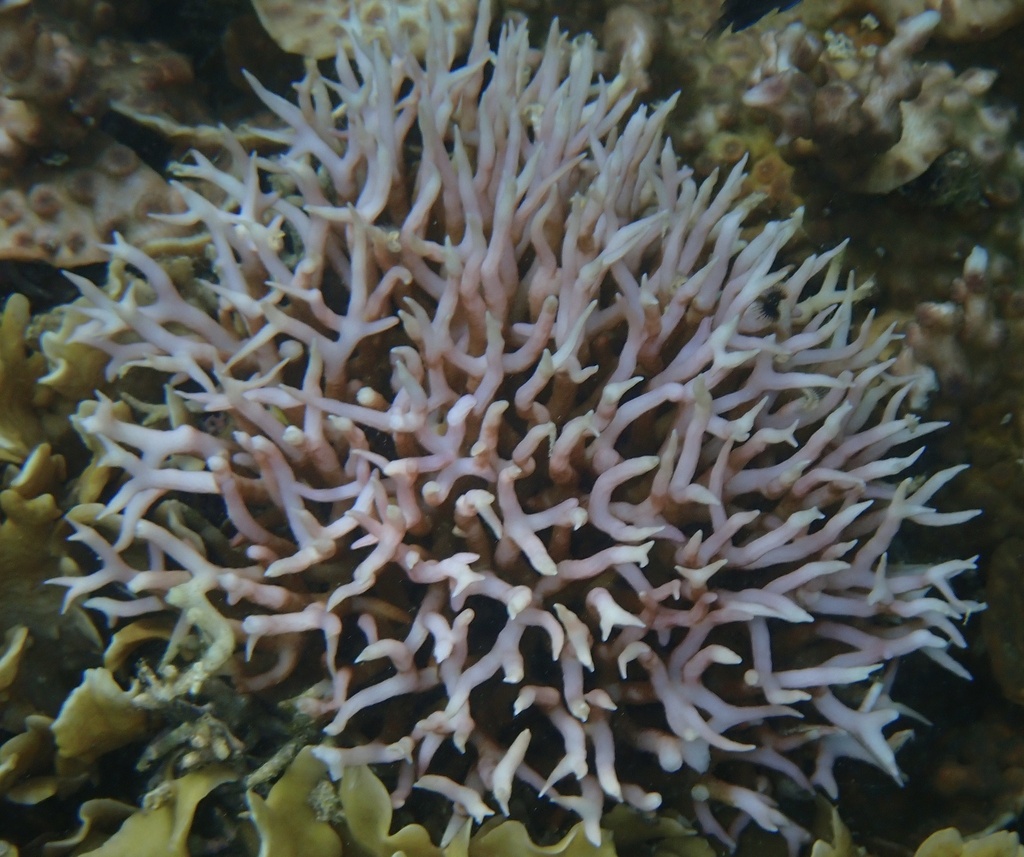
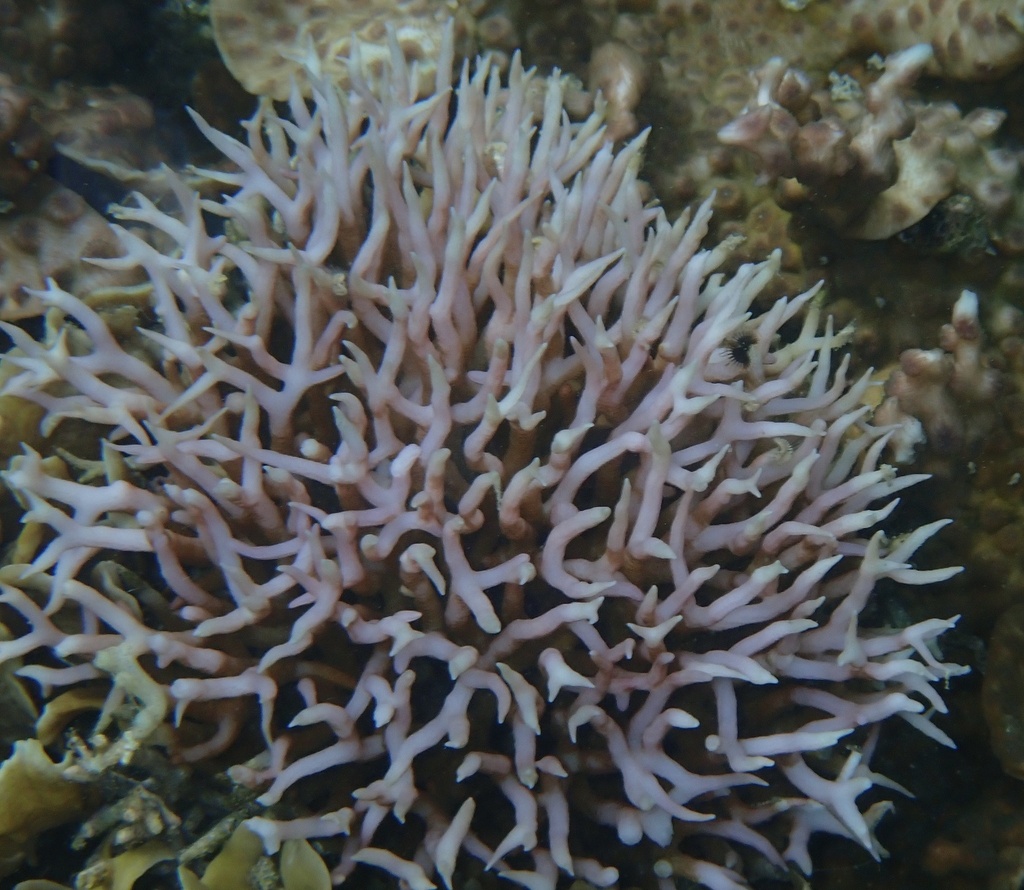
Pink Birdsnest →
A thin-branched Seriatopora hystrix with luminous solid pink branches and matching pink polyps and pointed growth tips. The classic 'pink birdsnest' look that defines the species in the hobby.
Tip: Place in medium-to-high light with moderate-to-strong flow; too much intense light can wash the pink toward tan, so watch coloration and adjust placement. Keep calcium and alkalinity stable.
 representative
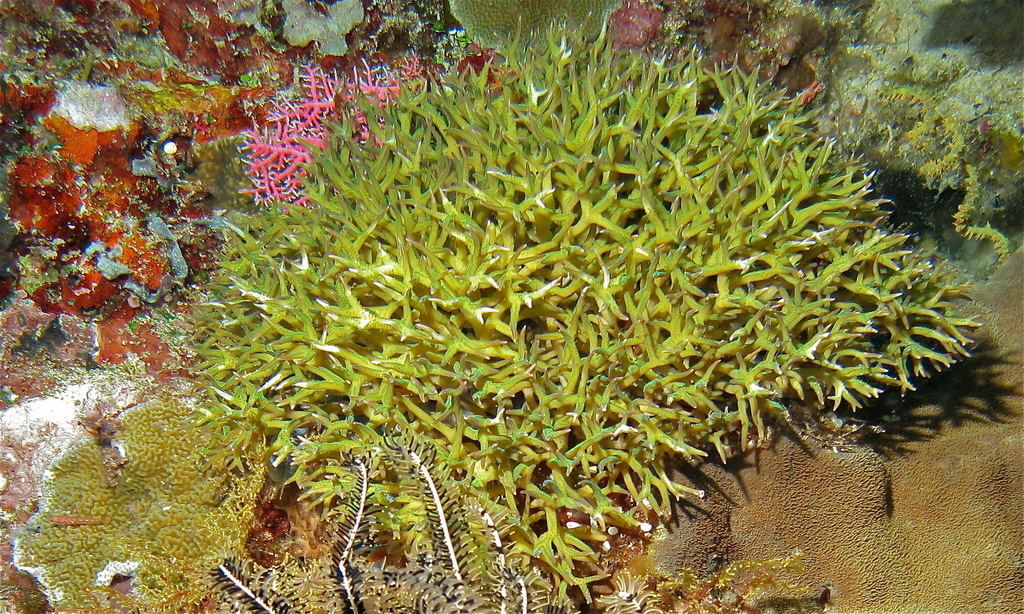
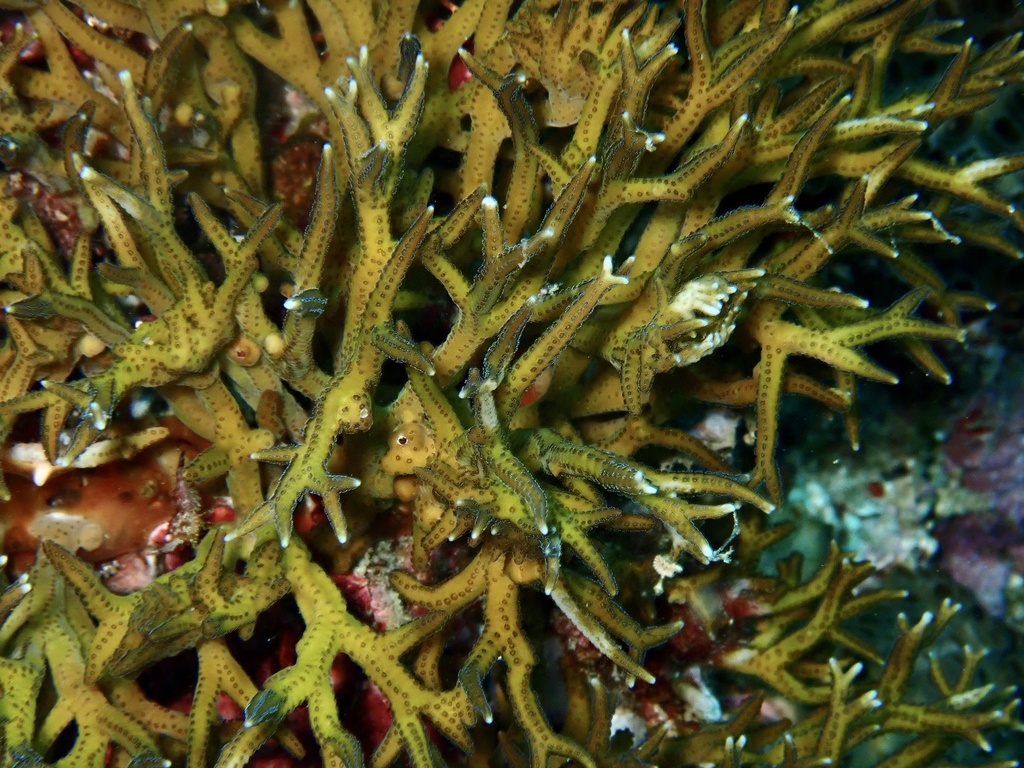
Green / Neon Birdsnest →
Green to neon-green branch colour, often with contrasting polyp extension.
 representative
Green Birdsnest →
A thin-branched birdsnest that produces stunning green polyps over a yellow-green background, giving the whole colony a glowing look. Often labeled Seriatopora guttatus.
Tip: It glows best under blue-heavy/actinic-rich lighting; give moderate flow and a spot where the polyps can extend without constant abrasion from neighbors. A fast grower, so leave room.
 representative
Ponape Birdsnest →
A compact, bushy birdsnest with short thin branches that are light tan-green tipped in bright pink, with pronounced bumpy corallites. One of the most recognizable and widely traded birdsnests in the hobby.
Tip: Give it moderate light and moderate-to-strong, somewhat turbulent flow to keep detritus from settling in the dense branch cluster; slightly lower light helps the green base color stay rich rather than bleaching pale. Like all SPS, it wants stable calcium and alkalinity.
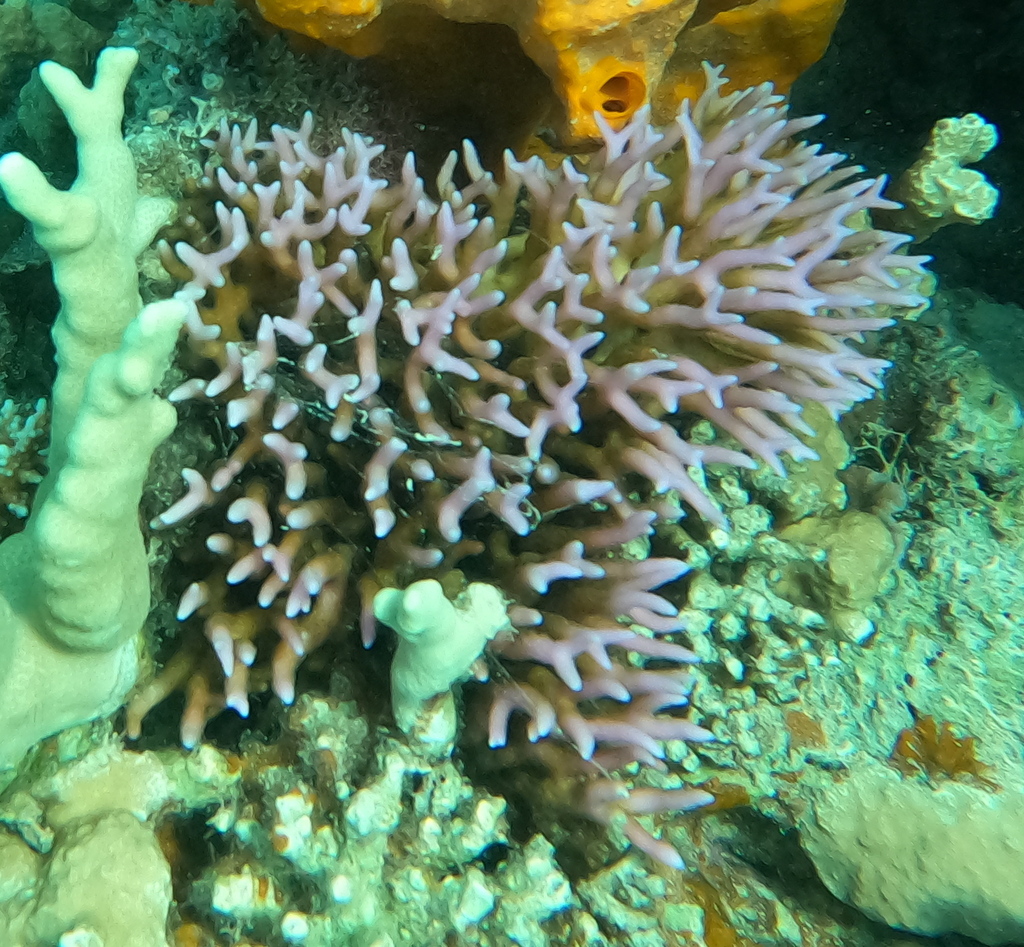 representative
Orange Setosa (Birdsnest) →
Technically *Psammocora* but traded alongside birdsnest, this is a low-encrusting orange-to-red morph with a fuzzy texture rather than fine branches.
Tip: Unlike branching birdsnest it likes lower-to-moderate flow on a flat surface where it can encrust outward; too much PAR bleaches the orange.
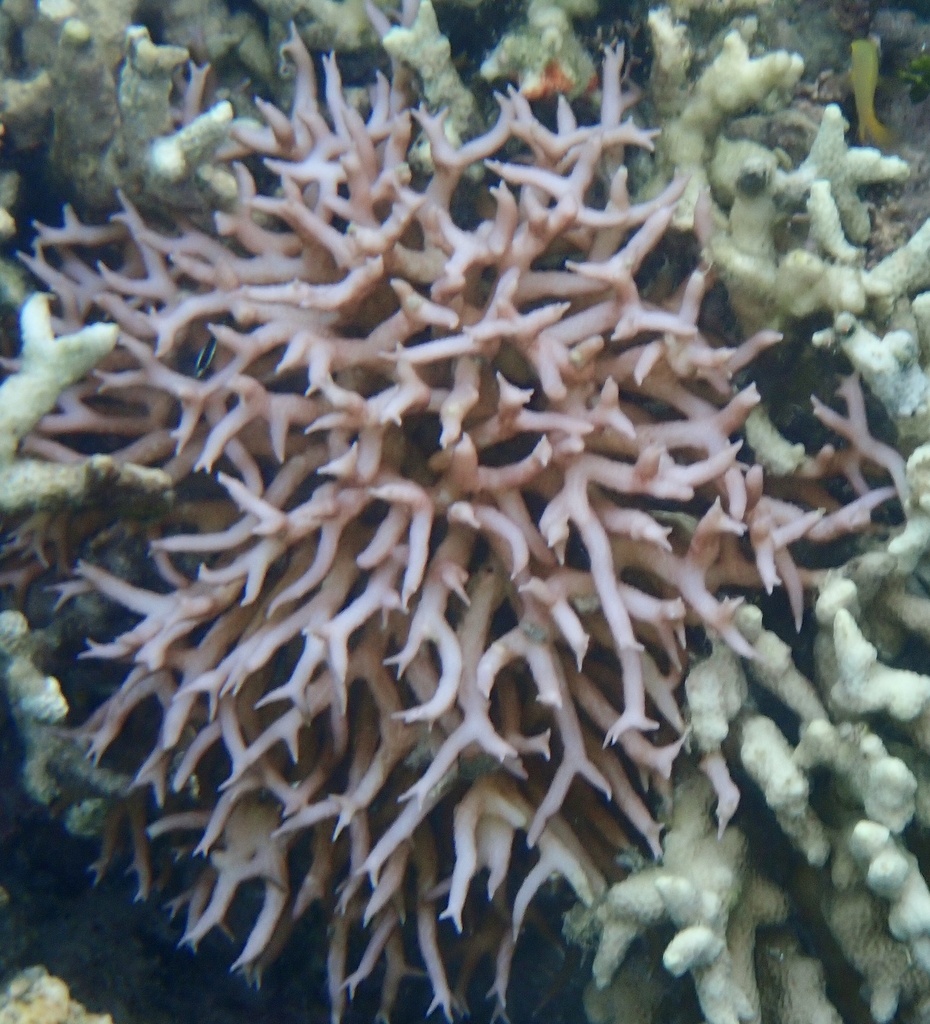 representative
Bird of Paradise (Blue-tip) →
A *Seriatopora* form with cream/pink branches tipped in blue or purple, named for its showy multicolor tips. A staple display birdsnest.
Tip: Blue tip coloration is light-driven — keep it under actinic-heavy spectrum and stable alkalinity; swings cause RTN in this genus quickly.
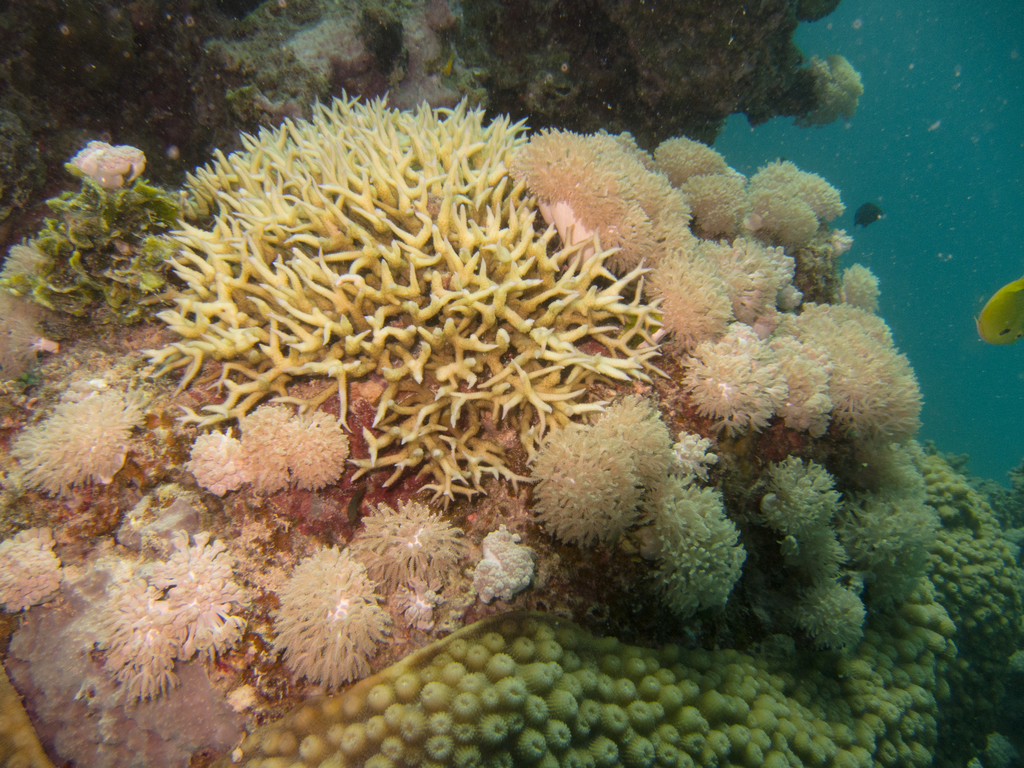 representative
Neon Green Tip Birdsnest →
Pink-bodied colony with electric neon-green growth tips. A popular intermediate-priced frag that shows obvious tip color as it grows out.
Tip: Frag from actively growing tips and place in good flow — the neon tips are new growth, so encourage growth with stable Ca/Alk/Mg to keep them bright.
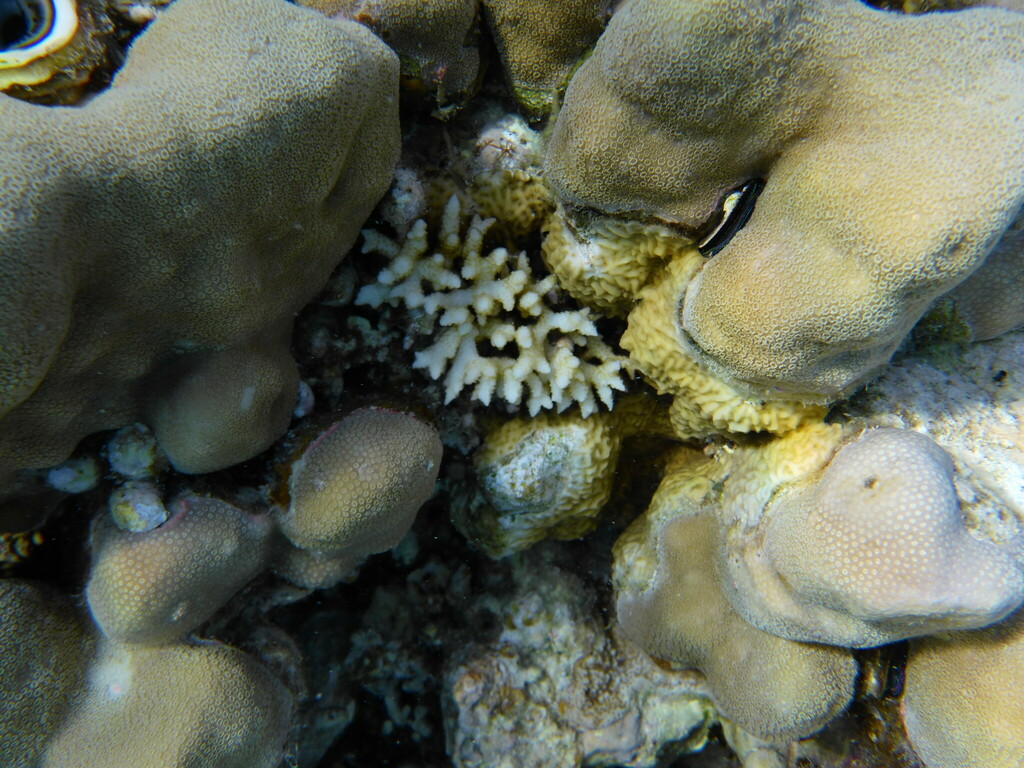 representative
Red Dragon Birdsnest →
A deep red-to-magenta named line that holds intense color, more demanding than the common pink. Commands premium frag pricing.
Tip: Needs high, stable PAR (250+) and pristine, low-nutrient water to hold red; in dirty or shaded tanks it dulls to brown and is slow to recover.
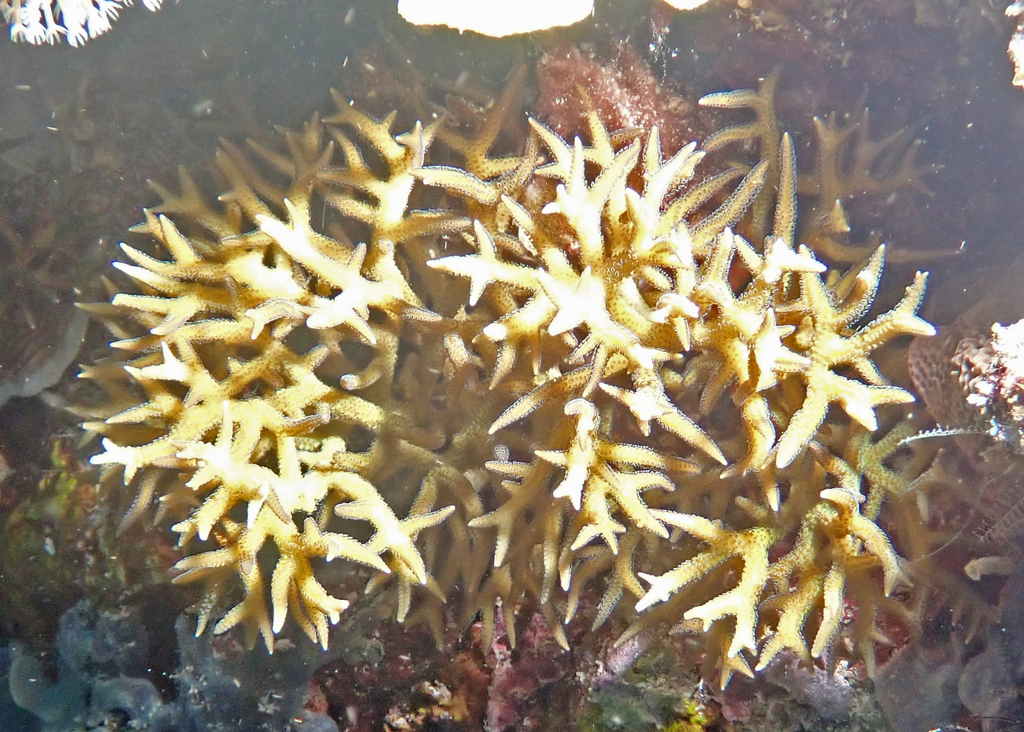 representative
Pink Birdsnest (Seriatopora hystrix) →
The classic birdsnest: delicate, needle-tipped pink branches forming an intricate, fragile bush — the most recognizable Seriatopora in the hobby.
Tip: A great 'starter SPS' — give moderate-to-strong light (PAR 150-250) and moderate flow; the thin tips snap easily, so handle frags by the base.
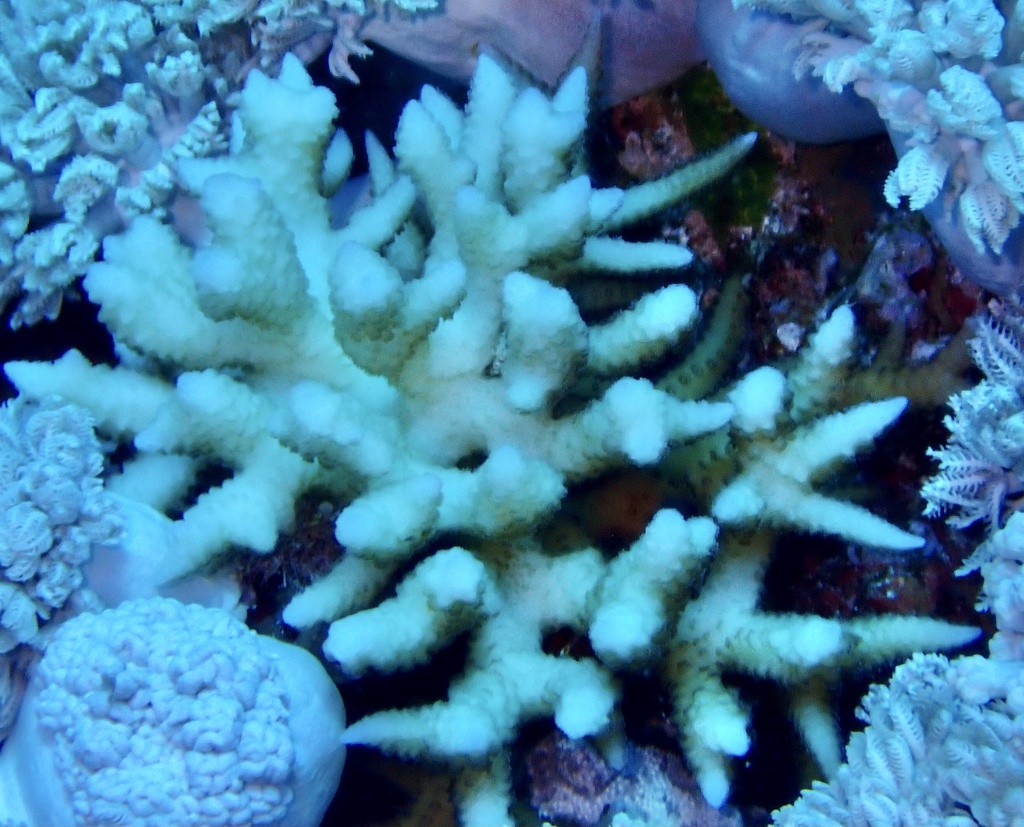 representative
Green Birdsnest (Seriatopora) →
A birdsnest with green-to-chartreuse branches and fine tips, often fluorescing under blue light.
Tip: Moderate light and moderate, indirect flow; like all birdsnest it prefers to grow where water moves through the branches without being blasted.
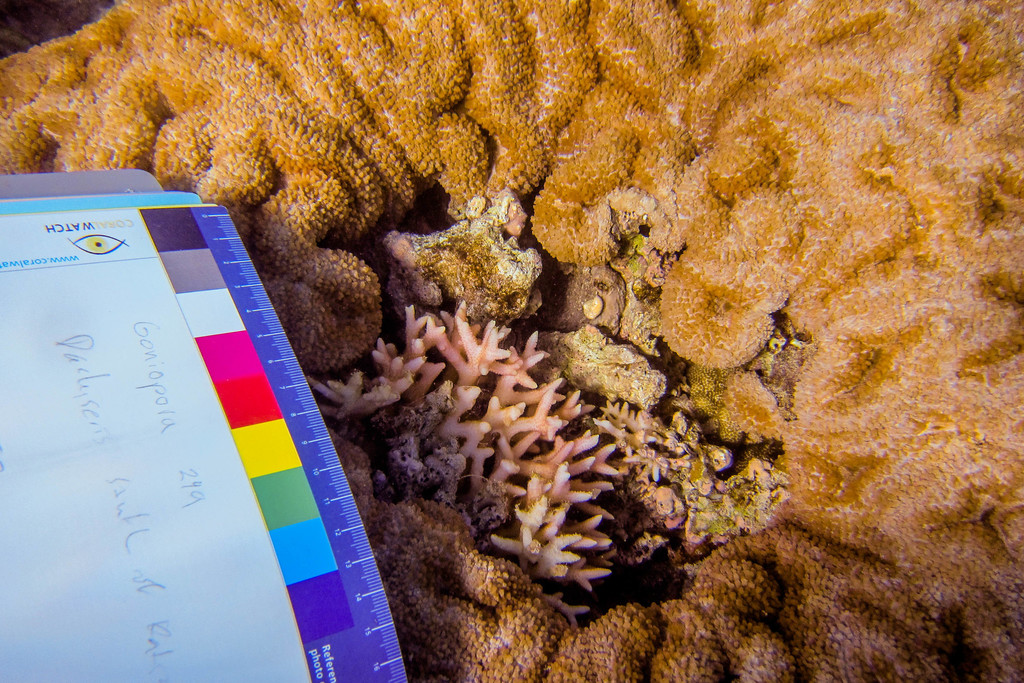 representative
Ponape / Pohnpei Birdsnest (Seriatopora) →
A prized birdsnest from the Pohnpei (Ponape) region with thicker branches and pink-to-salmon coloration with green-tinted polyps.
Tip: Slightly sturdier than thin pink hystrix; moderate-high light and moderate flow keep its color and encourage the chunky branching.
 representative
Bird of Paradise / Orange Birdsnest →
A warm-toned birdsnest in orange/salmon hues, sometimes sold as 'Bird of Paradise,' giving a softer color than the typical pink or green.
Tip: Moderate light brings out the warm tones; keep flow gentle-to-moderate so the fragile tips aren't constantly broken off.
 representative
Hyacinth Birdsnest →
A fine-branched hystrix with vivid pink coloration, blue-tinted polyps, and crisp white growth tips on elongated, slightly bumpy branches ending in very sharp points.
Tip: Medium-to-high light and moderate-to-strong flow suit it; the white growth tips are a health indicator, so keep alkalinity stable to encourage continuous tip growth. Branches are fragile, but broken tips regrow quickly.
 representative
Green Tip Orange Birdsnest →
A rapid-growing Seriatopora with a golden-orange body and rounded green branch tips, growing longer smooth branches for a more open structure than the compact birdsnests. Polyps can take on a blue sheen under actinics.
Tip: Place under actinic-rich light to pop the orange-against-blue effect and give moderate-to-strong flow; the open branch structure handles brisk water well and grows fast, so leave room to spread.
representativeGreen Tip Pink Birdsnest →
A thin-branched birdsnest with fuchsia-pink branches capped by contrasting green growth tips and bluish-green polyps, blending the two most popular birdsnest color traits in one colony.
Tip: Medium-to-high light and moderate-to-strong flow keep both colors balanced; you are more likely to give too little flow than too much, so place it where it gets brisk water.
 representative
Bird of Paradise →
An electric-green-based birdsnest topped with fluffy metallic purple polyps so well extended they often hide the green base, creating a vivid green-and-purple contrast. Usually identified as Seriatopora caliendrum.
Tip: Wants medium-to-high light to hold the green base and purple polyps; nudging flow up slightly retracts the polyps just enough to reveal the electric green base. The skeleton is dense and porcelain-like and can shatter when fragging.
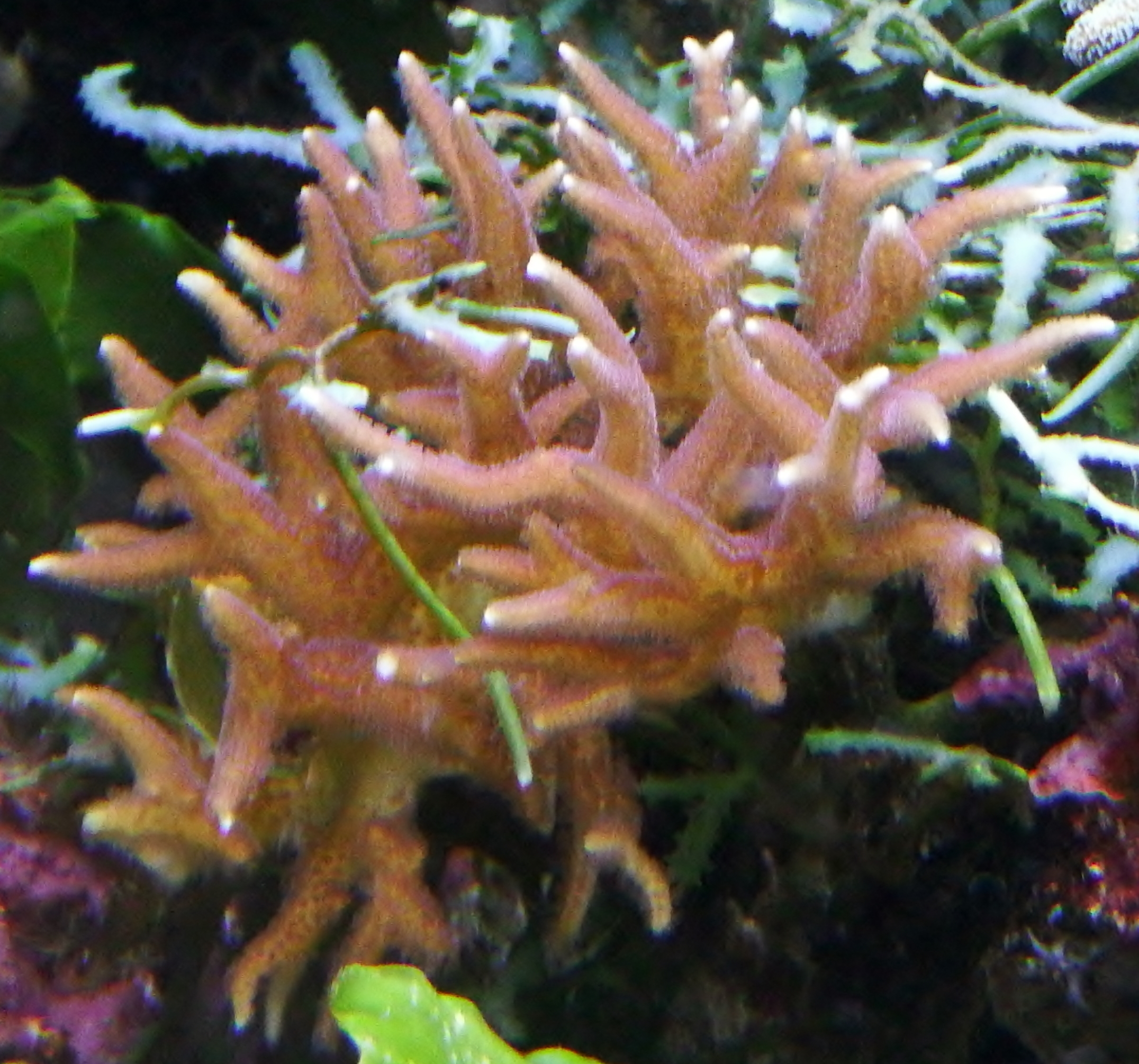 representative
Purple Polyp Green Birdsnest →
A bright green birdsnest energized by deep purple polyps dotted across the branches, a high-contrast look distinct from the metallic Bird of Paradise.
Tip: Give moderate-to-high light to keep the green saturated and the purple polyps dark; moderate-to-strong flow keeps the branch tangle clean without snapping the fine branches.
 representative
WWC Purple Polyp Birdsnest →
A Seriatopora hystrix birdsnest with bright purple polyps set against a neon-green base; as the colony develops, the thin branches intertwine into the classic dense birdsnest tangle.
Tip: Moderate lighting with moderate-to-high flow keeps the colors saturated and the dense branches free of detritus; it is fast growing, so give it room and keep calcium and alkalinity stable.
 representative
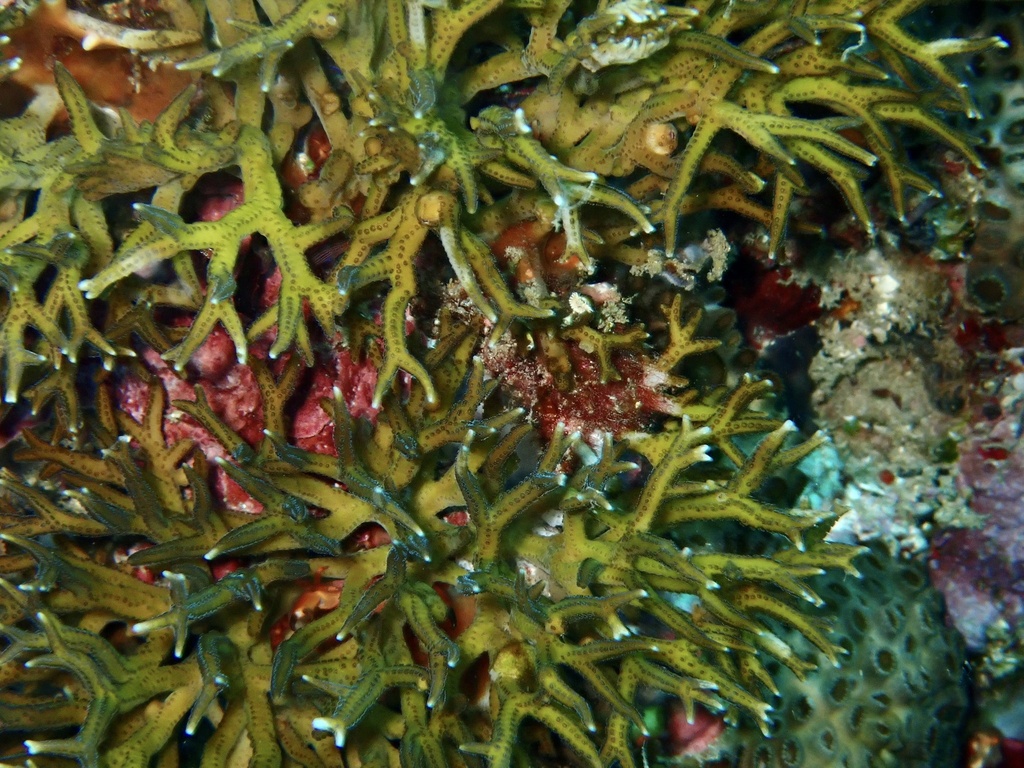
Yellow Bird's Nest →
A yellow-bodied birdsnest, sometimes showing pink-tipped branches, that fluoresces brightly under actinic lighting and brings a warm color rarely seen among the usual pink and green forms.
Tip: Unlike the pink forms, this one actually prefers somewhat subdued lighting to hold its yellow; give moderate flow and watch for tip recession if PAR or flow is pushed too high on the fine branches.
 representative
Ponape / Pink Lemonade Birdsnest →
Named aquacultured selections (e.g. 'Ponape Birdsnest', 'Pink Lemonade') line-grown for distinctive two-tone branch and polyp colour.
 representative
Jason Fox Enchanted Forest Birdsnest →
A bushy birdsnest with a lemon-lime colored base and contrasting blue polyps, developing longer branches with rounded tips that form a dense colony.
Tip: Prefers medium light with medium-to-low flow; the lower flow lets the colony bush out and the blue polyps extend, while too much light can mute the lime base.
 representative
Blue Zing Bird's Nest →
A birdsnest carrying a light green-to-blue color gradient across its polyps and thin tangled branches, standing apart from the more common solid pink and green forms.
Tip: Run it under blue-heavy lighting to bring out the blue tone and provide moderate flow through the dense branch cluster to prevent dead spots; keep alkalinity stable for steady tip growth.